
The price of a replacement refrigerator is only the first line of the budget. The total can include delivery, inside placement, floor protection, leveling, water connection, door or handle changes, old-unit removal, recycling, and repairs to an opening or household service. A freestanding replacement is usually simpler than a built-in or panel-ready unit, but even a like-for-like swap depends on the exact model and the home.

Start with the existing refrigerator and opening
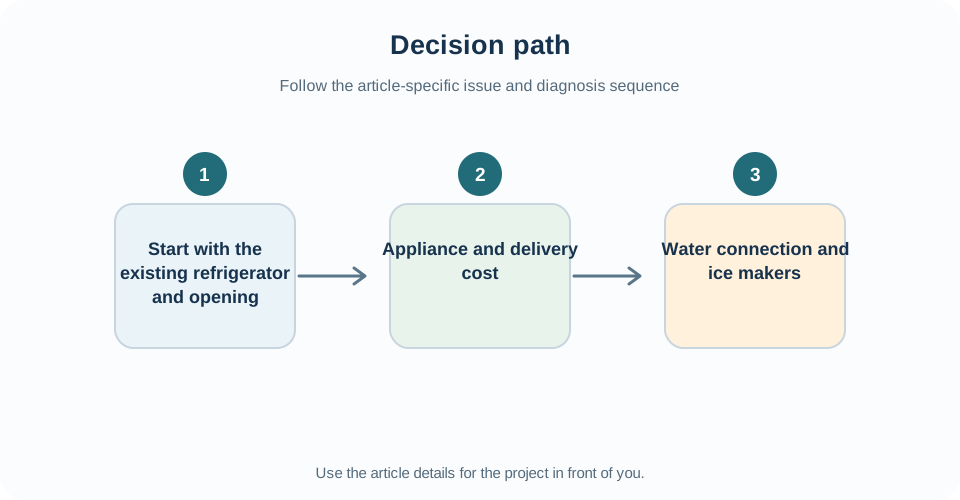
Record the current width, height, depth, door swing, handle projection, hinge location, ventilation space, and path from the delivery vehicle. Measure the opening at several points. Floors can be out of level, cabinets can be slightly out of square, and trim can reduce the usable space. A replacement that fits the advertised width can still collide with a wall, island, counter, or adjacent door.
Identify whether the refrigerator is standard-depth, counter-depth, built-in, integrated, or panel-ready. Counter-depth products may reduce projection but can sacrifice capacity or require different door clearance. A built-in replacement can become a cabinet and access project; it is covered separately in built-in refrigerator replacement cost.
Appliance and delivery cost
Product prices vary by capacity, configuration, finish, dispenser, ice system, controls, compressor design, and brand tier. Treat a retailer’s advertised price as the equipment component, not the installed project. Promotions, delivery windows, stocking, and regional availability change the comparison. Canadian product selection and pricing should be researched in Canadian dollars rather than inferred from U.S. prices.
Delivery may be free, included, or charged separately. Confirm whether the crew brings the unit inside, removes packaging, protects the floor, removes and reinstalls doors, and places the appliance in its final location. A curbside delivery can leave the homeowner with the hardest part of the work.
Water connection and ice makers
A refrigerator with an ice maker or dispenser may need a compatible household water supply. Basic installation sometimes includes connecting to an existing shutoff and approved line; it does not necessarily include installing a new line, replacing a leaking valve, correcting pressure, or opening a finished wall.
Photograph the existing connection and ask the installer to identify what it will accept. If a valve is inaccessible, corroded, leaking, or in the wrong location, plumbing work may be separate. An internal refrigerator leak and a building-side leak have different repair paths. Do not conceal a questionable connection under the new appliance just to complete delivery.
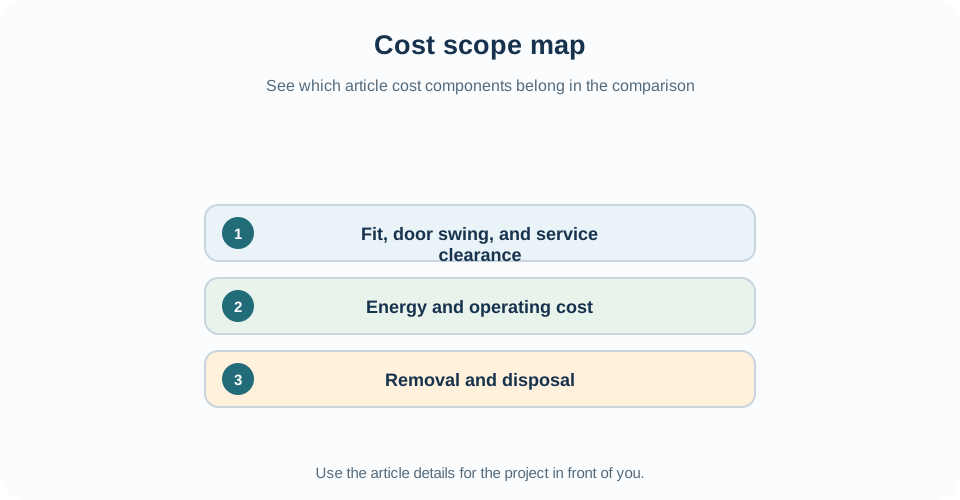
Fit, door swing, and service clearance
The model manual controls required clearances, leveling, ventilation, water routing, and service access. Do not generalize one manufacturer’s dimensions to every refrigerator. Check whether the doors can open far enough to remove shelves, drawers, and food; whether the hinge side can be changed; and whether the unit can be serviced without removing cabinetry.
The delivery path deserves the same attention as the kitchen opening. Measure exterior doors, thresholds, stairs, turns, elevators, railings, and ceiling height. Include the packed and unpacked dimensions where available. A failed delivery can create a restocking fee or require additional labor.
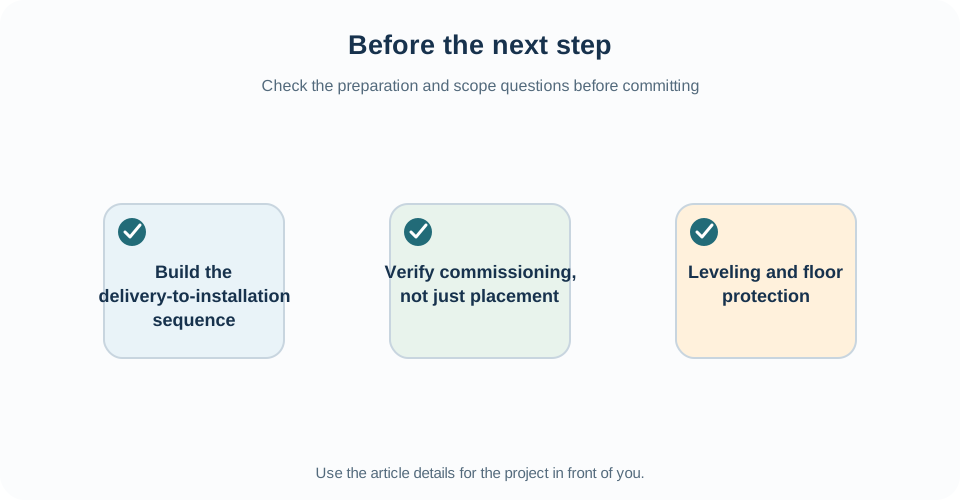
Leveling and floor protection
Refrigerators are heavy and can damage finished flooring during removal or placement. An installer may need to use boards, mats, or a special appliance dolly. Uneven floors can affect door alignment and operation. Ask whether leveling is included and what happens if the floor or cabinet is not suitable.
If the old unit has leaked, inspect the floor and adjacent cabinets before the new refrigerator covers them. Water-damaged materials, mold, and restoration are outside an ordinary appliance installation. Resolve those conditions before closing the area.
Energy and operating cost
Use the exact model’s EnergyGuide or EnerGuide information when available. U.S. EnergyGuide labels provide annual kWh and an estimated operating cost based on typical use and an average energy price. Canada’s EnerGuide label provides annual kWh and a comparison indicator within a defined class. Neither predicts your exact bill.
Multiply annual kWh by a representative local electricity rate to compare models, then consider usage, ambient temperature, door openings, ice-maker use, tariff structure, and ownership period. A more efficient refrigerator can cost less to operate, but the saving may not justify a large purchase premium if the unit is lightly used or likely to be replaced before the difference accumulates.
Removal and disposal
Ask whether haul-away is included in delivery or installation and whether the old unit must be empty, disconnected, and accessible. If a built-in refrigerator requires panel removal or cabinet disassembly, ordinary haul-away may not apply. Include stairs and difficult carries in the quote.
In the United States, EPA safe-disposal rules apply to household refrigerators entering the waste stream with refrigerant charge intact. Use a retailer, utility program, municipality, or recycler that explains its process. Canadian requirements and programs are local and must be verified separately. Do not cut or vent a refrigerant circuit.
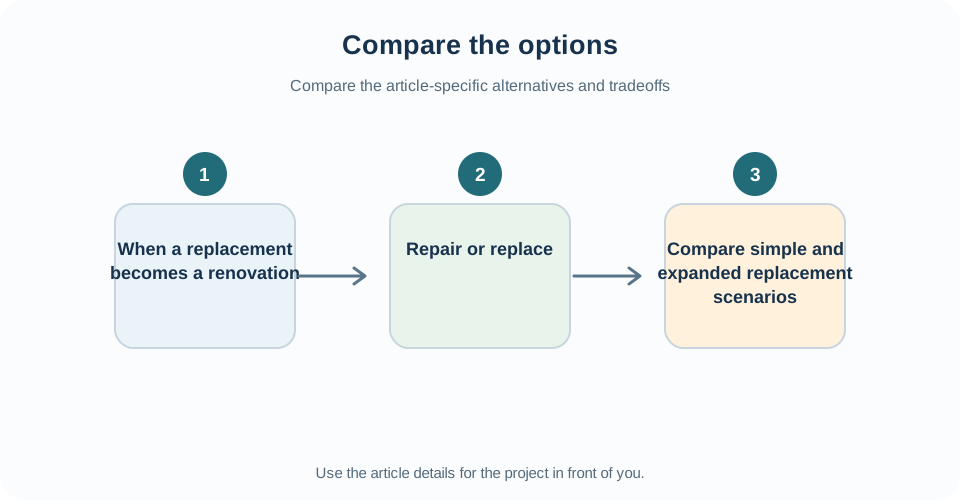
When a replacement becomes a renovation
The project expands when the new model does not match the opening, the panel is custom, the water line must move, the floor needs repair, the delivery route is difficult, or adjacent cabinets must change. A refrigerator can also reveal electrical, plumbing, or structural issues. Ask each provider where its scope stops and who owns the additional work.
Do not choose a model before checking the full path. A cheaper appliance can become expensive if it requires a new panel, counter alteration, cabinet filler, plumbing route, or second delivery.
Repair or replace
Before replacing a refrigerator that still cools, compare a confirmed repair with the full installed replacement. A localized seal, fan, control, or water-component repair may preserve a good cabinet and avoid disruption. A sealed-system failure, repeated failures, obsolete parts, high food-loss risk, or difficult-to-warranty repair can strengthen the replacement case. There is no universal age rule.
U.S. and Canadian budgeting
Keep U.S. and Canadian market evidence separate. Local labor, taxes, retailer packages, appliance availability, disposal programs, and plumbing requirements can change the total. The most useful quote states the exact model, delivery path, connection, leveling, removal, disposal, and exclusions. The final budget should answer what happens when the home is not already ready for the refrigerator you want.
Build the delivery-to-installation sequence
Ask for the replacement to be priced as a sequence rather than a product line:
- confirm the exact model, opening, door swing, and delivery route;
- decide whether the existing water connection is compatible and accessible;
- remove or protect the old unit and surrounding finishes;
- bring in, level, connect, and test the new refrigerator; and
- haul away the old unit through an appropriate disposal channel.
The sequence matters because one failed assumption can stop the entire job. A delivery crew may refuse an unsafe carry. An installer may stop when a shutoff leaks or a model does not fit. A haul-away provider may exclude a built-in unit that must be dismantled first. Have each provider state its stop conditions and the price of a second visit.
Compare simple and expanded replacement scenarios
In a simple scenario, the new freestanding refrigerator fits the measured opening, the route is clear, the floor is sound, and an existing compatible water connection is ready. The budget is mainly the appliance, delivery, basic installation, removal, disposal, and operating cost.
An expanded scenario may involve a counter-depth or panel-ready model, an out-of-square opening, a changed hinge side, a hidden leak, difficult stairs, cabinet fillers, floor repair, new plumbing, or a different electrical arrangement. None of these should be buried in an appliance allowance. Price them as dependencies and identify which contractor owns each one.
Compare a ready replacement with a fit project
Measure width, height, depth, door swing, handles, hinges, water connection, electrical location, floor, cabinetry, counter, and delivery route. A replacement may fit the opening but fail the route, service clearance, panel alignment, or door swing. Ask for a written fit check tied to the exact model and current manual. Keep cabinetry, flooring, plumbing, electrical, and finish work separate from the appliance allowance.
Budget the first day and the next service visit
Include inside delivery, door or handle removal, floor protection, disconnection, haul-away, disposal, leveling, connection, testing, warranty, and callback terms. If the refrigerator is built in, state how it can later be pulled out for service. A complete installation is a working, dry, accessible unit with the surrounding finish protected—not simply a refrigerator left in the kitchen.
Verify commissioning, not just placement
Before the crew leaves, confirm that doors and drawers move as intended, the unit is level, the connection is dry, the ice or water feature is handled according to the model instructions, and the surrounding floor and cabinetry are undamaged. The exact manual controls the clearances, connection, and operating checks. A refrigerator that is placed but not properly connected or tested has not completed the project.
For Canadian purchases, verify the model and label information in the Canadian market. For U.S. purchases, use the applicable U.S. label and disposal guidance. Keep the two markets separate; currency conversion does not create a valid installed-price estimate.