
Refrigerator repair cost depends heavily on which system failed. A service visit and a small control, fan, seal, or switch repair can be very different from a compressor or refrigerant-system repair. U.S. specialist sources report broad refrigerator repair signals around $125 to $500 or $200 to $500, while a compressor replacement may be substantially higher. These are source-specific U.S. estimates, not a Canadian price and not a remote diagnosis.

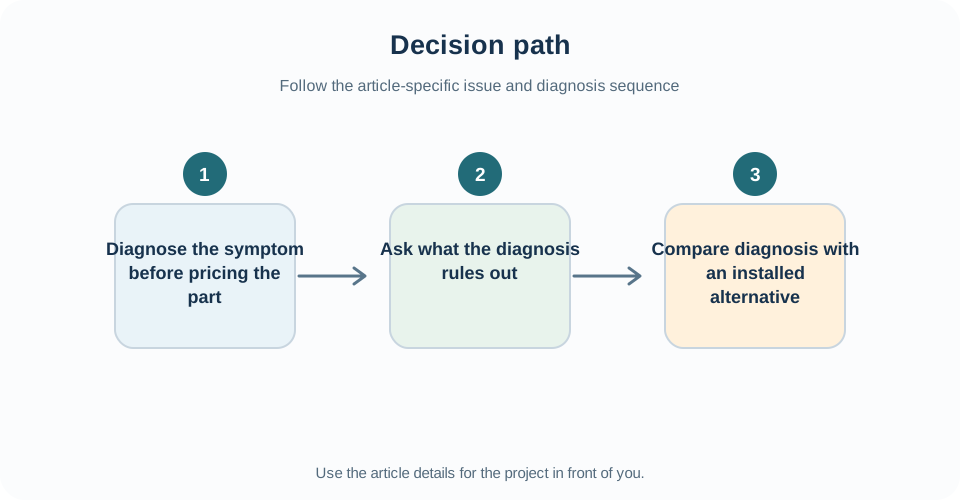
Diagnose the symptom before pricing the part
“The refrigerator is not working” can mean no power, no cooling, excessive frost, uneven temperature, a noisy fan, a water leak, a broken ice maker, a door-seal issue, or an intermittent control problem. The likely intervention and cost change with each symptom. A technician should identify what was tested and separate the appliance from the building connection.
Record the model, age, temperature symptoms, noise, error display, water or ice behavior, and timing. Do not remove covers, work on electrical parts, or disturb a sealed system based on an online guess. A proper diagnosis is especially important when food is at risk or a leak could damage flooring and cabinets.
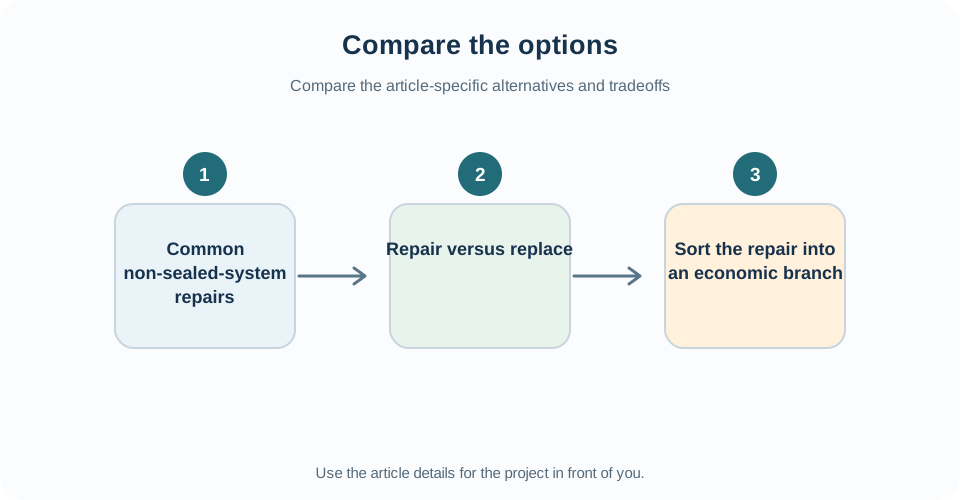
Common non-sealed-system repairs
Fans, controls, sensors, thermostats, defrost components, door gaskets, hinges, lights, and water valves can produce a wide range of repair scopes. The part price is only one component. Access, diagnosis, labor minimums, model availability, and whether the technician has the part affect the total.
A damaged gasket may be a relatively contained repair when the door and cabinet are sound. A cooling complaint attributed to a fan may instead involve a control, wiring, ice buildup, airflow restriction, or sealed-system issue. A refrigerator that cycles abnormally may need testing rather than immediate part replacement.
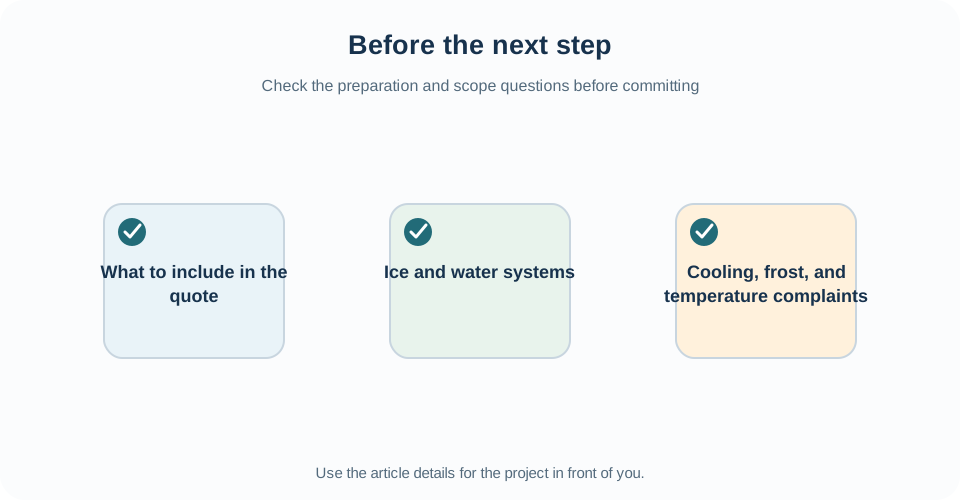
Ice and water systems
Ice makers and dispensers combine appliance components with a household water connection. An inlet valve, internal tube, filter housing, ice-maker assembly, dispenser switch, or control can fail inside the refrigerator. A supply line, shutoff, pressure issue, or drain problem can be outside it.
If water appears under the unit, identify whether it originates at the filter, internal tubing, door, ice maker, supply connection, or another source. Stop using a leaking appliance when continued operation could cause damage, and obtain qualified help for concealed or electrical conditions. Building-water repair and resulting restoration are separate scopes from the appliance diagnosis.
Cooling, frost, and temperature complaints
Temperature problems can involve airflow, door sealing, controls, defrost, fan operation, condenser condition, or the refrigeration circuit. Frost pattern and temperature measurements may help a technician, but a homeowner should not convert them into a sealed-system diagnosis. The same warm-food complaint can have a minor or major cause.
Ask whether the proposed repair restores the underlying cause or only changes a symptom. For a premium or built-in refrigerator, ask how the technician will access the equipment and whether panels or cabinetry must be removed. If the unit has lost cooling and food spoilage is possible, include temporary food storage or loss in the household decision without presenting one example as a universal dollar amount.
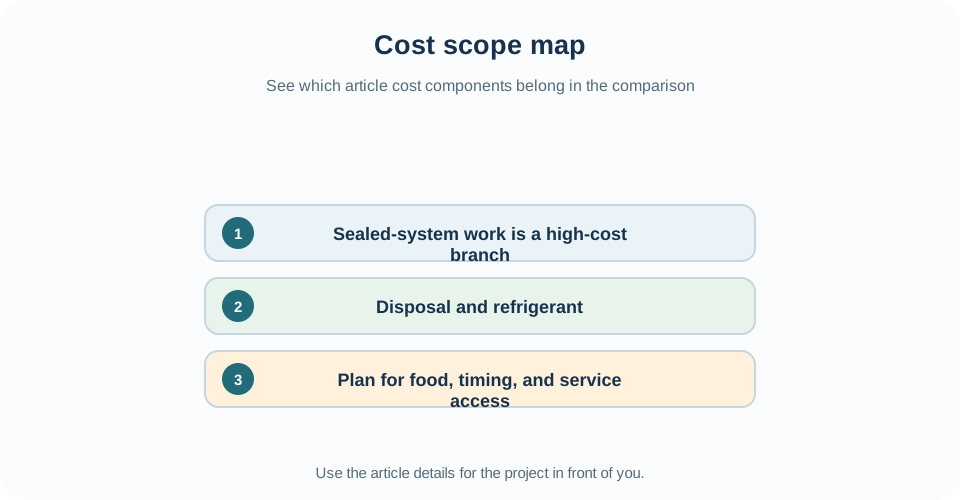
Sealed-system work is a high-cost branch
Compressors, leaks, tubing, evaporators, condensers, and refrigerant-related work require specialized diagnosis and handling. U.S. specialist market data places compressor replacement in a much higher range than many ordinary refrigerator repairs. The exact outcome depends on the model, refrigerant, access, warranty, part, labor, and whether the fault can be confirmed.
Do not treat an online compressor price as an authorization to replace a sealed-system component. Ask whether the diagnosis is confirmed, whether the part is available, who will perform the work, what warranty applies, and how the cost compares with replacement. The detailed economic branch is covered in refrigerator compressor and sealed-system repair.
Standard, premium, and built-in units
A freestanding refrigerator often has a simpler replacement path than an integrated or panel-ready model. Premium and built-in units can have higher part prices, specialized service, custom panels, long lead times, and more difficult removal. That can make repair economically sensible even when the repair invoice is larger than a standard appliance’s invoice.
Conversely, an older premium unit with discontinued controls or an uncertain sealed system can make replacement a renovation. Compare service availability and parts support before deciding. Do not assume that a premium brand guarantees longer life or that a standard model is always cheaper to service.
Repair versus replace
Repair is easier to justify when the defect is localized, the cabinet and major systems are in good condition, the part is available, the service warranty is clear, and replacement would involve water connections, cabinetry, or difficult access. Replacement deserves consideration when failures repeat, repair scope is uncertain, the compressor or major assembly is failing, parts are obsolete, energy use is high, or the installed replacement is straightforward.
Use the full comparison: diagnosis, repair, second visit, food loss, replacement purchase, delivery, installation, water connection, fit, operating cost, haul-away, and disposal. There is no universal age or “repair below this percentage” rule that handles every refrigerator.
Disposal and refrigerant
In the United States, EPA safe-disposal requirements apply to household refrigerators and freezers entering the waste stream with refrigerant charge intact. The final disposal chain must ensure recovery before final disposal. Canadian disposal rules and local programs require separate verification. Do not vent or dismantle refrigerant circuits; use a qualified service provider, retailer, utility program, municipality, or recycler that explains its process.
What to include in the quote
Request the model-specific diagnosis, parts, labor, diagnostic credit, return-visit terms, warranty, access assumptions, tax, and cleanup. Ask whether the provider inspected the water system and building connection separately. If replacement is recommended, get the exact model, opening measurements, water requirements, delivery route, removal, and disposal scope.
Canadian repair prices and service availability may differ materially from U.S. specialist figures. A local quote in Canadian dollars is not comparable to an unqualified converted U.S. range. The best refrigerator decision is the one that makes the failure, total cost, remaining risk, and replacement path visible.
For one local comparison point, Fateh Air Comfort’s Greater Toronto Area page, checked October 7, 2026, lists refrigerator repairs at $200–$600 and says the price includes service, diagnosis, parts, and labor. It separately lists an $89–$129 diagnostic fee, waived with repair, and a 90-day parts-and-labor warranty. The provider page does not state an ISO currency code or a fault-sampling method, so this is one local price signal, not a Canadian market range. Ask for the written model- and fault-specific quote.
Before paying for a refrigerator repair, check the exact model and date code against current recall notices. For example, CPSC’s 2026 Galanz notice covers five named retro-refrigerator models only when they have date codes from December 2018 through December 2020; it directs owners to unplug affected units and stop using them until free in-home repair by a qualified technician. That remedy applies only to the listed model/date-code combinations, not to all Galanz refrigerators.
Sort the repair into an economic branch
The same warm, noisy, leaking, or intermittently failing refrigerator can lead to very different budgets. A contained branch may involve a seal, fan, sensor, control, relay, or other accessible component. A water-and-ice branch may involve an internal valve or tubing, or it may reveal a household supply-line problem. A cooling branch may involve airflow or defrost work, while a sealed-system branch can require specialized diagnosis and a much larger repair.
Ask the technician to identify which branch is supported by the tests. A list of possible parts is not the same as a diagnosis. The written estimate should state what was observed, what was tested, whether the part is available, whether a second visit is likely, and what happens if the appliance must be removed for access. This makes a small repair comparable with a larger repair rather than hiding both under a single average.
Plan for food, timing, and service access
Food loss and temporary storage can change the decision, but the value is household-specific. A refrigerator serving a large household, a medical diet, or a planned event may justify a faster diagnostic visit than a lightly used secondary unit. Do not treat a generic food-loss estimate as a universal cost. Record what the household would actually have to replace, move, or postpone.
Access also affects timing. A freestanding refrigerator may be serviced in place; a built-in or panel-ready unit may require panel handling, cabinet protection, or a coordinated removal. Ask whether the technician can complete testing without damaging the surrounding finish and whether the quoted warranty covers a return visit.
Ask what the diagnosis rules out
Request a plain-language explanation of the failed function, the test that supports the diagnosis, the parts or assembly involved, and the conditions that would require a second visit. Cooling, ice, water, noise, frost, and leaks can involve different appliance systems or connected plumbing. A diagnosis should distinguish the refrigerator from the supply, drain, floor, cabinet, or electrical conditions around it.
Price the interruption and the service path
Add food protection, temporary storage, delivery lead time, access, removal, disposal, and the cost of a callback. A built-in or hard-to-access refrigerator may have a sound repair case even when a freestanding replacement looks inexpensive. Conversely, a repeated sealed-system or control problem may justify a replacement comparison if parts, service, or support are uncertain. Use the exact model and local quote; do not assign a universal life expectancy.
Compare diagnosis with an installed alternative
If the repair is high-cost or uncertain, request the replacement comparison before authorizing a part. The alternative should identify an actual or representative model, opening and water requirements, delivery route, installation, removal, disposal, operating cost, and the time without refrigeration. In the United States, refrigerant disposal has a specific safe-disposal context; Canadian disposal and local program rules require separate verification.
Repair is not automatically the cheaper option when the appliance remains unreliable. Replacement is not automatically the better option when a localized repair avoids a difficult built-in project. The sound budget keeps the failure branch, food and access consequences, and replacement scope visible together.