
Compressor and sealed-system repairs deserve a separate repair-versus-replace decision because the work involves specialized diagnosis, refrigerant handling, access, and potentially high labor and parts costs. A warm refrigerator does not prove that the compressor has failed. The same symptom can come from airflow, controls, a fan, defrost, a leak, or another component.
What the sealed system means
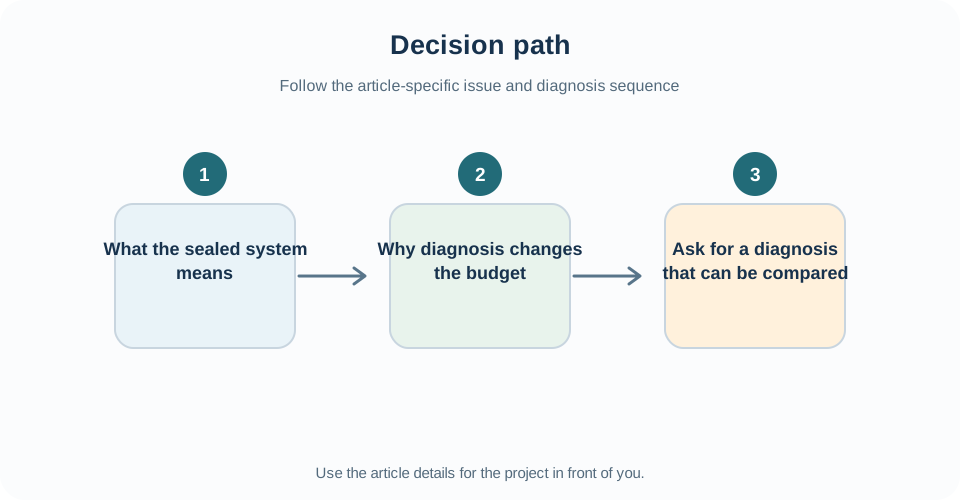
The sealed system is the refrigerant circuit that transfers heat through components such as the compressor, condenser, evaporator, tubing, and related controls. Homeowners do not need to diagnose the circuit themselves. The useful economic distinction is whether the technician found a conventional accessible fault or a confirmed sealed-system problem that requires specialized equipment and service.
Ask the technician to describe the diagnosis in plain language. “Needs gas” or “bad compressor” is not enough to compare quotes. Find out what was tested, whether a leak was located, whether the compressor is electrically and mechanically failed, whether a part is available, and what warranty applies to the repair.
Why diagnosis changes the budget
A refrigerator that is warm may have a failed fan or control with a contained repair, or it may have a refrigerant leak or compressor problem. Replacing a guessed component can waste the diagnostic fee and delay a decision about food storage. A proper sealed-system assessment may require more time and a technician with appropriate training and equipment.
U.S. specialist cost sources report ordinary refrigerator repair ranges roughly around $125 to $500 or $200 to $500, while compressor replacement is reported at a much higher range. The figures are U.S.-weighted market signals; they are not universal prices and do not establish Canadian cost. Built-in, premium, or difficult-access units can behave differently.

Compressor, leak, and other outcomes
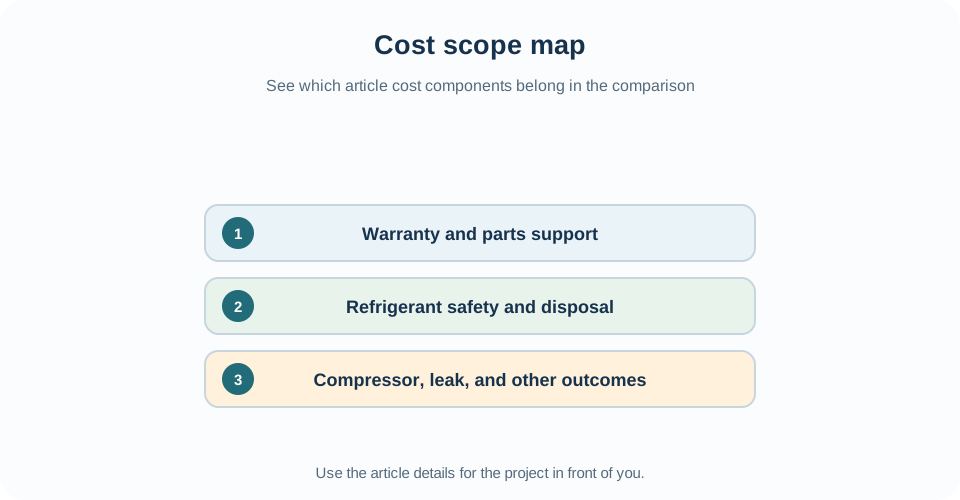
A compressor replacement is not the same job as locating and repairing a leak, replacing an evaporator, correcting a restriction, or replacing an electronic control. A leak may be difficult to locate or may involve a part that is not economical to replace. A compressor diagnosis may also reveal that the cabinet, insulation, controls, or other systems are aging.
Request the proposed repair scope in writing: diagnosis, parts, refrigerant-related work, labor, access, return visits, testing, cleanup, and warranty. Ask whether the quote is contingent on finding an additional leak or replacing another component. A low initial number that excludes the likely second stage is not a meaningful comparison.
Warranty and parts support
Some refrigerators carry separate warranty terms for the compressor or sealed system. The coverage may apply only to a part, may exclude labor, or may require an authorized provider. Check the exact model warranty and ask who pays for refrigerant, access, diagnosis, transport, and installation.
Older premium refrigerators can have a higher repair value because replacement affects panels and cabinetry, but they can also have difficult-to-source parts. A repair is not necessarily a good investment when a discontinued compressor, control, or evaporator leaves the appliance exposed to another failure.
Standard versus built-in repair economics
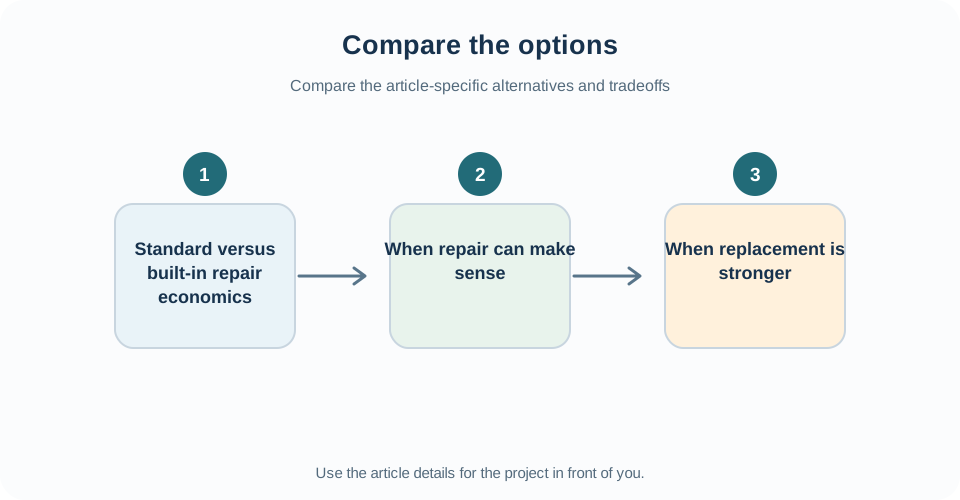
Freestanding refrigerator replacement can often be priced from an available product and standard delivery path. A built-in replacement may require custom panels, cabinet work, long lead times, and specialized installation. Those costs can make a sealed-system repair more attractive even when the repair is expensive.
Make the comparison with the actual replacement, including removal, disposal, water connection, fit, delivery, and operating cost. Do not compare the repair invoice with only the advertised replacement appliance.
Refrigerant safety and disposal
Refrigerant work is not a homeowner repair procedure. Do not vent, puncture, cut, recover, or recharge a circuit based on a video or general advice. Use a qualified service provider and follow the model’s requirements and local rules.
In the United States, EPA rules address the safe disposal of household refrigerators and freezers entering the waste stream with refrigerant charge intact. The final disposal chain must ensure recovery before final disposal. These requirements do not establish Canadian law. Canadian provincial, territorial, municipal, and retailer processes must be verified locally.
When repair can make sense
Repair can be reasonable when the diagnosis is confirmed, the cabinet and other major systems are sound, the part is available, the warranty is clear, and replacing the unit would trigger built-in or water-connection work. It may also make sense when food-storage disruption is costly and a prompt repair is available.
Ask for a second opinion when the diagnosis is unclear, the quote is near replacement cost, the first provider cannot explain the failure, or a premium unit has an unusually complicated replacement path. A second opinion is especially useful when the recommendation changes from a common component to sealed-system work.
When replacement is stronger
Replacement deserves more weight when the unit has repeated failures, high energy use, damaged cabinet or insulation, poor parts availability, an uncertain diagnosis, or a repair warranty too short to offset the risk. A small refrigerator may have little economic room for a major repair; a custom built-in may have much more.
There is no universal age or percentage rule. Use age as context alongside failure mode, condition, service history, expected use, and replacement scope. If a repair only delays an unavoidable opening or panel project, include that timing in the comparison.
What to ask before authorizing work
Ask what component failed, what testing supports that conclusion, whether a leak was located, which technician will perform the work, what refrigerant and parts are involved, whether the repair is covered, what happens if the diagnosis changes, and what the labor and parts warranty says. Ask for the replacement alternative with delivery and disposal included.
Canadian prices should be obtained from Canadian service providers. U.S. specialist numbers can explain why a sealed-system repair is a high-cost branch, but they should not be converted into a Canadian estimate. The sound decision is the one that makes both the technical uncertainty and the total economic risk visible.
Ask for a diagnosis that can be compared
Before approving sealed-system work, ask the provider to separate the observations from the proposed remedy. The useful record should say whether the refrigerator is cooling at all, whether the compressor starts and runs, whether airflow or defrost was checked, whether a leak was located, which component is believed to have failed, and whether the diagnosis is conclusive or provisional. “Low refrigerant” describes a condition, not necessarily the cause or the complete repair.
Ask whether the quote includes access, recovery or charging work, replacement parts, testing, cleanup, a return visit, and a parts-and-labor warranty. Ask what happens if a leak is found after the compressor is replaced or if the first part does not restore cooling. A staged estimate is acceptable when the uncertainty is real, but the next decision and its possible cost should be visible.
Compare three repair outcomes
A relatively contained outcome may be a control, fan, relay, or defrost repair that restores cooling without opening the refrigerant circuit. A sealed-system outcome may involve locating a leak, replacing a compressor or evaporator, or correcting a restriction. A nonrepair outcome may occur when the part is unavailable, the cabinet or insulation is compromised, or the total scope approaches the cost of a suitable replacement.
These outcomes have different service requirements and warranties. Do not compare a component-only online price with an installed replacement. Include the diagnostic visit, specialized labor, model-specific part, refrigerant-related handling, access, testing, food loss, delivery, removal, disposal, and future service availability.
Put a ceiling on staged work
If diagnosis and repair must be staged, ask for the cost of each stage, the information it is expected to provide, the possible next branches, and the point at which the household can stop and compare replacement. This is especially important when opening the sealed system could reveal another failure. A staged quote can be responsible when its uncertainty is explicit; it is not a blank authorization.
Decide how much uncertainty to carry
Repair has more economic support when the diagnosis is confirmed, the unit has a sound cabinet and service history, the part is available, and the provider can state the warranty. Replacement gains weight when the diagnosis is uncertain, the repair is staged without a clear ceiling, the appliance has repeated failures, or a major repair would still leave old controls and insulation in service.
Built-in replacement may be much harder than freestanding replacement because panels, cabinetry, and access must be coordinated. That can justify paying for a second opinion, but it does not justify retaining an unsafe or unsupported repair. In the United States, use an appropriate refrigerant-disposal chain for an appliance entering the waste stream. Canadian disposal and service requirements must be verified separately.