
A built-in refrigerator replacement can look like an appliance purchase but behave like a small renovation. Equipment price, delivery, panel handling, opening dimensions, ventilation, water and electrical connections, cabinet modifications, trim, access, and commissioning all affect the result. The existing unit’s brand and appearance do not guarantee that a current replacement will fit the same opening.
Define the built-in type
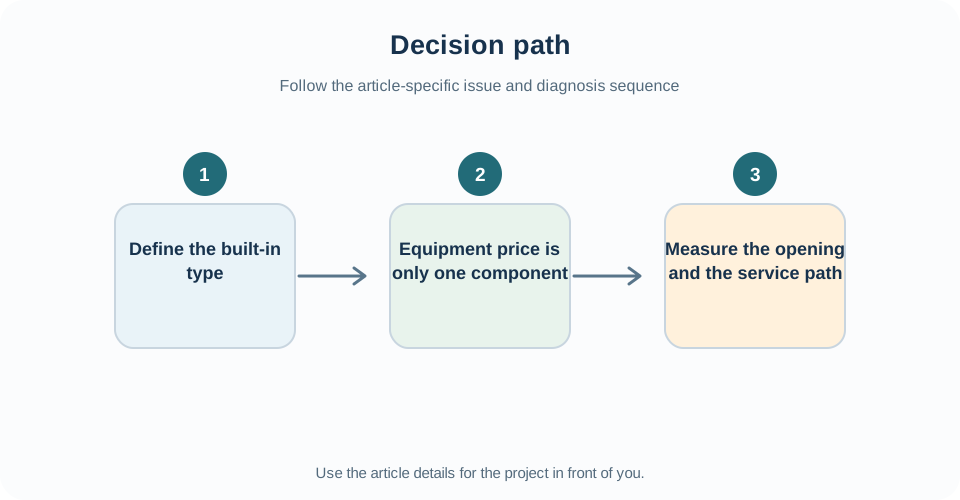
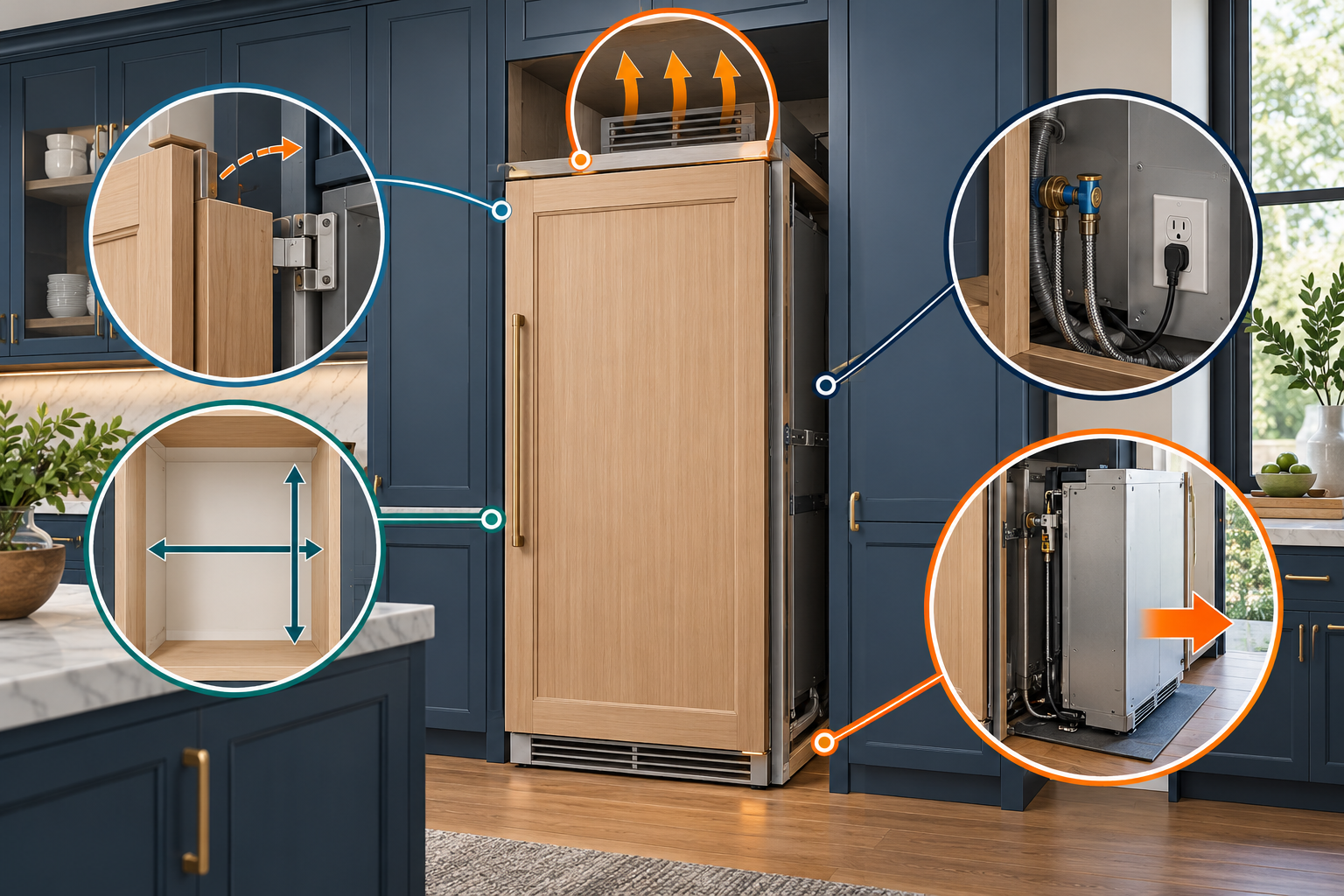
“Built-in” can describe an integrated panel-ready refrigerator, a stainless built-in, a column refrigerator or freezer, or a counter-depth product installed within cabinetry. These categories have different depths, hinge behavior, ventilation, panel requirements, and service access. Identify the exact existing construction before requesting a quote.
Photograph the front, sides, top, toe-kick, hinge area, panels, water connection, and electrical outlet. Record the model number and measure the opening, cabinet face, adjacent fillers, and floor. Measurements should be checked against the chosen model’s current installation manual, not a generic product-family description.
Equipment price is only one component
Built-in and column products can cost much more than freestanding refrigerators because of capacity, finish, controls, compressor arrangement, panel integration, and premium service networks. Current availability may be limited, and a discontinued model can make replacement panels or matching equipment difficult to source.
Obtain the exact model, lead time, warranty, and service path before dismantling the existing unit. A lower-priced model may require new panels, fillers, trim, or cabinet work that erases the initial difference. In Canada, use Canadian product and installer pricing; do not create a Canadian estimate by converting a U.S. price.
Measure the opening and the service path
Measure width, height, depth, plumb, level, cabinet thickness, panel weight, hinge clearance, door swing, and ventilation space. Check whether the floor is finished under the refrigerator and whether the unit can be pulled forward for future service. Column installations can involve more than one appliance and may have separate electrical or cooling requirements.
The delivery path can be more restrictive than the final opening. Check the packed dimensions, doorways, stairs, turns, elevators, railings, and ceiling height. A large appliance may need a specialized crew, door removal, temporary trim removal, or a route through another room. State who pays if the route requires extra handling.
Panels, trim, and cabinet modifications
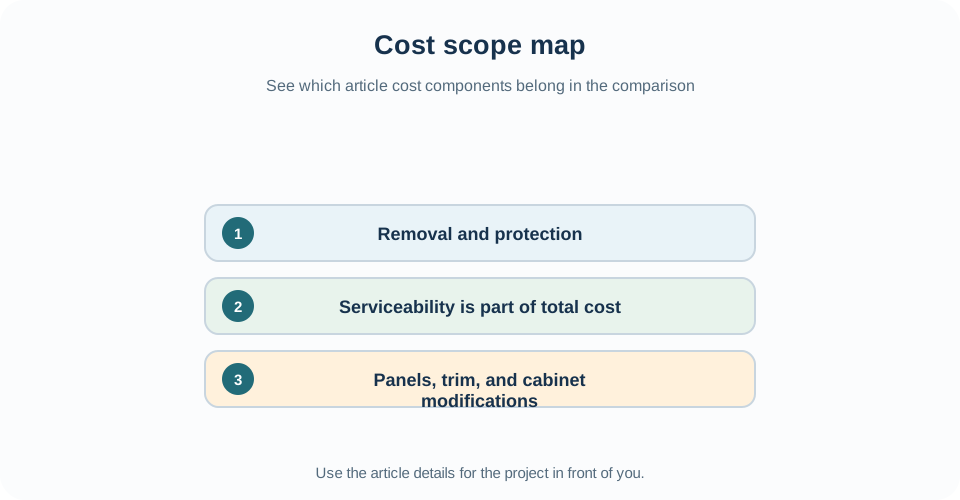
An integrated replacement may reuse an existing panel only if its dimensions, thickness, hinge position, weight, and attachment method are compatible. A panel that looks close can interfere with door swing or exceed the new model’s limits. Custom panels, fillers, toe-kicks, side panels, and trim should be priced separately.
If the opening needs to be widened, raised, deepened, or reconfigured, the work belongs partly to cabinetry and kitchen renovation. Category 018 can identify the dependency and its economic effect, but it should not substitute for a cabinet quote. Ask whether the appliance installer will measure, remove, modify, reinstall, and finish the surrounding work.
Water, electrical, and ventilation interfaces
Built-in refrigerators may have water dispensers, ice makers, filters, dedicated outlets, or model-specific ventilation arrangements. The selected manual controls the connection. An existing line may be usable, but a leaking valve, inaccessible shutoff, unsuitable outlet, or concealed damage can require separate plumbing or electrical work.
Do not assume that a built-in unit may be enclosed like a freestanding refrigerator. Inadequate clearance can affect performance and service access. Do not publish one model’s electrical or ventilation requirement as a universal rule. Have the installer and qualified trades verify the actual model and property.
Removal and protection
Removal can require emptying and defrosting the refrigerator, disconnecting water, protecting floors, removing panels, and handling the unit without damaging cabinets. A refrigerant-containing unit needs an appropriate disposal route. In the United States, EPA rules require safe recovery before final disposal of refrigerators and freezers entering the waste stream with charge intact. Canadian disposal arrangements are separate and local.
If water has escaped beneath the appliance, inspect flooring, cabinets, and wall finishes before installing the replacement. A haul-away crew is not a restoration contractor. Resolve water damage or mold concerns as a separate scope.
Repairing the existing unit first
Repair can be financially sensible when the cabinet, panels, controls, and sealed system are serviceable, replacement lead time is long, and the failure is localized. Built-in replacement can be expensive enough that a larger repair deserves a second opinion. Ask about the diagnosis, part availability, service warranty, and likely failure of other major components.
Replacement is stronger when the unit has repeated failures, obsolete parts, a confirmed major sealed-system problem, high energy use, damaged insulation or cabinet, or a service network that cannot support it. Do not treat premium construction as proof of remaining life.
Build an all-in quote
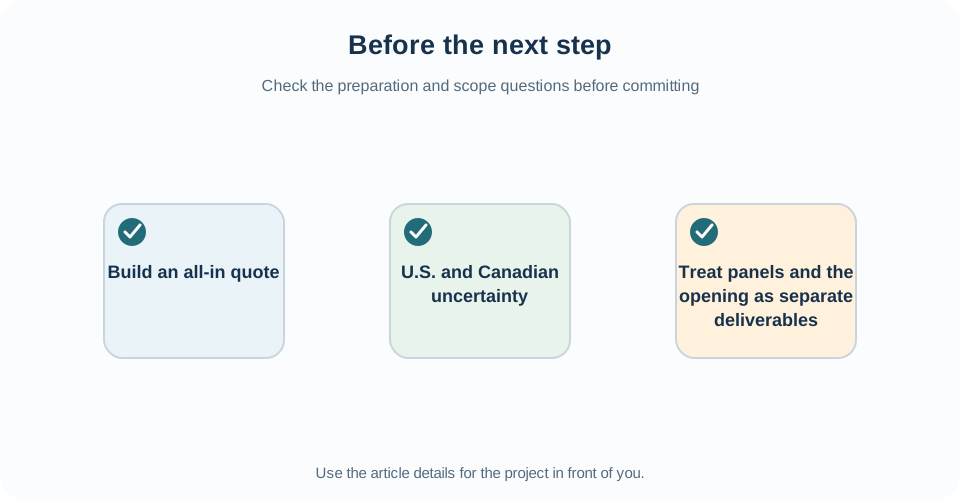
Request separate amounts for the appliance, panel or trim, delivery, inside placement, removal, door or panel handling, installation labor, water and electrical connections, cabinetry, floor protection, haul-away, taxes, and commissioning. Add a line for assumptions: exact opening, service access, path, model, panel, and existing connections.
Ask what happens if the opening is out of tolerance or the panel cannot be reused. Ask who coordinates cabinet work and whether the appliance warranty depends on an approved installation. A quote that omits these questions is not yet a complete built-in replacement budget.
U.S. and Canadian uncertainty
Premium appliance availability, installer experience, taxes, parts support, cabinetry labor, and disposal programs vary by region. Canadian prices and lead times should be obtained from Canadian suppliers. U.S. market repair data can provide context for repair categories, but it does not establish Canadian service cost.
The most reliable decision compares the existing unit’s confirmed repair path with a model-specific, access-aware replacement quote. Built-in economics are driven by fit and coordination as much as by the refrigerator itself.
Treat panels and the opening as separate deliverables
Ask for a written answer to four questions: can the existing panel be reused, does the opening meet the new model’s requirements, who handles fillers and trim, and who accepts responsibility for the finished appearance? A panel may be the right width and still be too heavy, too thick, or attached at the wrong hinge position. A cabinet may appear sound while being out of level, too shallow, or unable to provide the service clearance the new unit needs.
If the answer is “we will make it fit,” ask how. Widening, raising, deepening, or rebuilding an opening is cabinet work, not a hidden appliance-installation allowance. The same applies to moving a water connection, outlet, toe-kick, or adjacent door. The appliance quote can identify the dependency, while the cabinet or qualified trade quote owns the actual modification.
Serviceability is part of total cost
Built-in equipment is expensive to replace when a repair requires removing panels or surrounding cabinetry. Before choosing a model, ask how a technician will reach the controls, compressor area, water components, and service connections. A model that is easy to install but difficult to service may have higher long-term disruption. Conversely, a slightly more expensive model with local service and available parts may reduce the risk of a failed repair path.
Include the cost of protecting finished surfaces, moving panels, storing food, and coordinating a second visit. If the existing refrigerator leaked, inspect the floor and cabinets before covering them. Appliance removal does not include restoration unless the quote says so.
A replacement decision sequence
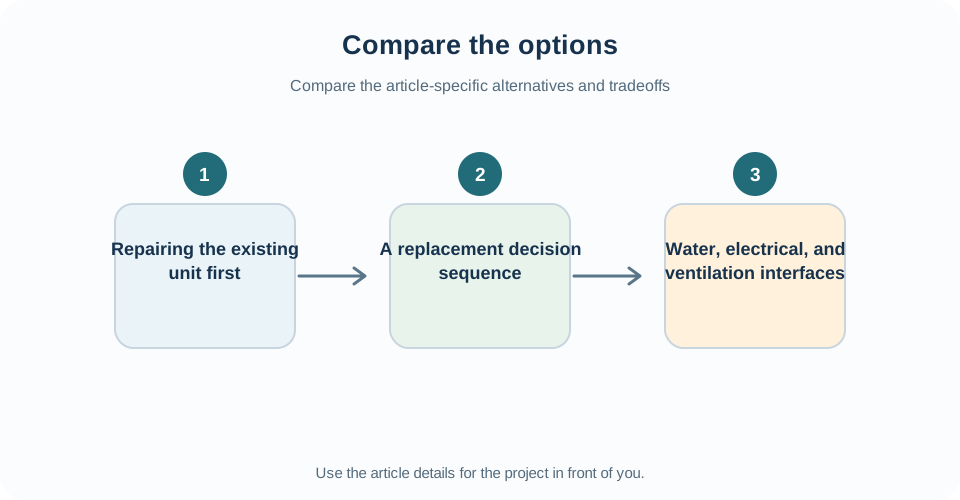
First document the existing unit and opening. Next select a model whose manual, panel system, utility connections, and delivery route can be verified. Then obtain separate appliance, delivery, installation, cabinetry, utility, removal, disposal, and tax lines. Finally compare that project with the confirmed repair and its service support.
This sequence is more reliable than choosing a premium refrigerator by appearance and asking an installer to solve the fit afterward. It also keeps U.S. and Canadian availability, labor, and pricing separate. Built-in replacement is complete only when the appliance works, the panels and finishes are restored, and future service access is understood.
Decide what must be preserved
List the functions and visible elements that matter: panel alignment, hinge side, door swing, interior capacity, water or ice features, trim, adjacent cabinetry, and the finish around the opening. Then identify which can change and which must remain. A quote that prices the refrigerator but leaves panel fabrication, trim, or cabinet protection uncertain is not a comparable built-in replacement quote.
Ask where a technician will stand, how doors and panels will be removed, whether the unit can be pulled forward without damaging the floor, and who protects the surrounding finish. A replacement that looks correct on installation day can be expensive to service if the opening, panel, or adjacent cabinet blocks access. Confirm the model’s ventilation, clearance, water, electrical, and securing instructions from its current manual.
If the existing cabinet or panel is reused, have the installer verify dimensions and attachment points rather than assuming the old hardware transfers. If a new panel or trim is required, keep fabrication, finishing, delivery, and installation as a separate line. The final ownership cost includes the support path for the installed refrigerator, not just the purchase price.