
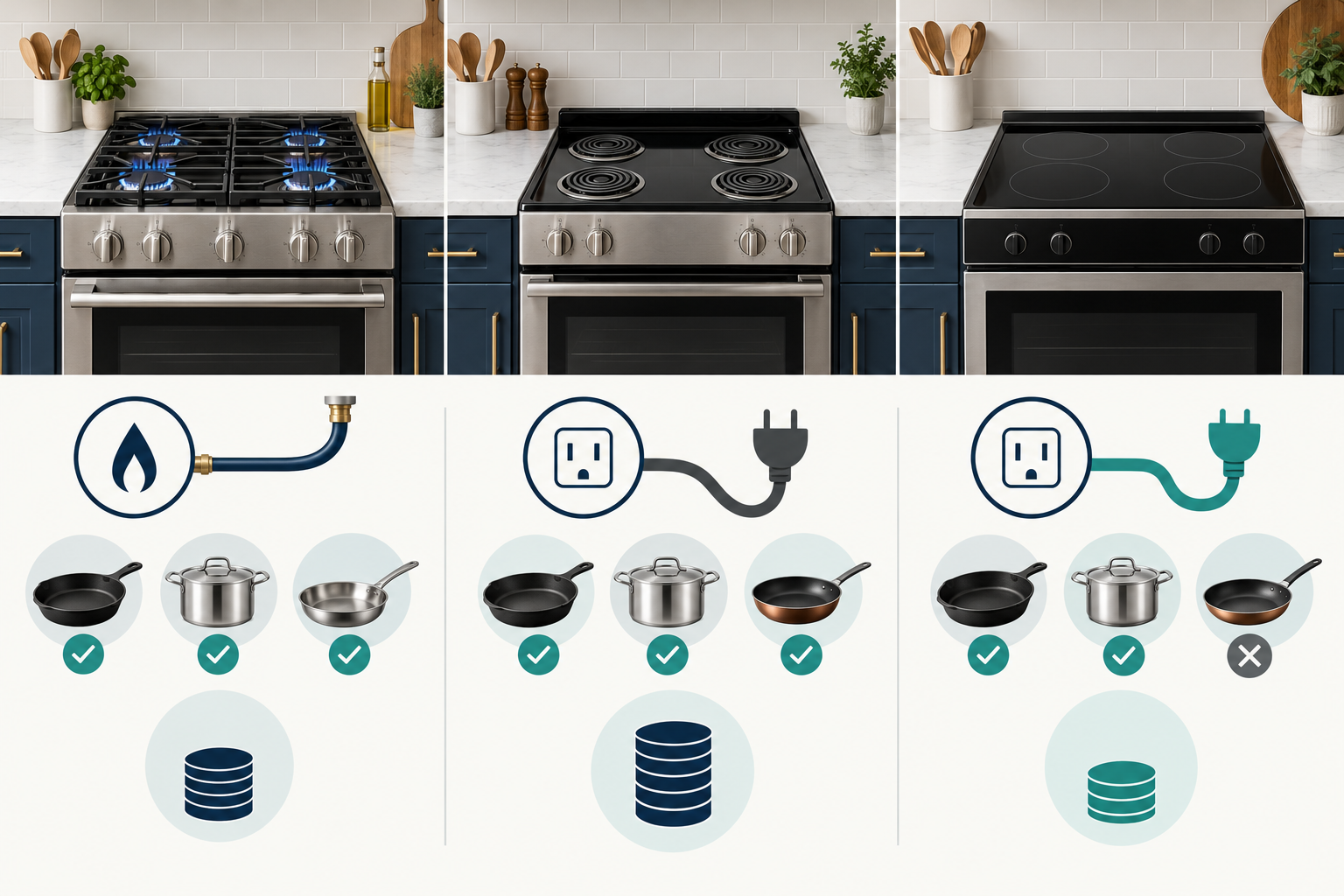
There is no universal cheapest cooking technology. Gas, conventional electric, and induction ranges can have different product prices, utility prerequisites, cookware needs, operating costs, ventilation implications, service networks, and repair risks. The most useful comparison is the total project cost for the particular home, not a feature list or a single energy-efficiency claim.
Compare the equipment first
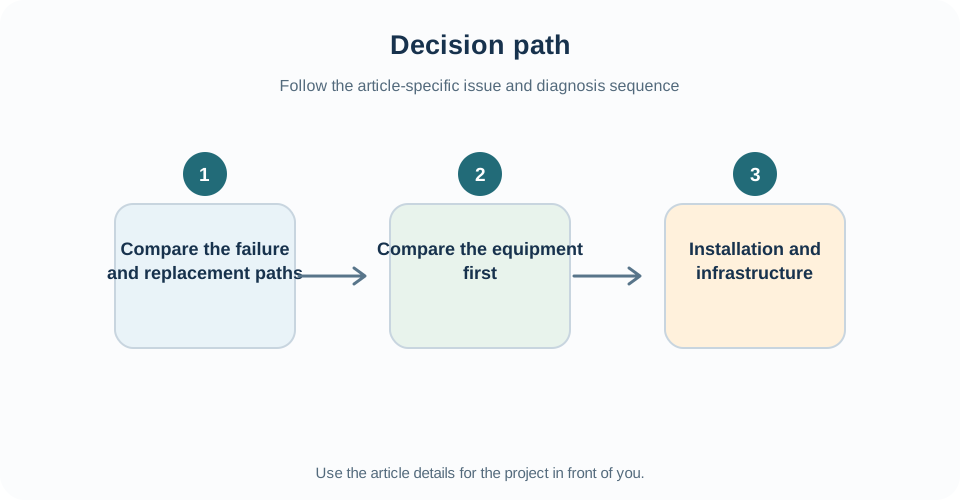
Product price changes with width, oven capacity, finish, controls, cooking zones, smart features, and brand tier. Compare equivalent configurations. A basic gas range is not an economic equivalent to a premium induction range with a different oven and control package.
Decide whether the household needs a freestanding range, slide-in range, separate cooktop and wall oven, or another configuration. Changing the layout can add cabinetry and electrical work before technology cost enters the comparison.
Installation and infrastructure
A like-for-like gas replacement may use a compatible existing connection, subject to model and local requirements. A conventional electric or induction replacement may require a suitable electrical connection. Converting between fuels can require gas work, electrical work, service-capacity assessment, permits, inspections, and ventilation changes.
The exact model manual controls voltage, amperage, connection, clearances, and accessories. Do not state a universal circuit or gas-connection requirement. A qualified trade should verify the home before the appliance is ordered. Whole-home capacity and fuel-switching economics belong to broader electrification planning.
Induction and cookware
Induction uses electromagnetic energy to heat compatible cookware. ENERGY STAR’s guidance says that about 85% of heating energy is transferred to cookware for induction, compared with about one-third for gas, and that compatible cookware is required. These are technology-comparison statements, not a household-bill guarantee.
Many cast-iron, stainless, and enameled cast-iron pieces may work, but check them and the model instructions. A magnet is a screening aid, not a complete performance test. Include cookware replacement when the household’s current pans are incompatible.
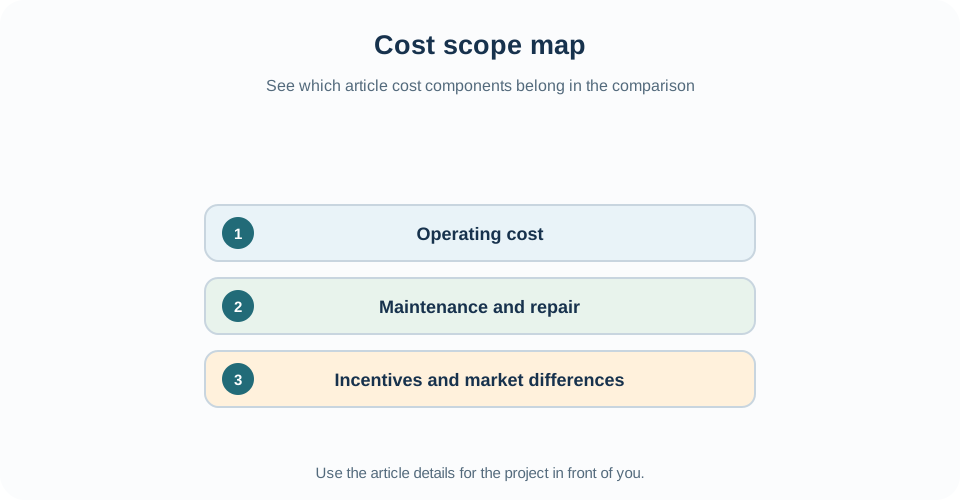
Operating cost
Energy cost depends on local electricity and gas rates, usage, cookware, settings, ventilation, and actual appliance efficiency. Use the model’s label or product data and apply your own tariff assumptions. Show a low, expected, and high scenario rather than asserting a universal payback.
Induction can have an efficiency advantage at the cooking surface, but a conversion may require electrical infrastructure. Gas may have a lower installation cost in a home already configured for it, while electric or induction may be more attractive where electricity rates, incentives, or future electrification plans change the result. Conventional electric can be a lower-complexity replacement when the connection and opening already match.
Ventilation and indoor environment
Cooking produces heat, moisture, and contaminants; the proper ventilation solution depends on the home, appliance, and local requirements. Keep the comparison at a high level unless current authoritative evidence supports a more specific statement. Substantive hood, duct, or whole-kitchen ventilation work is a separate project dependency.
Do not let a technology comparison become medical advice or a substitute for a qualified ventilation assessment. A range replacement quote should state whether existing recirculation or ducting is compatible.
Maintenance and repair
Gas ignition and burner components, electric elements and controls, and induction glass and power electronics have different repair profiles. Parts availability, local technicians, warranty, and access may matter more than a theoretical efficiency difference. Ask how a failure would be diagnosed and repaired for the exact model.
Use the range and stove repair guide for repair scope and the induction range and cooktop guide for induction prerequisites. Do not assume a premium price guarantees longer service life.
Incentives and market differences
Rebates can change by state, province, utility, product qualification, and date. Verify the current program and exact model before subtracting an incentive. Canadian product availability, regulation, labeling, and energy prices require Canadian information. Do not convert a U.S. product price or rebate into a Canadian estimate.
For eligible ENERGY STAR electric cooking equipment, the U.S. HEAR framework permits a rebate of up to $840. It is a ceiling, not a promise: only participating local programs can provide it, and household, product, funding, and program-status requirements apply. Verify the exact range or cooktop and local administrator before subtracting any amount. This U.S. incentive does not establish Canadian eligibility or value.
Palo Alto Utilities is a local example checked October 12, 2026: its Rebate Hub lists $500 for a qualifying induction range or cooktop replacing gas, or $1,000 for an income-eligible household. It requires an active Palo Alto electric and gas account, a project on or after March 18, 2026, a reservation before installation, and an application within 90 days of final inspection. Confirm exact model, available funds, and stacking terms; this is not a general U.S. offer. See the induction cost article for detailed conditions.
A total-cost worksheet
For each technology, list the equipment, cookware, delivery, installation, removal, disposal, connection, circuit or gas work, service-capacity work, ventilation, cabinetry, permits, operating cost, maintenance, and likely repair exposure. Mark each line as confirmed, estimated, or unknown. Include the home’s existing infrastructure and the household’s cooking frequency.
Conversion cost can overwhelm operating savings. Conversely, a small product premium may be reasonable when it avoids a new vent route, fits an existing opening, uses less energy for frequent cooking, or supports a broader planned project. The result depends on facts, not a universal ranking.
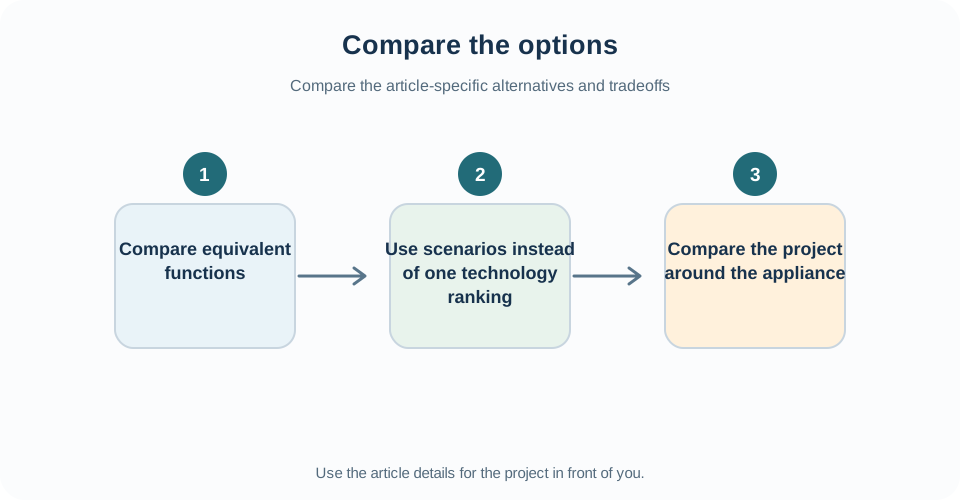
Compare equivalent functions
Start with the cooking capacity and configuration the household needs: freestanding or slide-in, oven capacity, number of zones, controls, and width. A low purchase price is not a fair comparison if one option removes an oven, requires new cookware, or changes the way the household cooks. Match the usable function first, then compare the technology.
The installation comparison should show whether the existing gas connection, electrical service, opening, counter, backsplash, and ventilation are ready. A same-fuel replacement may need only model-specific verification. A fuel conversion can add qualified trade work, service-capacity assessment, cabinet or vent changes, approval, and temporary cooking disruption. Keep these lines separate so an appliance promotion does not hide the conversion cost.
Use scenarios instead of one technology ranking
Gas may be easier to compare when a compliant gas connection is ready and the household values its existing cookware and cooking pattern. Conventional electric may be simpler when the electrical path already fits and the household wants a direct replacement. Induction may become more compelling when cookware is compatible, frequent cooking makes energy transfer relevant, the household values lower heat release, or a vent route or other project is already being changed. These are decision scenarios, not universal conclusions.
ENERGY STAR’s electric-cooking guidance reports program-level efficiency comparisons and describes induction’s transfer of heating energy to compatible cookware. Those statements do not establish a particular home’s utility capacity, Canadian eligibility, installation cost, or bill. Use exact model data and local rates for the final comparison.
Include future service and resale uncertainty
Ask whether local technicians support the selected technology, whether parts are available, how warranty work is handled, and what the unit will cost to remove and dispose of. A gas or electric conversion can affect future buyers, but resale value is property- and market-specific; do not assign a universal premium. Mark incentives, fuel rates, code requirements, and service availability as assumptions that need current local verification.
Price the change in household terms
Record the number of burners or zones, oven use, cookware, warm-up expectations, ventilation, cleaning, service, and likely ownership period. A technology that is efficient in a program comparison may still be a poor fit if the home needs a utility upgrade, the cookware must be replaced, or local service is unavailable. Conversely, a higher equipment price can be reasonable when it avoids construction or better fits heavy use.
Compare the failure and replacement paths
Ask whether the current range has a contained repair with credible parts and service support. A repair can preserve a difficult fit, while a replacement can be the better time to correct a utility or ventilation condition. Put the repair, same-technology replacement, and conversion in separate columns with the same disruption, disposal, warranty, and service assumptions.
Before choosing
Confirm the exact model, fit, utility, cookware, ventilation, service, warranty, rebate, and local approval path. Obtain quotes from the appropriate trades when the fuel or electrical system changes. The best choice is the technology whose total cost, performance, serviceability, and future compatibility fit the household.
Compare the project around the appliance
For each technology, show the existing opening, utility path, electrical capacity, gas connection, ventilation, cookware, delivery route, removal, disposal, and commissioning. A ready same-fuel replacement may have a smaller construction scope than a conversion. An induction choice can add cookware or electrical considerations while changing the way heat reaches the room. These are project conditions, not universal price premiums.
Separate measured facts from assumptions
Mark the opening, fuel connection, electrical capacity, cookware, ventilation, rates, incentives, service, and product availability as verified, estimated, or unknown. Do not let an attractive operating-cost scenario hide an unmeasured installation prerequisite. Resolve the assumptions that can change the technology choice before authorizing the conversion.
Model the decision over real use
List low-, typical-, and high-use cooking scenarios and compare purchase, installation, energy, service, warranty, and disruption. Use local delivered fuel and electricity rates, not a generic ranking. Include the value of an outage during a kitchen project and the cost of a future technician or replacement part. If a rebate or incentive matters, verify the current program, product eligibility, date, and location before counting it.