
An inherited house may be vacant, unfamiliar, underinsured, remotely managed, or affected by a decision about whether to keep, renovate, rent, or sell it. The first budget is therefore a stabilization plan, not a remodeling wish list.
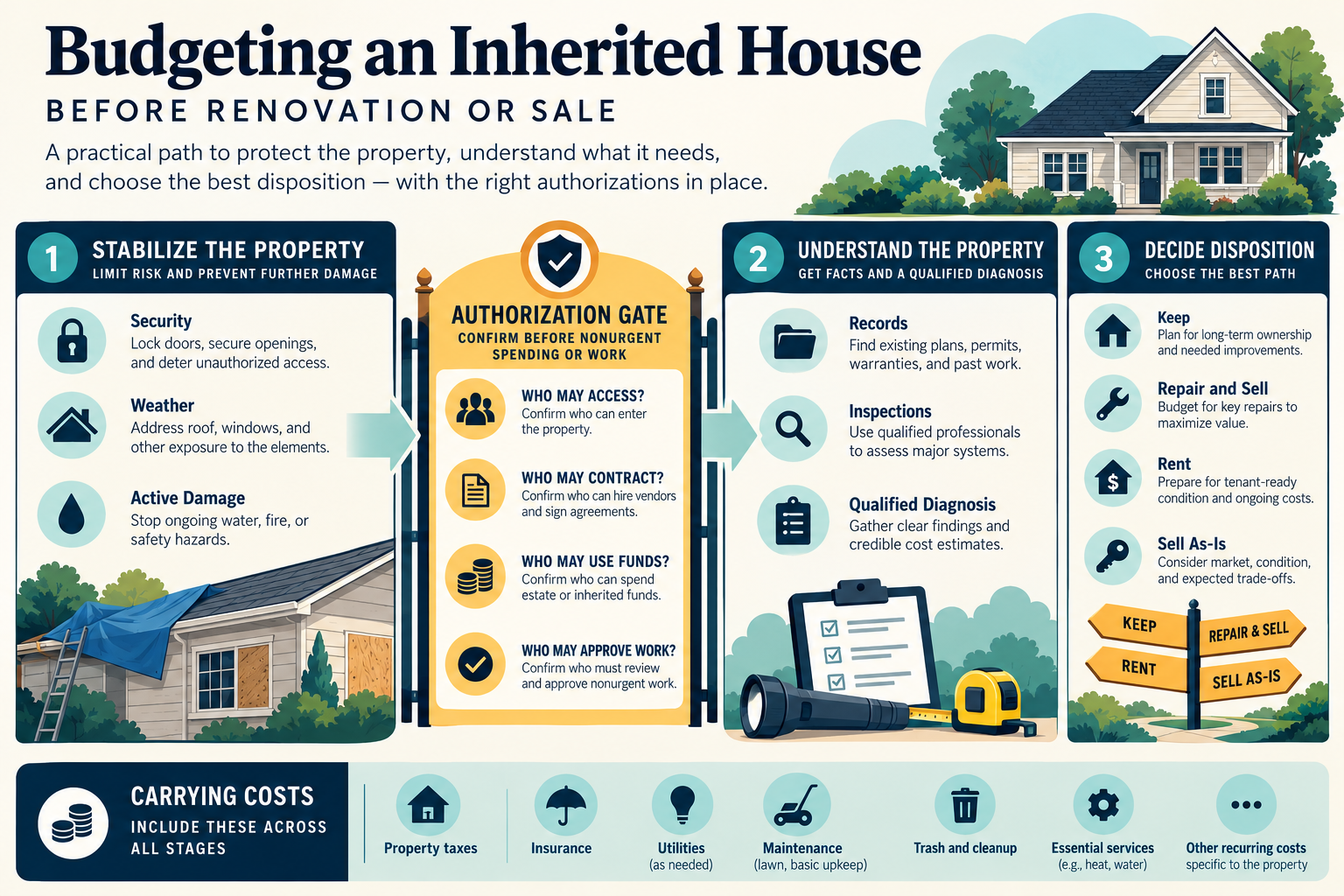
Before authorizing work, confirm who has authority to access the property, spend funds, sign contracts, change utilities, insure the home, or approve a sale. Executor, administrator, beneficiary, co-owner, title, probate, and lender rules vary by jurisdiction and estate documents. Obtain local legal or estate advice when authority is unclear.
Stabilize before improving
Start with a condition record: photographs, date, meter readings where appropriate, known occupants, keys, active services, visible water entry, security concerns, and existing documents. Do not disturb suspected hazardous materials or unsafe systems merely to inspect them yourself.
Check the property for:
- active leaks, freeze exposure, standing water, or weather damage;
- loss of heat, power, water, or another essential service;
- unsafe electrical, gas, structural, fire, or access conditions;
- broken windows, doors, locks, roof openings, or drainage paths;
- pests, biological growth, or other conditions needing specialist assessment;
- vacancy, occupancy, utility, and insurance changes.
If there is an immediate threat, use the appropriate emergency or qualified professional response. Do not delay protection while waiting to build a complete renovation budget.
Make three budget stages
| Stage | Budget purpose |
|---|---|
| Stabilization | Secure the property, stop active damage, protect essential systems, and obtain urgent professional assessment |
| Understanding | Inspection, specialist diagnosis, records, cleanup, and defined scopes for repair or replacement |
| Disposition | Repair-and-keep, repair-and-sell, rental preparation, or as-is sale after authority and condition are clear |
Keep discretionary remodeling separate until the first two stages are complete. A new kitchen or finish package can consume money needed for water control, security, weather protection, or an essential repair.
Budget the carrying period
Estimate utilities, insurance, taxes, security, monitoring, lawn or snow service, travel, access, temporary protection, inspection, and management during the period of uncertainty. A vacant property may have different insurance and maintenance conditions from an occupied home; ask the carrier what the policy requires and what changes must be reported.
Do not assume that estate funds may be used for any work or that a beneficiary can sign a construction contract. Confirm the authority and payment process before committing to nonurgent work.
For the day-to-day care budget during an authorized owner’s extended absence, see leaving a home unoccupied. This inheritance guide retains the separate questions of estate authority, title, and who may authorize spending.
Define the property decision
Once the house is stable and its condition is better known, compare:
- keep and repair over a realistic ownership horizon;
- complete only the work needed for a safe, marketable sale;
- sell with known conditions and appropriate disclosure;
- defer discretionary work while the estate or co-owner decision is resolved.
Use current local quotes and include access, disposal, design, permits, temporary accommodation, and restoration. The cost of a remote or vacant property can be dominated by coordination and carrying time rather than the visible repair.
Preserve records and reassess
Keep photos, reports, invoices, contracts, approvals, warranties, insurance correspondence, and utility records together. Update the budget when a diagnosis changes the scope or when authority, occupancy, financing, or sale timing changes.
An inherited property does not need to be renovated immediately. A staged stabilization budget protects its value and gives the authorized decision maker better information. The correct next action may be a qualified assessment, a safe temporary measure, or a local estate decision—not a broad improvement contract.
Confirm authority before spending
Make a written list of decisions that require authority: entering the property, changing utilities, hiring a contractor, paying from estate funds, changing insurance, removing contents, renting, listing, or selling. The person who inherited an interest is not automatically authorized to take every action for an estate, trust, co-owner, lender, or insurer. Executor, administrator, beneficiary, title, probate, and provincial or state rules can change the answer.
This article cannot establish that authority. Ask the responsible estate, title, or legal professional before committing to nonurgent work. While authority is being clarified, limit activity to safe access, documentation, and emergency protection that a qualified person confirms is permitted.
Contact a mortgage servicer separately from resolving estate authority
If a mortgage remains on the property after a borrower’s death or transfer, contact the servicer through a verified channel and ask how to report the change, what documents it needs, and how to keep account communication and payments current while the estate question is resolved. For U.S. mortgages covered by Regulation X, the CFPB’s servicing rules require servicers to facilitate communication with potential or confirmed successors and to identify documents reasonably needed to confirm status. A confirmed successor receives specified servicing treatment even if state law does not require assuming the loan, but that status does not decide title, personal debt liability, probate authority, or permission to spend estate money or order repairs. Get local legal or estate advice for those separate questions.
Separate property risk from decision risk
An inherited house can have physical risks and administrative risks at the same time. Physical risks include water entry, freeze, weather exposure, pests, security, loss of utilities, and unsafe conditions. Administrative risks include unknown insurance status, shared ownership, unpaid obligations, missing records, access disputes, or a pending disposition decision.
Track both in the budget. A contractor cannot resolve an authority question by offering a lower price. A legal or estate decision cannot stop active water damage by itself. Assign each issue to the person who can answer it and record what work is allowed while the question remains open.
Budget vacancy and carrying costs
For a vacant or lightly occupied property, estimate utilities, heating or winterization, insurance, taxes, security, monitoring, lawn or snow service, travel, inspections, emergency response, and temporary protection. Ask the carrier whether vacancy or occupancy status must be reported and how it affects coverage. Do not assume that ordinary maintenance deterioration will be reimbursed as a claim.
Remote management can add coordination costs: travel, lockbox or access arrangements, local representatives, delivery, minimum charges, and repeated visits. A local property professional may reduce delay, but the authority and payment arrangement must still be clear.
Use a 30-, 90-, and 12-month view
For the first 30 days, budget safe access, documentation, active leak or weather protection, security, essential utilities, and any urgent qualified assessment. For the next 90 days, price the known stabilization work, confirm insurance and occupancy requirements, gather missing records, and decide which diagnosis or specialist report is worth buying. Over the next year, compare carrying costs with keep, rent, repair-and-sell, or as-is options after authority and condition are clearer.
The dates are planning windows, not legal deadlines. A property in a cold climate, a vacant home, or a house with active moisture may need a different response. Ask the insurer and the authorized estate or property representative what must be reported or approved. Do not assume a beneficiary can authorize work or use estate funds merely because the person expects to receive the property.
Keep stabilization, understanding, and discretionary improvement in separate budget columns. This preserves flexibility if the estate decision changes and makes it easier to explain why an expense protected the property rather than simply making it more attractive.
At each stage, write:
- what condition is established;
- what work is necessary to protect the property;
- what authority and funding are confirmed;
- what diagnosis or quote is needed;
- what alternatives remain open;
- when the decision will be reviewed.
After stabilization and diagnosis, compare keep-and-repair, limited repair for sale, rental preparation, or an as-is disposition. Include the cost of carrying the property during the decision and the value of preserving flexibility. Do not start discretionary renovation simply because an inherited property feels like a fresh project.
Keep records of approvals, reports, invoices, photographs, insurance communication, utilities, and contracts. A staged budget helps the authorized decision maker protect the house without treating an unresolved estate question, insurance request, or uncertain condition as permission for broad work.
Keep stabilization separate from improvements
For every proposed expense, label it as protection, diagnosis, code or transaction requirement, necessary repair, restoration, improvement, or carrying cost. This prevents an inherited property from absorbing elective upgrades before the people responsible for the estate know whether the work is affordable or even appropriate. A repair that protects the structure may be justified before a decision to sell; a finish upgrade usually needs a different case.
Ask for a written scope when the property is vacant or access is changing. Include lock and alarm control, utilities, weather exposure, landscaping or snow obligations, pest or moisture observations, and who will inspect the property between visits. Keep receipts and photographs with the estate or ownership records, and note who authorized each expense.
At the next decision point, compare the property’s condition and carrying cost with the available sale, occupancy, rental, or renovation paths. If authority, title, insurance, or local requirements remain uncertain, spend on the professional advice needed to resolve that uncertainty before committing to a broad scope.
Make the property record transferable
Keep one current file with keys and access instructions, utility and service contacts, insurance information, reports, photographs, invoices, warranties, known hazards, and the next review date. Record whether each item is verified, suspected, or still unknown. If several people share responsibility, identify who can authorize an inspection, protective work, payment, or change in access.
This record reduces duplicated visits and prevents a property from being treated as unmanaged simply because responsibility is changing. It also helps the next authorized decision maker see which costs protect the house now and which belong to a later renovation, sale, rental, or ownership decision.
Use the next review date to confirm that access, utilities, insurance, and authority are still current before approving another expense.