
“Home warranty” can mean different things. In U.S. consumer offers it often refers to an optional, separately purchased service contract for listed appliances or home systems. It is different from homeowners insurance, an included builder or workmanship warranty, and a manufacturer’s product warranty. A service contract may reduce some costs for covered repairs while adding a contract price, per-service charges, limits, exclusions, and rules about who arranges the work.
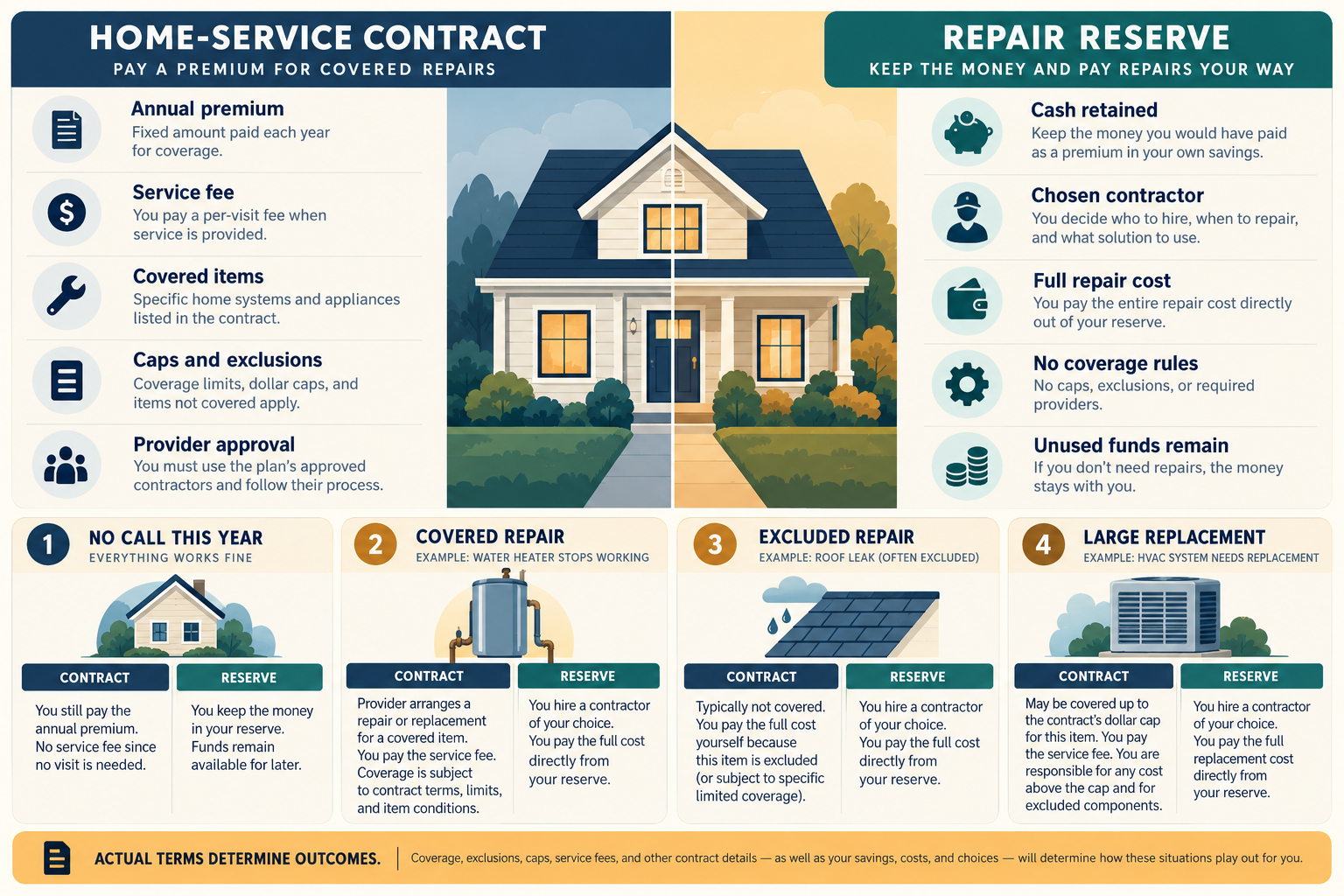
Compare the actual agreement with the cash you would keep for repairs. This guide does not rank providers, predict whether a claim will be approved, or recommend buying or declining a contract for every home.
Find the agreement and the party making the promise
Before comparing price, identify the written agreement, provider, obligor, term, and the items or events it covers. Do not assume that an offer attached to a home sale is required or that a marketing name describes the legal product. Read the document that controls the service and any separate payment or renewal terms.
Also inventory coverage you already have:
- manufacturer warranty for an appliance or system;
- builder or workmanship warranty for new construction or completed work;
- a service plan included with a product or installation;
- homeowners insurance for specified covered causes of loss;
- any separate maintenance, equipment, or home-service agreement.
Coverage can overlap or leave different costs uncovered. The U.S. Federal Trade Commission distinguishes builder coverage from separately purchased service contracts and cautions consumers to compare existing product coverage. The Canadian federal consumer guide discusses paid warranty extensions and written terms, but it does not establish a comparable whole-home service-contract market across Canada. Verify the actual contract and local terminology instead of importing U.S. marketing assumptions.
Read the terms that determine the out-of-pocket cost
Read definitions, exclusions, limits, fee schedules, and cancellation terms. Ask the provider to identify the exact clause for each answer.
| Term to check | Questions for the provider |
|---|---|
| Covered item and cause | Is the named appliance or system covered, and which kinds of failure qualify? Are particular parts excluded? |
| Existing condition | How does the contract treat a known, pre-existing, or previously repaired condition? What maintenance records are required? |
| Service charge | Is there a fee each time a technician visits, for diagnosis, or when work is not approved? |
| Payment limit | Is there a per-item, per-visit, annual, or whole-contract cap? Is the cap based on repair cost, replacement cost, or a reimbursement limit? |
| Repair and replacement | Who decides whether to repair or replace? What happens if a part is unavailable or the item is beyond repair? |
| Provider control | Does the contract choose the technician? Can you use your own? Must you obtain approval before scheduling work? |
| Response and access | When will the provider respond, what counts as an emergency, and are travel, after-hours, or access costs excluded? |
| Related work | Are code updates, permits, disposal, finish repair, consequential damage, or work on connected systems covered? |
| Term and exit | When does coverage start and end? What are renewal, cancellation, refund, and transfer terms? |
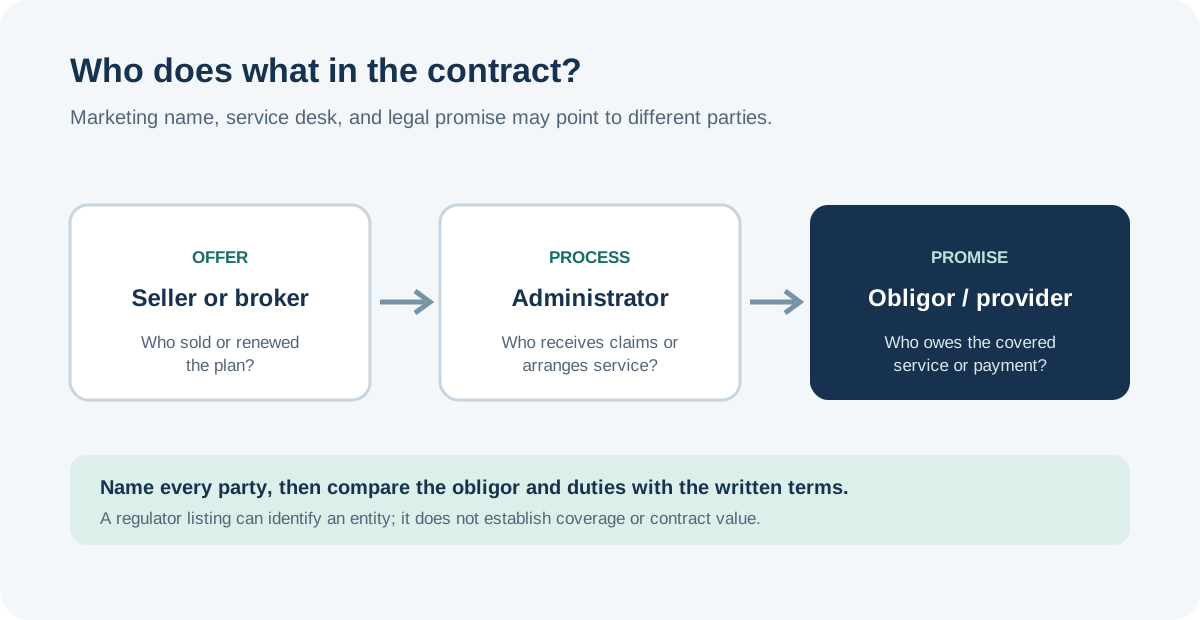
The written answer matters. A customer-service explanation or broad coverage label may not override exclusions and caps in the contract. Keep the complete agreement and any written clarification.
Compare scenarios with your own numbers
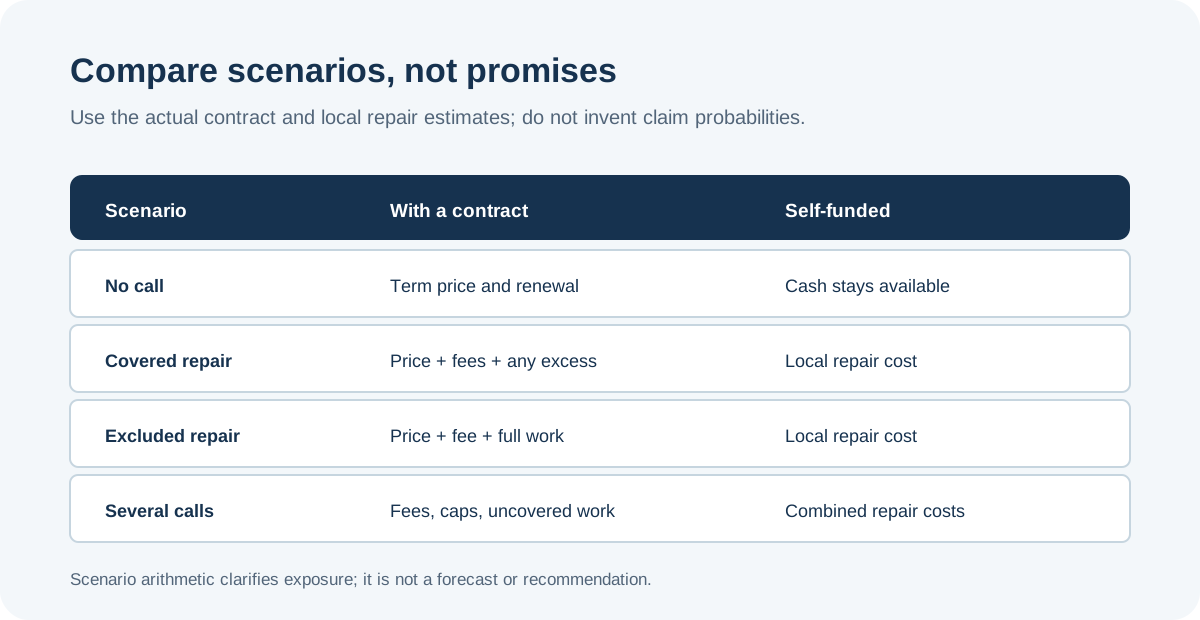
There is no supported universal repair probability, claim-approval rate, or expected saving that decides whether a contract is worthwhile. Use the annual price and fees from the offered plan, plus local repair estimates for the items that matter to your home. Then examine more than the best-case claim.
| Scenario | Contract cost to record | Self-funded exposure to record |
|---|---|---|
| No service call during the term | Contract price and any renewal cost | The reserve remains available for other needs |
| One repair qualifies | Price plus service charges and any amount above a limit | The local quoted or observed repair cost |
| A repair is excluded | Contract price, service charge if payable, and the full uncovered work | The same repair cost, paid from available funds |
| Several calls or a large replacement | Fees and limits for every call, plus excluded or capped work | Combined repair or replacement quotes, timing, and cash required |
These are planning cases, not predictions. Do not add a fictional claim probability to make the arithmetic look precise. If the contract price is lower than one possible repair, that alone does not establish value: the repair must qualify, fit the terms, and be handled in time. If your cash reserve is small, access to service may feel useful, but the agreement does not erase uncovered work or provide the same flexibility as cash.
Use this worksheet:
Contract price for the term
+ expected service-call fees under each scenario
+ likely excluded, capped, or owner-arranged work
+ financing or cancellation charges, if any
= scenario outlay with the contract

Local repair or replacement costs for the same scenarios
= scenario outlay when self-funding
Keep the repair reserve separate from contract coverage. A contract limit is not an account balance, and you may still need cash for an excluded condition, the service fee, a deductible, temporary protection, or another system.
Check the repair process and provider
Ask who takes the service request, how the provider is selected, what evidence must be supplied, and when you may arrange a qualified contractor yourself. Confirm whether work started before authorization can be denied under the written terms. The U.S. FTC recommends examining fees, limits, exclusions, cancellation, and repair delays; Texas’s service-contract checklist adds questions about pre-existing conditions, service fees, provider selection, repair time, and replacement limits. Those are U.S. consumer guides, not universal contract requirements.
For a failure that needs prompt attention, also ask what you should do while waiting, who can authorize temporary protection, and whether unapproved work could affect payment. A listed limit may offer little practical help if the response process does not fit the problem. Keep these answers with the written terms and include any delay, call fee, or owner-arranged work in your scenario comparison.
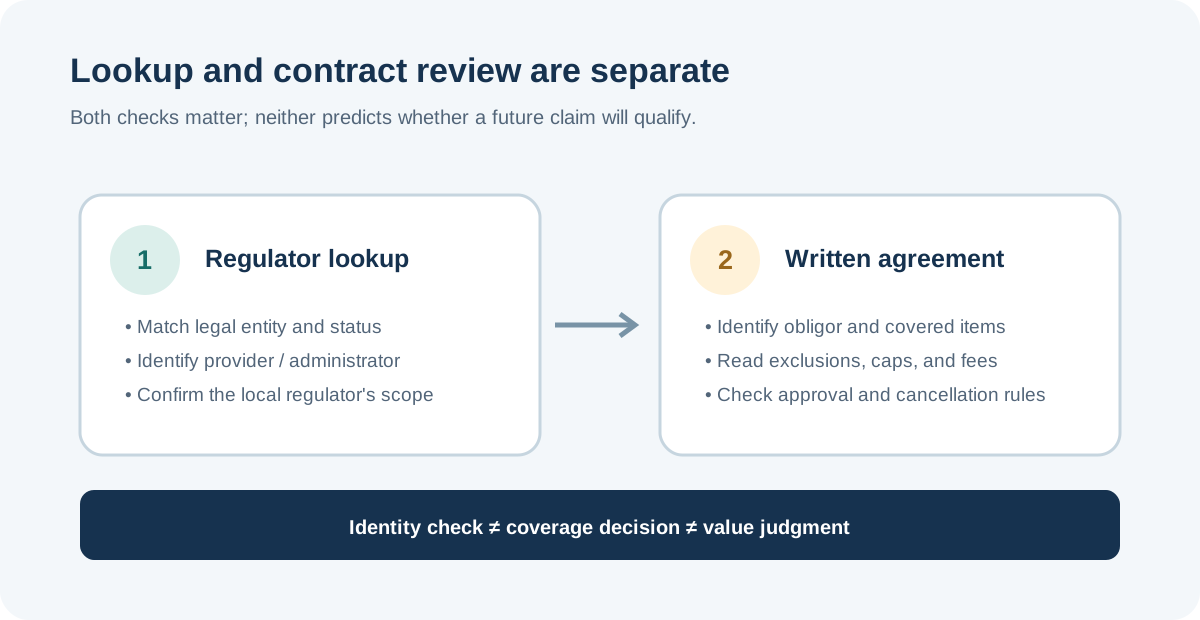
Check the appropriate regulator or consumer-protection office for your location and product type. Licensing, complaint channels, cancellation rights, and regulatory classification vary. Reviews and complaint records can inform questions but cannot predict the outcome of your claim.
For example, Texas lets consumers search its licensing database for service-contract providers and administrators; an (a) in the registration number identifies an administrator. That check can help identify the entities behind a Texas agreement, but registration does not establish which party owes a particular repair or whether the contract is a good fit. Confirm the provider, administrator, obligor, and written terms for the contract you are considering. Other jurisdictions use different systems or may classify contracts differently.
Decide whether the contract fits this home
An optional contract may suit a homeowner who values a defined service process and accepts the provider’s limits and fees. Self-funding may suit someone who wants to choose a contractor and keep control of available cash. Either path can leave material risk. Consider the system’s condition, existing warranty, repair history, household liquidity, service availability, contract term, ownership horizon, and the cost of uncovered work.
Before buying or renewing, write down:
- which systems and failure types are actually covered;
- the contract price and service charges;
- the limits, exclusions, pre-authorization rules, and cancellation terms;
- the local cost of the repairs you are most concerned about;
- the cash reserve you will retain for uncovered or urgent work;
- the unanswered terms that could change your decision.
Do not treat homeowners insurance, a paid service contract, and repair savings as interchangeable. The useful comparison is specific to the written agreement, the home, and the amount of cash you can afford to keep available.