
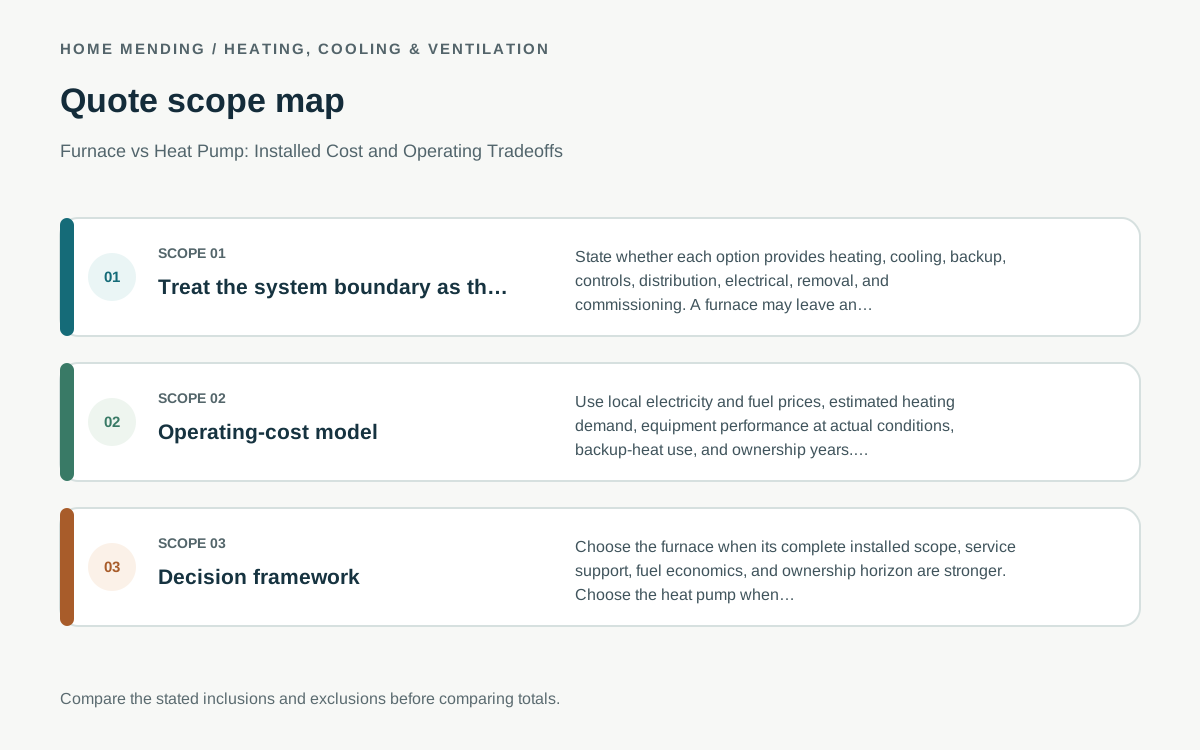
Treat the system boundary as the comparison
State whether each option provides heating, cooling, backup, controls, distribution, electrical, removal, and commissioning. A furnace may leave an existing AC in place; a heat pump may replace cooling and require supplemental heat. If those boundaries differ, the price comparison is not fair.
Use local climate, electricity, fuel, runtime, maintenance, and future replacement assumptions. For a short horizon, disruption and infrastructure reuse may dominate. For a long horizon, operating and repeat-repair risk may matter more. No product label resolves those property-specific tradeoffs.
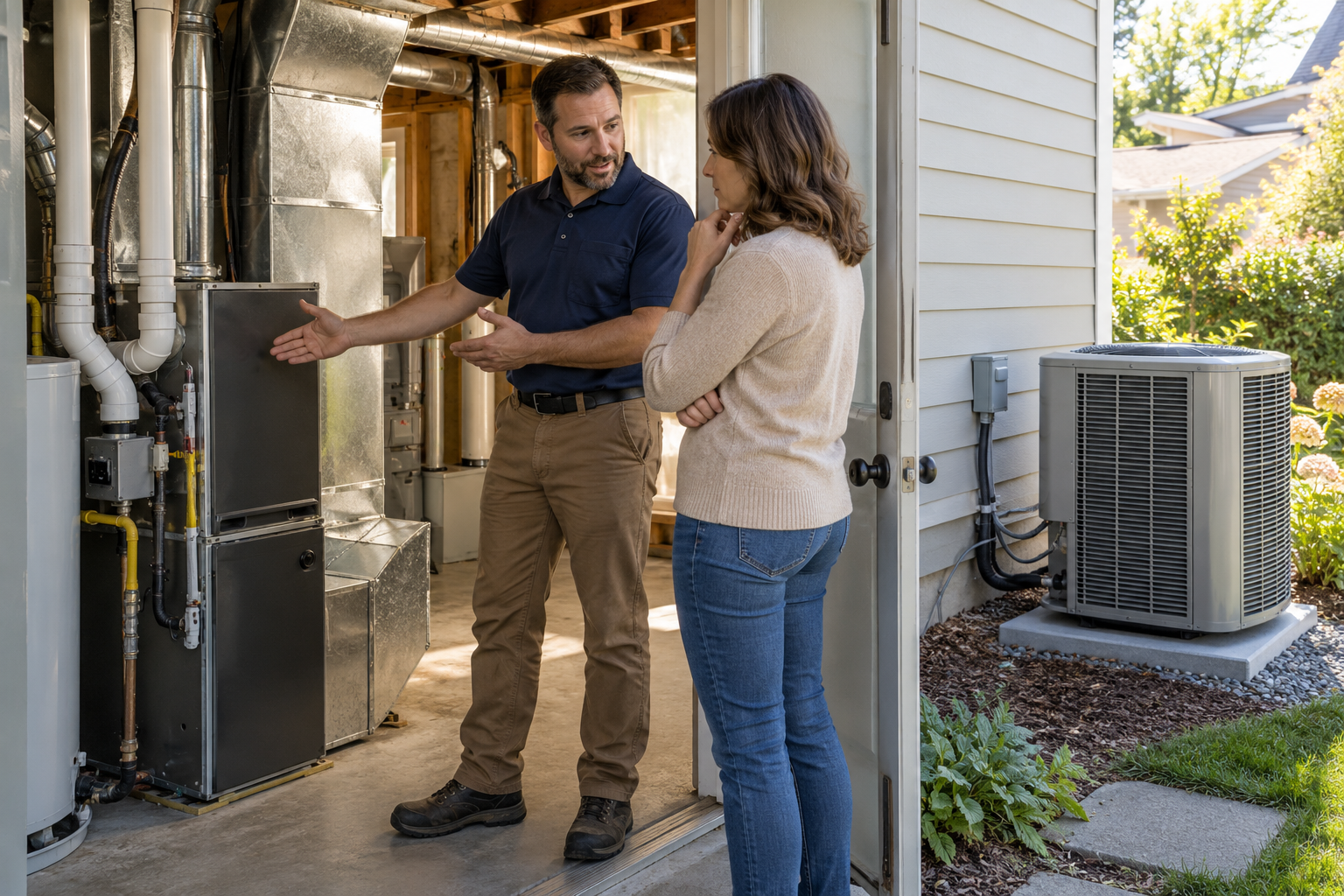
If a furnace leaves the AC in service, include the future AC project in a long ownership comparison. If a heat pump replaces both, include the avoided AC replacement. If a furnace remains as backup, include its maintenance, controls, venting, and eventual replacement rather than treating it as free infrastructure.
Ask for local electricity and fuel assumptions, performance at relevant outdoor conditions, backup use, capacity, ducts, controls, and electrical scope. If the conclusion changes with one tariff or winter assumption, present that sensitivity instead of a universal winner.
The lower-cost choice between a furnace and a heat pump cannot be determined from equipment price alone. A heat pump may provide both heating and cooling, but its installation can involve outdoor and indoor equipment, controls, backup or supplemental heat, ducts, electrical work, and a different sizing basis. A furnace may reuse more of an existing system, but fuel cost, cooling equipment, venting, and future replacement can change the ownership comparison.
Compare the systems at the same decision boundary
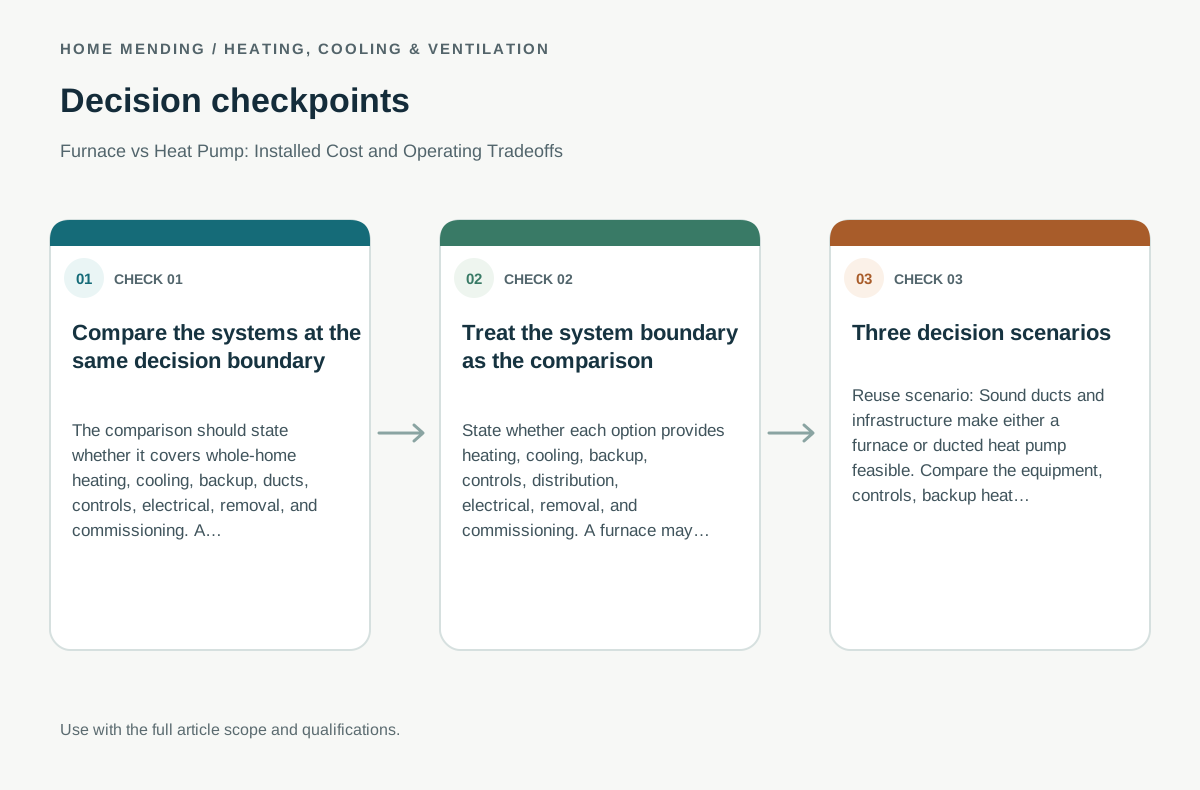
The comparison should state whether it covers whole-home heating, cooling, backup, ducts, controls, electrical, removal, and commissioning. A heat pump may need backup or low-temperature capacity; a furnace may require a separate AC or retain existing cooling. A proposal that prices only one appliance can make a complete alternative appear artificially expensive.
For a short horizon, disruption and reuse of sound infrastructure may dominate. For a long horizon, include electricity, fuel, maintenance, repairs, future replacement, climate, and equipment capacity. NRCan identifies system type, existing ducts, climate, energy prices, and design as relevant to heat-pump cost and operation. Use local assumptions rather than promising one universal winner.
A furnace quote should state fuel, capacity, efficiency, ducts, controls, venting, condensate, removal, and testing. A heat-pump quote should state ducted or ductless configuration, capacity at relevant outdoor conditions, efficiency metrics, indoor and outdoor match, thermostat, auxiliary or supplemental heat, electrical work, line set, condensate, removal, and commissioning.
Canadian specialist examples place a ducted air-source heat pump around CAD $4,500–$10,000 with existing ducts and a gas furnace around CAD $3,500–$7,000 in straightforward configurations. Those figures are not directly comparable scopes or a national Canadian price list. A U.S. specialist guide reports heat-pump installation around $4,237–$7,943, also as broad planning context.
What favors a furnace
A furnace may fit a home where existing ducts, fuel service, venting, and cooling equipment are sound; winter performance is already understood; and local fuel economics and service support are favorable. A replacement furnace may have a smaller immediate installation scope.
That advantage weakens if the AC, furnace, venting, or controls all need replacement, if comfort problems come from ducts, or if the homeowner plans a future fuel conversion. Include the cost of maintaining or replacing the paired cooling equipment when comparing ownership horizons.
What favors a heat pump
A heat pump can combine heating and cooling and may be attractive where electricity, climate, emissions goals, or the desire to avoid combustion equipment matter. DOE distinguishes ducted, ductless, ground-source, and dual-fuel systems; this article concerns the ordinary air-source equipment choice, not a whole-home electrification project.
Climate suitability and sizing are decisive. ENERGY STAR’s current criteria distinguish ducted and non-ducted equipment and use SEER2, EER2, and HSPF2. Its cold-climate designation includes low-ambient performance testing; qualification is not a design calculation or a guarantee for a particular house. NRCan states that cold-climate units can operate as low as -30°C in its guidance, while supplemental heat may be required below that and exact performance remains model-specific.
Operating-cost model
Use local electricity and fuel prices, estimated heating demand, equipment performance at actual conditions, backup-heat use, and ownership years. Change those assumptions to see whether the conclusion is robust. Do not use a simple nameplate efficiency comparison as if it were an annual bill.
An envelope or duct problem can overwhelm the equipment difference. NRCan also recommends considering planned insulation, window, or air-sealing work so that equipment is not oversized. If those improvements are already planned, tell the HVAC designer; the sequence may change capacity and cost.
Three decision scenarios
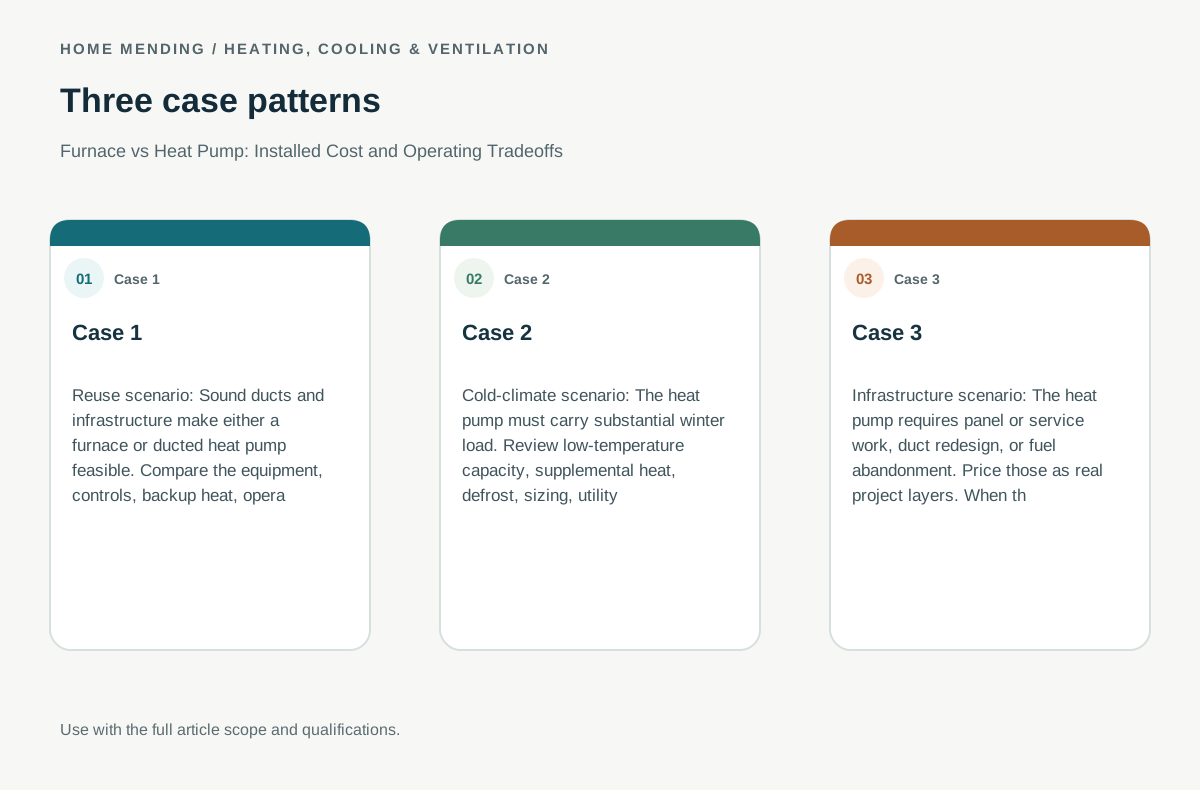
Reuse scenario: Sound ducts and infrastructure make either a furnace or ducted heat pump feasible. Compare the equipment, controls, backup heat, operating assumptions, and future cooling replacement.
Cold-climate scenario: The heat pump must carry substantial winter load. Review low-temperature capacity, supplemental heat, defrost, sizing, utility rates, and service support. Do not assume one “cold-climate” label meets every peak load.
Infrastructure scenario: The heat pump requires panel or service work, duct redesign, or fuel abandonment. Price those as real project layers. When they dominate, use the electrification category for the broader strategy while keeping equipment economics clear.
Decision framework
Choose the furnace when its complete installed scope, service support, fuel economics, and ownership horizon are stronger. Choose the heat pump when its climate-appropriate capacity, distribution, backup strategy, electrical scope, and operating assumptions remain attractive under realistic scenarios. Choose dual-fuel when retaining a furnace solves a genuine cold-weather or infrastructure constraint, not merely because it is a familiar default.
The useful result is a local, matched, whole-system comparison—not a universal claim that either technology is always cheaper.
Include the replacement that you would otherwise postpone
If a furnace is replacing an old furnace while the AC remains, include the future AC replacement in a long-horizon comparison. If the heat pump replaces both heating and cooling, include the value of avoiding a separate AC project. If a furnace is retained as backup, include its maintenance, venting, controls, and eventual replacement rather than treating it as free infrastructure.
Use a decision table
| Condition | More favorable starting point | What still needs verification |
|---|---|---|
| Sound ducts, existing fuel, modest scope | Furnace or dual-fuel | Future cooling, fuel prices, equipment life |
| Need heating and cooling replacement together | Heat pump deserves a full comparison | Capacity, backup, controls, electrical work |
| Heating-dominant cold climate | Cold-climate heat pump or dual-fuel | Low-temperature capacity and supplemental heat |
| Major panel or fuel changes | Broader electrification study | Service capacity, incentives, whole-home scope |
This table is a prompt for local analysis, not a recommendation by itself. Ask each bidder to explain which row describes the property and what evidence could move it.