
U.S. specialist guidance places boiler repair roughly around $95–$1,500, depending on fuel, parts, urgency, leaks, pressure, valves, pumps, and related work. That is a broad market observation, not a quote and not a complete price list. Hot-water and steam boilers have different distribution and control arrangements, so the symptom and system type must be identified before a repair can be priced.
Separate the failed part from system condition
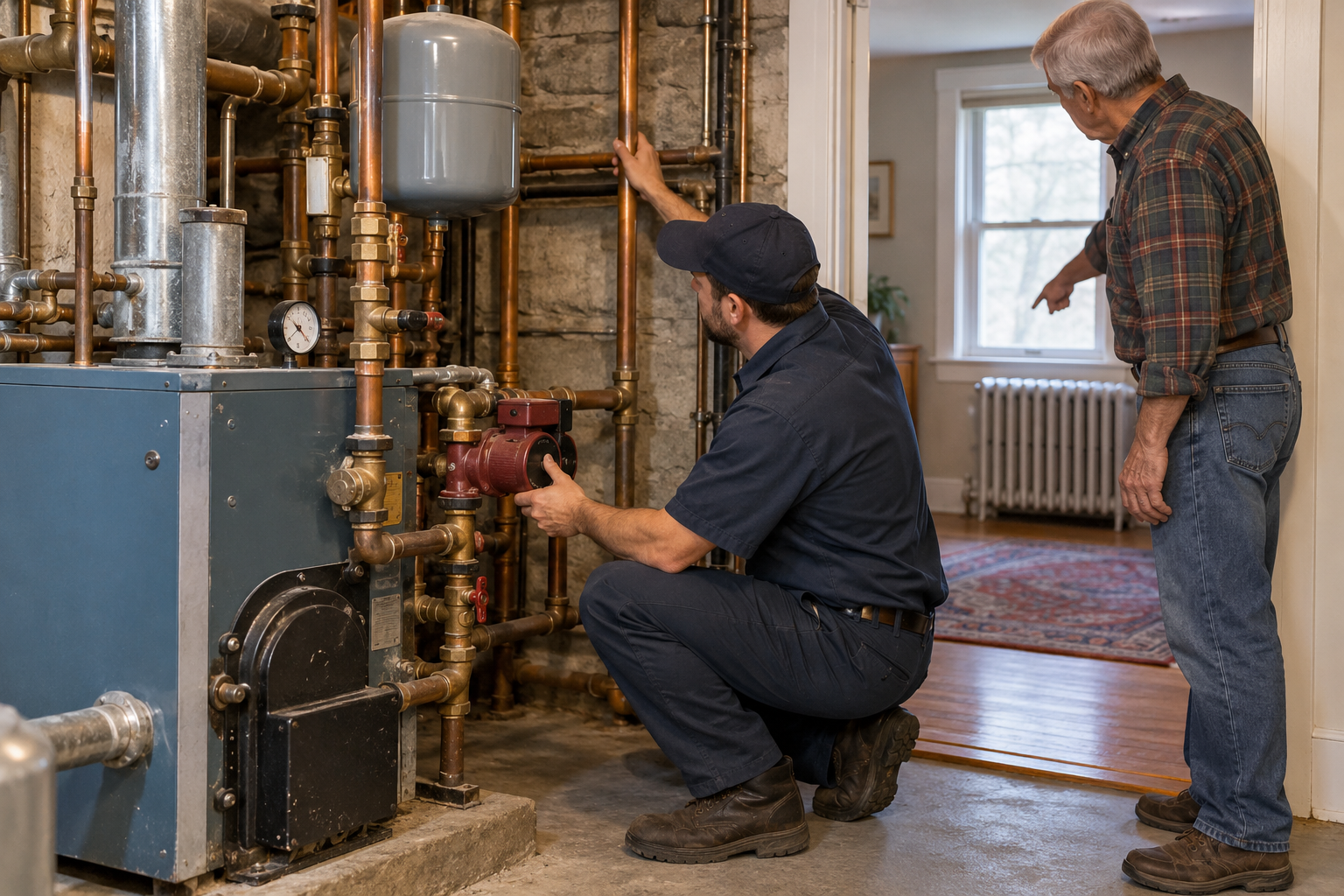
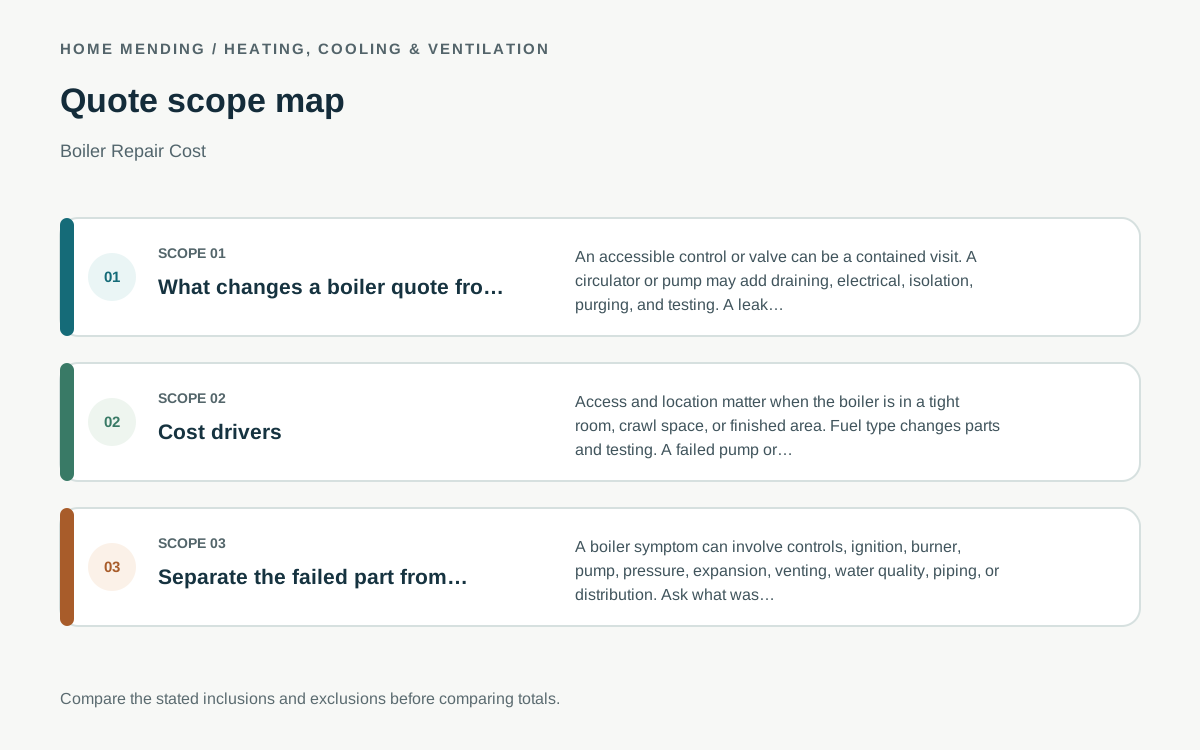
A boiler symptom can involve controls, ignition, burner, pump, pressure, expansion, venting, water quality, piping, or distribution. Ask what was tested and whether the repair restores only the boiler or also the room-level heating problem. A repair estimate should identify diagnosis, parts, labor, draining or purging, access, testing, and warranty.
Repair is stronger when the failure is isolated and the boiler, piping, controls, and service path remain credible. Compare replacement when several repairs are accumulating, parts are difficult to obtain, distribution is also failing, or the owner is considering a different heat source. Do not use one component price as the replacement threshold.
A boiler that will not heat may have a control, ignition, burner, thermostat, circulator, pump, valve, pressure, water-level, venting, or distribution problem. A leak may be at the boiler, piping, valve, radiator, or expansion component. A cold radiator may be a flow, air, valve, balancing, control, or boiler issue rather than a failed boiler.
Steam systems add different concerns from hot-water systems. Do not assume a steam component or adjustment is interchangeable with a hydronic water component. Fuel type also changes service requirements and the safety scope.
Diagnosis before the part
The service call should state the observed symptom, tests or checks performed, suspected cause, repair proposed, and condition that will remain. Pressure, relief devices, combustion, gas or oil, venting, and electrical work require qualified assessment under local requirements. This article provides cost context, not a homeowner procedure for opening, draining, firing, or adjusting a boiler.
Ask whether the quote includes a service call, labor, parts, water-side materials, controls, testing, cleanup, and return visit. A low component price can conceal access, draining, refilling, purging, or system balancing work.
Cost drivers
Access and location matter when the boiler is in a tight room, crawl space, or finished area. Fuel type changes parts and testing. A failed pump or valve may be a localized repair; a boiler leak, heat exchanger concern, control architecture, or venting issue can become a major lifecycle decision. Distribution condition matters because a repaired boiler cannot correct blocked, air-bound, leaking, or poorly balanced emitters.
Maintenance history also changes uncertainty. A clean service record and one bounded fault support repair. Repeated pressure, leak, or control problems suggest investigating the system rather than replacing parts without a pattern.
Three scenarios
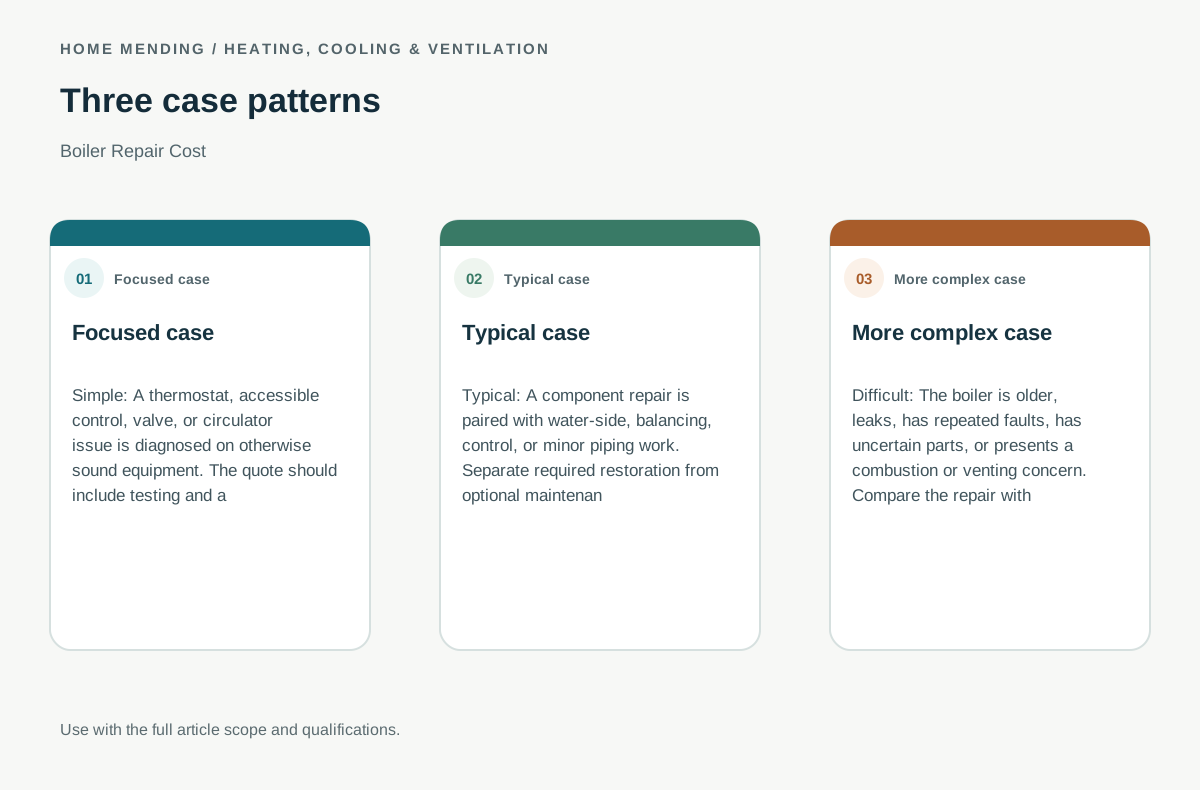
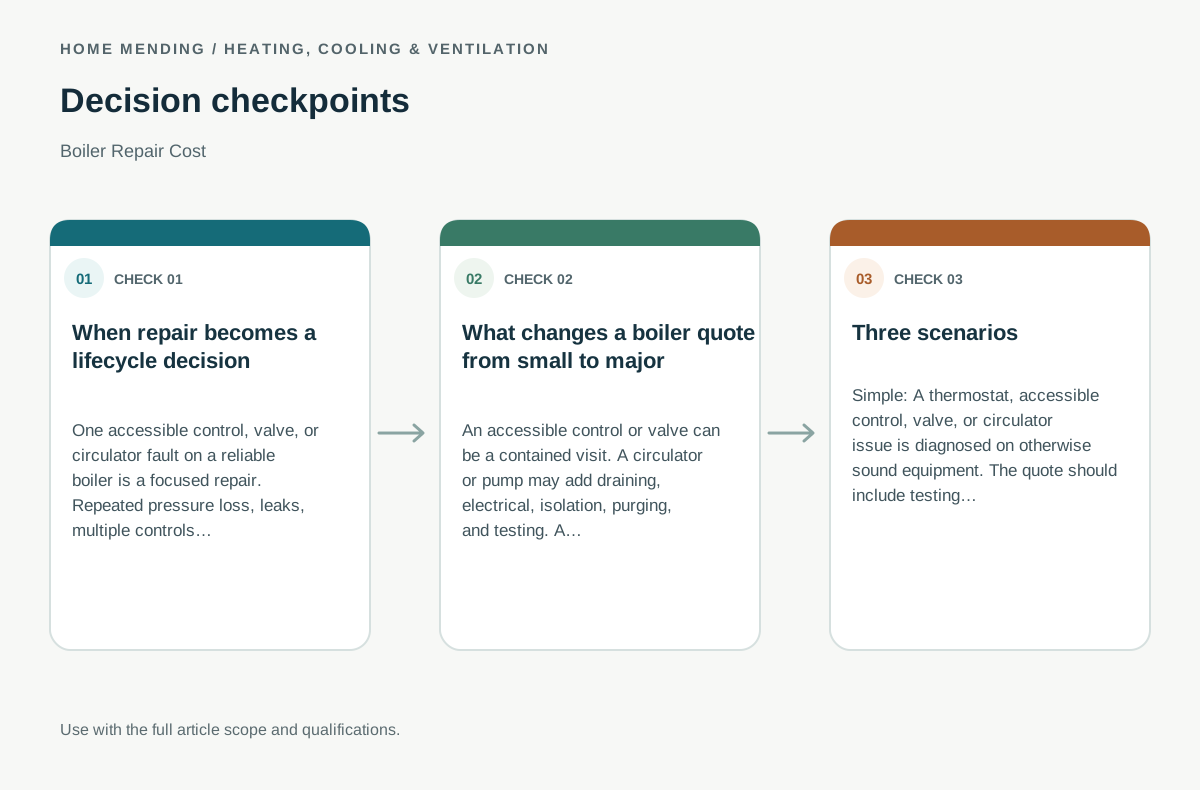
Simple: A thermostat, accessible control, valve, or circulator issue is diagnosed on otherwise sound equipment. The quote should include testing and a clear repair warranty.
Typical: A component repair is paired with water-side, balancing, control, or minor piping work. Separate required restoration from optional maintenance or upgrades.
Difficult: The boiler is older, leaks, has repeated faults, has uncertain parts, or presents a combustion or venting concern. Compare the repair with a replacement that includes fuel, capacity, distribution connections, controls, venting, condensate where relevant, removal, and commissioning.
Repair versus replacement
Repair is stronger when the failure is isolated, the boiler has reliable history, parts are available, and the repair preserves an appropriate service horizon. Replacement deserves a quote when several failures cluster, the repair exposes deteriorated heat-transfer or venting conditions, comfort remains poor, or a high-cost component is involved.
ENERGY STAR identifies repeated repairs, rising bills, uneven comfort, noise, and wider system problems as evaluation prompts. Its age guidance is context, not a universal cutoff. A boiler can be old and serviceable, or newer and unsuitable because the distribution or installation is wrong.
What to ask for
Request fuel and boiler type, failed component, diagnosis, labor and parts, draining or piping assumptions, controls, venting, safety or inspection responsibility, repair warranty, and remaining-condition statement. If replacement is plausible, request a comparable replacement scope and keep radiator, baseboard, chimney masonry, and major remodel work separately identified.
The useful answer is not one boiler repair average. It is the cost to restore the heating system, the uncertainty left afterward, and whether another repair or a coordinated replacement better fits the home’s ownership horizon.
Read a boiler repair estimate
Ask the contractor to separate the service visit, diagnosis, part, labor, water-side materials, draining or purging, controls, testing, and return visit. A pressure or leak symptom should identify whether the source is the boiler, piping, valve, radiator, expansion component, or another part of the system. A cold room should identify whether the issue is flow, air, control, emitter, boiler, or envelope.
If the quote involves fuel, combustion, venting, relief devices, or pressure, ask which qualified professional and local requirements govern the work. Do not use a market-price article as a substitute for a safety assessment.
When repair becomes a lifecycle decision
One accessible control, valve, or circulator fault on a reliable boiler is a focused repair. Repeated pressure loss, leaks, multiple controls, poor comfort, or a major heat-transfer failure deserve a replacement comparison. Include radiators, baseboards, pumps, piping, venting, and controls so a new boiler does not inherit an unresolved distribution problem.
What changes a boiler quote from small to major
An accessible control or valve can be a contained visit. A circulator or pump may add draining, electrical, isolation, purging, and testing. A leak can require tracing the boiler, piping, emitter, valve, or expansion components before any part is ordered. A pressure or relief-device issue should be treated as a professional safety assessment, not a convenient replacement of whichever part is easiest to name.
Steam and hot-water systems create different follow-up risks. A repair that restores one radiator may not correct system balance. A boiler that fires may still leave a distribution or venting condition unresolved. Ask what performance is expected after the repair and which observations would trigger a replacement or wider hydronic assessment.
Build a repair total, a repair-plus-likely-follow-up total, and a replacement total. Include another emergency visit if the repair is deferred. This makes a modest invoice useful without pretending the future is known.
Follow the symptom through the distribution
Pressure loss, leaks, cold emitters, and noise can originate in the boiler, piping, valves, pumps, controls, or radiators. Ask what evidence isolates the failed component and what will be tested after repair. A boiler that fires is not necessarily a system that delivers heat reliably.
For major or repeated repairs, compare replacement with the condition of emitters, pumps, piping, controls, venting, and access. Keep combustion, pressure, fuel, and local inspection requirements with qualified professionals.