
“Cold-climate” is a performance and design question, not simply a product label. ENERGY STAR’s designation includes low-ambient testing at 5°F, including a minimum coefficient of performance and retained heating capacity. NRCan says cold-climate air-source heat pumps can operate at outdoor temperatures as low as -30°C in its guidance, with supplemental heat potentially needed below that. Neither statement tells you what capacity your home needs or what a local installation will cost.
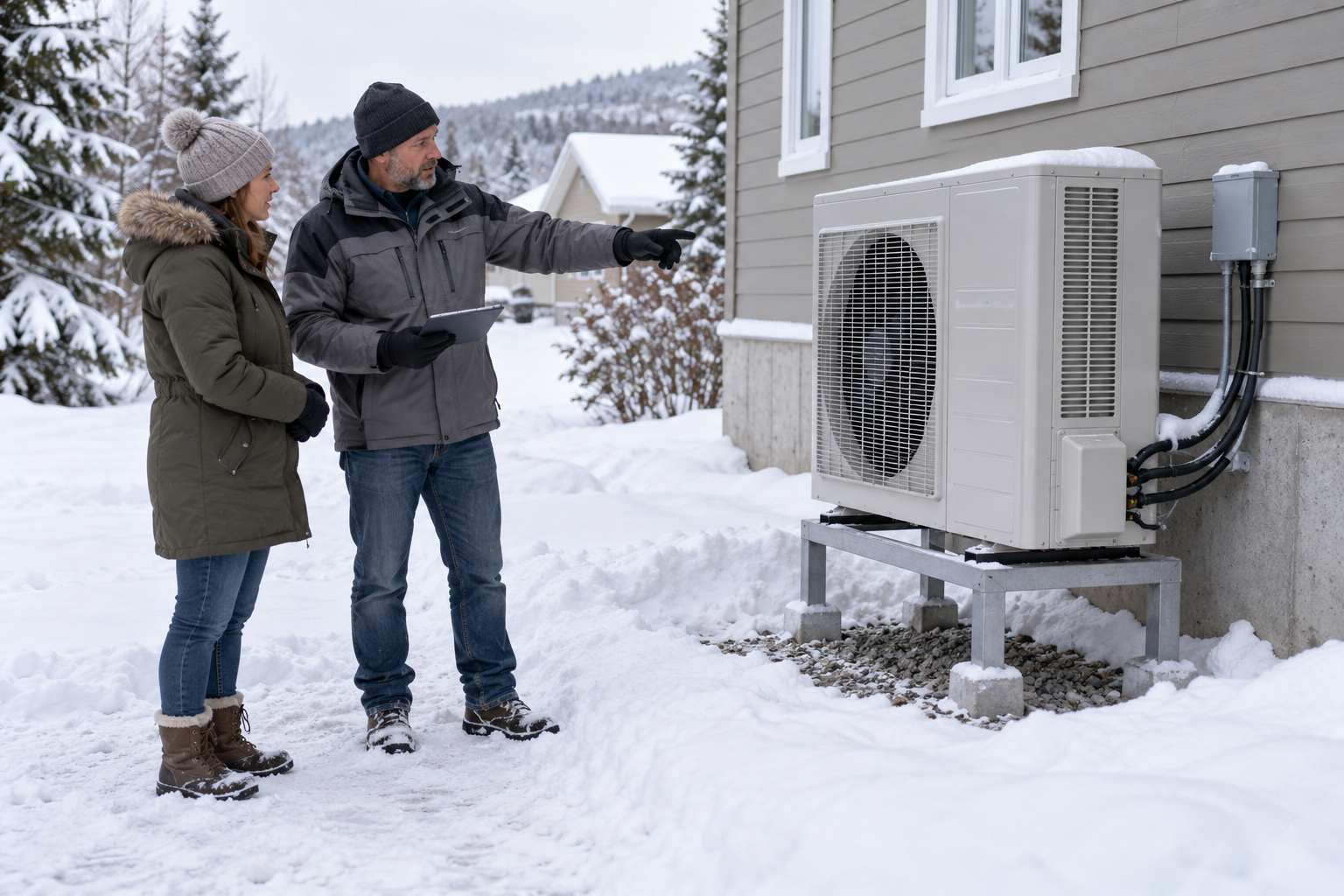
Illustrative planning scenario (U.S. dollars, September 2026)
This is a transparent comparison, not a sizing result: assume a $10,000 cold-climate heat-pump installation, $2,000 for electrical or controls work, and $3,000 for supplemental heat or distribution corrections. The planning scope is $15,000 before incentives; a designer must verify capacity, backup, and design temperature for the home.
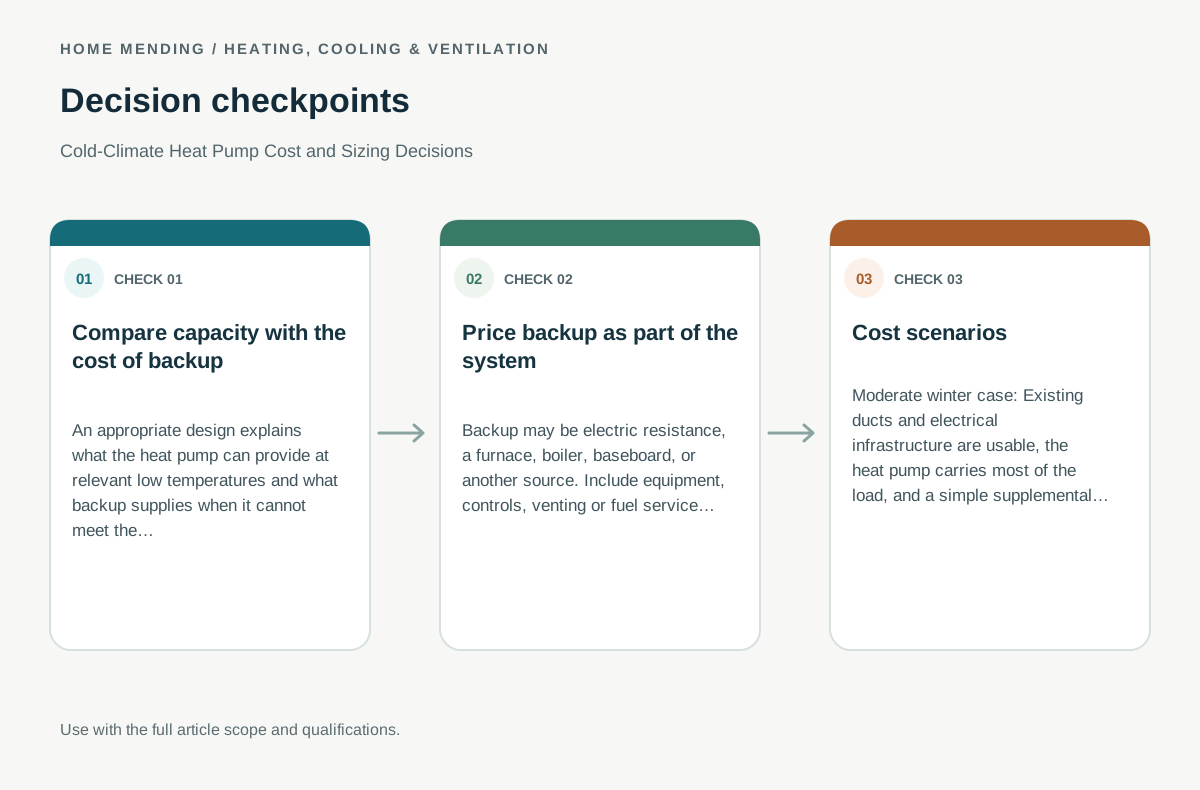
Compare capacity with the cost of backup
An appropriate design explains what the heat pump can provide at relevant low temperatures and what backup supplies when it cannot meet the load. Include backup equipment, controls, electrical, distribution, service, and fuel assumptions. A lower equipment price is not a saving if it leaves an expensive or inadequate cold-weather gap.
For a long horizon, compare the cold-climate system with retained furnace, dual-fuel, standard heat pump, or envelope work using the same rooms and climate. Ask what happens during defrost, outages, faults, and future equipment replacement. The uncertainty should be visible in the design assumptions.
A cold-climate project may include a higher-capability outdoor unit, indoor unit or air handler, controls, line set, condensate, backup or supplemental heat, electrical work, ducts, removal, and commissioning. The premium can also reflect low-temperature design, access, and the need to coordinate with a furnace, boiler, or baseboard system.
Ask for the complete installed scope and the outdoor conditions used in the design. Do not compare a cold-climate equipment price with a conventional changeout if one quote includes backup heat and electrical work.
Sizing is not floor-area arithmetic
NRCan warns that both undersizing and oversizing can produce a more costly and less efficient system. Capacity depends on the building load, climate, distribution, controls, and the desired role of supplemental heat. Planned insulation, window, or air-sealing work should be disclosed because it can change the load and prevent oversizing.
ENERGY STAR qualification metrics are product tests. They do not replace a property-specific load assessment, establish a universal design temperature, or prove that a unit will carry every peak condition.
Backup and supplemental heat
The system may use electric resistance, a furnace, baseboard, boiler, or another source for conditions the heat pump cannot economically or technically cover. Compare equipment, controls, fuel or electricity, service, and the frequency and duration of backup operation. A backup heater that is rarely used can still be important for resilience; its cost should not be hidden.
Below the conditions represented by the chosen design, capacity and efficiency can change. Ask how the system handles defrost, low outdoor temperature, and backup changeover. These are equipment- and control-specific questions.
Cost scenarios
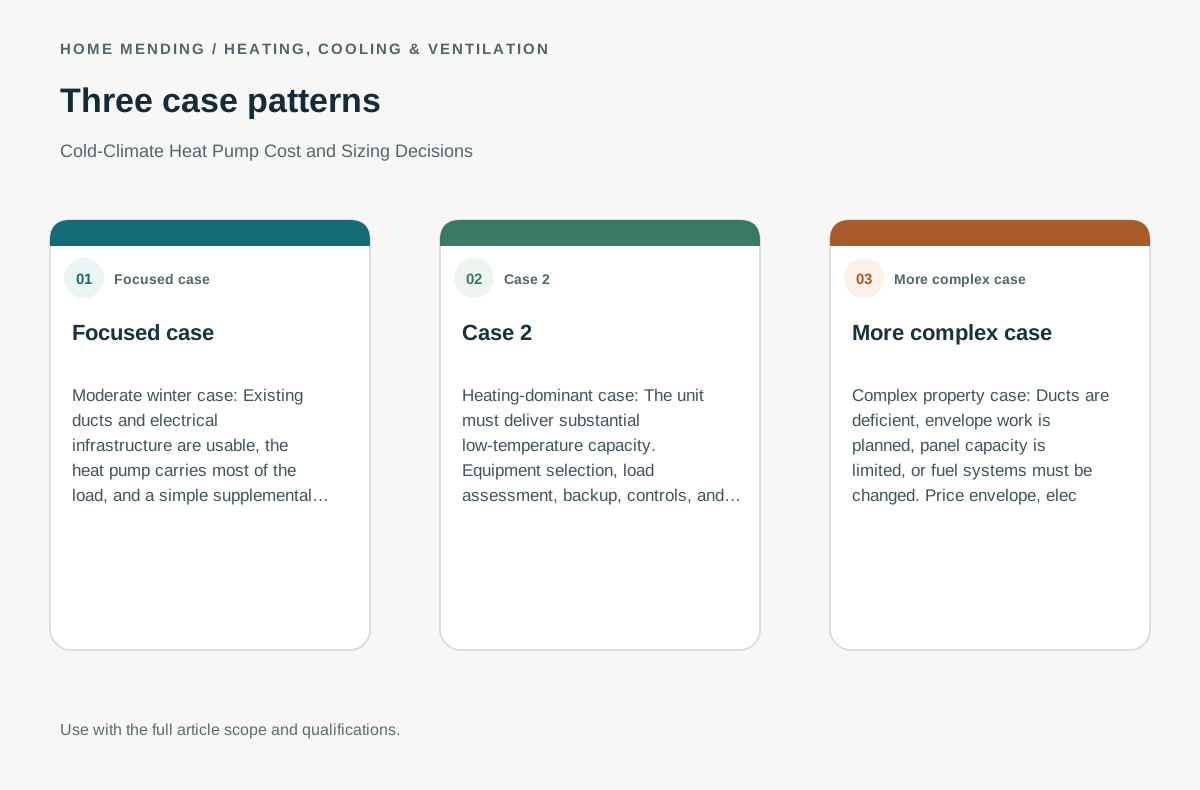
Moderate winter case: Existing ducts and electrical infrastructure are usable, the heat pump carries most of the load, and a simple supplemental arrangement is retained. Installation is closer to an ordinary ducted heat-pump replacement.
Heating-dominant case: The unit must deliver substantial low-temperature capacity. Equipment selection, load assessment, backup, controls, and commissioning become a larger part of the budget.
Complex property case: Ducts are deficient, envelope work is planned, panel capacity is limited, or fuel systems must be changed. Price envelope, electrical, and broader electrification work separately while preserving their effect on the HVAC decision.
Model operating cost honestly
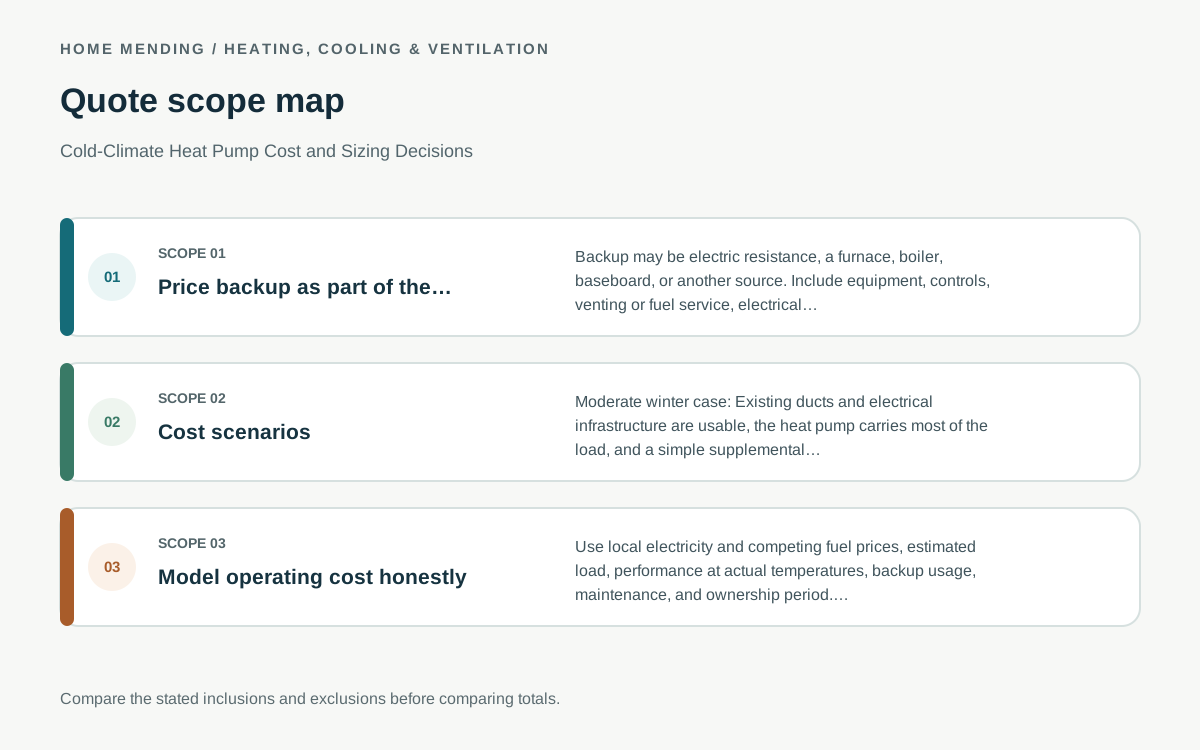
Use local electricity and competing fuel prices, estimated load, performance at actual temperatures, backup usage, maintenance, and ownership period. Test the conclusion under warmer and colder winters and different rates. Do not promise one payback or use a balance-point temperature as a universal rule.
How to evaluate a proposal
Request equipment identifiers, low-temperature capacity and efficiency data, design load and assumptions, distribution and airflow, backup heat, controls, electrical and line-set scope, condensate, removal, testing, warranty, and exclusions. Ask what happens if envelope improvements occur later.
Choose a cold-climate heat pump when the property-specific load, low-temperature performance, backup plan, infrastructure, and operating model make sense together. The designation is useful evidence, but it is not the complete decision.
Ask for the low-temperature evidence
Request the actual equipment’s capacity and efficiency at the outdoor conditions relevant to the property, not only its marketing label. ENERGY STAR’s cold-climate criteria include a test at 5°F and retained capacity, but qualifying criteria do not prove the unit meets your peak load. NRCan’s -30°C guidance is not a universal design temperature or a guarantee for every model.
Decide what backup is buying
Backup heat can cover rare extreme conditions, support defrost, or reduce the size and cost of the heat pump. Compare its equipment, controls, fuel or electrical infrastructure, maintenance, and expected operation. A dual-fuel arrangement can preserve an existing furnace, but it also retains a second system and its future replacement cost.
If envelope or duct work is planned, ask the designer to show how it changes capacity and backup assumptions. This is more useful than selecting a larger unit “for safety.”
Review the design assumptions line by line
Ask what weather data, building load, indoor temperature, ducts, airflow, and planned envelope condition were used. Request capacity and efficiency at relevant low temperatures, not only a nominal capacity at a mild rating condition. A cold-climate designation supports product screening; it does not replace the design.
Price backup as part of the system
Backup may be electric resistance, a furnace, boiler, baseboard, or another source. Include equipment, controls, venting or fuel service, electrical work, maintenance, and the expected hours of operation. A smaller heat pump with more backup is not automatically cheaper than a larger unit; compare the installed and modeled operating totals.
For a home with a planned insulation or air-sealing project, ask whether HVAC sizing will be revisited after that work. Avoid paying twice for a system selected from an assumption that is about to change.
Price the resilience of the design
Low-temperature capacity is only one part of the decision. Ask how the home is heated during the coldest expected conditions, defrost or backup operation, outages, equipment faults, and periods when the heat pump is unavailable. Include backup equipment, controls, electrical work, fuel or service connections, and the distribution system in the comparison. A small backup allowance can produce a large comfort consequence if it is not actually adequate for the home.
Compare a cold-climate heat pump with a standard heat pump, retained furnace, dual-fuel arrangement, or envelope improvement on the same rooms and operating assumptions. The best choice may be the one that reduces risk and disruption rather than the one with the highest published rating. Require the designer to state the conditions used for sizing and what remains uncertain.