
Illustrative planning scenario (U.S. dollars, September 2026)
This is a transparent planning example, not a market quote: assume $4,500 for the electric furnace, $1,200 for removal and installation, and $1,000 for controls, duct transitions, and electrical work. The illustrative project total is $6,700 before tax; a service-capacity upgrade belongs in a separate, clearly priced line.
Define what “replacement” includes
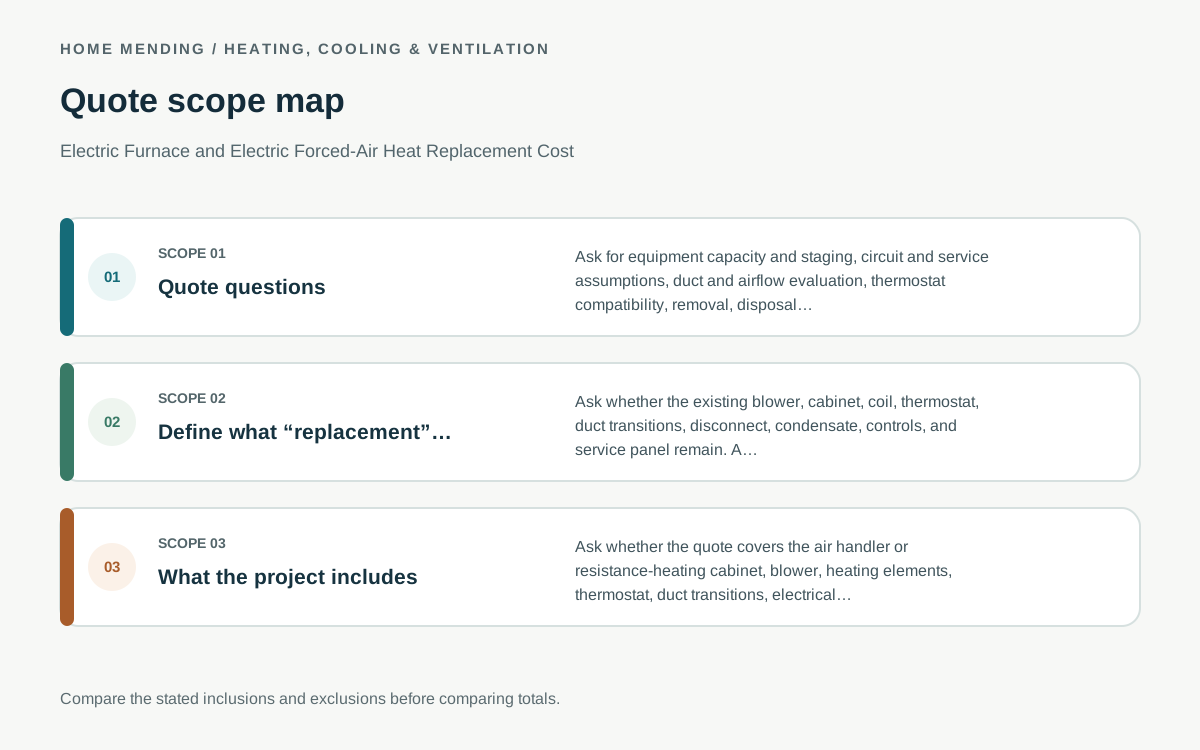
Ask whether the existing blower, cabinet, coil, thermostat, duct transitions, disconnect, condensate, controls, and service panel remain. A compatible cabinet swap is a different project from a replacement that corrects airflow, adds cooling, changes controls, or requires electrical work. Price removal, disposal, testing, commissioning, and warranty rather than accepting a cabinet-only allowance.
For a short horizon, reuse of sound infrastructure may be valuable. For a long horizon, compare the furnace with a heat pump or dual-fuel path using the same rooms, backup, climate, electricity, maintenance, and future replacement assumptions. Do not let a low first cost conceal a system strategy that will be changed soon.
Decide whether replacement is still the right system
An electric furnace replacement may be the least disruptive option when ducts, controls, and service capacity are sound. It deserves a wider comparison when the blower or distribution is deficient, operating cost is a concern, the cabinet is obsolete, or a heat pump could provide both heating and cooling. A heat-pump proposal must include low-temperature capacity, backup, controls, electrical, ducts, condensate, and commissioning; otherwise its price is not comparable.
Ask what is retained and what is changed: indoor cabinet, blower, heat exchanger, coil, thermostat, duct transitions, disconnect, service panel, condensate, removal, and warranty. A higher-efficiency label does not by itself establish lower ownership cost. Use local electricity, climate, runtime, and future equipment plans, and keep any broader electrification or service upgrade separately identified.
Request the capacity and airflow basis, existing circuit and disconnect, service-panel assumptions, duct transitions, thermostat and staging, condensate, removal, testing, and warranty. If a panel or service upgrade is proposed, ask for its electrical basis and separate total.
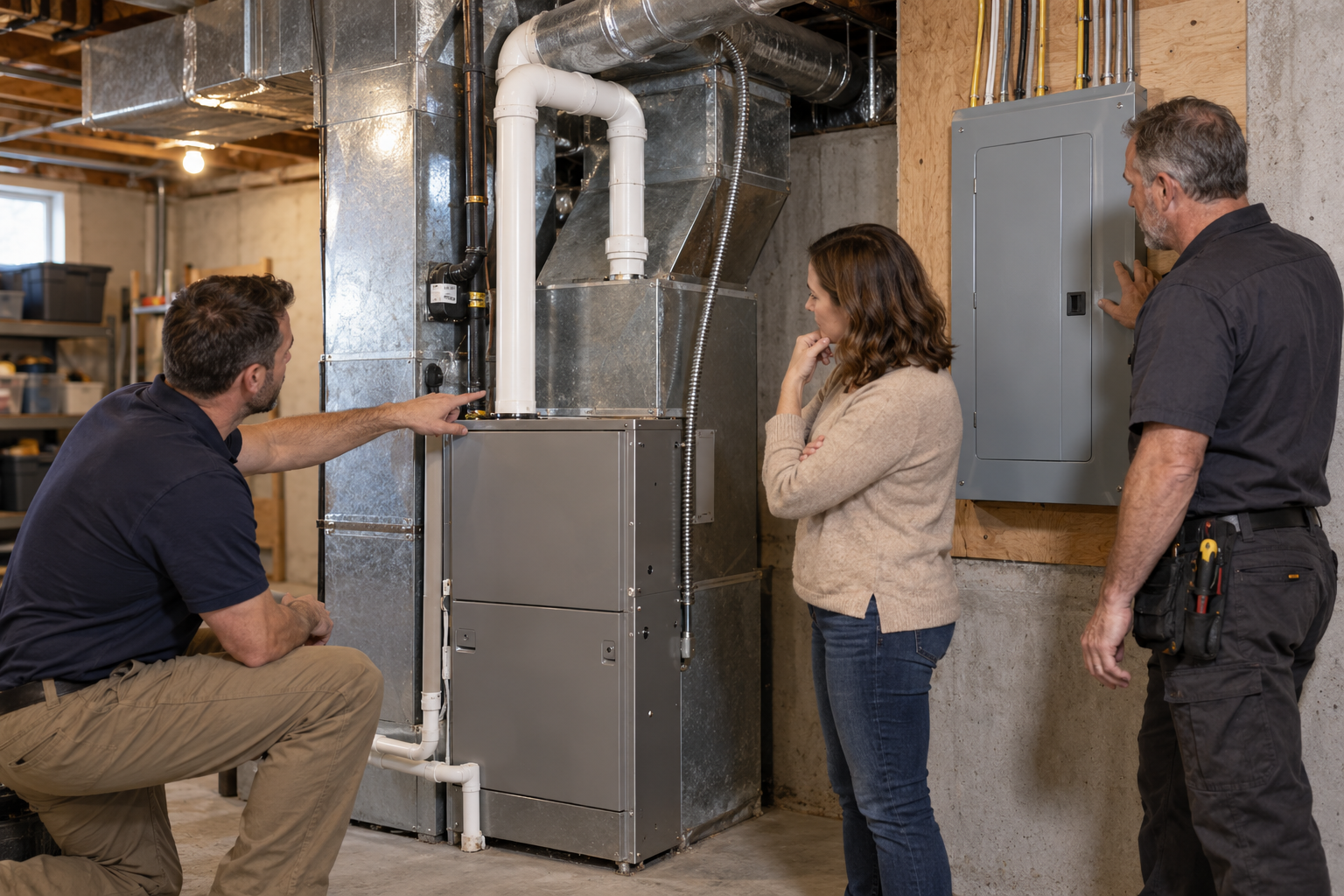
Compare an electric furnace with a heat pump using the same room coverage, backup, controls, electrical, access, maintenance, and ownership assumptions. NRCan identifies climate, existing equipment, ductwork, and energy prices as important to heat-pump outcomes; no generic comparison can decide the local case.
Replacing a central electric furnace is often a simpler equipment decision than replacing combustion equipment, but the complete price still depends on capacity, blower, ducts, controls, electrical connections, access, and removal. The equipment price also should not be confused with the operating cost. Electricity rates, climate, runtime, envelope, and system efficiency determine the ownership economics.
What the project includes
Ask whether the quote covers the air handler or resistance-heating cabinet, blower, heating elements, thermostat, duct transitions, electrical disconnect and circuit, service-panel assessment, condensate where cooling or heat-pump equipment is paired, removal, disposal, startup testing, and warranty.
An equipment changeout may reuse the existing circuit and ducts. A new or differently sized system may require an electrical assessment or duct changes. If service capacity or a panel upgrade becomes the dominant decision, it belongs to the electrical or electrification scope rather than being hidden as a furnace accessory.
Capacity and distribution
Do not select a replacement by copying the old wattage without checking the home’s load and the air-distribution system. Poor return air, leaking ducts, restricted branches, and uneven balancing can create comfort complaints that a new furnace will inherit. ENERGY STAR’s quality-installation principles support evaluating airflow and ducts as part of replacement.
The existing blower and duct connections may be more important than the cabinet dimensions. Ask for the capacity basis, airflow assumptions, transition work, and whether rooms with comfort complaints were evaluated.
Replacement scenarios
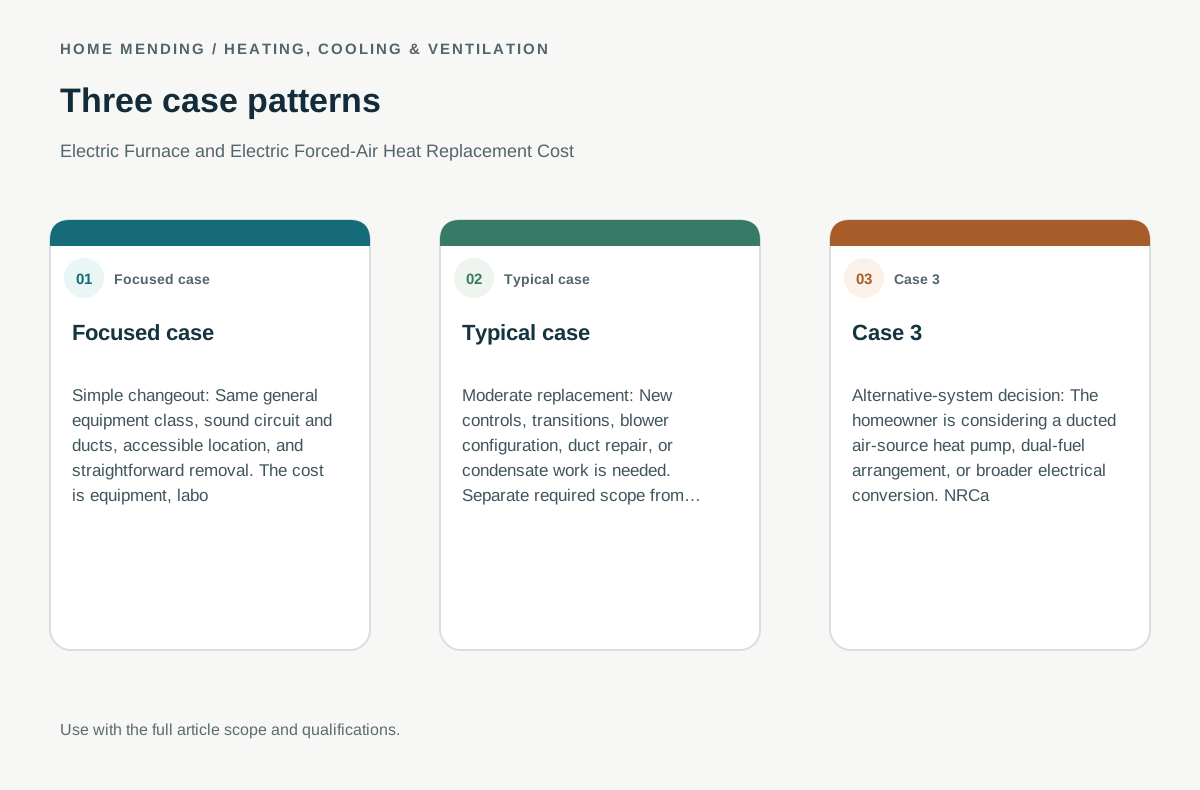
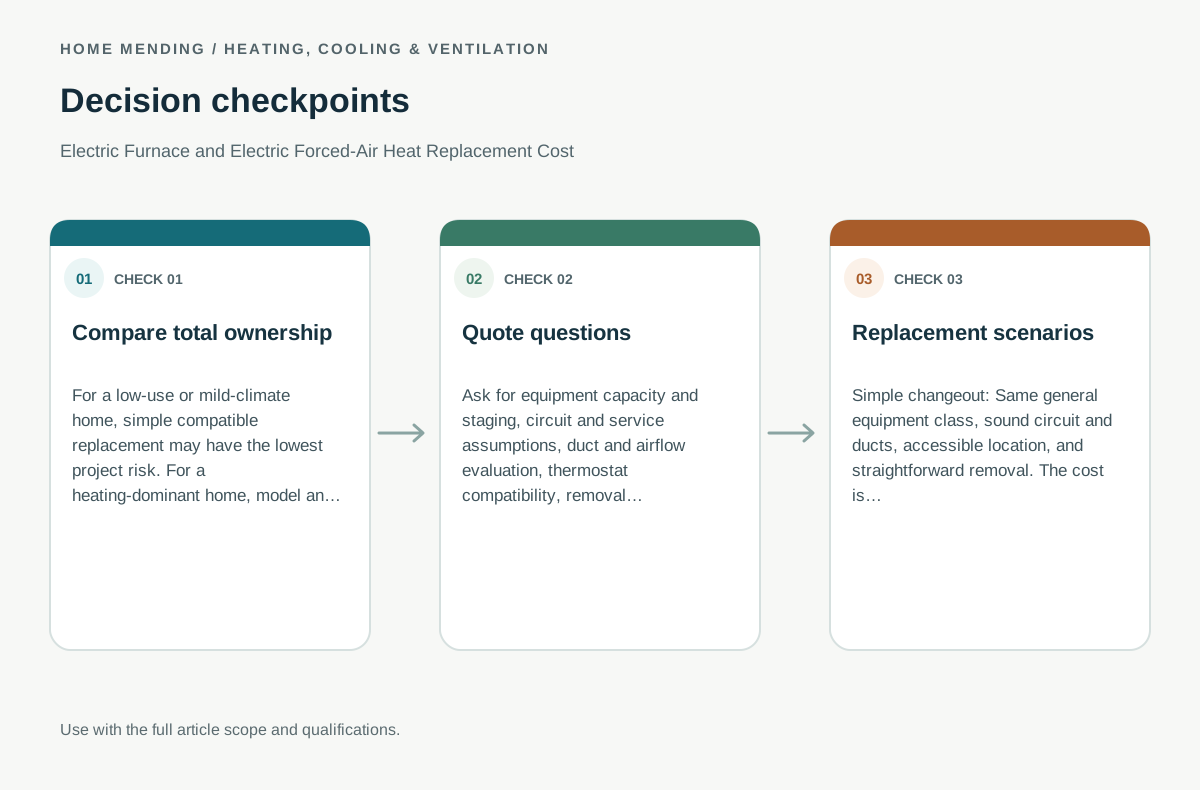
Simple changeout: Same general equipment class, sound circuit and ducts, accessible location, and straightforward removal. The cost is equipment, labor, testing, and disposal.
Moderate replacement: New controls, transitions, blower configuration, duct repair, or condensate work is needed. Separate required scope from optional thermostat or zoning upgrades.
Alternative-system decision: The homeowner is considering a ducted air-source heat pump, dual-fuel arrangement, or broader electrical conversion. NRCan notes that heat-pump installation cost depends on system type, design objective, existing equipment, and ductwork; cold-climate sizing and supplemental heat are property-specific. Compare that complete system rather than a furnace cabinet alone.
Operating-cost comparison
Electric resistance is easy to describe but not automatically the lowest-cost heat source. Model local electricity price, expected heat demand, competing fuel price, and the proposed heat-pump performance if alternatives are being considered. Do not promise savings from a heat pump without stating assumptions.
In a mild or low-use home, the lower installation complexity of a replacement electric furnace may matter more than a theoretical long-term difference. In a heating-dominant climate, a properly selected heat pump may deserve a full comparison, including backup heat and electrical work. That is a decision, not an automatic upgrade.
Quote questions
Ask for equipment capacity and staging, circuit and service assumptions, duct and airflow evaluation, thermostat compatibility, removal, disposal, testing, warranty, and what is excluded. If a contractor recommends a panel upgrade, request the electrical basis and keep that work separately priced.
Choose a replacement electric furnace when it is compatible, appropriately sized, and economically aligned with your ownership horizon. Price a heat pump when operating cost, cooling, climate performance, or planned electrification could materially change the decision. Keep the HVAC choice separate from a whole-home service-capacity strategy.
What a contractor should verify
Request the capacity and airflow basis, existing circuit and disconnect, service-panel assumptions, duct transitions, thermostat and staging, blower, condensate, removal, testing, and warranty. If a panel or service upgrade is proposed, ask for the electrical reason and a separate price. Do not accept a generic “needs more power” statement as a complete assessment.
Compare total ownership
For a low-use or mild-climate home, simple compatible replacement may have the lowest project risk. For a heating-dominant home, model an air-source or cold-climate heat pump with backup heat, low-temperature capacity, controls, and electrical scope. NRCan notes that heat-pump cost and operating outcome depend on system type, existing equipment, ductwork, climate, and energy prices.
The better choice is the one whose installation, operation, service, and future strategy remain credible—not necessarily the one with the lowest cabinet price.
Separate equipment capacity from electrical capacity
An electric furnace may fit the existing ducts while still requiring a different circuit, breaker, disconnect, or service assessment. Conversely, a recommendation for more electrical capacity may reflect a proposed heat pump, backup heater, or future electrification rather than the replacement furnace alone. Ask for the load and connection assumptions in writing and keep electrical work separately priced.
Replacement is a focused decision when the cabinet, blower, controls, and duct transitions are compatible and the system’s operating cost is acceptable. It becomes a broader system decision when the ducts are deficient, the blower is noisy, the equipment is obsolete, or a heat pump could replace or supplement the furnace. Compare disruption, low-temperature operation, backup, controls, and service—not just heating output.