
Illustrative planning scenario (U.S. dollars, September 2026)
This is a worked scope comparison, not a market average: assume a $1,100 oil-furnace repair, versus $7,000 for replacement equipment plus $1,500 for tank, venting, controls, or electrical work. The change-of-direction case is $8,500 before any program-specific help; verify the oil system and conversion scope locally.
Compare repair with a complete change of direction
For repair, identify the failed burner, control, blower, fuel, heat-transfer, venting, or distribution component and what will be tested afterward. For replacement, include removal, venting, tank or fuel work, controls, ducts, access, commissioning, and disposal. A furnace-only quote is not comparable with a fuel-conversion or heat-pump proposal.
The case for repair is stronger when the rest of the infrastructure is maintainable and the fault is isolated. The case for replacement or another system is stronger when work repeats, service is difficult, or the owner is already planning a fuel change. Compare coverage, backup, electrical, distribution, operating assumptions, and future service before deciding.
Compare the remaining system burden
An oil-furnace repair should identify whether the burner, controls, blower, heat exchanger, fuel delivery, tank, venting, or distribution is involved. Replacement can add removal, venting, controls, duct transitions, commissioning, tank or fuel work, access, and disposal. Ask which adjacent items are inspected and which are excluded.
Repair is stronger when the fault is isolated and the furnace, tank, venting, and service path are credible. Replacement or a different heat source deserves comparison when failures repeat or the owner is already planning a fuel change. Match room coverage, backup, electrical, distribution, maintenance, operating assumptions, and future service before comparing prices.
Ask whether the quote includes burner, filter, oil line, tank condition, venting, chimney interface, controls, blower, ducts, removal, testing, and access. Tank replacement, spill remediation, fuel delivery, and masonry may be separate projects. A furnace-only total can therefore understate the home’s heating transition.
In a long-horizon home, evaluate furnace, tank, vent, distribution, service availability, and fuel logistics together. If fuel switching is the real objective, compare that broader project separately rather than treating a heat-pump conversion as an oil-furnace replacement.
Oil-furnace economics are highly regional because fuel delivery, service availability, climate, storage, and local replacement options differ. An oil-furnace bill may involve a burner, nozzle, filter, pump, oil line, controls, heat exchanger, venting, or tank interface. A replacement may also expose decisions about the tank, chimney or vent, distribution, and whether the homeowner is considering a broader fuel switch.

Repair scope comes before replacement scope
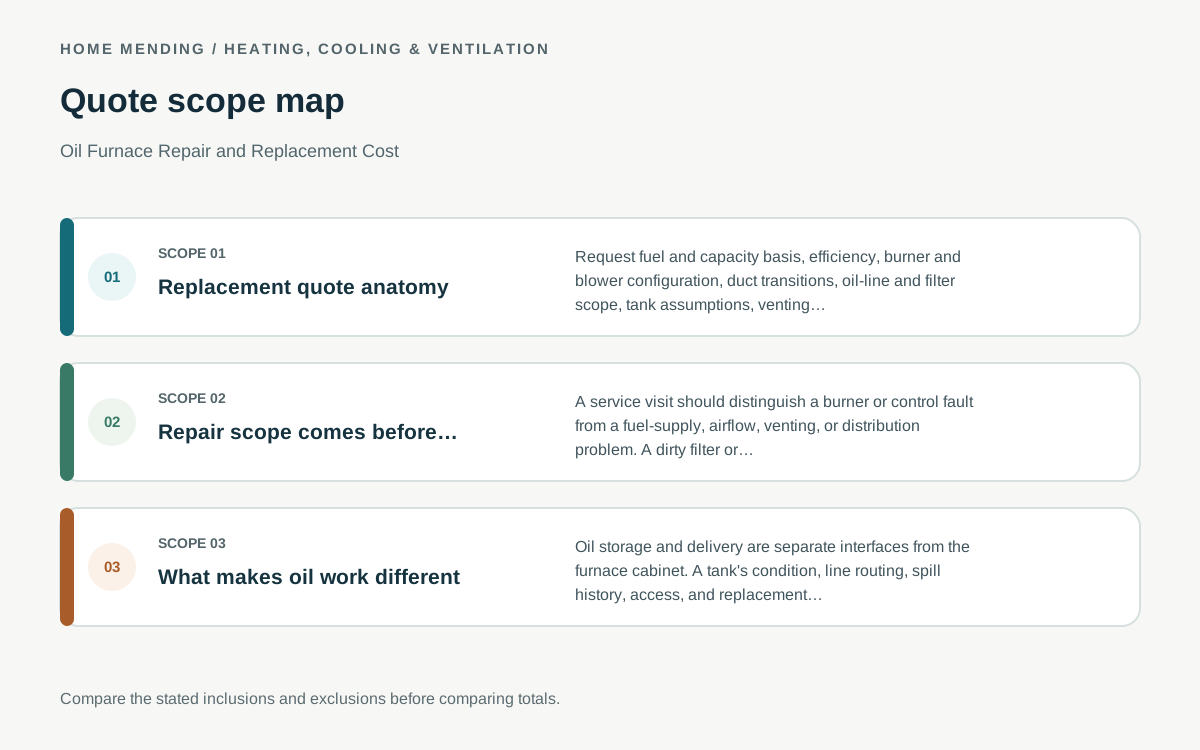
A service visit should distinguish a burner or control fault from a fuel-supply, airflow, venting, or distribution problem. A dirty filter or restricted duct can affect heat delivery without proving the furnace has failed. Combustion and fuel-system diagnosis should be performed by qualified personnel under applicable local requirements.
Common repair families include burner service, nozzle or filter work, ignition and controls, pump or fuel-line issues, blower and airflow, and heat-transfer or venting concerns. The available evidence does not support a reliable universal oil-furnace component price, so obtain an itemized regional quote.
What makes oil work different
Oil storage and delivery are separate interfaces from the furnace cabinet. A tank’s condition, line routing, spill history, access, and replacement requirements may create a separate project. Venting or chimney conditions may also need evaluation, but masonry reconstruction belongs to the exterior masonry/chimney scope when that is the dominant decision.
Do not assume the furnace quote includes tank replacement, oil-line work, spill cleanup, chimney work, or fuel delivery changes. Ask what was inspected and what remains an owner responsibility.
Repair and replacement scenarios
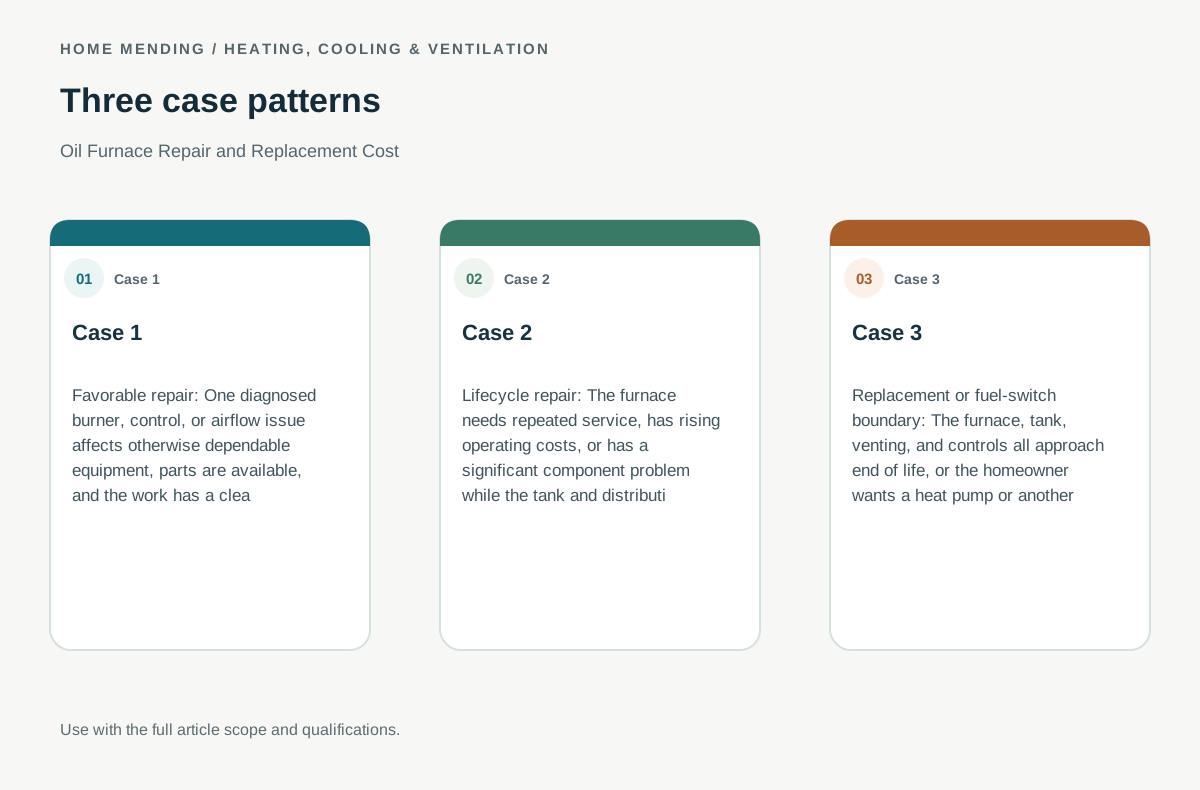
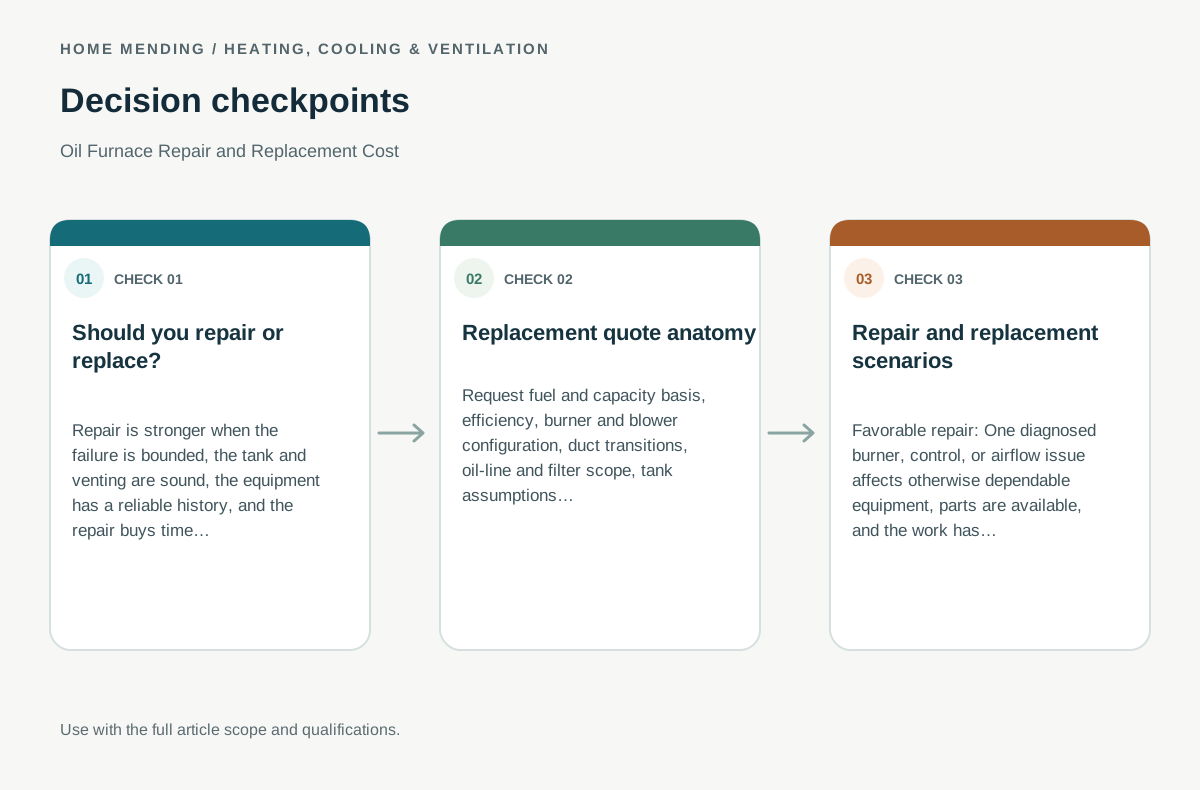
Favorable repair: One diagnosed burner, control, or airflow issue affects otherwise dependable equipment, parts are available, and the work has a clear warranty. Repair may preserve useful service.
Lifecycle repair: The furnace needs repeated service, has rising operating costs, or has a significant component problem while the tank and distribution are also aging. Add prior repairs and likely future mobilization before deciding.
Replacement or fuel-switch boundary: The furnace, tank, venting, and controls all approach end of life, or the homeowner wants a heat pump or another fuel. A conventional furnace replacement can be compared here; a deliberate gas/oil-to-electric conversion with service capacity, incentives, or multiple systems belongs to broader electrification planning.
Replacement quote anatomy
Request fuel and capacity basis, efficiency, burner and blower configuration, duct transitions, oil-line and filter scope, tank assumptions, venting, controls, electrical work, removal, disposal, access, testing, permits or inspections where applicable, warranty, and exclusions. Keep tank work and chimney masonry separate where they are not part of the furnace installation.
Compare U.S. and Canadian quotes in their local currencies and markets. Oil heating is not evenly distributed across either country, so a national-looking online range can be misleading.
Should you repair or replace?
Repair is stronger when the failure is bounded, the tank and venting are sound, the equipment has a reliable history, and the repair buys time that fits your ownership plan. Replacement is stronger when failures repeat, service is difficult, fuel and parts are uncertain, several interfaces are deteriorated, or a new system would avoid duplicated access and removal.
Age is context, not a decision rule. ENERGY STAR identifies repeated repairs, rising bills, poor comfort, noise, humidity, and suspected wider system problems as reasons to evaluate replacement, while not making age alone determinative.
Ask the contractor to state what condition remains after repair and what a complete replacement or broader alternative would cost. The useful decision is not oil furnace versus a generic number; it is a defined heating system, tank/venting boundary, service horizon, and future fuel strategy.
Price the interfaces explicitly
Ask whether the proposal includes burner and filter work, oil-line inspection, tank condition, venting, chimney interface, controls, blower and ducts, removal, disposal, access, testing, and warranty. A furnace contractor may not own tank replacement, spill remediation, fuel delivery, or masonry reconstruction. Those boundaries should be written down before comparing totals.
Use regional scenarios
In an established oil-heating market with available technicians, a bounded burner or control repair may be practical. In a region with fewer providers or uncertain fuel logistics, repeat-work and emergency costs deserve more weight. In a long-horizon home, tank, vent, furnace, and distribution condition should be evaluated together; in a short-horizon home, a documented repair may be preferable if residual risk is acceptable.
Do not compare a furnace-only replacement with a complete heat-pump or fuel-switch project. If the homeowner is changing fuels, include electrical, distribution, backup, incentives, and service-capacity questions in the broader strategy.
Include the infrastructure that remains
An oil-furnace repair may be focused on the burner, ignition, controls, blower, heat exchanger, or fuel delivery, but the remaining condition of the tank, venting, distribution, and service access affects the decision. A replacement quote should identify removal, new equipment, venting, controls, duct transitions, oil-related work, commissioning, and any finish or access restoration. Keep tank or chimney work visible rather than hiding it in a general allowance.
Repair is stronger when the fault is isolated and the rest of the system is maintainable. Replacement is stronger when failures repeat, parts or service are difficult, safety concerns are identified by a qualified professional, or the owner is already considering another heat source. Compare the retained-fuel ownership burden with a heat pump or other alternative only on matching coverage, backup, electrical, distribution, and operating assumptions.