
Decide whether the repair restores confidence
Ask for the confirmed fault, related conditions checked, part and labor scope, access, testing, warranty, and remaining-condition comments. A repair is not complete if a recurring airflow, control, venting, or distribution issue remains unexplained. The post-work result should be described in terms of operation, not only replacement of a component.
Compare repair with replacement when the furnace has repeated failures, difficult access, obsolete parts, poor distribution, or a broader equipment decline. Include removal, venting, condensate, controls, duct transitions, commissioning, and operating assumptions in the replacement option. The right threshold depends on the whole system and ownership horizon.
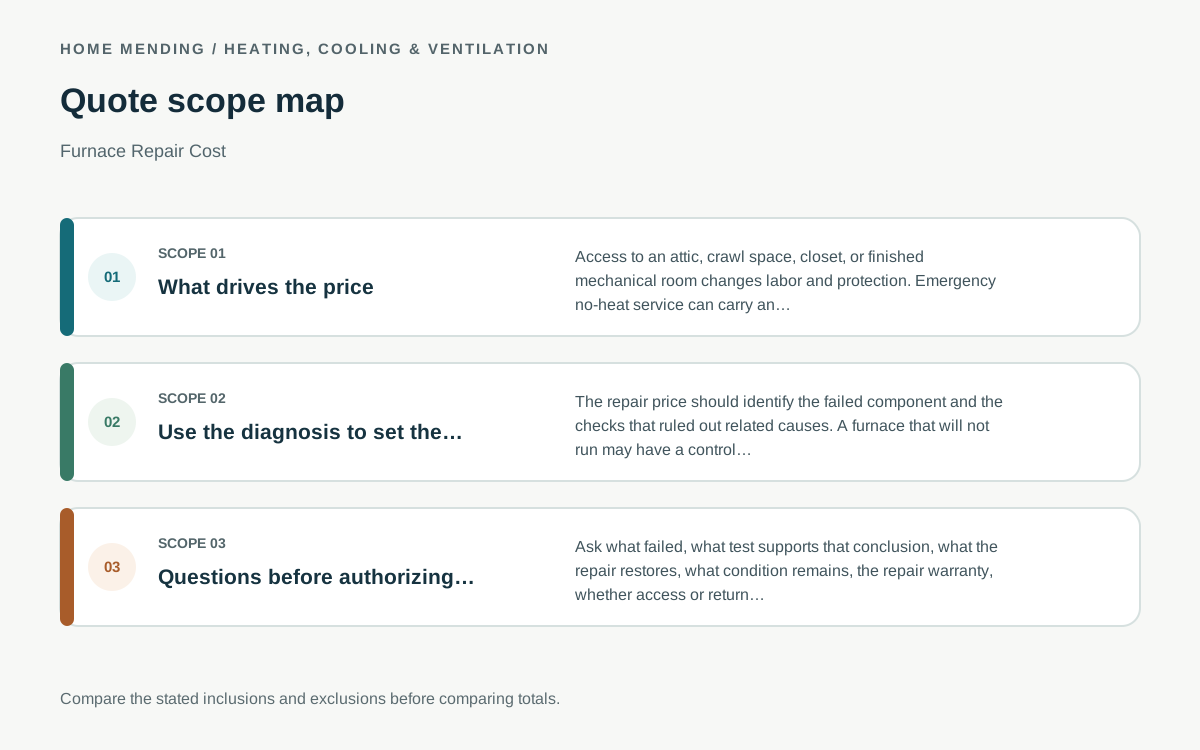
Use the diagnosis to set the repair boundary
The repair price should identify the failed component and the checks that ruled out related causes. A furnace that will not run may have a control, ignition, airflow, fuel, venting, sensor, blower, or heat-exchanger issue. A short-cycle or noisy furnace may need a different investigation. Ask what the technician expects to change and what remains outside the visit.
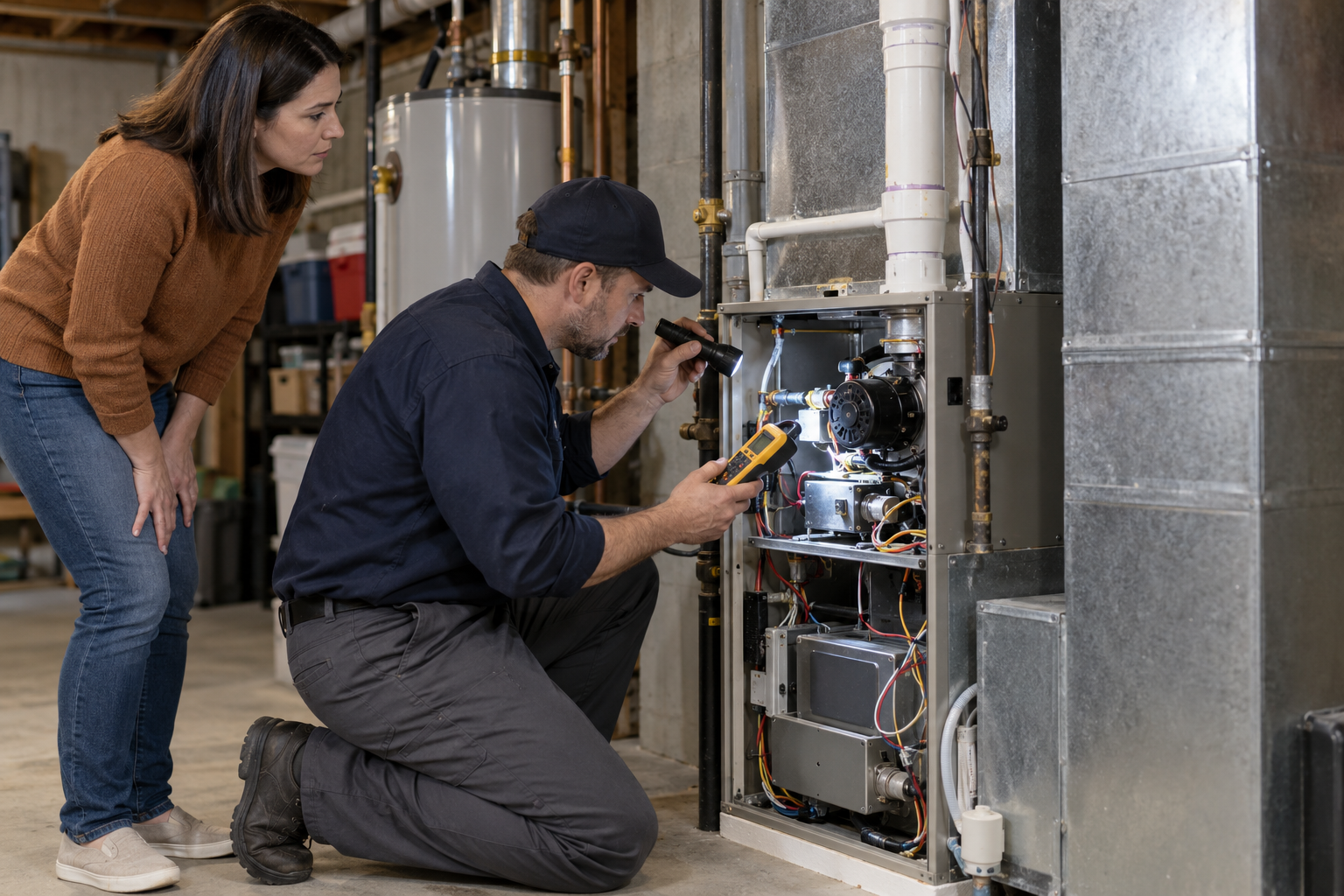
Repair is stronger when the failure is isolated, parts are available, the equipment is serviceable, and testing shows safe and stable operation afterward. Compare replacement when the proposed repair joins repeated failures, obsolete parts, poor distribution, or a broader age-related decline. A quote should separate diagnosis, part, labor, access, testing, warranty, and any recommended but unapproved work.
Ask whether the proposed work restores ignition, airflow, heat delivery, controls, or another defined function. A blower repair may not solve a restricted return; an ignition repair may not resolve a venting concern; a control repair may not correct short cycling from sizing or distribution. The quote should state the expected result and remaining uncertainty.
For major components or repeated failures, obtain a replacement comparison with fuel, capacity, ducts, venting, condensate, controls, removal, testing, access, and warranty. Treat combustion and electrical findings as professional safety and local-verification matters, not as ordinary part pricing.
A U.S. specialist guide reports furnace repair around $64–$1,475 across ordinary projects. That is a broad planning band, not a promise and not a complete list of gas, oil, propane, or electric repairs. The failed part, fuel, access, urgency, combustion or electrical scope, and condition of the wider system determine the real bill.
“No heat” has several repair paths
A furnace may fail to heat because of controls, ignition, airflow, blower operation, fuel delivery, burners, a limit or safety control, venting, or a problem outside the furnace such as duct restriction. A thermostat symptom can be a control issue, while a noisy or short-cycling unit can involve airflow, blower, sizing, or combustion-related conditions.
Diagnosis should identify the observed failure before a part is replaced. Combustion, gas, oil, electrical, venting, and carbon-monoxide-related concerns require qualified professional assessment. This article explains cost and scope, not a DIY test procedure.
Common repair families
- Controls and ignition: thermostat, control board, ignitor, flame-sensing or other equipment-specific controls. Labor and diagnosis can exceed the price of a small part.
- Blower and airflow: motor, wheel, capacitor or control, filter-related restriction, duct connection, or return-air problem. Replacing a motor will not correct an undersized or leaking duct system.
- Combustion and fuel components: burners, valves, pumps, nozzles, or related equipment. Scope and safety requirements vary by fuel and jurisdiction.
- Heat-transfer or venting concerns: a suspected heat exchanger, flue, vent, or combustion-air issue can change the repair into a safety and replacement decision.
- Electrical equipment: wiring, relays, fuses, or circuit issues. Furnace work does not establish that a whole-home electrical upgrade is required.
What drives the price
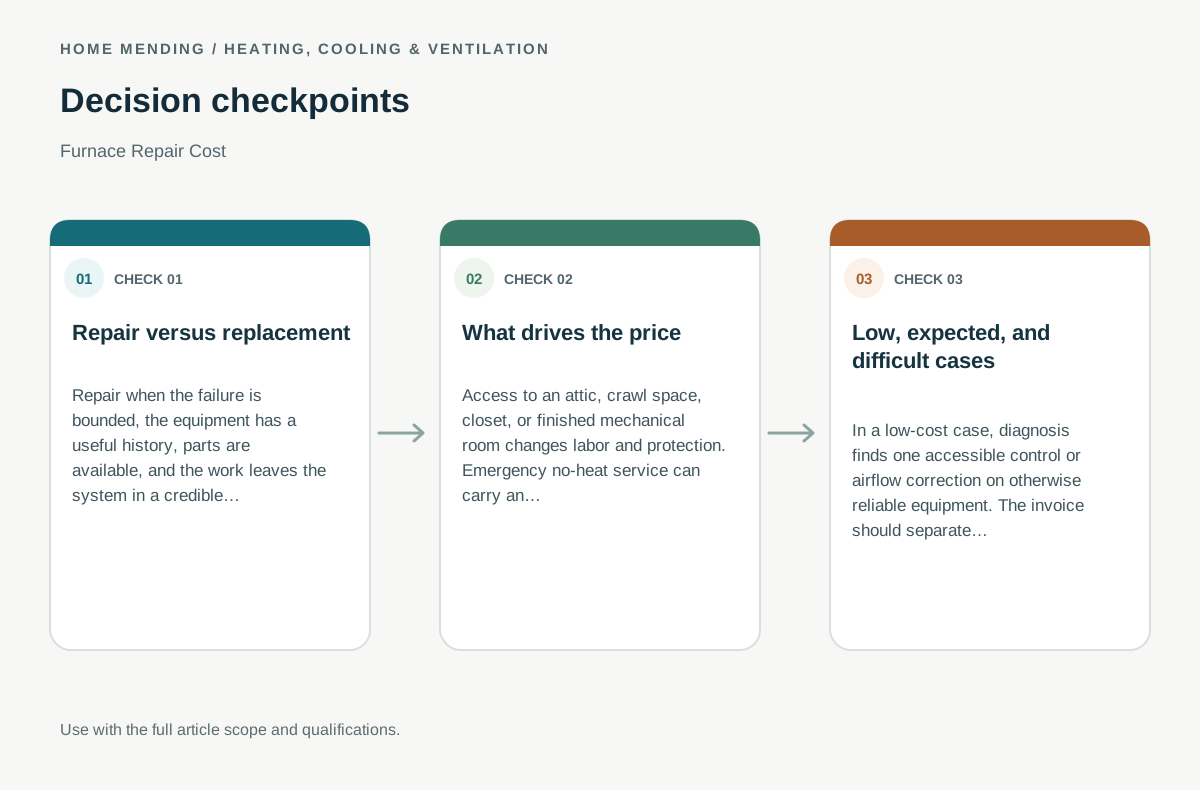
Access to an attic, crawl space, closet, or finished mechanical room changes labor and protection. Emergency no-heat service can carry an availability premium. Fuel type changes parts, skills, venting, and testing. Age affects availability and the chance of a second failure, but it is not by itself a replacement rule.
The wider air-distribution system matters. ENERGY STAR identifies ducts, airflow, controls, sizing, and installation quality as contributors to comfort and efficiency. If one room is cold, the furnace may not be the correct first repair.
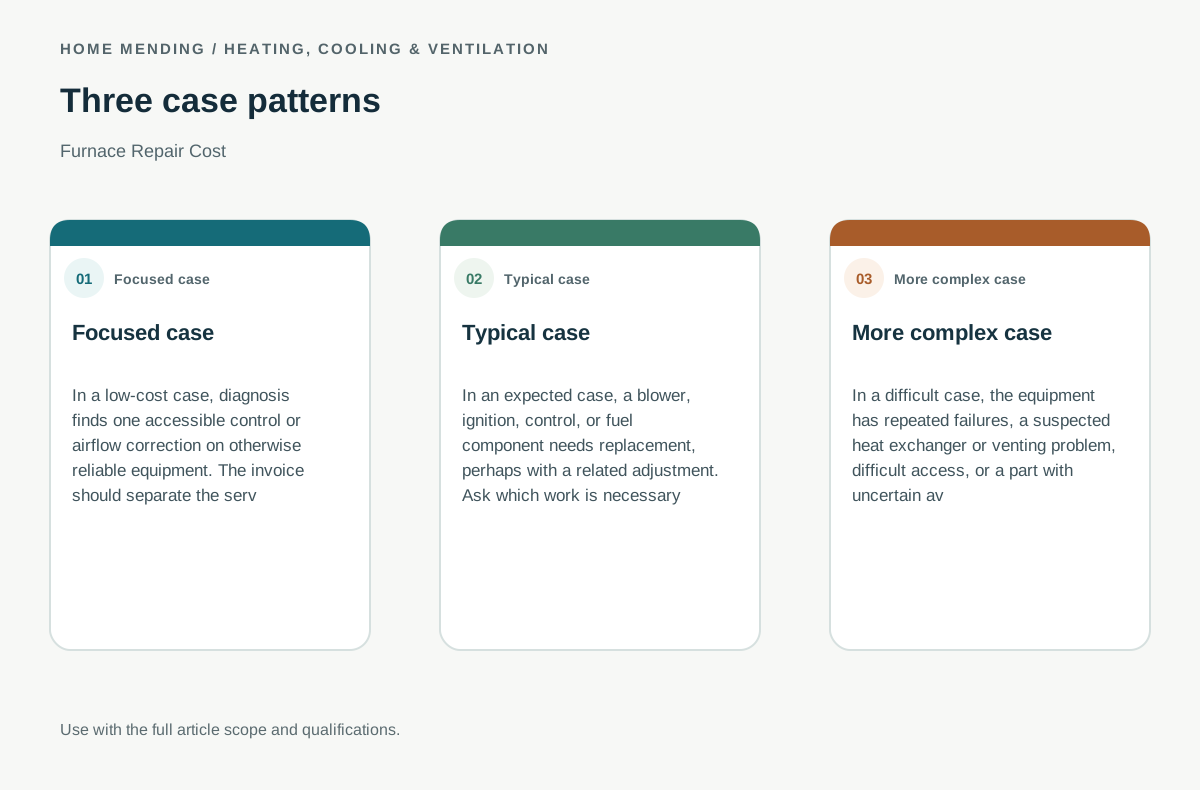
Low, expected, and difficult cases
In a low-cost case, diagnosis finds one accessible control or airflow correction on otherwise reliable equipment. The invoice should separate the service fee, part, labor, testing, and warranty.
In an expected case, a blower, ignition, control, or fuel component needs replacement, perhaps with a related adjustment. Ask which work is necessary and which recommendation is preventive or optional.
In a difficult case, the equipment has repeated failures, a suspected heat exchanger or venting problem, difficult access, or a part with uncertain availability. Compare the repair with a furnace replacement that includes capacity selection, ducts, venting, condensate, controls, removal, and commissioning.
Repair versus replacement
Repair when the failure is bounded, the equipment has a useful history, parts are available, and the work leaves the system in a credible condition. Replacement deserves a quote when repairs repeat, comfort remains poor, major components fail, bills rise without a distribution explanation, or safety-related work exposes a wider issue.
ENERGY STAR uses roughly 15 years as a furnace evaluation point, not a rule that every furnace of that age must be replaced. Use age with repair history, condition, efficiency, service availability, ownership horizon, and compatibility.
Questions before authorizing work
Ask what failed, what test supports that conclusion, what the repair restores, what condition remains, the repair warranty, whether access or return visits are included, and whether a replacement quote is available. For gas or oil equipment, ask which local inspection, venting, fuel, and permit requirements apply; do not accept a generic online rule as the answer.
Compare the all-in repair with the future cost and disruption of a replacement. A cheap repair is useful when it buys reliable time. It is poor value when it only delays a broad, already-visible system failure.
Evaluate the result, not just the part
Ask what the furnace should do after the repair and what remains unknown. A new blower may restore airflow but not correct a deficient return. A new ignition component may restore operation but not resolve a venting or combustion concern. A control replacement may not correct short cycling caused by sizing or distribution.
For a fuel-burning appliance, ask which inspection, testing, venting, fuel, and permit requirements apply locally. Market price guides are not authority for safe combustion work. If a safety-related condition is found, treat the professional assessment and required correction as the scope rather than seeking a shortcut.
Compare a major repair with replacement
For a heat exchanger, blower, control system, or repeated fuel-related failure, obtain a furnace replacement alternative. Include capacity, efficiency, fuel connections, ducts, venting, condensate, controls, removal, access, testing, and warranty. A component repair can still be right, but the comparison reveals the remaining system risk and future mobilization.