Illustrative planning scenario (U.S. dollars, September 2026)
This is a transparent ownership example, not a payback promise: compare a $6,500 standard replacement with an $8,000 high-efficiency option, a $1,500 premium. If the premium is spread over 10 planned years, it represents $150 per year before fuel savings, maintenance, incentives, or financing; local operating conditions determine whether it is worthwhile.
Put the efficiency premium against the ownership horizon
Identify the installed premium for the higher-efficiency model and the work it triggers: venting, condensate, controls, electrical, duct transitions, removal, access, testing, and commissioning. Then compare that premium with local fuel use, climate, runtime, maintenance, parts, and the years the owner expects to keep the system. Do not treat a product rating as a guaranteed payback.
A compatible replacement may make the premium easier to evaluate. A difficult retrofit or a home considering a heat pump may need a broader system comparison. Ask whether envelope or duct work is planned soon and whether that will change equipment sizing or the value of the upgrade.
Price a suitable standard furnace and the high-efficiency alternative with the same capacity, ducts, controls, removal, access, testing, and warranty. Isolate the extra venting, condensate, controls, and installation work. Then model fuel use with local rates, runtime, current efficiency, proposed efficiency, and ownership years.
The premium is easier to justify when the furnace is already being replaced, the home has substantial heating demand, and the supporting work is modest. It is harder to justify when envelope or duct losses dominate, the retrofit is disruptive, or the owner may move before the modeled benefit accrues.
Paying more for a high-efficiency gas furnace can make sense, but the answer depends on the complete installed premium and the home’s future fuel use. A rated efficiency number does not by itself predict savings. Climate, gas price, runtime, existing furnace efficiency, sizing, duct condition, installation quality, venting, condensate, and ownership horizon all matter.
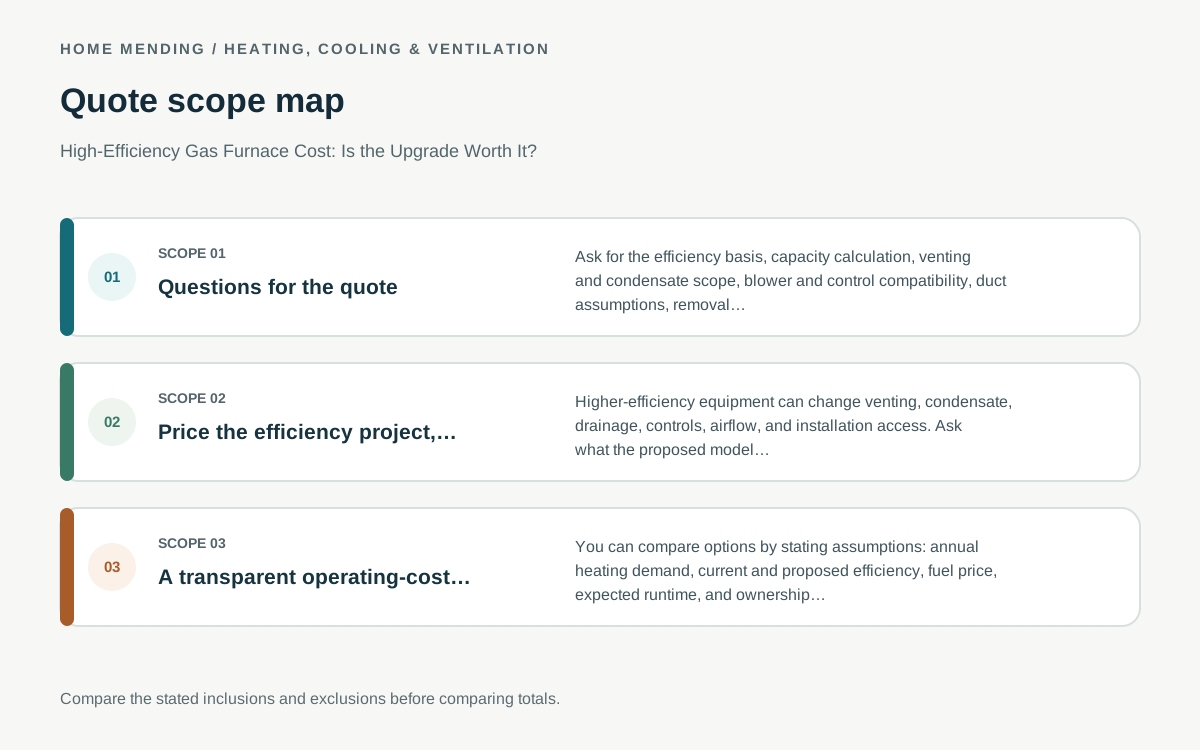
Price the efficiency project, not only the rating
Higher-efficiency equipment can change venting, condensate, drainage, controls, airflow, and installation access. Ask what the proposed model requires and whether the existing ducts, thermostat, flue path, gas connection, electrical, and drain are compatible. A rating difference does not establish savings without local fuel use, climate, runtime, and equipment sizing assumptions.
Compare the installed premium with the remaining ownership horizon and the likelihood of a future heat-pump or system replacement. A simple compatible installation may have a clear case; a difficult retrofit may need a broader system decision. Keep venting, electrical, condensate, controls, removal, testing, and commissioning visible in the quote.
The comparison is usually between a conventional non-condensing furnace and a higher-efficiency condensing design, although product classes and ratings vary. A condensing furnace can require different venting, condensate management, controls, and installation details. The supporting work may be a larger part of the premium than the furnace cabinet.
U.S. federal standard: check the product class and date
DOE’s current consumer guidance continues to list December 18, 2028, as the compliance date for the amended standard covering non-weatherized and mobile-home gas furnaces. It lists an 80% AFUE minimum for covered products manufactured through December 17, 2028, and 95% for covered products manufactured on or after December 18, 2028. Industry petitioners asked DOE in 2026 to extend the date to January 1, 2030, at a minimum, and DOE sought public comment on whether to grant that request. The petition notice is not a final amendment. In a related case, the Supreme Court vacated and remanded a lower-court judgment; that procedural action did not itself change DOE’s published date. Check the current rule and the exact product class and manufacture date before relying on the schedule. This is not an existing-home replacement deadline, Canadian requirement, installation code, or price or savings forecast. Sources include the Department of Energy’s consumer furnace guidance, petition notice, Supreme Court docket, and 10 CFR 430.32.
Ask the contractor to price both options using the same capacity basis and distribution assumptions. If one option includes new venting, drain, thermostat, removal, and testing while the other assumes reuse, the price difference is not an efficiency premium.
Build the installed premium
Compare:
- equipment and blower configuration;
- rated efficiency and product eligibility relevant to your market;
- venting route and termination assumptions;
- condensate drain, pump, or freeze-protection considerations;
- gas, electrical, thermostat, staging, and control work;
- duct transitions, return-air condition, balancing, and commissioning;
- removal, disposal, permits where applicable, and warranty.
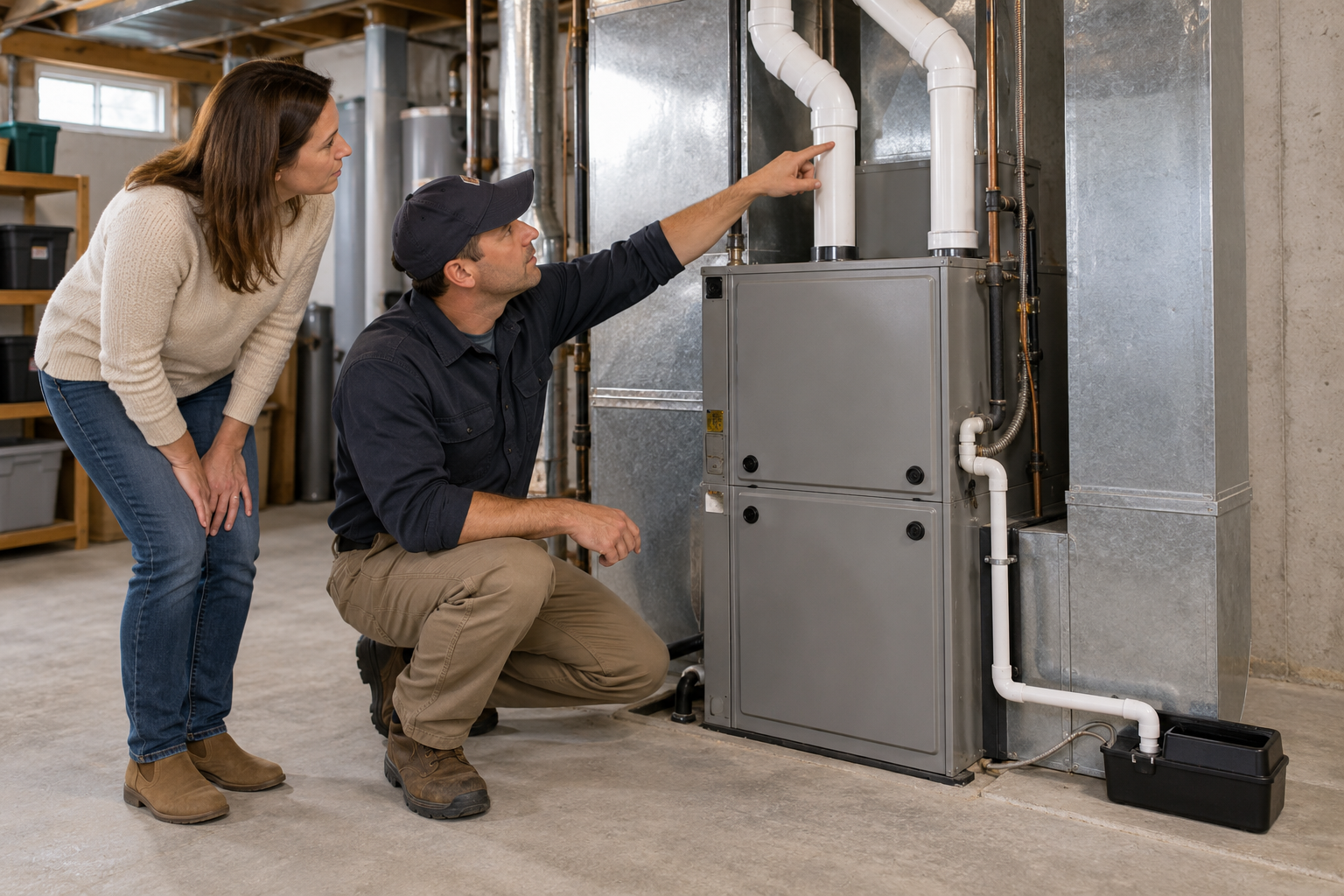
The existing mechanical-room layout can determine whether an upgrade is simple or intrusive. A short accessible route may keep the premium modest; a finished basement, difficult drain path, or concealed vent route can make the installation layer significant.
Think in scenarios, not payback promises
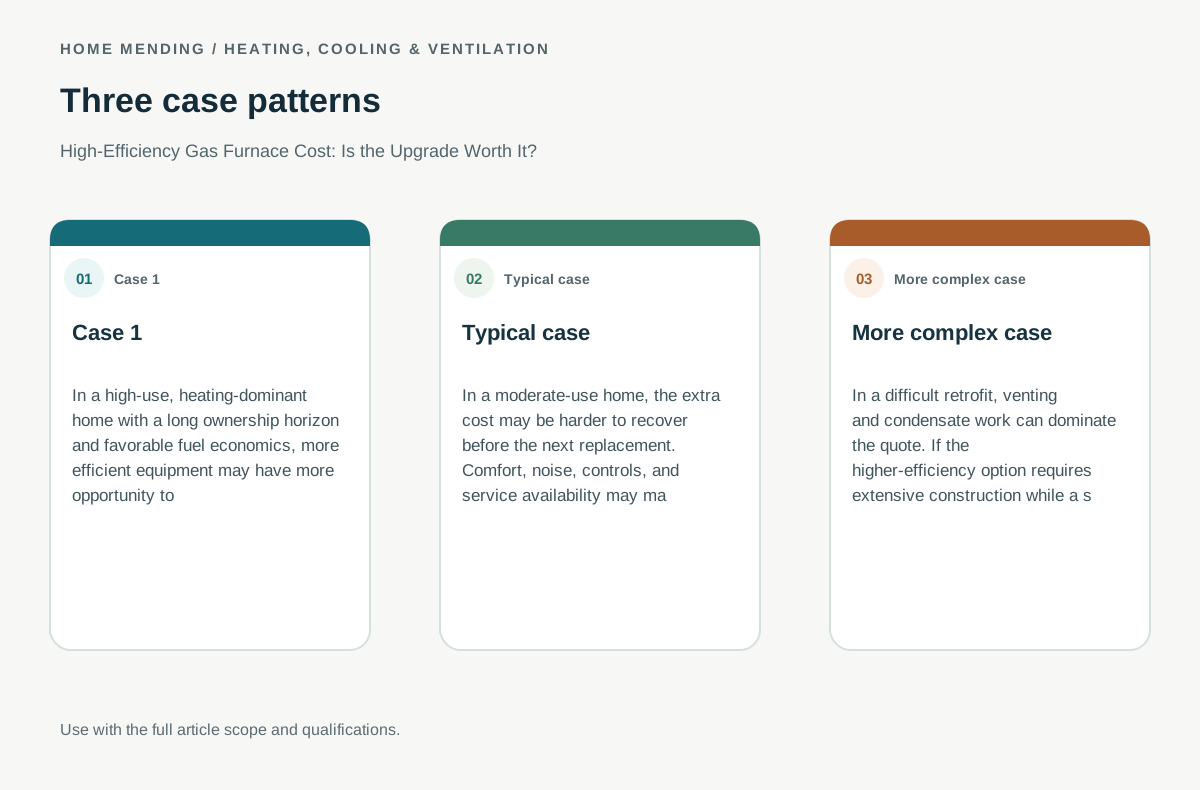
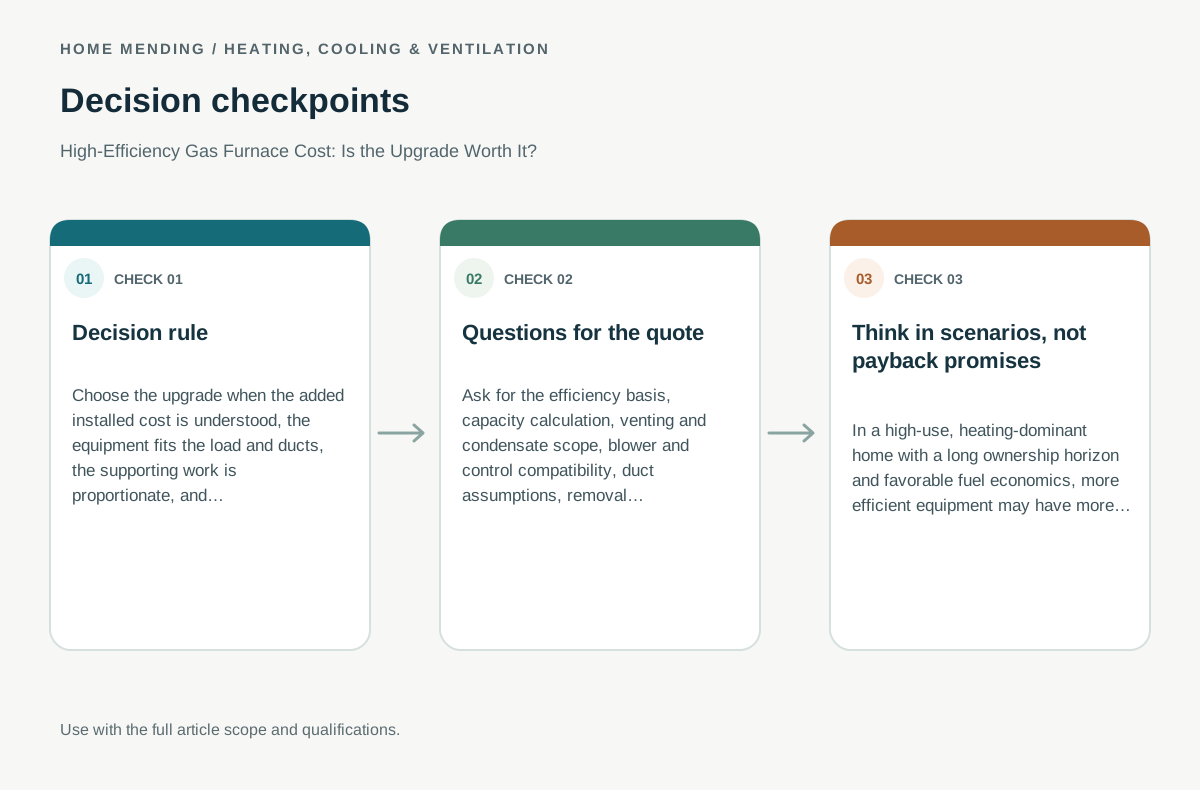
In a high-use, heating-dominant home with a long ownership horizon and favorable fuel economics, more efficient equipment may have more opportunity to recover its installed premium. That conclusion still depends on correct sizing and installation.
In a moderate-use home, the extra cost may be harder to recover before the next replacement. Comfort, noise, controls, and service availability may matter more than a modeled energy-only payback.
In a difficult retrofit, venting and condensate work can dominate the quote. If the higher-efficiency option requires extensive construction while a suitable alternative reuses infrastructure, compare the whole project rather than assuming the rated efficiency wins.
A transparent operating-cost model
You can compare options by stating assumptions: annual heating demand, current and proposed efficiency, fuel price, expected runtime, and ownership period. The result is a planning model, not a guarantee. Change one assumption at a time to see whether the recommendation changes.
Do not use a generic savings percentage without showing the baseline. A home’s envelope, duct leakage, thermostat behavior, weather, and equipment condition can matter as much as the rating. ENERGY STAR emphasizes system performance and installation quality; a poorly installed high-efficiency furnace can underperform its label.
When the upgrade is not the right comparison
If the home has cold rooms, high bills, or short cycling, investigate ducts, airflow, sizing, and envelope conditions before buying efficiency. If a fuel switch, electrical-service upgrade, heat pump, or coordinated whole-home conversion is under consideration, the dominant decision belongs to broader electrification planning. Do not make a gas-furnace efficiency comparison carry that larger project.
Questions for the quote
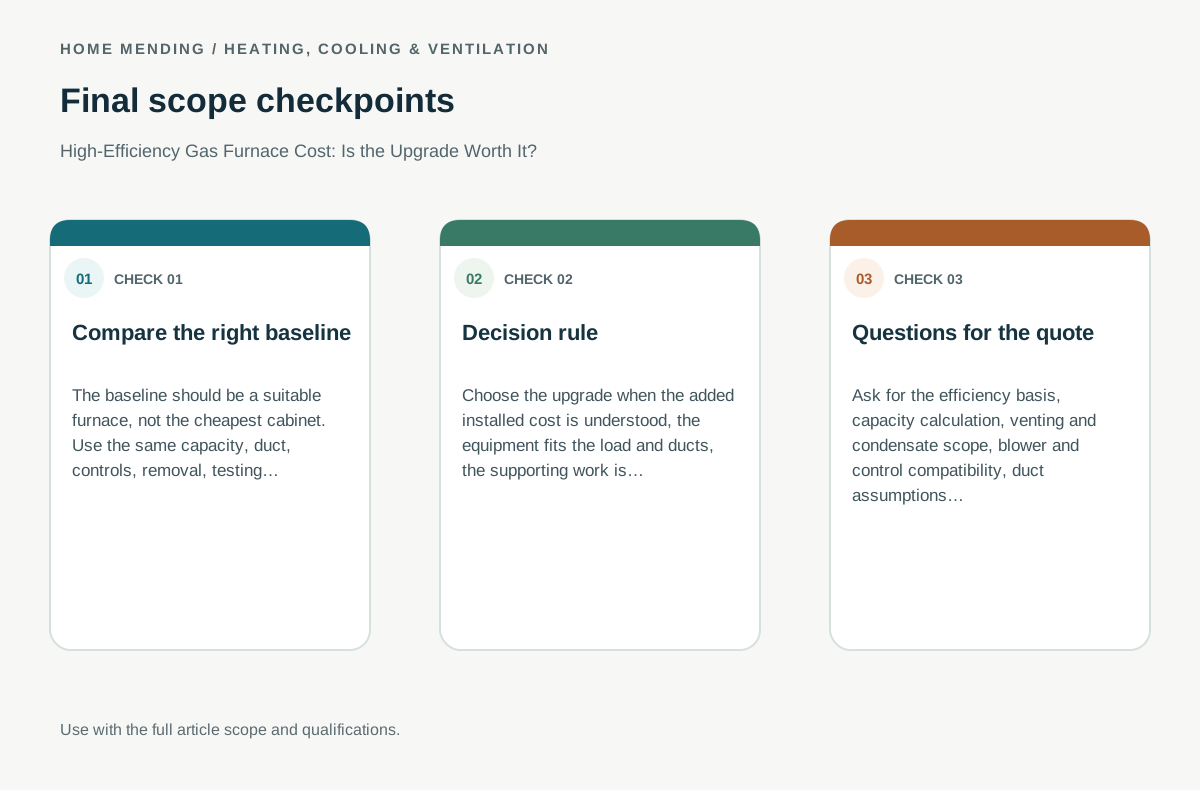
Ask for the efficiency basis, capacity calculation, venting and condensate scope, blower and control compatibility, duct assumptions, removal, testing, warranty, and the exact incremental price over a suitable lower-efficiency option. Request the contractor’s modeled assumptions for any savings claim and ask what happens if the existing drain or vent route is unsuitable.
Decision rule
Choose the upgrade when the added installed cost is understood, the equipment fits the load and ducts, the supporting work is proportionate, and your ownership horizon gives the operating benefit time to matter. Choose the simpler suitable option when the premium is mostly construction cost, fuel use is modest or uncertain, or the home needs envelope or distribution correction first.
There is no universal payback threshold. The sound decision is the one that compares a complete, compatible installation with transparent assumptions rather than a rating number against a sticker price.
Test the payback against ownership
Build a model with current and proposed efficiency, annual heating demand, local gas price, expected runtime, maintenance, and years of ownership. Test colder and warmer use, different fuel prices, and a shorter ownership period. If the result changes easily, present the upgrade as a preference or comfort decision rather than a certain financial return.
An efficiency upgrade may be worth more when the installation is already open for replacement and the incremental venting or condensate work is modest. It may be worth less when the premium requires major finished-surface access or when the home’s envelope and ducts still waste much of the heat. Correct sizing and installation quality are part of the economics.
Compare the right baseline
The baseline should be a suitable furnace, not the cheapest cabinet. Use the same capacity, duct, controls, removal, testing, warranty, and access assumptions. Keep incentives and fuel forecasts separate until verified for the actual location. If the real decision is a heat pump or whole-home fuel change, use that comparison rather than forcing it into a gas-efficiency calculation.