
Siding repair versus replacement is not decided by a universal percentage of replacement cost. Compare the affected area, the cause, the condition of the wall, the availability of matching material, and the next likely repair.
Start with the damage boundary
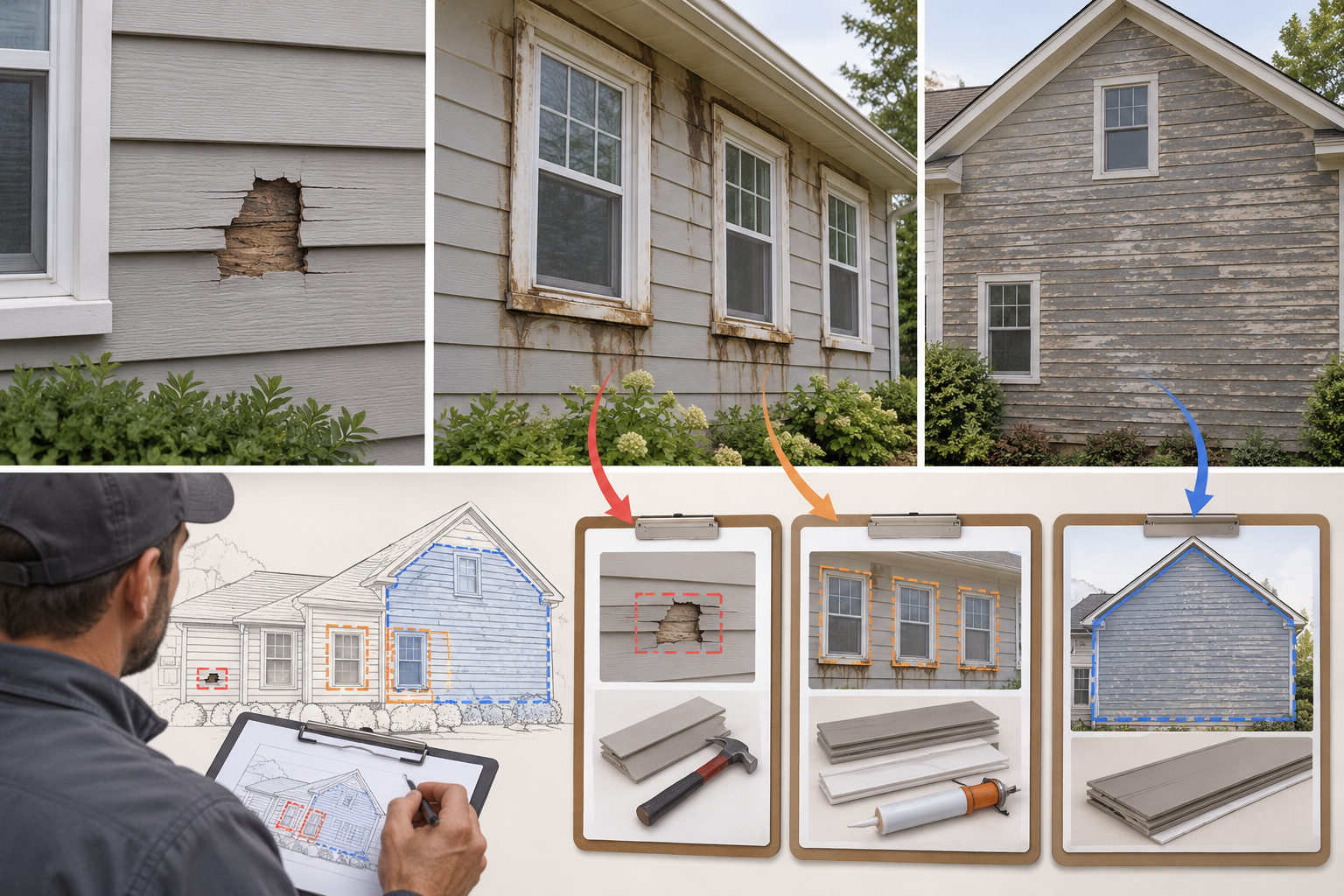
Localized damage with a stable substrate can support repair. Widespread cracking, repeated loose sections, extensive rot, or damage on several elevations may make a larger project more coherent. Ask the contractor to map the affected areas instead of describing the problem only as bad siding.
The visible finish is not the complete wall. Water can pass joints and penetrations and should be managed by flashing, a drainage plane, and other layers behind the cladding. If repair would leave wet sheathing, failed flashing, or an unresolved water path, a small patch may only postpone the cost.
Compare the next repair
Include:
- the immediate repair and access charge;
- diagnosis and correction of the water or impact source;
- matching, painting, or refinishing;
- the likelihood of another repair in the same area;
- the cost of opening the wall now versus later;
- disposal, trim, and access if replacement is chosen.
Material changes the decision. Vinyl can be replaceable in sections but hard to match after weathering. Wood may need profile matching and a new finish. Metal can be dented or corroded. Masonry may require compatible mortar or replacement units. Manufacturer documents can limit repair methods for fiber cement or engineered products.
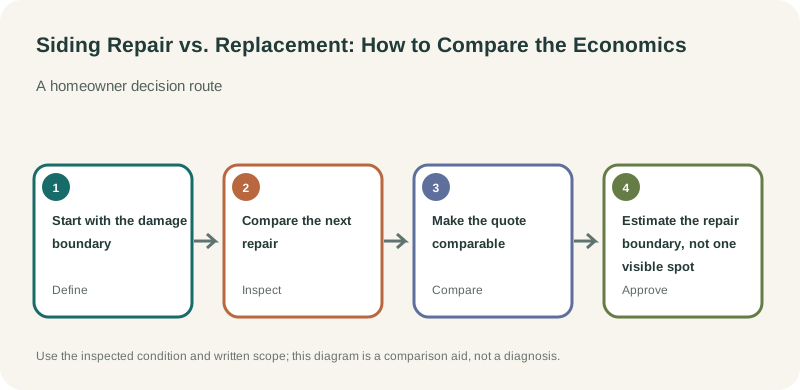
Make the quote comparable
Request one repair option and one replacement option when the boundary is uncertain. Both should state the same access, preparation, trim, disposal, substrate assumptions, and change-order terms.
Repair is more defensible when the problem is localized, the cause can be corrected, and matching is practical. Replacement is more defensible when failures are widespread or repeated and the finish is no longer serviceable. Neither conclusion follows from age alone. For full-project scope, see siding replacement cost.
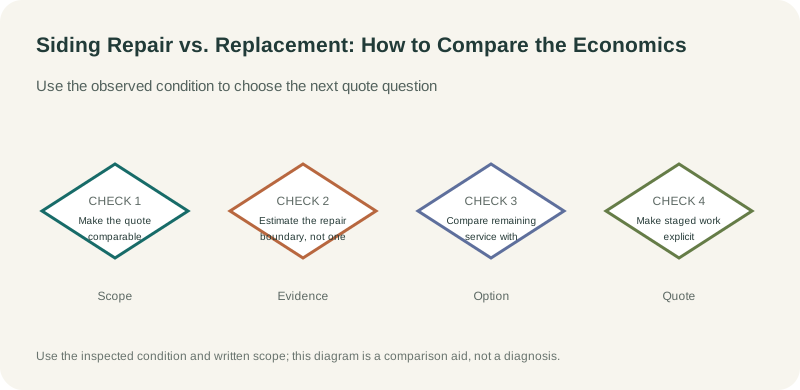
Estimate the repair boundary, not one visible spot
A repair estimate is useful only when it states how far the contractor will investigate and where the work stops. Ask whether the price covers just the cladding, or also removal for inspection, housewrap or flashing repairs, sheathing, insulation, trim, and matching adjacent courses. For a leak, request the suspected entry point and the evidence for that diagnosis. Water can travel behind cladding, so the wet interior mark and the exterior defect may not line up.
If damage is localized, price the repair with a clear allowance for opening the wall. If defects recur in several areas, ask for a separate assessment that maps the affected elevations and details. This lets you compare the immediate repair with a staged program, rather than treating every defect as proof that all siding must be replaced. It also exposes when several small service charges would accumulate without correcting a shared cause.
Compare remaining service with repeat-work risk
A replacement quote is a large, defined investment; repair is a smaller intervention with an uncertain remaining life. Compare them over a practical horizon that fits your plans for the home. Include known maintenance, likely repeat service visits, the risk that matching material will become harder to source, and the possibility that additional concealed damage will be found. Do not convert an uncertain lifespan into a precise annual-cost calculation unless the assumptions are stated.
Repair tends to be easier to defend when the surrounding assembly is sound, matching parts are available, and the cause is corrected. Replacement deserves closer consideration when failures are widespread, the system is near the end of its useful service, the existing installation has recurring water-management defects, or the repair scope approaches a substantial part of a replacement. Those are prompts to compare estimates, not automatic rules.
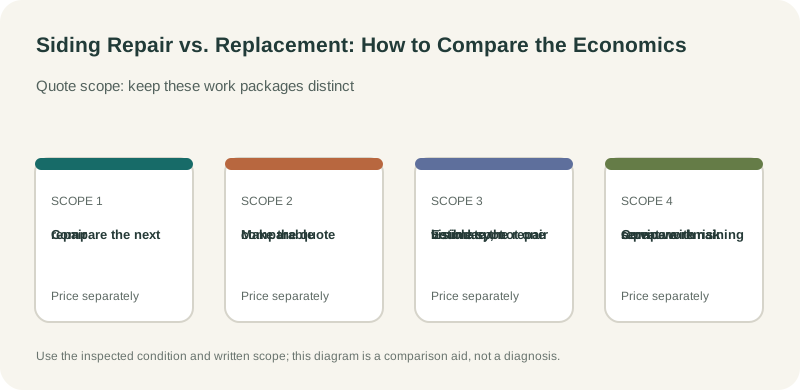
Make staged work explicit
If replacement is deferred, ask the contractor to identify urgent water-entry or safety repairs separately from cosmetic work and to document areas not opened. Keep photographs and invoices so future bidders can see what was changed. A staged plan should state what condition would trigger the next phase, which details must be monitored, and whether temporary patches are intended to be short-term. This makes a repair decision reviewable instead of allowing a series of disconnected invoices to obscure the total cost.
Compare costs over a chosen time horizon
Choose a time horizon that matches how long you expect to own the home or keep the current exterior. Within that period, compare the proposed repair price, any known recurring maintenance, and the possibility of another mobilization with the replacement scope. Use low, expected, and high cases based on explicit assumptions: a dry wall and available matching material; some trim or sheathing repair; or a wider concealed defect. Do not turn uncertain service life into a precise annual cost without explaining the assumptions.
For insurance-related damage, compare the physical scope with any claim estimate separately from the coverage decision. Insurance rules and depreciation are outside the repair-versus-replacement economics. Ask contractors to quote observed damage and optional whole-elevation work as distinct items so the homeowner can see the incremental cost.
Check whether the repair changes the underlying detail
A repair is stronger when it includes correction of the cause: secure attachment, flashing, water diversion, or replacement of damaged backing. If the repair only hides a symptom, the estimate should state that limitation. When a larger project is proposed, ask what recurring condition it corrects and what evidence supports removal beyond the visibly damaged area. This keeps the decision based on wall condition rather than on a contractor’s preferred project size.
Compare three common decision patterns
One isolated impact: A single damaged area with sound surrounding panels, no water evidence, and available matching material usually supports pricing a local repair first. The estimate should include the actual panel and accessory count, access, and any inspection behind the opening. A whole-elevation proposal needs to explain why the damage boundary extends beyond the visible area.
Repeated failures at several details: Similar leaks or loose panels around multiple windows, corners, or roof transitions may point to a shared installation or water-management issue. Price a diagnostic assessment that maps those details before choosing between another series of patches and a larger replacement. Replacing cladding without correcting the detail can leave the underlying cause in place.
Broad deterioration or unavailable material: If several elevations are damaged, matching stock is unavailable, and repairs would leave a conspicuous patchwork, compare a defined wall-by-wall replacement with a broader recladding. The wider option may simplify finish and access but increases demolition and the chance of finding hidden repairs. Ask for staged alternatives that show the incremental cost of each elevation.
These patterns guide the questions, not the outcome. The condition of the backing, exposure, remaining service, access, and homeowner’s appearance priorities determine the best scope.
Make the decision using written quantities
Request a condition map and quantities for both paths. For repair, list each location, material, labor minimum, and allowance for concealed conditions. For replacement, list wall areas, openings, trim, removal, disposal, access, and water-management work. Ask which quantities are measured and which are estimates. If the repair path requires repeated service calls, include likely mobilization and matching limitations in the comparison, but do not assume every small repair will recur.
If the home is being sold or an insurance claim is open, keep those administrative questions separate from the physical repair decision. The condition record should describe what is damaged and what the contractor proposes to correct. Coverage, disclosure, and claim settlement are determined by the relevant parties and policies, not by the repair-versus-replacement calculation.
Avoid two common comparison errors
First, do not compare a minimal repair with a complete replacement total and call the smaller number more economical without accounting for the work each buys. The repair may leave other deteriorated areas untouched; replacement may include new trim and access not needed for the immediate defect. Separate necessary work from optional improvement and compare only the scope that addresses the same condition.
Second, do not assume that replacement provides a better water barrier by itself. A new cladding face still depends on the backing, flashing, joints, and transitions being appropriate. If the current concern is water entry, ask every bidder to identify the suspected path and the planned correction. A repair that corrects a discrete flashing defect can be more durable than broad siding replacement that reproduces it.
State your practical priorities
Some homeowners prioritize lowest immediate cost and accept future patch visibility; others want a consistent elevation and fewer service visits. There is no universal ranking. Write down the acceptable appearance, expected ownership horizon, tolerance for opening the wall, and available budget. Ask the contractor to explain what is certain and what may be discovered. This makes the final choice understandable even when price and hidden-condition risk cannot be reduced to one exact calculation.
The written comparison should state the consequence of deferring each optional line and the evidence that would trigger a larger phase.