
An aluminum siding repair can be dent correction, panel replacement, coating repair, or a larger section where the finish cannot be matched. Labor minimums and access often matter more than the replacement piece.
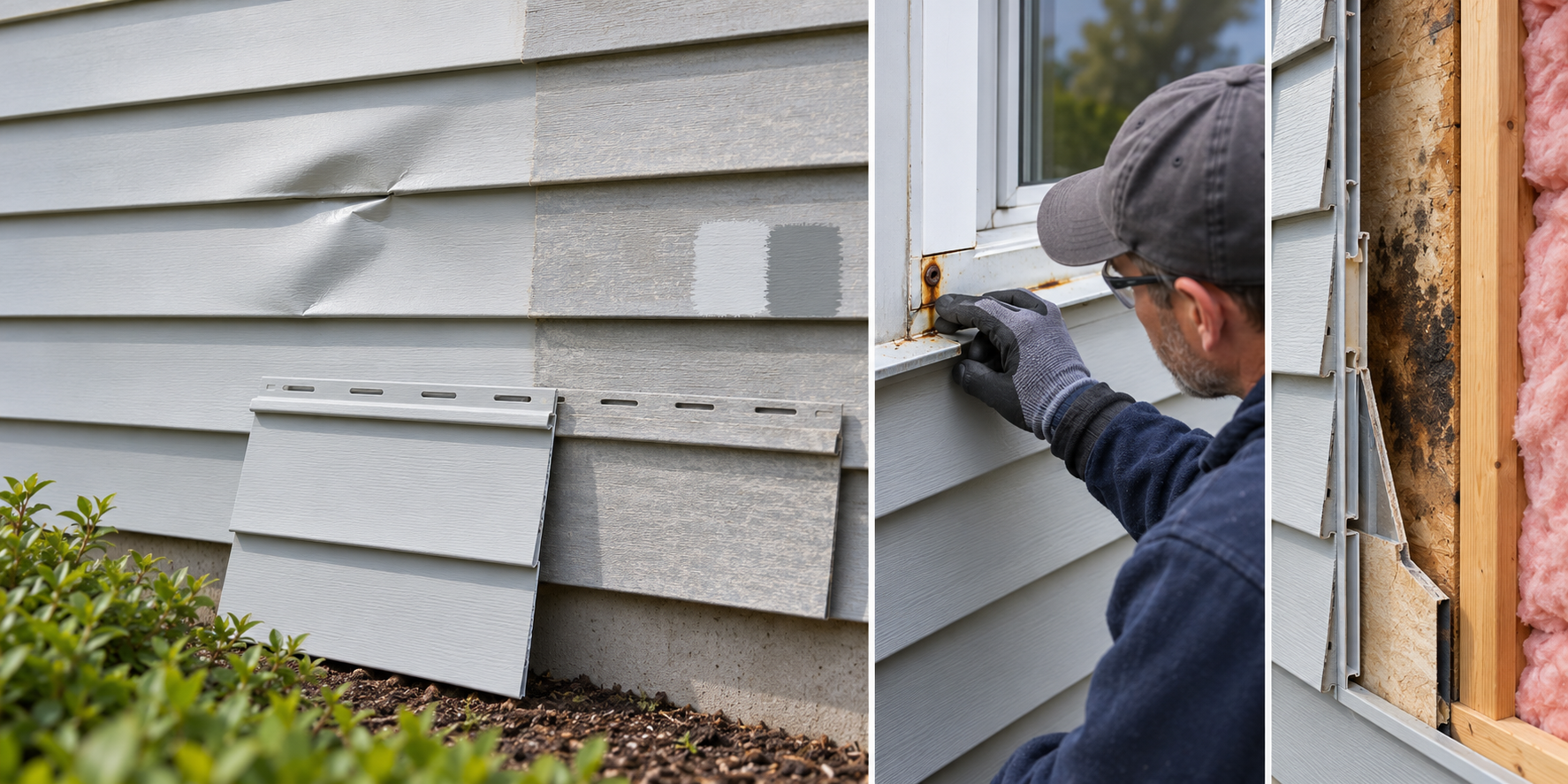
A contractor may straighten a suitable dent, replace a panel, repair a scratch or coating failure, or paint a broader area. Severe corrosion, brittle trim, and discontinued profiles can turn local repair into partial replacement. Ask whether removal, replacement panels, trim, fasteners, coating preparation, access, and cleanup are included.
Sun and weather alter the original finish. Compare a sample with the actual elevation before accepting a color-match promise. A broader section or deliberate repaint can be more coherent than repeated patches.
Corroded fasteners and flashings may be part of the cause. The cladding works with flashing and drainage layers behind it. Replacing a panel without correcting water entry or incompatible metal contact can shorten the repair.
The evidence does not support a reliable national aluminum repair price or Canadian benchmark. Use a local quote with a service minimum and a mapped boundary. Compare broader replacement when failures repeat.
Repair choices for dents, loose sections, and finish wear
A dent may be only cosmetic, while a loose panel or damaged lock can admit water or allow wind movement. Ask whether the repair restores attachment and interlocks with neighboring pieces or merely improves appearance. The contractor should identify the affected panels, corners, channels, and fasteners, and state whether trim removal is required. For a leak or staining, ask what evidence connects the visible damage with the suspected water path.
Aluminum can be difficult to match after years of fading and chalking. Compare a replacement panel, a larger section, and a coating or intentional contrast if appearance matters. A coating quote should include cleaning, preparation, compatible primer if needed, masking, and a defined coating system. Painting over loose or distorted panels does not repair the attachment and may leave the original defect in place.
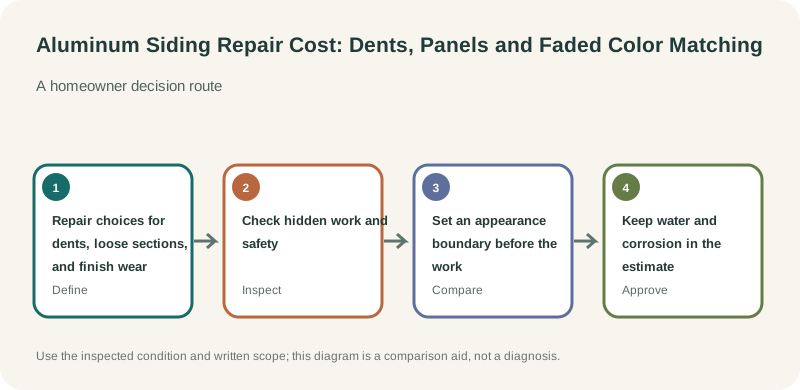
Check hidden work and safety
If removal reveals damaged sheathing or wet insulation, ask for photographs and a separate repair scope before the wall is closed. Keep the panel repair distinct from flashing or building-envelope work so the estimate shows what problem each line addresses. Older exterior finishes and building materials may require local hazard screening before disturbance; use the applicable jurisdictional rules and qualified advice rather than assuming the age or appearance alone determines the controls.
A small repair is usually most predictable when the surrounding wall is sound and replacement material is available. If dents, loose joints, or leaks recur across multiple elevations, compare repair totals with an elevation or full replacement estimate and identify whether a common installation or water-management issue is driving the symptoms.
Set an appearance boundary before the work
Decide whether the goal is to stop movement or water entry, improve appearance, or both. A small dent repair may leave a visible ripple; replacement panels may have a cleaner profile but a noticeable color mismatch. Ask the contractor to show the proposed stopping point and whether a corner, downspout, or other feature creates a natural break. Photograph the wall before repair so the agreed finish can be compared with the result.
For a coating, request a sample on a cleaned portion of the actual surface and review it in daylight. Confirm how oxidation is removed, whether primer is needed, how nearby materials are protected, and whether the coating can bridge any existing finish defects. The product warranty and the contractor’s workmanship coverage should be described separately.
Keep water and corrosion in the estimate
If metal is corroded or separated near a joint, ask whether water has reached the substrate and whether dissimilar materials or trapped moisture contributed. Include a check for surrounding trim, openings, and roof or deck transitions where the damage repeats. The quote should distinguish replacement metal from repair of backing, flashing, or a water-entry detail. This prevents a cosmetic panel change from being presented as a complete leak correction.
Set a repair budget around uncertainty
A simple case might involve one accessible panel, available replacement stock, and no backing damage. A more involved case can require trim removal, a larger section for matching, lift access, coating work, or investigation behind a leak. Ask for a fixed price for the confirmed work and a separate allowance for concealed repair. This gives you a useful first decision without pretending the total is known before the wall is opened.