
Vinyl siding repair is often a small-material, labor-minimum project. A single panel may be inexpensive compared with the service visit, access, diagnosis, and matching work needed to make the repair useful.
Common repair scopes
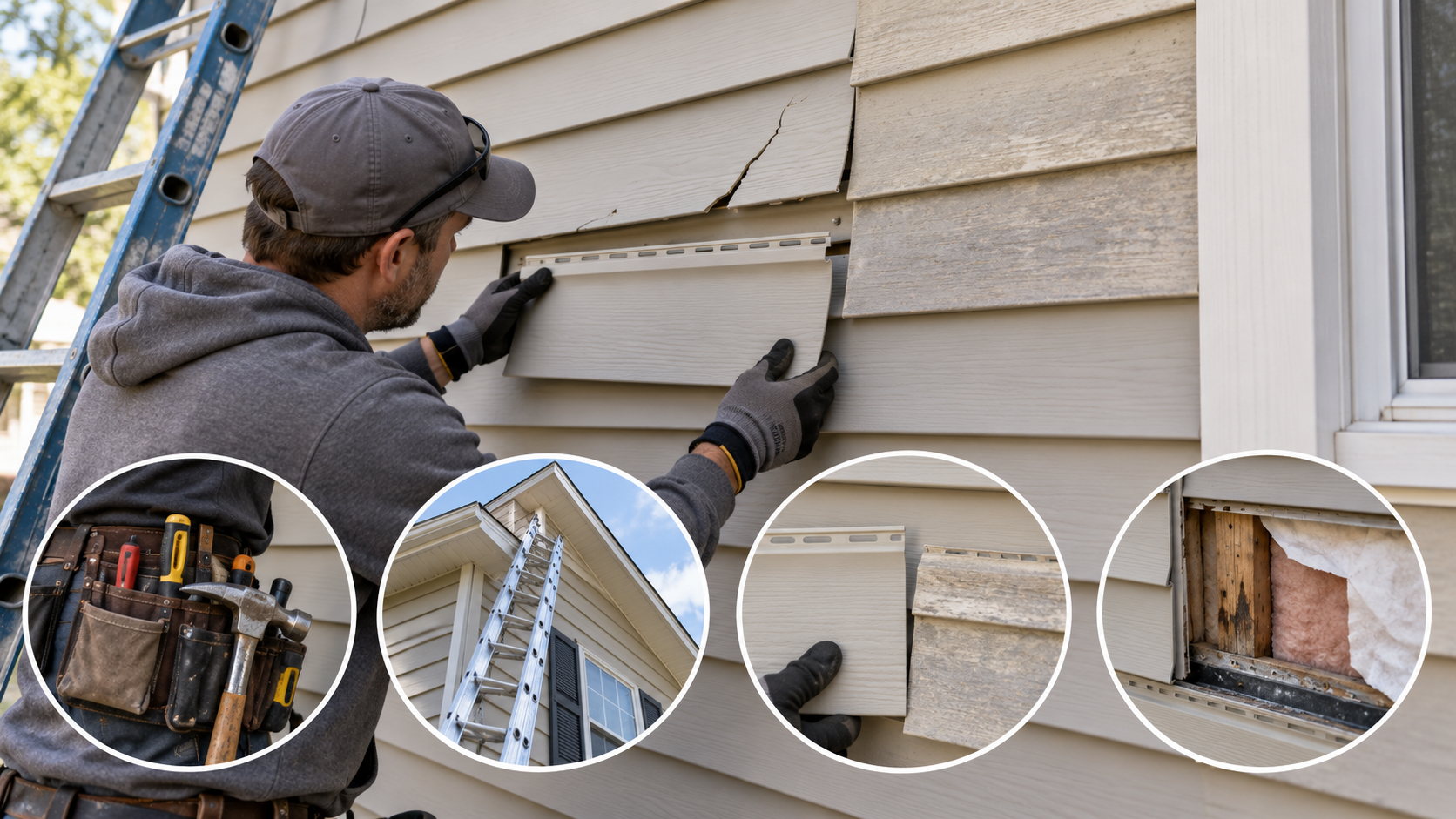
A contractor may replace panels, a loose or wind-damaged section, a corner or channel, a hole, or a damaged accessory. The quote may also include checking fasteners and the wall behind the opening. An impact repair should not assume the visible panel is the complete damage.
Service minimums, travel, ladder or lift access, and finding a matching profile can dominate. Sun-faded color may no longer match a new panel. A discontinued profile can require salvage material, a larger section, or a deliberate contrast.
Ask whether removal, replacement pieces, trim, fastener correction, disposal, and cleanup are included. Ask separately about sheathing, insulation, flashing, and framing.
Repair or replace?
A technically sound panel repair can still be visually obvious. Compare a local repair with replacing an elevation when exact matching is impossible. Recurring loose panels, staining, soft wall surfaces, or damage around windows can indicate a detail or moisture problem.
Exterior cladding works with flashing and drainage layers. Replacing the face without correcting the entry path may lead to another repair. A localized repair with a sound wall is reasonable; widespread or repeated failure supports a broader comparison with siding repair versus replacement.
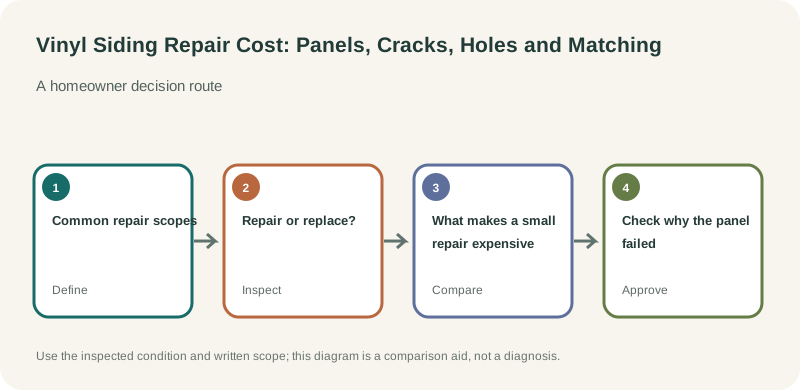
What makes a small repair expensive
The visible damaged area is a poor proxy for the service call. The contractor may need to travel, protect landscaping, reach a second-story wall, remove trim, or open several courses to release and replace one panel. Ask whether the estimate is a minimum charge, hourly service, or fixed scope, and whether return trips or material sourcing are included. For a small repair, these setup costs can be a larger share of the total than the replacement panel itself.
Matching requires more than color. Record the profile, exposure, panel length, manufacturer, and any accessory shape if known. Sun and weather change appearance, and a discontinued profile may no longer lock correctly with the installed system. Ask whether a sample fit can be checked before a larger section is removed. If exact matching is not practical, compare a discreet repair, a full wall elevation, and a visibly intentional contrast before authorizing work.
Check why the panel failed
A cracked or loose panel can follow impact, wind, incorrect fastening, thermal movement, or a problem at an edge detail. The repair should include a brief explanation of the likely cause and whether surrounding panels or attachment points show the same symptom. If damage follows a storm, photograph it before repair and coordinate with the insurer when a claim is being considered; do not postpone urgent weather protection while waiting for a cosmetic decision.
Water staining, soft sheathing, or damage around a window changes the assignment. Ask whether the price includes removal to inspect behind the cladding and who will quote any wall repair. A panel replacement alone is not a water-entry repair if the source is flashing or another part of the wall assembly.
Choose the smallest sound repair
A spot repair makes sense when the nearby system is secure, the wall is dry, and the replacement can be installed without damaging adjacent panels. A broader replacement becomes more reasonable when damage is widespread, repeated, or visually unacceptable across an elevation. Keep the quote explicit about panel count, accessories, removal, disposal, matching limits, concealed work, and cleanup. This helps you compare a repair with replacement without assuming that either is automatically the economical choice.
Decide when a larger patch is worth pricing
A repair confined to one panel may be the least disruptive choice, but the labor minimum can make a small job relatively expensive per piece. Ask for a price to replace the directly damaged panels and an alternate price for the full section between natural breaks. Compare those options with a wall-elevation replacement only if damage or matching makes a smaller repair impractical. Each option should include the same access, disposal, and backing inspection assumptions.
If a matching panel is unavailable, salvage material from a less visible area may be considered by a qualified installer, with new material used in the hidden location. Ask whether that approach is technically compatible and what visual tradeoff it creates. Do not assume salvage pieces have the same locking condition or color as undamaged panels.
Verify the repaired water path
After a leak-related repair, ask what detail was corrected and how the contractor verified the adjacent area. A visual closeout cannot guarantee there is no hidden moisture, so request any inspection or test result that was included. Keep before-and-after photos and note the date. If staining returns, this record helps determine whether the panel repair failed or a separate flashing or wall issue remains.
Use a small-to-large repair range of scope
At the simplest end, an accessible panel can be released and replaced with available material while nearby backing remains dry and intact. The expanded case may need removal of several courses, replacement of trim or channels, lift access, product sourcing, or repair of flashing and sheathing. Ask for both the confirmed repair and the conditional items to be priced separately. This prevents a low initial service quote from implying that concealed work is included.