
A factory-built insulated metal chimney is a listed system selected for a particular appliance and installed route. Replacing it is different from putting a metal liner inside a masonry chimney, rebuilding a masonry stack, or replacing a short connector. Those projects use different parts, work scopes, and compatibility checks. There is no single installed price that responsibly covers all of them.
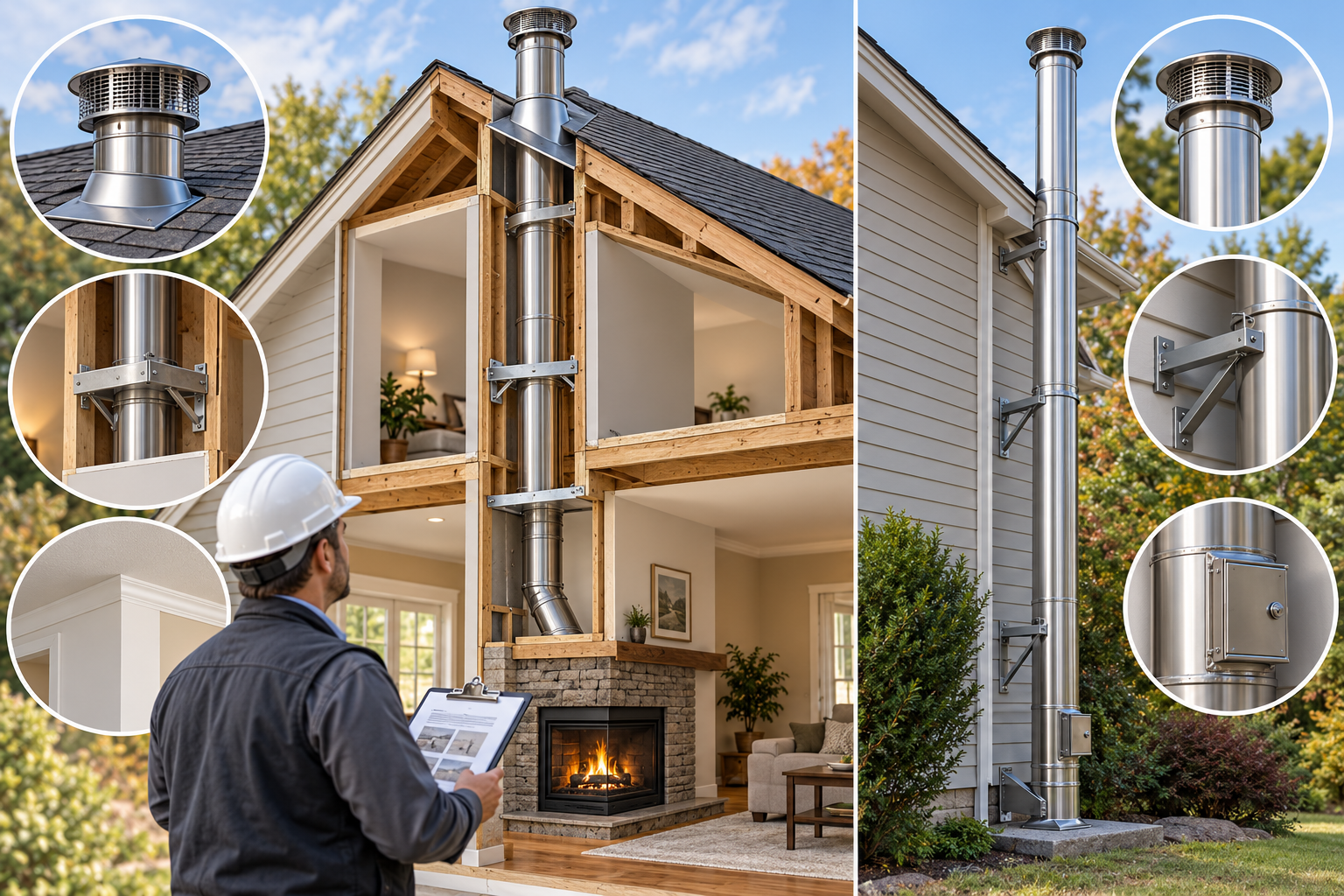
If the chimney may have been damaged by fire, stop using the connected appliance until a qualified chimney professional has evaluated the system. The Chimney Safety Institute of America warns that fire damage may be hidden from view and that affected factory-built metal systems can require replacement. A cost estimate should follow that inspection; it cannot establish that an existing component is safe to retain.
Identify the exact chimney and what the inspection found
Ask the inspector or installer to record the manufacturer, product series, label or identification information, approximate age, connected appliance and fuel, route, and observed condition. The proposal should distinguish visible findings from assumptions and state which pieces are approved to remain, which are proposed for replacement, and why. If the product label is missing or an older series is discontinued, ask how the professional will establish a compatible replacement system and document the basis.
A metal liner inside a masonry chimney belongs to a different decision, covered in chimney liner repair and replacement cost. Masonry reconstruction belongs with chimney rebuild cost. A vent or connector associated with an appliance change may be primarily an HVAC or appliance project. Confirm the work actually concerns the insulated factory-built chimney before comparing estimates.
What to have ready for the site assessment
Gather the appliance make and model, fuel, prior chimney or appliance service records, installation paperwork, and any product label information that is already visible without removing or opening components. Tell the inspector when the problem appeared and whether there was a suspected chimney fire, water entry, appliance change, or prior repair. Photographs of accessible areas can help explain the route, but they do not replace an inspection or establish which components can remain.
Ask the professional to record what was actually inspected, what was inaccessible, and which conclusions depend on later opening a wall, chase, or roof. A quote based on a partial view should say that plainly and identify the condition that would change the scope. This gives competing contractors the same starting facts and makes a later change order easier to compare with the original estimate.
What moves the installed cost
The quote can include far more than lengths of chimney pipe. Ask the contractor to identify the proposed system and quantity, transitions, supports, bracing, termination, flashing, roof protection, removal, disposal, and any components that must be exposed to reach the assembly. The exact parts depend on the product and installed route; a parts list from another series or market is not a compatibility guide.
Access is a separate cost driver. An exposed exterior run may be reachable without opening much interior finish, but it still needs appropriate support, a weather-tight roof or wall interface, and safe staging. A chimney routed through a finished room or enclosed chase may require openings in ceilings, walls, floors, or roofing, followed by structural, fire-separation, weather, and finish restoration. These are different project patterns, not guaranteed low- and high-price options. Ask which parts of the route are included and what the contractor expects to open and restore.
| Project pattern | Scope questions that change the quote |
|---|---|
| Accessible exterior run | What access and support work is included, and who restores the wall and roof interface? |
| Route through a finished interior | Which levels or finishes need opening, and who closes each wall, ceiling, chase, or roof area? |
| Older or damaged system | Which components are documented as retainable, and what happens if a compatible section is unavailable? |
A contractor may price a partial scope and a full replacement differently because the amount of demolition, access, and restoration changes. These patterns help identify missing quote lines; they do not predict which option will cost less before the system and route are inspected.
Other costs may include an inspection, temporary protection, disconnecting or reconnecting the appliance, permit and inspection fees, structural support work, roof or siding repair, interior finishes, disposal, and final documentation. Separate the base replacement from allowances for concealed damage. If an opening reveals a condition that changes the design, ask for photographs and a written change order before added work proceeds where the building can safely remain protected.
Component replacement or a complete system
A limited component repair can cost less only when the condition, listing, and manufacturer documentation allow the relevant parts to remain. Ask the qualified installer to cite the approved system and identify the retained sections in writing. With an older or discontinued product, a matching-looking section may not belong to the same listed system. Do not assume that mixing components from different manufacturers, product families, or instruction editions is acceptable.
Full replacement may be proposed when the system is damaged, the model is unavailable, the inspection cannot support retaining existing sections, or the route or appliance has changed. Request a second option when both a compatible partial repair and full replacement are technically supportable. Compare the same appliance, route, termination, access, removal, and restoration in each price. A quote that omits work needed to complete the installation is not a less expensive equivalent.
Use the instructions for the country and product
Manufacturers can publish separate products and documents for the United States and Canada. DuraVent, for example, distinguishes its DuraTech product from DuraTech Canada and provides separate installation documents. That illustrates why an estimate should name the exact product and the instructions used for the actual market. It does not establish that those products are interchangeable or that their parts may be mixed.
The applicable listing, appliance, fuel, local requirements, and current manufacturer instructions determine the installation details. A homeowner cost comparison should not guess chimney sizing, clearances, supports, offsets, or component compatibility. Ask the installer to show how the proposed system was selected and how any required authority review will be handled.
Compare written proposals line by line
A useful proposal identifies:
- the inspected system, appliance, fuel, and findings;
- the product series and components proposed for installation or retention;
- the route, measured scope, support, and termination work;
- removal, disposal, access equipment, and temporary protection;
- openings and restoration for roof, siding, chase, ceiling, wall, and interior finish;
- appliance work, permits, inspections, testing, and closeout documents;
- taxes, exclusions, allowances, and the written approval process for concealed conditions.
Ask whether the price is firm for the stated scope, which quantities are provisional, and what condition would trigger extra work. Clarify who repairs each interface: chimney installer, roofer, siding contractor, or finish trade. Get dates, product identification, warranty terms, and inspection records in the final file.
When estimates differ, compare the inspected route, product family, retained components, and restoration boundary before comparing totals. One proposal may include removal and roof repair while another ends at the chimney connection; another may assume an open chase while a competing estimate includes finish work. Ask each contractor to list exclusions and allowances on the same elevation or route description. If the work is staged, identify whether the system will be left protected between visits and which temporary measures are included. A low base price can reflect a narrower scope, while a more complete quote may include work the other proposal leaves to a separate trade.
Confirm the closeout before return to service
Ask who will arrange any required permit or inspection and which qualified person will confirm that the completed system is ready for its intended appliance. Request the product identification, installation record, inspection or authority documents where applicable, and any operating or maintenance material supplied with the system. The quote should state whether those steps are included or assigned to another contractor. A homeowner should not infer that an installation is approved for use from the fact that the pipe and finish work look complete.
No reliable universal installed price
Published component prices or a masonry-chimney rebuild estimate do not establish the installed cost of a complete factory-built system. A useful estimate needs the actual series, appliance, route, length, access, retained components, removal, and restoration. Because those details vary and current market-wide replacement data are limited, obtain a qualified site assessment and compare itemized local proposals rather than applying a generic U.S. or Canadian amount.
If the chimney cannot be safely or economically returned to service, ask the qualified professional to explain the alternatives, including whether an appliance change or chimney retirement is feasible. Compare the cost and disruption of those options only after confirming the appliance’s replacement or venting requirements; an appliance price alone does not include the building work needed to close or reuse a route. Removal and restoration are separate scopes; see chimney removal cost and the relevant appliance guide when that becomes the main project.