
“Partial rebuild” has no universal scope. It may mean rebuilding the above-roof stack, a few courses, a shoulder, or a larger section coordinated with the liner, crown, flashing, and roof.
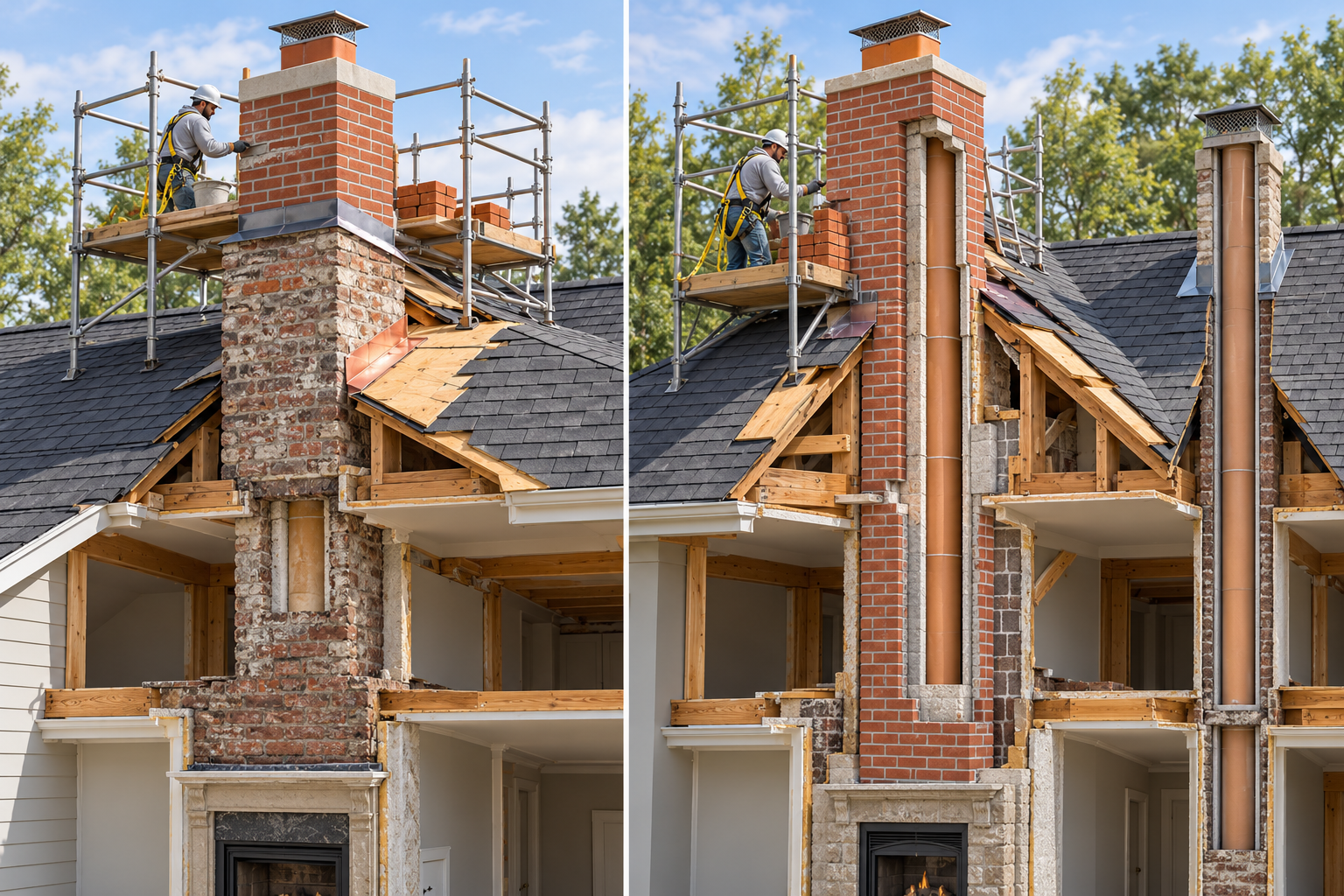
Define the work
Ask for photographs and a marked scope showing affected courses, crown, cap, flashing, liner, connector, and interior or attic interfaces. Confirm demolition, brick matching, mortar, scaffolding, temporary protection, disposal, rebuilding, crown, flashing, and final inspection.
Brick Industry Association guidance shows why mortar compatibility matters. Matching brick and mortar may require specialist sourcing, especially when the original material is no longer available.
Height, roof pitch, stack size, multiple flues, staging, weather, access, liner condition, roof closure, and concealed damage affect labor. The research does not establish a dependable national rebuild price or Canadian benchmark.
CSIA inspection guidance considers the accessible chimney, flues, appliances, crown, flashing, attic, and termination in the appropriate inspection context. A rebuild quote should state whether liner and appliance compatibility have also been evaluated.
Rebuilding may preserve an active, wanted chimney. Removal may suit an obsolete system, but an apparently unused chimney must not be assumed disconnected from an active appliance. Compare a documented repair, a defined partial rebuild, and chimney removal cost.
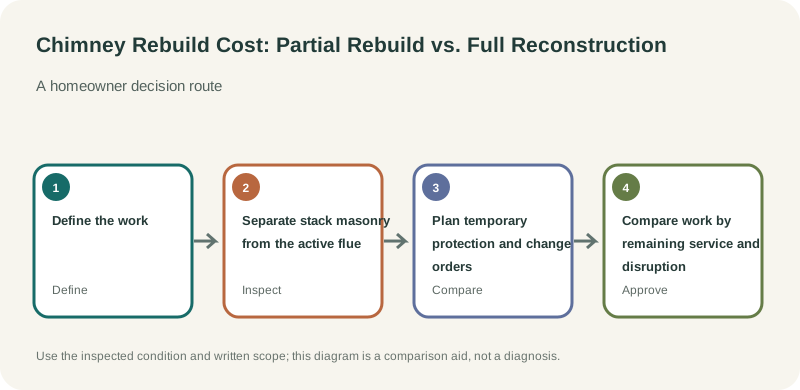
Separate stack masonry from the active flue
A masonry rebuild can restore the exterior stack while leaving liner or appliance work outside the proposal. Ask the contractor to state whether the flue remains in service during construction, how it will be protected, and whether a qualified inspection will verify the system afterward. Confirm responsibility for reconnecting or protecting any attached appliance. If the chimney is no longer needed, compare removal only after checking every connected appliance and vent.
The estimate should identify the number of courses or boundary of demolition, brick and mortar specifications, crown, flue interface, flashing, cap, scaffold, roof closure, and cleanup. If brick matching is limited, agree on a sample and visible result before rebuilding. Older or historic masonry may need a specialist to select compatible materials and address preservation constraints.
Plan temporary protection and change orders
Demolition can leave the roof opening exposed. Ask what temporary weather protection is included and how the contractor will secure the structure overnight or during a delay. Define how unexpected liner damage, unstable masonry, or sheathing problems will be documented and priced. Unit costs help, but the contract should still require approval before extra work proceeds where conditions allow.
When the above-roof portion is rebuilt, verify that roof flashing and interior/attic interfaces are returned to a weather-tight condition. Request closeout photographs and a written record of the completed scope, especially for concealed connections. That documentation makes future inspection and repair quotes easier to compare.
Compare work by remaining service and disruption
If the chimney is active and the defects are concentrated above the roof, a partial rebuild may preserve the remaining structure. If deterioration extends below the roof or into the flue, a larger reconstruction may be needed. Ask for the boundary of each option and which portions of the chimney remain unverified. A lower partial-rebuild price is not directly comparable if it excludes the liner, crown, or roof interface that another bid includes.
If the chimney is not wanted, removal is a separate decision with roof and interior restoration consequences. Verify that removal does not leave an appliance without required venting and that the remaining masonry is stable and properly closed. The intended finished condition should be decided before comparing costs.
Plan schedule and neighbor protection
Scaffolding, falling debris, shared walls, narrow access, and weather can affect schedule and protection needs. Ask how the contractor will protect the roof, garden, adjacent property, and occupied rooms. Clarify working hours, temporary access restrictions, and debris routes. If a chimney is shared or close to neighboring property, establish permissions and responsibilities before demolition or reconstruction begins.
Ask about a partial repair boundary
If only a few courses or the top portion are being rebuilt, ask how the connection to retained masonry will be made and what condition is assumed below the repair. A partial project can leave lower defects untouched, which may be acceptable if they are stable and documented. The estimate should identify retained areas and any limitations on service life or warranty rather than implying that the entire chimney has been renewed.
Compare a partial rebuild with a broader reconstruction only after inspection clarifies the extent. Ask for photos and a marked elevation drawing, then review whether the cap, crown, flashing, and liner are included. This makes the price difference legible and avoids paying twice for access or roof closure.
Review the finished roof connection
A masonry rebuild is not complete for cost comparison unless roof closure is defined. Ask whether new or reused roofing, underlayment, flashing, cricket, and attic-side weather repairs are included. If the roof covering is older, discuss the visual match and whether future replacement would disturb the new flashing. Request photographs of the completed interface and confirmation of any inspection or permit closeout that applies locally.