
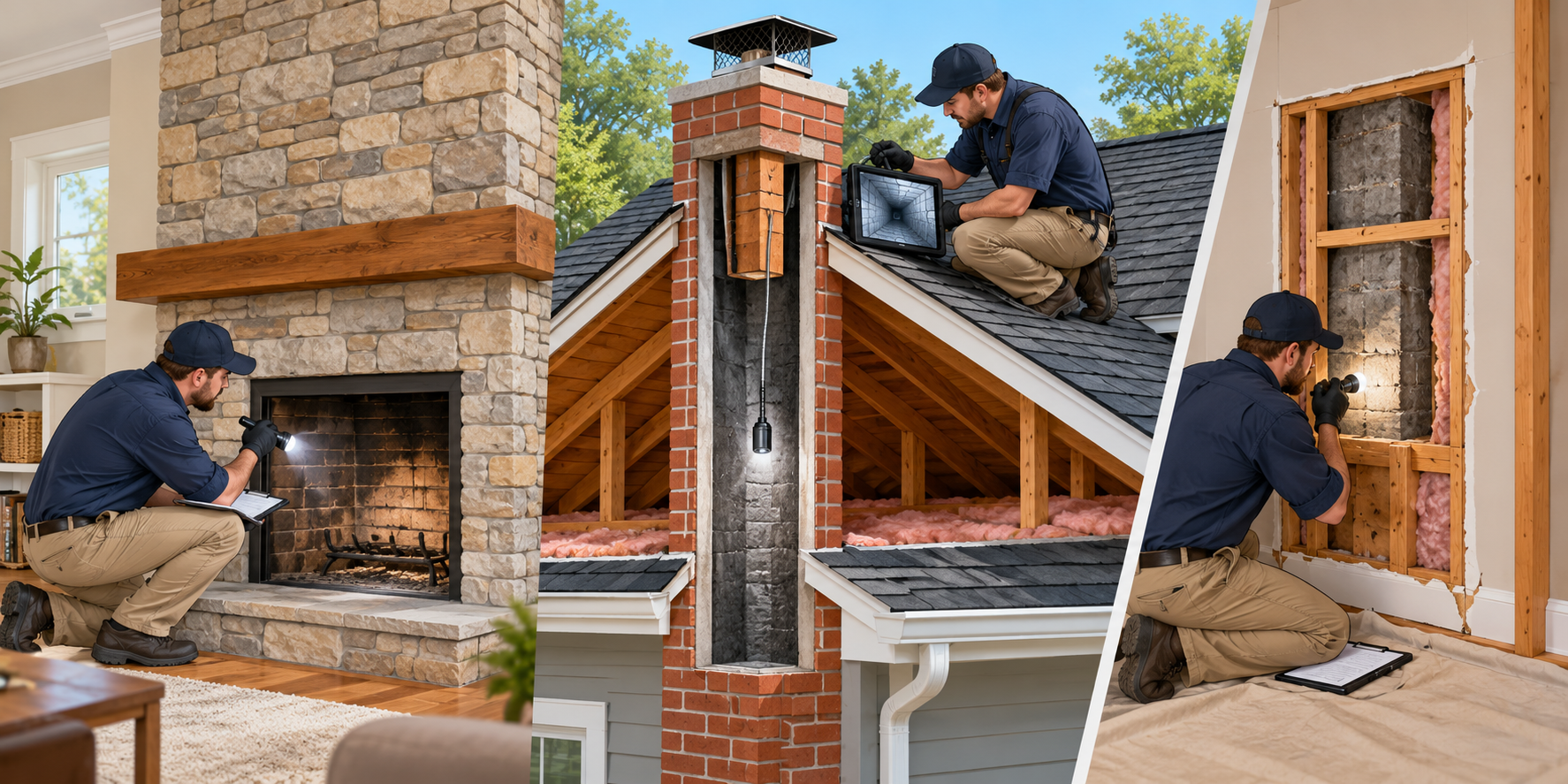
Chimney inspection cost depends on what must be inspected, the number of flues and connected appliances, access, roof height, interior visibility, and why the inspection is ordered. Inspection is not the same as sweeping or a repair estimate.
When scope increases
CSIA masonry-chimney guidance describes a Level 2 inspection as appropriate when use changes, an appliance is added or replaced with a dissimilar one, a property is sold, relining is planned, or a fire, weather, seismic event, or malfunction may have caused damage. In that context it includes accessible fireplace, chimney, connected appliances, roof, attic, and other relevant areas, with an interior video scan where feasible.
The terminology is U.S.-oriented. Canadian or local practice may use different standards or names. Ask which current standard and authority apply; do not assume a Level 1 label has the same scope everywhere.
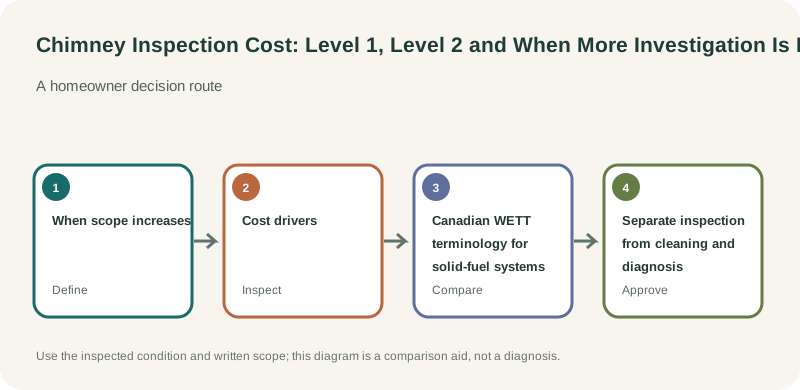
Cost drivers
- flues and connected appliances;
- roof height, pitch, access, and safety setup;
- attic, basement, crawl-space, or chase access;
- video scanning and difficult offsets;
- safe opening of panels, doors, or connectors;
- report, photographs, and follow-up testing.
The evidence does not establish a dependable national inspection price or Canadian benchmark. Ask for a written scope and inaccessible areas to be listed.
If repair or relining is recommended, ask for the observation supporting it and a separate quote. Appliance manuals, local code, and the authority having jurisdiction control compatibility decisions.
Canadian WETT terminology for solid-fuel systems
For Canadian solid-fuel-burning systems, WETT describes its own SITE® program using Visual, Technical, and Invasive inspections. Visual covers readily accessible areas; Technical is non-invasive and may require attic or roof access or removal of panels or flue pipes; Invasive uses construction openings to reach concealed areas. These are WETT program terms and are not equivalents to CSIA levels or a universal Canadian code classification. WETT certifies individuals, not the appliance, system, or company, and the appropriate scope depends on the property and reason for inspection.
Ask the inspector which program and standard the report follows, what areas and appliances are included, what access is anticipated, and whether the report will satisfy the specific insurer, sale, or project need. WETT says it does not regulate fees. Two published provider examples use different bundles and units, so this article does not treat them as comparable Canadian market rates. Confirm current fee, currency, tax, travel, and inclusions directly with the provider before using any listed quote.
Separate inspection from cleaning and diagnosis
A sweep may be recommended or bundled, but it is a different task from evaluating the condition of the chimney and connected system. Ask whether cleaning, video scanning, testing, and a written report are included, and whether an additional visit is charged if a defect is found. A report should distinguish observed conditions from recommended work and identify areas that could not be accessed.
Do not choose an inspection level only because it is the least expensive. Provide the reason for the visit, fuel type, appliance changes, suspected event or damage, and any prior report, then ask a qualified inspector what scope is appropriate. Local requirements and insurer acceptance need confirmation for the specific case.
Decide what the report must answer
A real-estate transaction, a change in appliance, a suspected flue defect, and routine maintenance may require different questions to be answered. Tell the inspector the purpose and share appliance details, prior reports, and the observed symptom. Ask in advance what the written report includes, whether it documents inaccessible areas, and whether photographs or a video scan are included. A short verbal walkthrough is not equivalent to a documented inspection scope.
In the United States, CSIA’s Level 1 and Level 2 terminology describes a separate framework from WETT SITE® in Canada. The labels should not be treated as interchangeable, nor should either framework be assumed to satisfy a particular insurer, authority, or transaction without confirmation. Ask the local qualified professional which current standard or program applies and who will accept the report.
Compare quotes on equal units
Request the number of flues, appliances, visits, travel, roof access, scanning, cleaning, and reporting included. A bundled inspection with a home inspection is not comparable to a standalone chimney visit. For the WETT examples, preserve each provider’s own bundle and unit wording and verify currency, tax, and current fee directly; they are not an average or a full inspection-level price schedule.
If the report recommends repair, request the specific observation and a separate written repair estimate. Inspection fees do not establish repair necessity or appliance safety by themselves; recommendations need to fit the observed condition and applicable requirements.
Ask what happens after a defect is found
A useful inspection quote explains whether a follow-up visit, repair estimate, or additional level of inspection is charged separately. Ask whether the report ranks observations, includes images, and identifies areas that could not be accessed. If the inspection is part of a purchase or insurance process, verify the recipient’s requirements before booking; a report’s format or program label may not automatically be accepted.
For solid-fuel systems in Canada, keep WETT scope terms and provider fees separate: WETT’s three levels describe different access and inspection effort, while two provider listings give non-normalized Level 1 fee examples. Neither source establishes a national price or decides which level applies. Confirm scope, unit, currency, taxes, travel, and current price directly with the inspector.