
Chimney repointing is mortar-joint renewal above or alongside the roof. It can cost more than wall repointing because of height, roof access, fall protection, weather exposure, staging, and interaction with the crown and flashing.
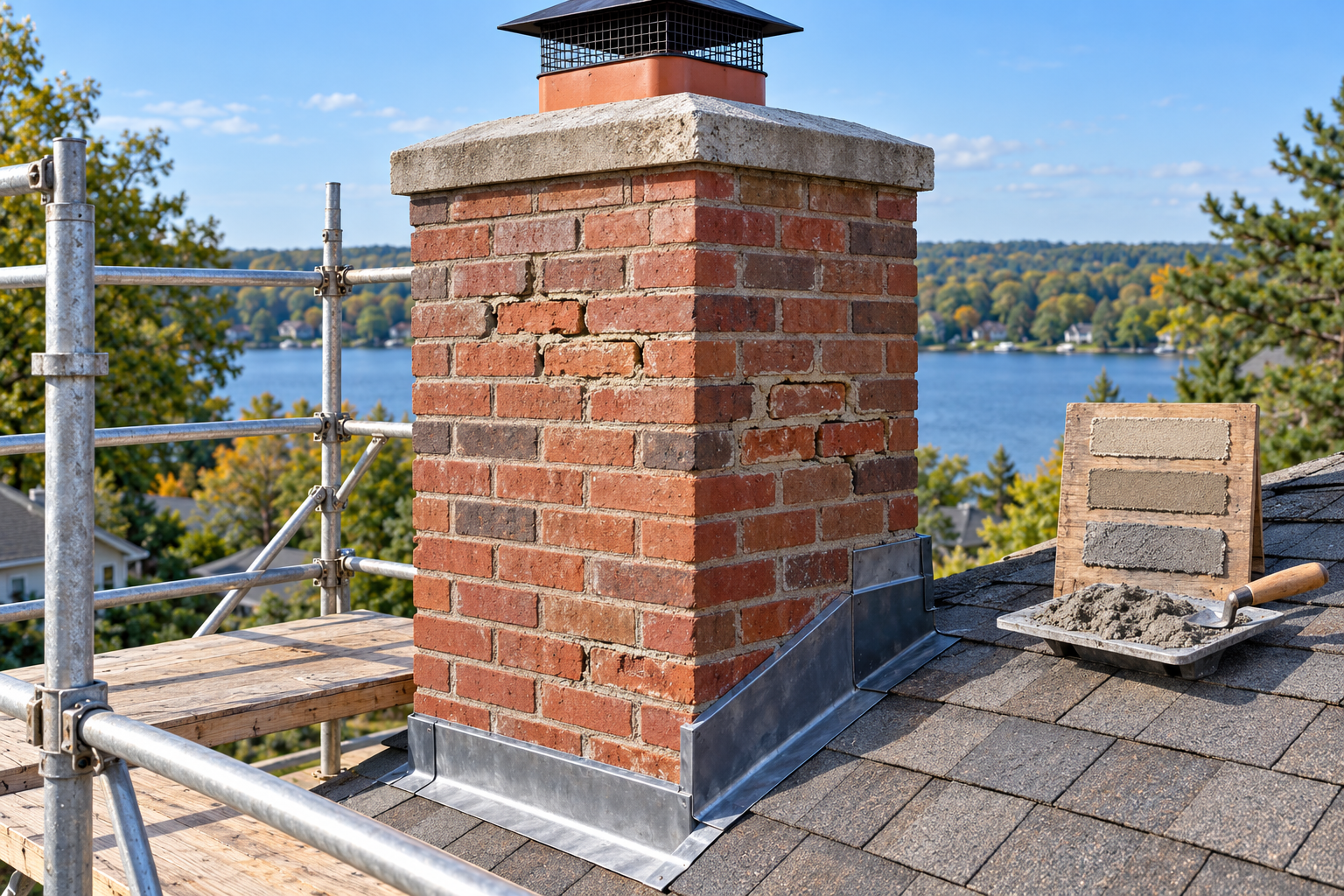
Ask whether the quote covers inspection, access, defective-mortar removal, joint preparation, compatible mortar, filling and tooling, brick replacement, cleaning, crown or flashing coordination, protection, and disposal. “Tuckpointing” can mean different work in different markets, so define the joint repair.
Brick Industry Association guidance emphasizes mortar compatibility, joint preparation, filling, and workmanship. The work should target defective joints rather than cover sound original mortar. Older or significant masonry may need specialist characterization.
A steep roof, multiple flues, and narrow access increase setup. Inspection may identify crown, cap, flashing, liner, or attic conditions that should be coordinated. No reliable national chimney-repointing price or Canadian benchmark was captured. Ask for a mapped area, access plan, mortar specification, unit rates, and a boundary between repointing and rebuild.
Repointing may fit deteriorated joints with stable masonry. Displaced courses, widespread cracked bricks, or movement may require reconstruction. See chimney rebuild cost.
Measure work by condition and access
Ask the mason to mark the areas that need repointing rather than applying one rate to every joint on the stack. Specify approximate area, depth of removal, joint profile, brick replacement if any, and how sound material will be protected. A small chimney can still require substantial scaffold or roof setup, so compare access as its own line instead of inferring labor from wall area alone.
The work is weather-sensitive. Clarify what temperature and moisture conditions the contractor requires, how fresh joints will be protected, and what happens if the schedule moves. Ask whether cleanup or final washing is included and how the method will avoid eroding brick faces. A test area may help confirm the mortar color and joint profile before the full scope is accepted.
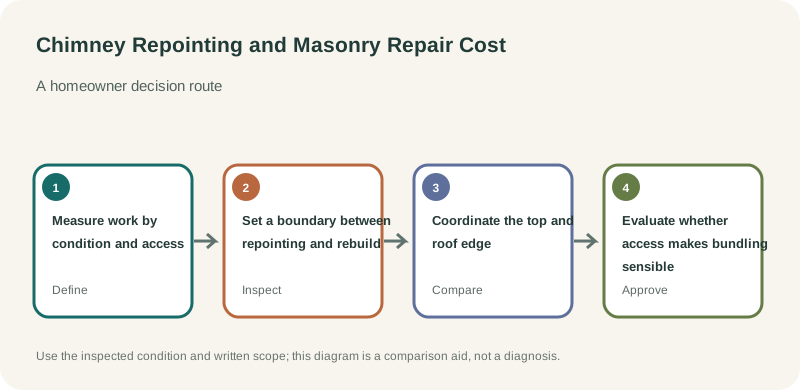
Set a boundary between repointing and rebuild
If bricks are cracked, displaced, or soft, replacing mortar alone may not restore the stack. Ask what evidence would trigger unit replacement, stabilization, or partial reconstruction and how those changes will be priced. Crown, flashing, cap, and liner conditions may be found during access setup; they should be listed separately unless the proposal includes them. Request photographs before and after the work and retain the mortar description for future maintenance.
Coordinate the top and roof edge
Repointing can reveal loose brick, deteriorated crown edges, or a flashing problem once access is established. Ask whether the mason will stop and document those findings or proceed under a preapproved allowance. If the crown or flashing is already known to need work, coordinate sequencing so new mortar is not damaged by later demolition or roofing work. Distinguish the chimney stack above the roof from the roof-to-chimney flashing line in the proposal.
The mortar color may change as it cures and weathers. Ask how the accepted sample will be judged and whether the intent is a close blend or a visible repair. For historic work, retain samples and seek specialist advice before replacing original mortar. A detailed record of mix and tooling can make future repairs more compatible.
Evaluate whether access makes bundling sensible
If cap, crown, or inspection work is also needed, compare the incremental labor while the scaffold or roof access is already set up with the cost of separate future visits. Do not bundle a repair solely to save mobilization if it is not warranted. A written option schedule can show necessary work, recommended adjacent maintenance, and optional improvements as separate decisions.
Decide whether one mobilization can handle adjacent work
Access equipment may be a substantial part of the project. If inspection finds a cap, crown, or flashing issue, request separate prices for that work while the crew is already mobilized. Compare the incremental cost with a later service call, but authorize only repairs supported by observed conditions. A convenient opportunity to work at height is not by itself a reason to replace serviceable components.
If the stack remains in service, ask whether mortar work changes the timing for appliance use or requires follow-up inspection. The answer depends on the repair materials, weather, and local requirements; get it from the qualified contractor in writing. Keep the closeout report and photographs with the chimney’s maintenance history.
Check mortar selection against the existing stack
Ask how the mason will identify the existing mortar and whether a test area or specialist characterization is needed. A visually close mix is not automatically compatible with the brick, and a stronger replacement can damage softer masonry. The contractor should explain the selected material and tooling in the proposal, especially on an older stack. If preservation requirements apply, confirm those before removal begins.