
Chimney liner work is a high-consequence compatibility decision, not a generic pipe replacement. The appliance, fuel, flue dimensions, chimney condition, liner system, height, offsets, access, and local requirements determine the scope.
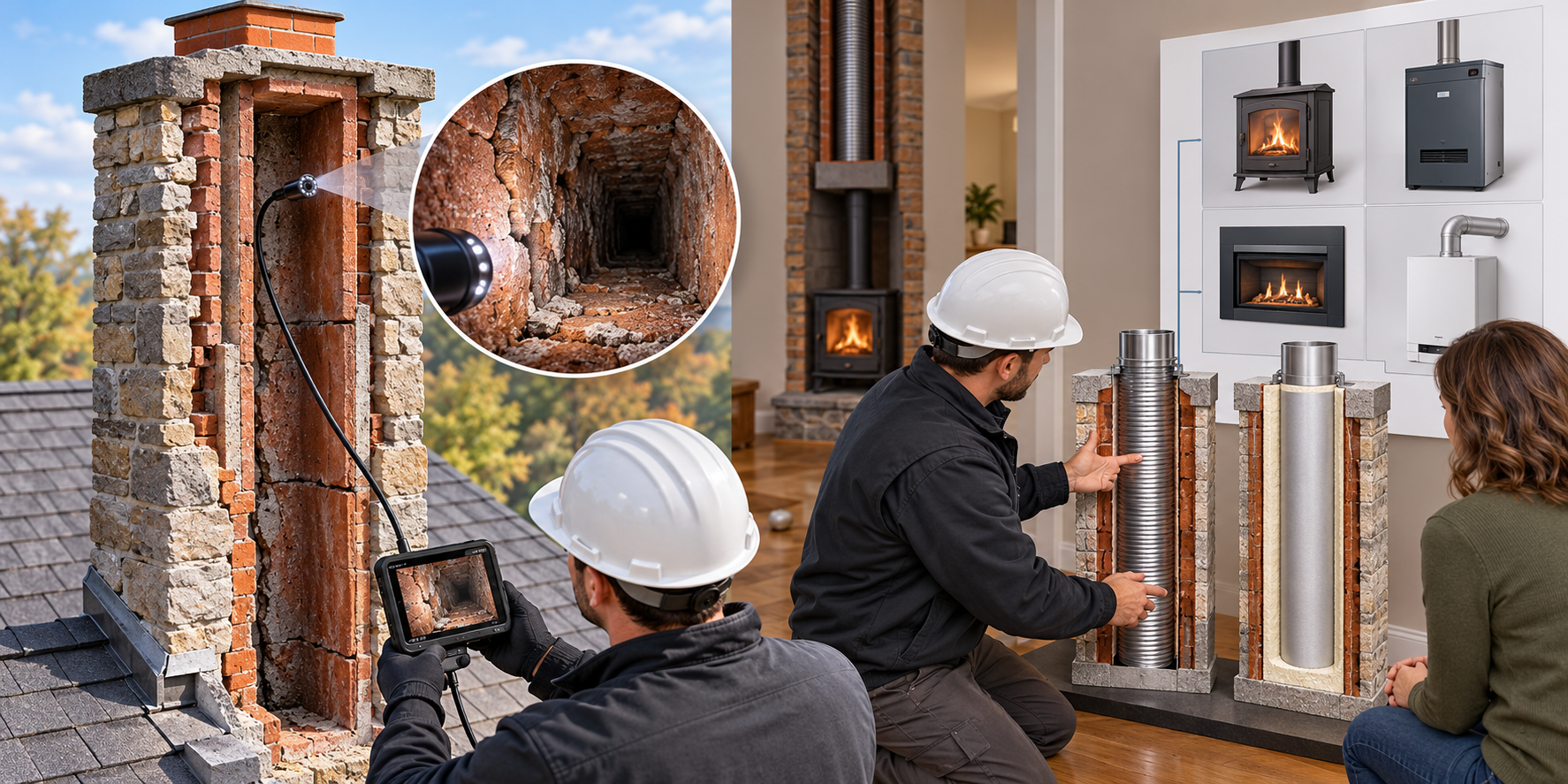
CSIA Level 2 guidance includes an interior video scan where feasible, checks liner cracks or gaps, considers offsets, measures flue dimensions and height, and evaluates the connected appliance. This is inspection guidance, not a universal sizing formula.
A quote may include inspection, cleaning or access, clay-tile repair, metal relining, another approved liner system, removal of a failed liner, masonry access, cap or crown work, and final documentation. The selected system must be appropriate for the appliance and installed under current manufacturer and local requirements.
The Napoleon S25 manual is one model-specific example: it calls for a sound chimney, qualified installation, local authority consultation, separate Canadian and U.S. code references, and no shared flue with another appliance. Do not generalize it to every appliance. Bring the make, model, fuel, data plate, manual, and prior inspection.
Angi’s 2026 U.S.-oriented guide reports a $1,500–$5,000 range and a $2,500 average for chimney-liner installation. It does not establish Canadian pricing or a price for replacing a complete factory-built chimney. Its material table has unclear units for several entries, so those figures are not used here. Do not provide generic sizing, clearance, venting, or DIY installation instructions. Ask for compatibility basis, product, access, permits, testing, warranty, and contingencies.
Require a written compatibility basis
The proposal should identify the connected appliance, fuel, liner product, dimensions, route, insulation or support components where applicable, and the manufacturer’s instructions used. Ask how the chimney condition was assessed, whether offsets or obstructions were found, and what report or scan supports the selected system. This is not a homeowner sizing exercise: a qualified professional must confirm compatibility and applicable local requirements for the actual installation.
Clarify whether the price includes cleaning, existing liner removal, access to the top and appliance connector, masonry opening or restoration, insulation, top plate, cap, permits, testing, and final documentation. A quote for a liner alone may exclude much of the labor needed to install it safely. If a shared flue or abandoned connection is present, require the contractor to explain how the connected systems will be handled before work begins.
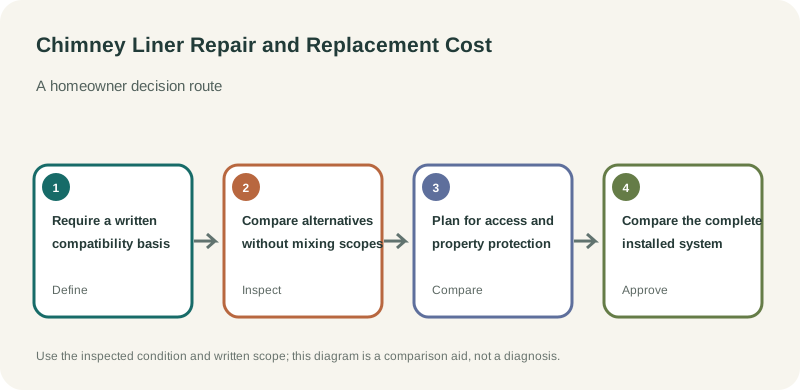
Compare alternatives without mixing scopes
Repairing a clay-tile flue, installing a metal liner, and using another listed system are different technical approaches. Ask why the proposed method fits the chimney and appliance and what alternatives were considered. Compare bids only after confirming they address the same flue, inspection findings, access, and finishing work. A lower price may reflect a different system or omitted restoration rather than a more efficient installation.
Retain appliance model information, installation records, liner documentation, and inspection results. Have future changes checked against the same compatibility constraints; a liner installed for one appliance should not be assumed suitable after a fuel or appliance change.
Plan for access and property protection
Liner installation may involve roof access, appliance disconnection, work inside the firebox, and moving long or heavy materials through the home. Ask how the contractor protects floors, furnishings, and nearby finishes and whether any appliance must be disconnected by a separate qualified trade. Confirm the expected duration, whether the chimney can be used during the work, and how the opening will be protected if the crew pauses.
If masonry must be opened, clarify who repairs the brick, plaster, or firebox afterward and whether matching is included. Ask whether the chimney can be returned to service the same day or requires curing, testing, or inspection. The closeout package should include the liner make and model, installation record, applicable warranty, and any limitations on future appliance changes.
Compare the complete installed system
A proposal should not be selected solely by liner material or diameter. Confirm that the contractor has included every transition, support, termination, connector, and required insulation component in the selected system. When two qualified bids disagree, ask them to explain the design basis and inspection findings in writing. This helps compare like scopes and gives a future inspector the information needed to evaluate the installation.
Understand the test and commissioning items
Ask whether the final scope includes a post-installation inspection, smoke or draft test, appliance startup, or other verification, and which qualified person performs it. These items may be required by the system, local authority, or manufacturer, but the exact requirement must be confirmed for the project. Do not assume the liner is ready for use as soon as it is physically installed.
If a proposal excludes permits, inspections, or appliance reconnection, identify who will arrange and pay for them. Request documentation of the installed liner and any clearances or support components before closing masonry. The complete cost comparison should include those closeout tasks rather than stopping at the material and labor subtotal.
Clarify operating restrictions and timing
Ask whether the appliance must remain out of service during inspection, installation, curing, or final verification and who will confirm when it may be used again. The contractor should give instructions tied to the installed product and actual system rather than a generic wait time. If other heating is needed during the work, plan that separately. Include any required authority inspection or report in the schedule and confirm who books it.