
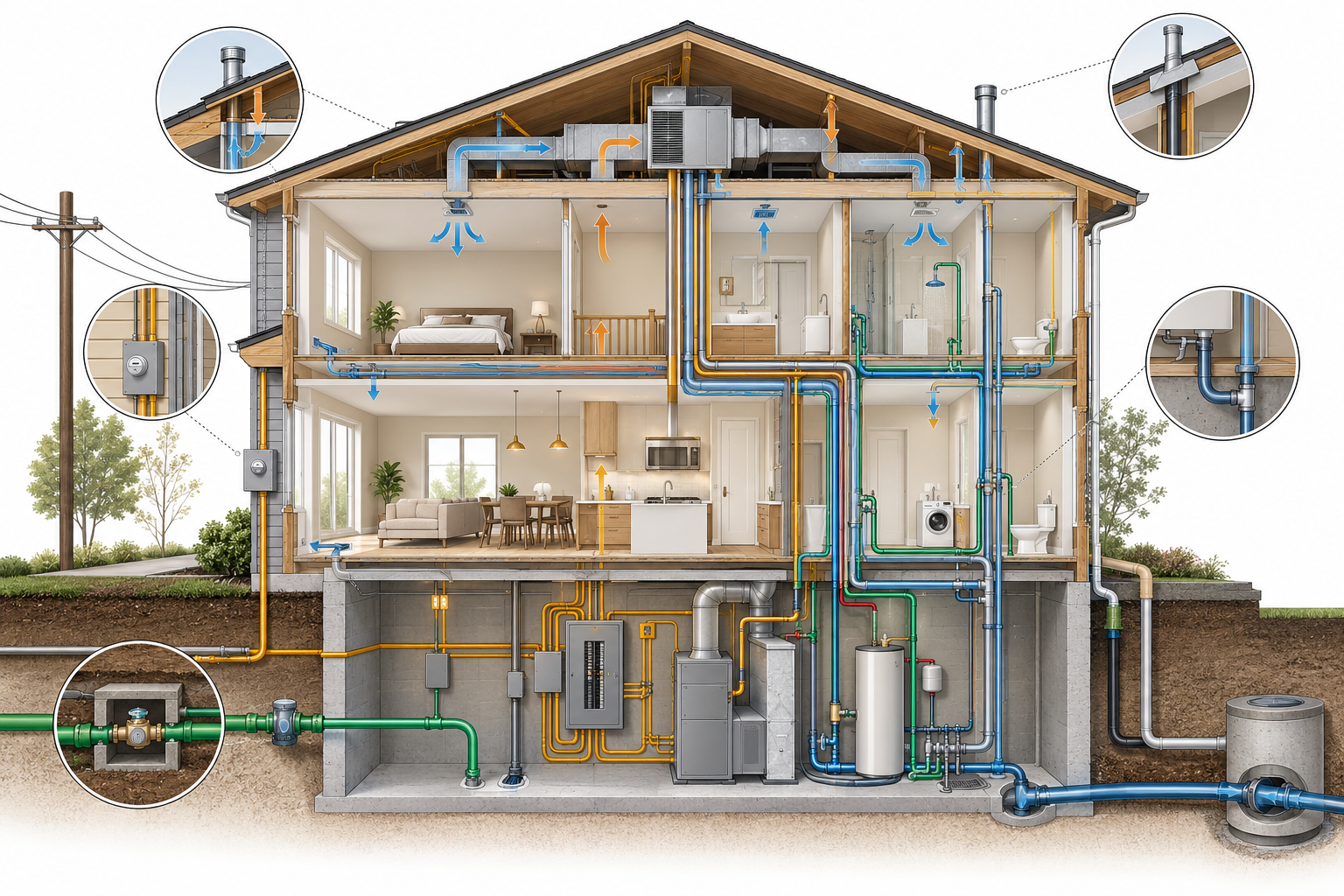
MEP means mechanical, electrical, and plumbing. Residential MEP engineering can document how building systems should be sized, distributed, coordinated, and connected when a project is more complex than ordinary prescriptive work or contractor selection. It is not automatically required for every remodel, and it is not the same as buying equipment or paying a trade contractor to install it.
What each discipline may cover
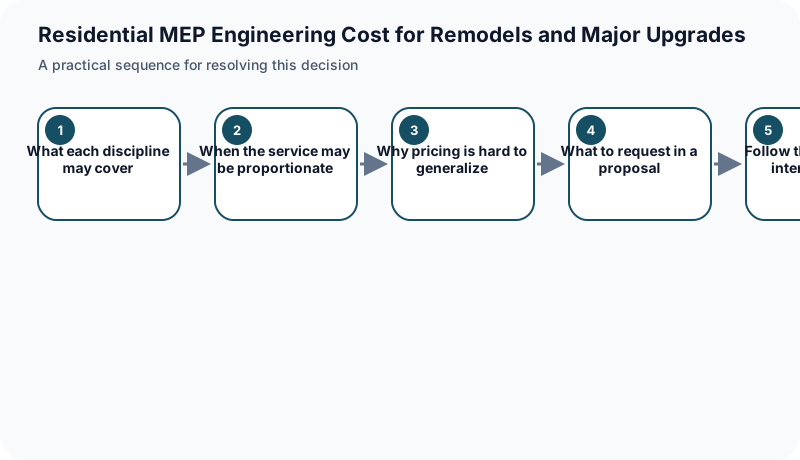
- Mechanical: Heating and cooling loads, equipment selection criteria, ventilation, duct distribution, controls, and sometimes indoor-air or energy coordination.
- Electrical: Load calculations, service or distribution design, circuiting, equipment coordination, emergency or backup-power interfaces, and documentation for approval.
- Plumbing: Fixture layouts, piping, drainage, water-heating coordination, special equipment, and the relationship between new work and existing capacity.
The exact boundary depends on the project and the provider. A contractor may size a standard replacement under a prescriptive method, while a professional engineer may be retained for a custom system, major addition, unusual loads, complex coordination, or a design that must be documented for a specific approval.
When the service may be proportionate
MEP engineering becomes more plausible when you are changing several systems at once, adding substantial conditioned area, electrifying major loads, modifying service capacity, coordinating a high-performance enclosure, or working on a custom home. It may also be relevant where the authority, program, insurer, or project team specifically requests professional design.
Do not infer a requirement from the project label. Confirm the local permit path and ask the design team which part of the work needs engineering. A small bathroom remodel and a whole-home electrification project may both involve plumbing and electrical work but have very different design questions.
Why pricing is hard to generalize
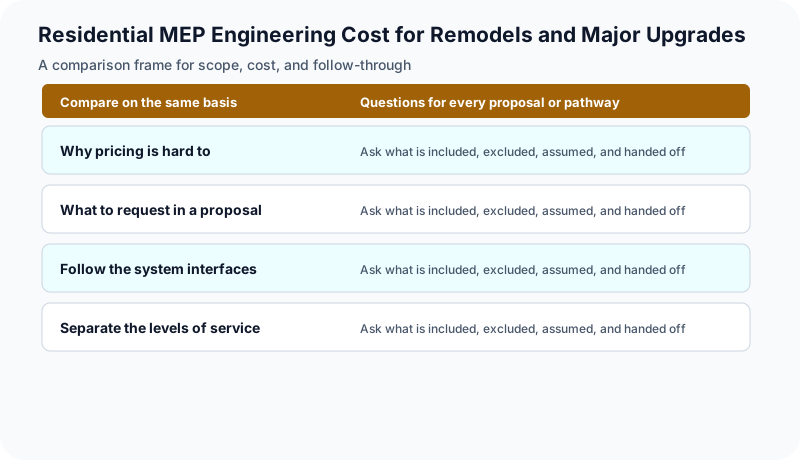
Public residential MEP price data is weak and scopes vary widely. A fee can be hourly, fixed by discipline, phased, tied to a defined project scope, or bundled into architectural or design-build services. A quote may exclude field verification, energy modeling, permit responses, equipment procurement, commissioning, and construction support.
Cost usually increases with the number of systems, documentation detail, unknown existing conditions, coordination meetings, calculations, site visits, jurisdictional requirements, revisions, and professional responsibility. U.S. and Canadian prices should be researched and quoted in their own markets rather than converted.
What to request in a proposal
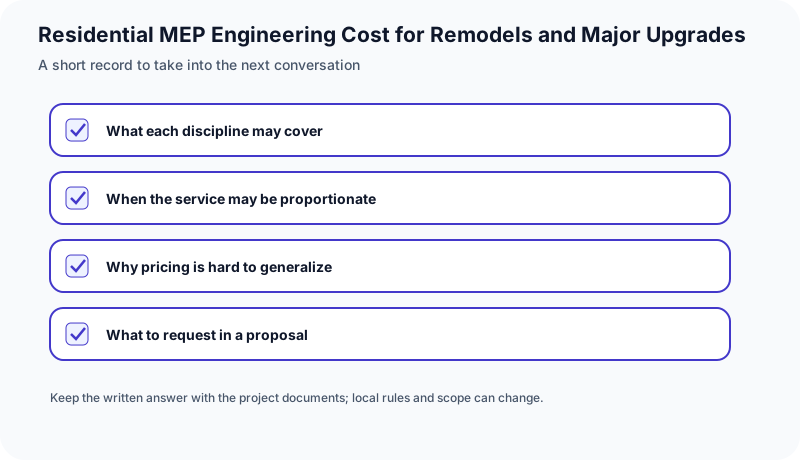
Ask the engineer to list:
- The disciplines included and the systems expressly excluded.
- Existing-condition information the owner must provide.
- Load calculations, equipment schedules, layouts, diagrams, and specifications included.
- Coordination with architectural, structural, energy, civil, and utility documents.
- Whether equipment selection is performance-based or brand/model-specific.
- Permit submission, review responses, and revision limits.
- Field observation, startup, commissioning, or post-installation verification.
- The professional authorization and signing responsibility that applies locally.
Do not assume commissioning is included because an engineer designed the system. Residential commissioning is a separate verification question.
Follow the system interfaces
MEP work becomes harder to price when a project changes several connected systems. A kitchen relocation can affect plumbing routes, electrical loads, ventilation, appliance selection, and structural openings. An addition can require a new heating zone, longer duct runs, panel capacity, drainage, and coordination with the existing house. Replacing a single appliance under an established prescriptive path is a different design problem.
Ask the engineer to identify interfaces, not just disciplines. The proposal should say what assumptions are being made about the building enclosure, available electrical service, water pressure, existing piping, equipment location, ventilation paths, and control strategy. If those assumptions are wrong, the design may need revision. Give the engineer current plans, equipment information, service records, and known constraints before accepting a fixed fee.
Also ask what outcome the design is meant to achieve. A layout that supports permit review may not include equipment procurement, shop drawing review, controls commissioning, acoustic targets, backup-power integration, or long-term operating analysis. A performance target should be described in measurable terms where possible, along with who verifies it after installation.
Separate the levels of service
MEP engineering can be scoped at several levels:
- Feasibility or screening: identify whether a system constraint could block the project and what information is missing.
- Design criteria: establish loads, capacity, equipment assumptions, or performance targets for a concept.
- Permit documents: prepare the calculations and layouts required by the local authority.
- Construction documents: add coordination and detail for pricing and installation.
- Construction support: review substitutions, respond to field questions, observe selected work, or verify startup.
Not every project needs every level. Ask the authority and design team what documents are required, then decide whether more detailed documents would help the contractor price the work or reduce change orders. A permit set may be enough for the application but leave the contractor to select equipment or route parts of the system. That can be reasonable for a simple replacement and risky for a custom integrated system.
Evaluate bundled proposals carefully
Design-build or contractor proposals sometimes bundle system selection, permit documents, installation, and startup. Bundling can reduce handoffs, but the owner should still be able to identify the performance assumptions, included drawings, equipment basis, and who is responsible for design. Ask whether the contractor’s price includes engineering by a licensed professional when required, permit response, startup, balancing, and any independent verification.
Compare proposals on the same system boundaries. One price may include only HVAC while another includes electrical service and ventilation. One may use standard equipment and another may design around a higher-performance target. Separate optional upgrades from required work so that the total does not hide the cost of the base scope.
Gather system information before requesting a fee
Collect existing equipment make and model, service panel information, visible duct or pipe routes, prior utility bills if relevant, renovation plans, and any equipment constraints. Mark what is known and what is guessed. The engineer can then identify whether field verification or a utility inquiry is needed before design.
For a remodel, identify the affected rooms, existing systems to remain, systems to be replaced, and any planned increase in conditioned area or electrical load. For a new dwelling or major addition, include the anticipated occupancy, desired comfort or performance goals, available utility services, and architectural concept. The greater the uncertainty, the more useful a paid investigation or concept phase may be before a fixed design fee.
Compare alternatives in total-system terms
If you are deciding between equipment or system strategies, ask what the engineer can compare and what other expertise is needed. One option may reduce mechanical loads but require enclosure work; another may use familiar equipment but need service upgrades. A model may compare energy outcomes, while an electrical engineer or utility determines connection constraints. A contractor can price installation after the system and assumptions are sufficiently clear.
Request separate fees for the baseline design, optional scenarios, permit documents, and construction support. Ask whether the design includes controls, commissioning criteria, and review of substitutions. Keep equipment purchase, system installation, electrical upgrades, permit fees, modeling, and verification separate so that a low design fee does not conceal an incomplete project budget.
Check the proposal before choosing equipment
Ask the engineer to name the equipment assumptions and whether the fee includes selecting a specific product or only describing performance criteria. Brand and model selection can affect dimensions, electrical requirements, controls, service access, and compatibility with the rest of the house. If the contractor will propose substitutions, ask who reviews them and whether that service is included.
For a replacement, confirm whether the existing distribution system can be reused or whether the project includes redesign of ducts, pipes, wiring, ventilation, or controls. A proposal that only sizes new equipment may not solve comfort or system-integration problems. For a renovation, ask how the design treats existing systems that remain and what happens if the field conditions differ from available plans.
Ask for the documents the contractor will use to price and install the system. A diagram may be enough to coordinate a concept but not enough to support procurement or verify performance. Keep any testing, balancing, commissioning, utility fees, and permit applications visible in the budget.
Check whether the fee includes utility coordination
If the project may change electrical demand, fuel source, or water service, ask whether the engineer will contact the utility or only provide design documents. Utility requirements and charges can be separate from MEP engineering and permit fees. Confirm the responsible contact and expected response before assuming the system can be installed as drawn.
Alternatives for smaller projects
For a straightforward replacement, the contractor, manufacturer instructions, utility, and local authority may define an adequate prescriptive path. For a larger project, an architect or designer may coordinate specialist engineering without performing it. An energy model may answer performance questions without replacing MEP design. These options are not interchangeable; choose based on the risk and decision you need to resolve.
If the proposal uses “MEP” as a broad label, ask for a system-by-system scope. A clear, limited engineering fee is more useful than a low bundled number that leaves responsibility and permit deliverables uncertain.