
Architect fees are not a standard percentage or a universal “plans” price. The useful comparison is the amount of professional work you receive: phases, drawings, meetings, consultants, revisions, permit support, and construction involvement.
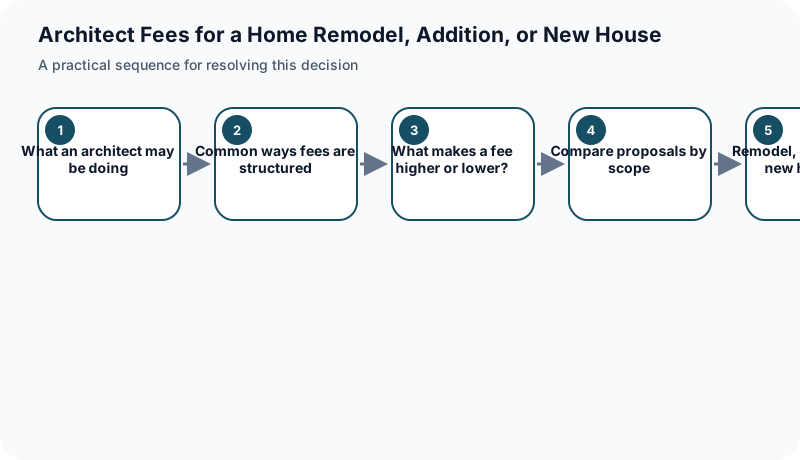
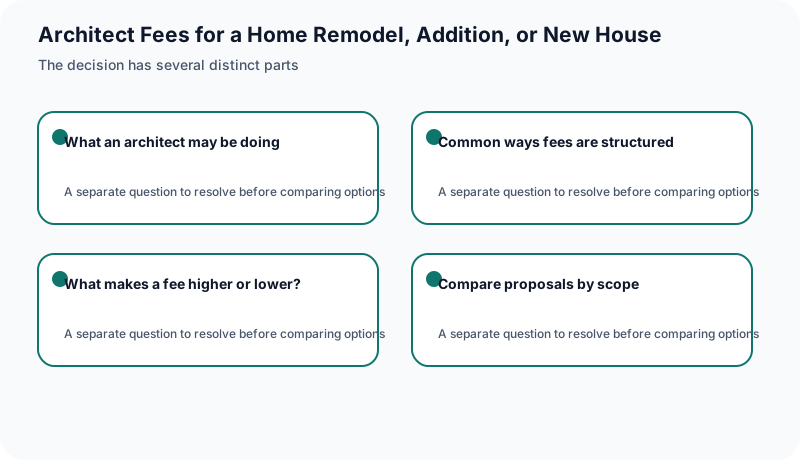
What an architect may be doing
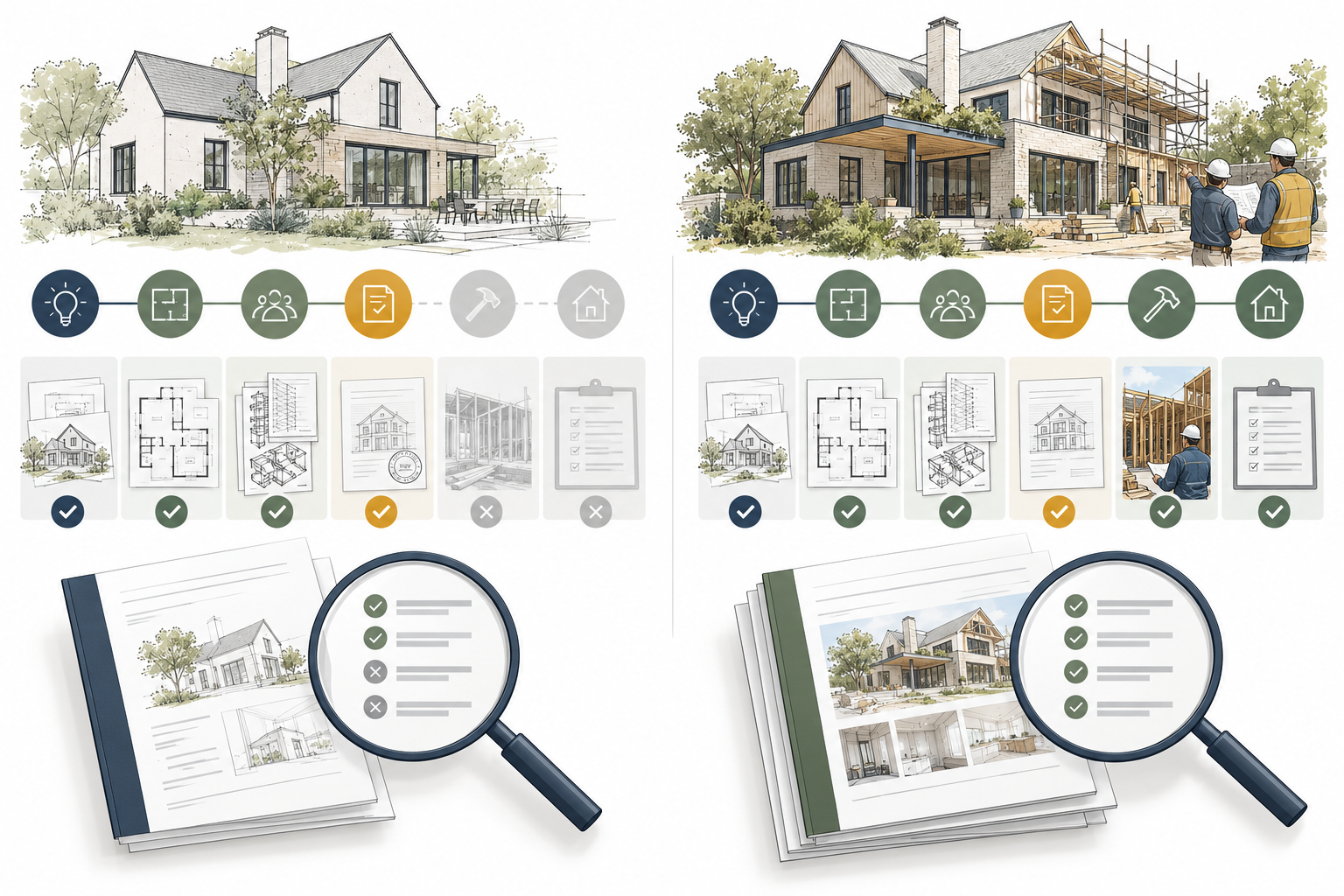
Depending on the agreement, residential architectural services can include programming, site and existing-condition review, schematic design, design development, construction documents, bidding or procurement support, and construction-phase administration. AIA describes schematic design as establishing goals, requirements, relationships, and preliminary cost; later phases add detail for pricing and construction. The agreement controls the actual deliverables.
An architect may coordinate structural, mechanical, electrical, plumbing, energy, civil, or specialty consultants, but consultant fees may be separate. Ask whether the proposal includes those consultants or merely coordinates them.
Common ways fees are structured
You may see a stipulated sum, hourly billing, a percentage tied to a stated cost basis, or a combination by phase. A percentage is meaningful only when you know whether it applies to an owner budget, construction cost, a defined portion of the work, or something else. AIA’s current compensation discussion emphasizes that the parties should define the basis and how it changes as the budget develops.
Canadian homeowners may encounter the Royal Architectural Institute of Canada’s scope-first fee framework. It is a tool for defining services and fees, not a mandatory residential tariff or a quote for your project. U.S. and Canadian fee observations should remain separate; a currency conversion does not create comparable market evidence.
What makes a fee higher or lower?
- Existing-building uncertainty: Hidden structure, incomplete drawings, and irregular conditions increase field work and coordination.
- Project complexity: An addition, change of use, historic property, or major structural alteration usually demands more than a simple interior layout.
- Design depth: Concept images, permit drawings, and construction-ready documents are different products.
- Consultant coordination: Structural, MEP, civil, energy, or specialty input adds time and fees.
- Client decisions and revisions: A defined number of review rounds is easier to price than open-ended changes.
- Approval path: Zoning, heritage, variance, or multiple permit authorities can add documentation and responses.
- Construction-phase service: Site observations, submittal review, RFIs, payment review, punch-list work, and closeout may be included, limited, or excluded.
Compare proposals by scope
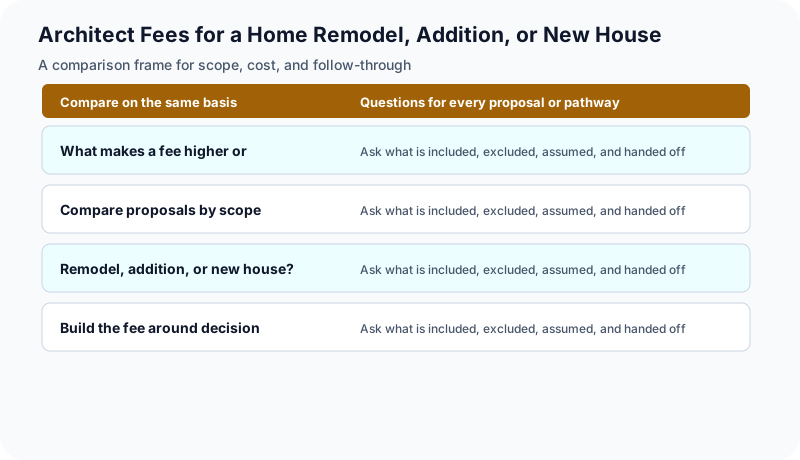
Ask each architect to state:
- The phases included and the point at which services stop.
- The drawings, specifications, models, schedules, and calculations delivered.
- The assumptions about project size, construction budget, and site information.
- The number of meetings, site visits, bid packages, and revision rounds.
- Consultant responsibilities and whether consultant fees are included.
- Permit submission and response responsibilities.
- Construction administration activities, frequency, and exclusions.
- Reimbursable expenses, travel, taxes, and additional-service rates.
- What happens if the project pauses, changes scope, or is not built.
Do not select a proposal solely because its percentage is lower. A lower fee can reflect fewer phases, less documentation, fewer revisions, or no construction support rather than better value.
Remodel, addition, or new house?
A remodel can be cheaper than new construction in some cases, but existing conditions create uncertainty and coordination work. An addition may combine site, zoning, foundation, structural, envelope, and utility decisions. A new house may have more area to document but fewer unknown existing conditions. There is no reliable universal ordering because location, scope, and professional responsibility matter more than the label.
Whether an architect is required, whether drawings must be sealed, and which professional may provide them are jurisdiction- and project-specific. Confirm those questions with the local authority and the licensed professional before assuming a cheaper service is legally interchangeable.
Build the fee around decision stages
An owner does not have to buy every service phase at once. A staged agreement may start with a feasibility or programming task, then authorize concept design, developed design, permit documents, bidding, and construction support as separate steps. The benefit is a clear decision point before the next commitment. The risk is that a limited early package may not be enough to price construction or apply for a permit.
Ask for the deliverable and stop point at every stage. A concept phase might compare layouts and establish an initial direction. Design development may coordinate structure, building systems, materials, and site constraints. Construction documents translate those choices into coordinated drawings and specifications. Bidding support may answer contractor questions, while construction administration addresses selected questions after a contractor is engaged. The labels vary; the written scope governs.
If the fee is a percentage, ask what amount the percentage uses and how the amount changes. Is it the estimated construction cost, awarded contract, cost of the work in a defined category, or an owner budget? Does the fee change if bids are high, the owner reduces scope, or the work is split into phases? A percentage can move because the cost basis changes even when the architect’s effort does not. A fixed sum can also require added services when the project expands.
Compare the total fee exposure
A useful comparison shows the base fee, likely reimbursables, consultant contracts, taxes where applicable, and additional-service rates. It also identifies the payment schedule and the deliverables that trigger invoices. Ask what happens if you pause the project, change the program, stop after concept design, or hire a different professional for the next phase.
For example, a low proposal may include two concept options and permit drawings but no engineering, bid assistance, or construction support. A higher proposal may include consultant coordination and a response to review comments. Neither is automatically better. Compare the work against the next decision you need to make and identify the tasks you would have to purchase elsewhere.
Ask how the architect handles changes caused by unknown site conditions, an authority correction, and an owner-requested redesign. These are economically different events. A defined correction-response allowance may protect the owner from a routine permit comment, while a changed addition size may appropriately trigger additional services. The contract should state the distinction and how the fee will be approved.
When the project pauses or changes
Remodels are especially sensitive to field discoveries. Once demolition reveals framing or services, the architect may need to coordinate a revised layout or new engineering. Ask whether site visits and existing-condition verification are included, what additional observation costs, and how the architect will report a condition that falls outside the original scope.
If bids come in above budget, the redesign effort depends on the stage reached and the type of change. A finish substitution may be straightforward; changing area, structure, or building systems can require coordinated revisions across disciplines. Ask for a fee and schedule before approving redesign. If the project becomes unbuildable under the current scope, ask what drawings and files you will receive and which can be used by a replacement professional.
Do not assume that a professional fee includes municipal application charges or that the architect guarantees the contractor’s final cost. Keep construction, authority fees, consultant fees, and architectural services in separate budget lines.
Check the agreement before signing
Read the service agreement for the project description, phases, fee basis, invoice schedule, expenses, file rights, termination, and additional services. Ask how unused phase fees are handled if you stop after feasibility or concept design. Confirm what files you receive and whether another professional may continue from them. Ask how a pause, contractor change, or new permit requirement affects the agreement.
For hourly work, ask for an initial estimate, reporting interval, and notice before the estimate is exceeded. For a fixed fee, ask which assumptions make the amount valid and what events trigger a change order. For a percentage fee, write down the cost basis, date it is set, treatment of alternates, and adjustment if the project is phased or reduced.
The fee comparison should include the people and services the project will need, not just the architect. List separate engineering, survey, energy, permit, estimating, and inspection fees. A proposal is easier to trust when it shows both what is included and what is intentionally left for a later decision.
Make the fee comparable to the next milestone
Ask each architect to identify the next milestone their fee is meant to reach: a feasibility decision, a selected concept, a permit-ready application, a bid package, or construction support. Then ask what the owner will have in hand and which professional or authority must act next. A proposal that stops at a sketch should not be compared to one that carries the project through permit review.
If you are unsure about total design cost, request a phase estimate and a review point before authorizing the following phase. This preserves the ability to revise the brief when survey, zoning, structural, or budget information changes. Do not use a fee percentage as a substitute for understanding the delivered work.
When construction administration is separate
Design documents do not automatically include construction-phase support. If the contractor asks for clarification, proposes a substitution, or submits a payment application, the person who responds may be working under a separate service scope. Read architect construction administration fees when the question is what happens after design is finished.
The right fee is the one you can explain line by line. If you cannot tell which decision, deliverable, or risk each charge addresses, the proposal is not yet specific enough to compare.