
A permit expediter is a private coordinator who may prepare submissions, track status, communicate with an authority, organize corrections, or help move information through a local process. The service is administrative. An expediter does not become the authority, replace a required architect or engineer, or guarantee approval.

What the service may include
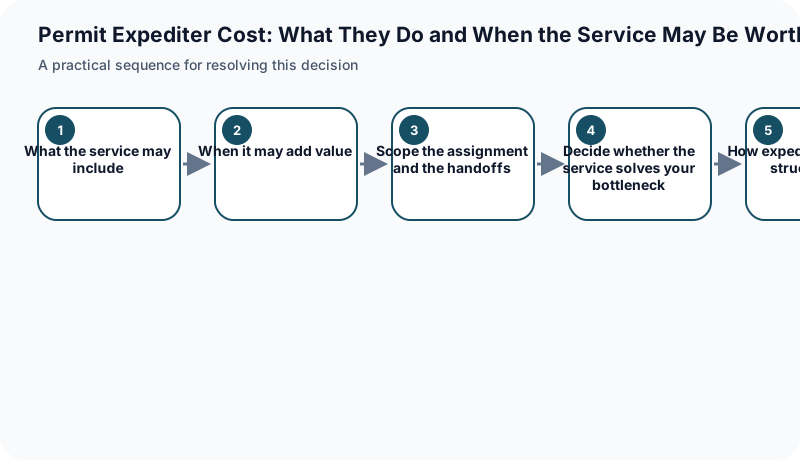
Depending on the provider, an expediter may review a checklist, assemble documents, submit forms, monitor comments, schedule meetings, track revisions, and report status to the owner or contractor. A design professional may also provide some of these services as part of a broader agreement. Compare the actual work rather than the job title.
The authority still decides completeness, compliance, fees, inspections, and approval. Toronto and Seattle guidance illustrate that permit applications follow local processes and project-specific requirements. No private coordinator can bypass those decisions.
When it may add value
The service can be proportionate when the project involves multiple permits or authorities, a tight administrative schedule, a remote owner, a complex correction history, or a team that needs one person to maintain the submission record. It may be unnecessary when the designer already includes submission and responses, the project is simple, or the owner can manage a clear local process.
Do not hire an expediter to compensate for missing design decisions. If the package is incomplete, administrative tracking cannot solve the underlying structural, zoning, MEP, or documentation problem.
Scope the assignment and the handoffs
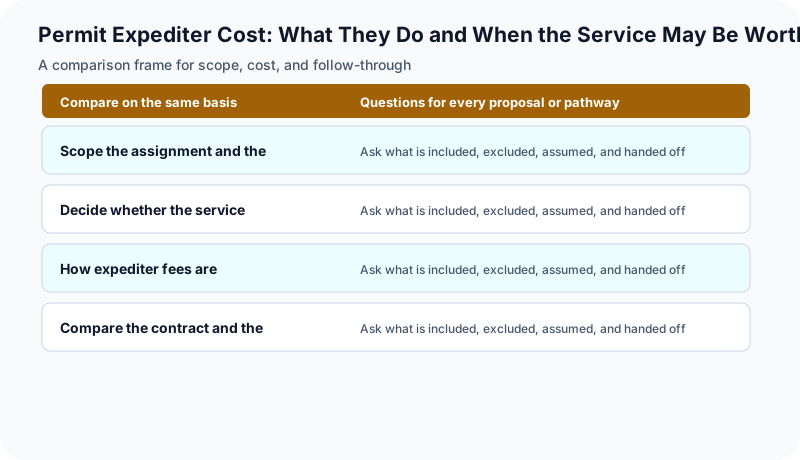
Ask the expediter to identify the authority, application, and administrative tasks they will handle. A useful scope can include assembling a checklist, submitting a complete package supplied by the design team, tracking review comments, scheduling a meeting, and reporting status. It should also say whether the provider checks document completeness, writes responses, uploads revised sheets, coordinates multiple permits, or closes out the record.
Technical responses need an accountable designer or engineer. An expediter can route a correction and track its return, but may not be qualified to decide how a structural, zoning, energy, or drainage comment should be answered. Ask who owns the technical work and how the expediter will obtain the approved response.
Decide whether the service solves your bottleneck
The service is more valuable when administrative work is a real constraint: several authorities, a remote owner, a complicated submission portal, recurring correction cycles, or a team without a permit coordinator. It is less valuable when the architect already includes submissions and review responses or when the main obstacle is missing design information.
Before hiring, list the current bottleneck and the result you expect. If the problem is that the package is missing a survey, structural calculations, or a zoning decision, pay for that technical work. If the package is complete but the owner cannot track status and deadlines, administrative coordination may be useful. Ask the provider to explain how they will measure progress without promising an approval date.
How expediter fees are structured
Private pricing may be a flat application fee, hourly rate, phase fee, monthly retainer, percentage, or a combination. Because market rates are fragmented, there is no dependable national range. Ask whether the fee includes the initial submission, authority meetings, corrections, resubmittals, inspections, closeout, travel, taxes, and government charges. Keep authority fees separate.
Compare the contract and the authority record
Ask whether the fee is due upfront, by submission, by hour, or by month, and what happens if review is delayed. Confirm travel, taxes, government fees, courier costs, and additional authority meetings. Identify the number of permits and correction rounds included and what happens if a new approval type is discovered.
Require regular status reports that show the last authority action, next owner or professional action, responsible person, deadline, and outstanding cost. Ask who holds the application login, how official notices are forwarded, and whether you receive copies of every submission and response. The owner should retain access to the record if the provider’s contract ends.
The expediter should not submit a changed drawing or make a technical representation without authorization from the responsible professional and owner. Ask how revisions are approved, who checks that the upload matches the current approved set, and how a superseded file is identified.
Compare a private coordinator with included services
Before hiring an expediter, review the architect’s and contractor’s agreements. One may already include permit submission, status tracking, correction responses, or inspection scheduling. Ask each party to identify what is included and where its service stops. A second coordinator may still be useful for oversight or multiple jurisdictions, but the owner should know why the extra fee is needed.
Request a proposal with a fixed list of permit types, authorities, submissions, meetings, and correction rounds. Ask what counts as a new application or added service. If the authority requires a professional response, confirm whether the expediter will only transmit documents or also coordinate the designer.
Protect the project record
The owner should receive copies of the application, fee receipts, correction notices, submitted responses, issued permit, inspection results, and closeout record. Ask whether the expediter stores them in a shared folder and how records are returned at the end of the contract. If the project is sold, paused, or transferred, the owner needs an accessible permit history.
Ask the provider to report delays and open tasks promptly. The report should state the last authority action, next owner action, date due, and any fee or consultant decision. A status note saying “waiting on city” is not enough if a missing document or unpaid fee is holding the file.
Measure whether the service is working
Set a service expectation such as response time to an authority notice, frequency of status updates, and who attends a meeting. These are provider-performance measures, not an approval guarantee. If the service does not reduce administrative burden or clarify responsibility, review the scope before extending a retainer.
Use a written service level
Agree on how quickly the expediter forwards a notice, how often they check status, and when they escalate a delay. A missed correction deadline can cost more than a routine tracking fee. Ask whether the provider monitors the portal on business days, receives email notices, and contacts the owner when a response needs technical input.
Do not rely on an expediter to decide that a project is code-compliant or that a permit is unnecessary. Their work is most useful when the technical scope is settled and the remaining problem is coordination. If the project is not ready for submission, ask whether a paid completeness review will identify missing files or simply route the application.
Compare the fee with the time saved
Estimate the owner’s time for assembling records, tracking notices, scheduling meetings, and communicating with consultants. Compare that effort with the expediter’s written fee and the value of a maintained schedule. For a simple application, the fee may exceed the administrative burden. For a multi-authority project or remote owner, consistent coordination may prevent missed handoffs.
Know the limits of the deliverable
Ask the expediter to list each permit application, authority contact, and expected record. Confirm whether the final deliverable is an issued permit, a status report, a response package, or closeout confirmation. A service may end at permit issuance while inspections and final documents remain the owner’s responsibility.
If an application is refused or the authority asks for additional design work, ask what the expediter will do next and what new fee applies. The provider should not promise an approval or quote a single price for undefined correction cycles.
Ask whether the expediter will reconcile final inspections and upload completion documents or whether the service ends at issuance. If it ends early, assign closeout and status tracking to the owner, contractor, or architect before the contract is signed.
Ask the expediter to state whether each quoted fee is for one property and one permit number or can cover multiple applications.
At contract end, require a list of applications still open, notices awaiting response, fees due, and records handed back to the owner.
Questions before hiring
- Which authority and permit types does the provider know?
- Are they authorized or registered for any local filing role?
- What documents are supplied by the owner, designer, engineer, and contractor?
- How many review and correction cycles are included?
- Who makes technical decisions and signs professional documents?
- What happens if the authority rejects the application or requests new work?
- Does the service continue through issuance, inspections, and closeout?
Beware of promises to “get around” code, skip review, or guarantee approval. A responsible expediter makes the process clearer; they do not change the rules. Read plan-review timeline and correction costs when the main risk is delay, and permit drawings cost when the package itself needs definition.
Know what the service can control
A provider can help organize documents, file an application, track comments, and coordinate a response, but the authority controls its review and decision. Ask for a scope that names the permits, filing steps, communication permissions, and number of included follow-ups. Confirm whether the expediter attends meetings or only relays messages, and whether technical responses remain the responsibility of the architect or engineer. Request a log of submission dates, document versions, outstanding items, and payments. This makes the service easier to evaluate and allows the owner to take over if the application is paused. Avoid paying a premium for an approval guarantee that no private provider can responsibly promise.