
Construction administration (CA) is a contract-defined set of architectural services during construction. It can help interpret documents, respond to questions, review submittals, observe progress, review payment applications, track changes, and participate in punch-list or closeout work. It is not automatically included in the design fee and does not necessarily mean the architect supervises the contractor’s means and methods.
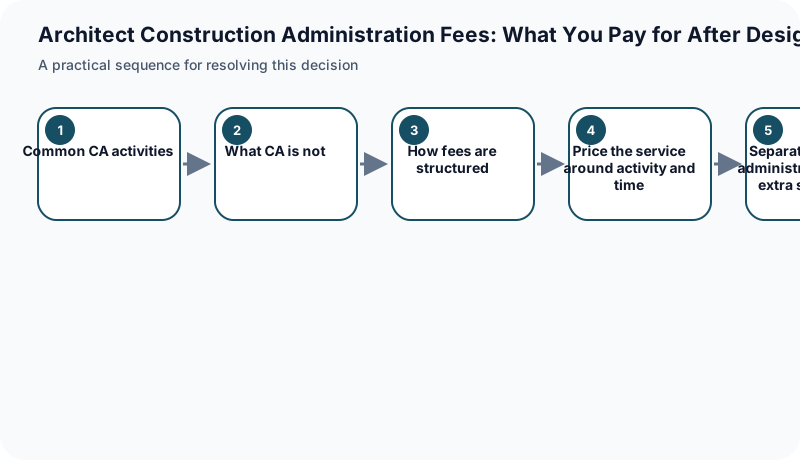
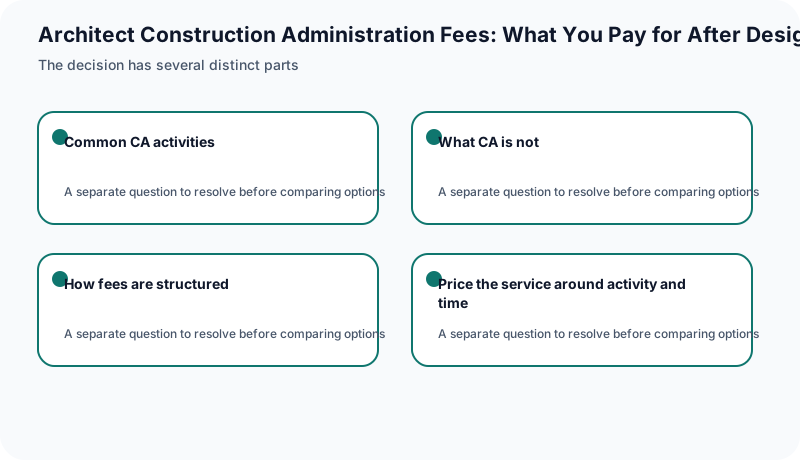
Common CA activities
AIA describes construction-phase contract-administration services as a separately defined owner-architect service. Depending on the agreement, the architect may:
- answer requests for information and issue clarifications;
- review shop drawings, product data, or submittals;
- visit the site at stated intervals and report observations;
- review payment applications against observed progress;
- help document proposed changes and interpret contract documents;
- participate in substantial completion, punch-list, and final payment activities.
The list is illustrative. The agreement controls frequency, authority, response time, and exclusions.
What CA is not
The contractor normally controls construction means, methods, sequencing, site safety, and workers under the construction contract, subject to local law and the actual agreements. An architect’s observation is not a guarantee of every concealed condition or a replacement for municipal inspection. An owner’s representative may coordinate broader budget and schedule interests. An independent inspector may check a specified scope. These services can overlap but are not identical.
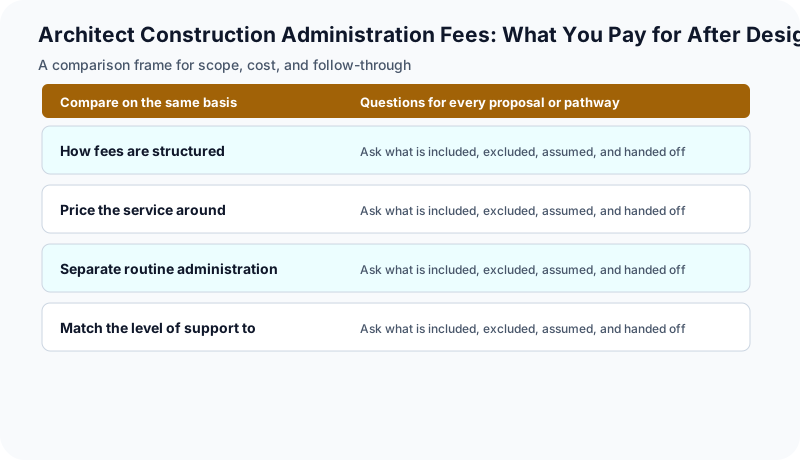
How fees are structured
CA may be included in a broader percentage or fixed fee, priced as a monthly or hourly service, charged per site visit, or separated by activity. Ask whether the fee assumes a construction duration, number of visits, weekly meetings, RFIs, submittals, payment reviews, change orders, and closeout. Additional services may arise from owner changes, contractor delay, paused work, redesign, or a project that lasts longer than assumed.
There is no reliable national residential rate. Compare scope, not just the number. Canadian and U.S. fee practices should be quoted in their own markets.
Price the service around activity and time
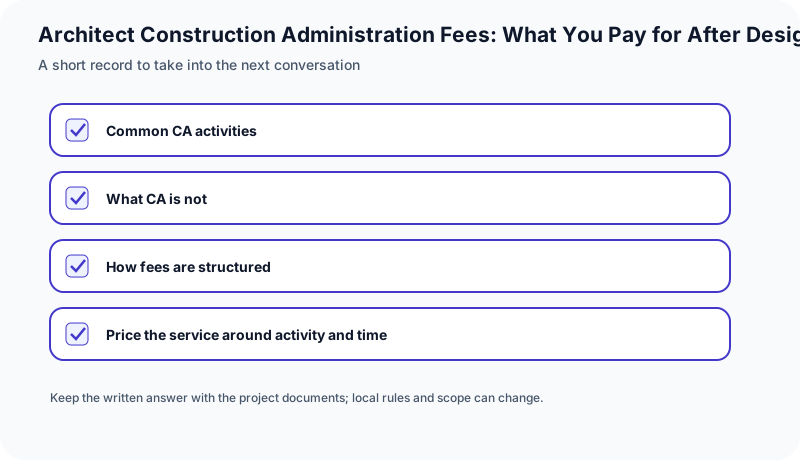
Ask for the anticipated construction duration, meeting frequency, site-visit frequency, response time, and number of RFIs and submittals included. A monthly fee may be predictable during a steady schedule but continue while work is paused. A per-visit fee may suit a short project but leave questions between visits outside the scope. Hourly billing can track actual effort but requires a clear authorization and reporting process.
The architect’s site visit is usually a limited observation at a stated point in time. Ask what the architect will look at, what they will record, and how urgent issues are escalated. The fee does not automatically include continuous supervision or inspection of every trade. Put any required contractor coordination, testing, safety review, or special inspection in the correct contract.
Separate routine administration from extra services
Routine CA can include ordinary clarifications and review tasks that the agreement lists. Added services may arise from a changed owner program, unexpected existing conditions, an extended construction schedule, repeated contractor resubmissions, a paused project, or a redesign. Ask how the architect will notify you that a task is outside scope and whether written approval is required before work proceeds.
If a contractor proposes a substitution or change order, ask whether the architect will review design conformance and what that review does not determine. The architect may advise on the design documents, while the owner and contractor negotiate price and contract terms. Keep the architect’s professional fee, contractor change cost, authority revision fee, and engineering update separate.
Match the level of support to project risk
A simple project with complete documents and an experienced contractor may need limited responses and a few observations. A major addition, occupied remodel, structural change, or multi-system project may create more questions and coordination needs. The owner should consider how available they are, how decisions will be documented, and what happens if a question waits for a response.
Ask the architect and contractor to agree on how RFIs, submittals, field changes, and payment applications are submitted and tracked. A shared log can record the item, responsible person, requested-by date, response, cost effect, and drawing revision. This lowers the risk that an informal conversation becomes an unpriced construction change.
When limited CA may be appropriate
A smaller project may need periodic site observations and responses rather than full administration. A complex addition, custom home, historic project, or unfamiliar contractor may justify more frequent support. The right level depends on project risk, owner availability, documentation, contract relationships, and the consequence of an unresolved question.
Choose a cadence and response path
Ask the architect how site visits will be scheduled against project milestones and whether the owner can request additional visits. Confirm how urgent questions are handled, where RFIs are submitted, and who may authorize a change. A predictable response path can prevent informal instructions from conflicting with the approved drawings.
For each meeting or visit, ask what written record the owner receives. A short field report can identify observed progress, open issues, and follow-up, but should state its limits. Ask whether reports are delivered to the contractor and whether the owner must approve distribution.
Track service use against the fee
Request periodic reporting of hours, site visits, RFIs, submittals, and remaining allowance. If the construction duration expands, ask for a revised forecast and the reason for the added time. The owner can then decide whether to continue the same level of support, reduce frequency, or authorize a different service.
Ask how disputed observations are resolved. The architect may interpret design intent, the contractor controls construction execution under its contract, and the owner decides whether to approve a change. The agreement should identify how those roles communicate before cost or schedule is affected.
Confirm which decisions the architect may make
The owner-architect agreement should say whether the architect may reject nonconforming work, interpret a drawing, recommend payment, or approve a substitution. These roles can affect cost and schedule. Ask which decisions remain with the owner and which belong to the contractor under the construction contract.
If the architect reviews a payment application, clarify whether the service checks submitted quantities, observes progress, or only confirms documents are complete. If the architect participates in a change order, clarify whether the architect reviews design conformance or also negotiates price. Do not infer broader financial or construction authority from the phrase “construction administration.”
Review delays and added visits
Agree on how the fee changes if construction lasts longer than planned or if repeated corrections require additional visits. Ask whether the architect provides a forecast when the included allowance is nearly exhausted. If the project pauses, determine whether ongoing site monitoring or contractor communication continues.
The owner can choose to reduce visits, but should understand which support tasks are being removed and who will handle field questions. Record any change to the CA scope in writing and distribute it to the contractor.
Confirm closeout and handoff duties
Ask whether the architect’s CA scope includes final observation, punch-list participation, record drawings, review of warranties or manuals, and response to outstanding permit comments. Some agreements stop at substantial completion; others include selected closeout tasks. Assign anything excluded to the owner or contractor.
At project end, request a list of open RFIs, unresolved submittals, approved substitutions, outstanding inspections, and incomplete documents. This helps the owner decide what remains before final payment and what should be carried into a warranty or maintenance file.
Plan for a pause or change of architect
If the project may pause, ask how the CA fee and response duties change during inactive months. Confirm whether the architect keeps a current record of open items and what they will deliver if the service ends. The owner should be able to hand off the approved drawing set, revision log, and unresolved questions to another professional.
If a new architect takes over during construction, ask which services are needed to review the work already completed and whether the professional is willing to rely on the original design documents. That review is different from ordinary CA and should have its own fee and assumptions.
Keep written approval for additional CA services with the budget and meeting record.
Questions for the agreement
- What activities and deliverables are included?
- How often will the architect visit or attend meetings?
- Who answers contractor questions and within what scope?
- Are submittals, payment applications, change orders, and punch-list work included?
- What is excluded, including safety, testing, and concealed conditions?
- How are extra visits, delays, owner changes, and redesign billed?
- What authority does the architect have, and who can approve a change?
Read owner’s representative cost if you need owner-side coordination rather than architect-specific document administration.
Match administration to project risk
The right level of service depends on how many decisions the design team must help resolve during construction. A straightforward, well-documented project may need limited clarification, while custom assemblies, concealed conditions, or many consultants can create frequent questions. Ask the architect to describe expected response times, site-visit triggers, and the process for approving additional services when construction lasts longer than planned. Confirm who reviews shop drawings and substitutions, and whether that review checks design intent rather than contractor means and methods. The contract should also state who can authorize cost or schedule changes, so professional observation is not confused with direct supervision of the contractor.