
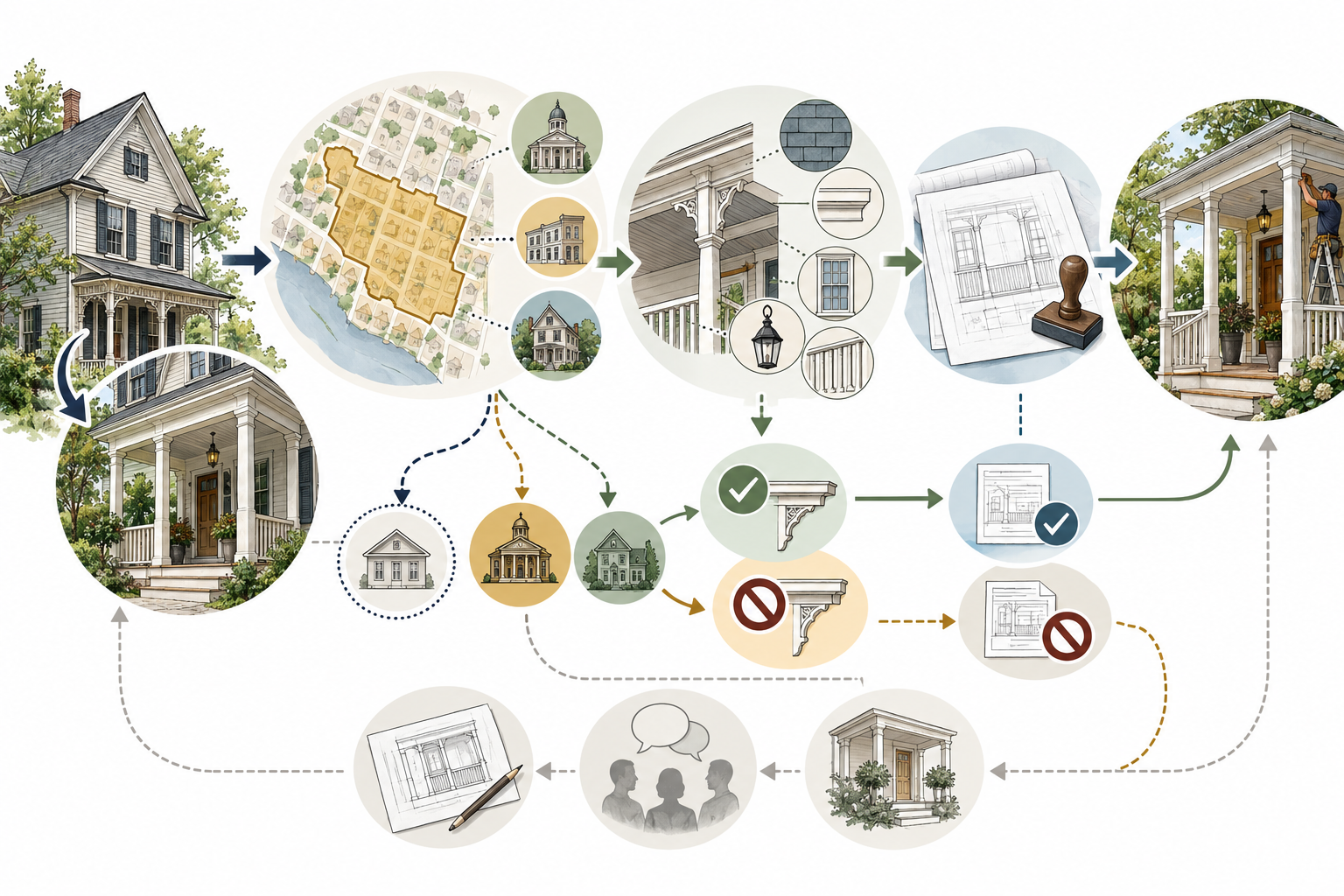
Historic review can add professional and administrative cost when a home is designated, listed, located in a heritage district, subject to preservation conditions, or being considered for a program with its own certification. The physical repair belongs in the construction budget. The review path depends on the designation and authority.
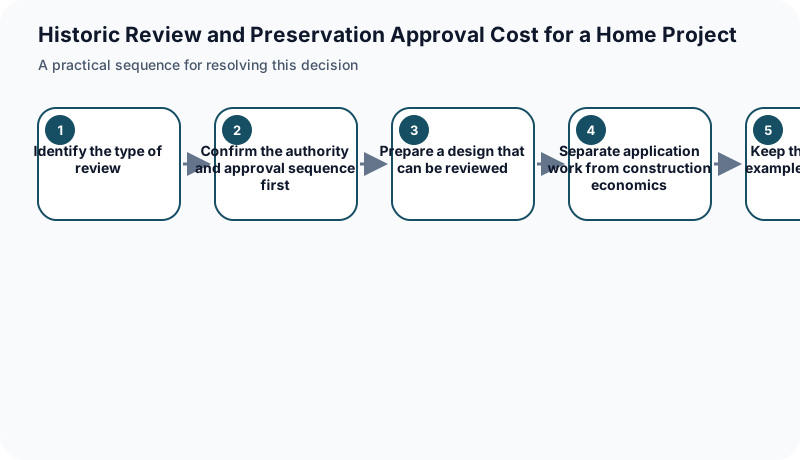
Identify the type of review
Local historic-district approval, state or provincial heritage review, a federal program, and a tax-credit certification are not interchangeable. A property can have more than one applicable process. Ask the local preservation office whether the proposed work affects regulated exterior features, interiors, additions, site elements, materials, or demolition.
The U.S. National Park Service provides a specific federal tax-incentive example. Its process uses Part 1 for significance, Part 2 for proposed rehabilitation, and Part 3 for completed work. Applications move through the State Historic Preservation Office to NPS, and applicable review fees are paid through Pay.gov. NPS encourages approval before construction and states that work undertaken without prior approval is at the owner’s risk. This process does not govern every local historic alteration or Canadian heritage review.
Confirm the authority and approval sequence first
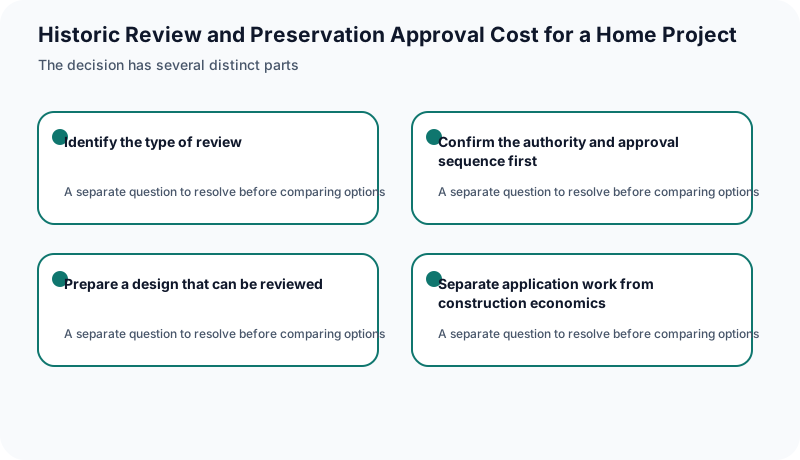
Begin with the local preservation office or the administrator of the program that may apply. Provide the property address, proposed work, photographs, and any designation or permit records you already have. Ask whether the work is within review scope, whether an early meeting is available, and what decision must be made before permit drawings are complete.
For a tax-credit or certification process, identify the exact program and stage. The U.S. National Park Service example has its own application path and review sequence. A local heritage committee can have a separate process. The same building may be subject to both, while many older houses are not subject to a historic review at all. Age or architectural style by itself does not establish the applicable status.
Prepare a design that can be reviewed
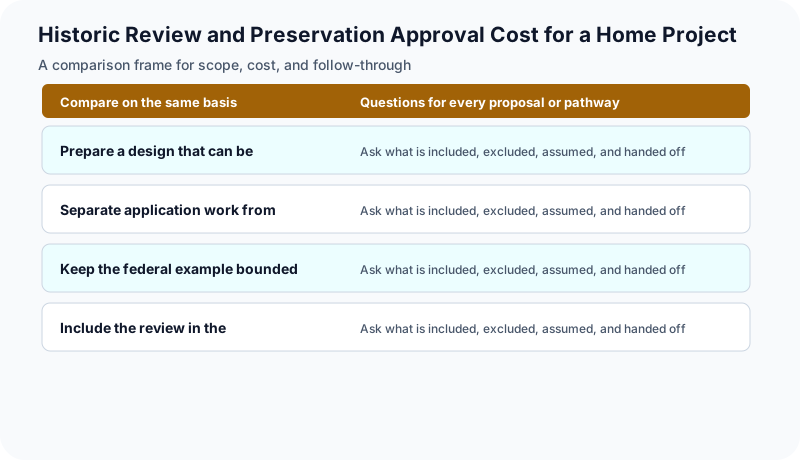
Historic review may require a description of existing materials, photographs, drawings, proposed materials, and an explanation of how the work affects protected features. The scope depends on the authority. Ask whether it needs a preservation architect, specialist consultant, contractor sample, or alternative design. A complete submission can cost more initially but may reduce avoidable comment rounds.
If a window, siding, roof, porch, landscape feature, or addition is involved, ask which alternatives the reviewer wants to see and whether the proposed material or detail needs testing or documentation. Do not assume that a visually similar substitute is accepted. Get the design criteria from the authority and put them in the professional’s fee proposal.
Separate application work from construction economics
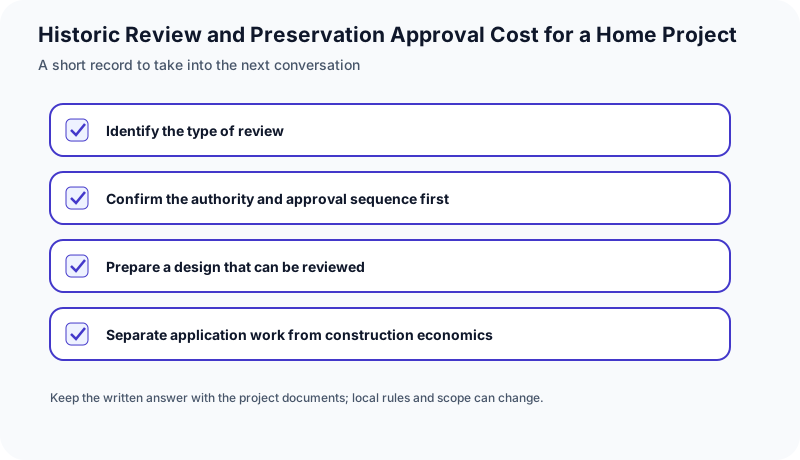
Budget the preservation consultant, architect, records research, application fees, drawings, material samples, hearing or staff time, and revisions separately from construction. A preservation-specific material can cost more or take longer to procure, but that is a contractor or product cost rather than the review fee. A required repair can also affect structure or energy work and bring other professionals into scope.
Ask how the review decision affects the construction schedule. If a contractor prices before preservation approval, a condition or material change may require a new quote. If the project depends on an incentive, verify the program’s documentation and timing before assuming a tax benefit or grant will offset fees.
Keep the federal example bounded
The National Park Service process applies to its federal historic-preservation certification and tax-incentive context. It is not a local renovation permit, a Canadian process, or a general sign-off for older houses. The cited NPS application page and the authority’s current instructions should be checked for the project. Local review and building permits still need their own confirmation.
Include the review in the construction sequence
Ask whether preservation review must occur before a building-permit application, material order, demolition, or construction. Sequence the design and procurement so that work does not depend on an unconfirmed material or feature. If an early concept changes after review, ask whether the authority needs another submission and whether the consultant’s fee includes it.
Request a schedule that shows records research, preservation drawings, application, authority review, building-permit review, and contractor pricing. The local authority may have its own meeting or hearing calendar. A contractor’s price can expire while those steps are underway, so identify the validity period and how repricing will be handled.
Ask for alternatives and fee limits
When there is more than one acceptable material or design approach, ask the architect to compare the preservation, performance, maintenance, and cost implications before the application. If the reviewer rejects a proposed detail, a prepared alternative may prevent a complete redesign. Ask how many options and comment responses are included in the professional fee.
Do not authorize extensive preservation drawings before confirming that the property and work are actually subject to review. Conversely, do not omit a possible designation from a contractor’s scope simply because the property record has not yet been checked.
Keep preservation requirements in the bid documents
Once the review authority approves the material and details, carry that information into the construction documents and contractor scope. Identify who checks substitutions and who seeks approval before changing an exterior or protected feature. An unapproved substitution can create delay or require replacement even if the contractor considers it equivalent.
Ask the architect to state whether the construction administration fee includes preservation-specific submittal review and a site visit. Ask the contractor to price sourcing and lead time for the approved materials. Keep the review condition, approved product, and installation record together for closeout.
Ask the preservation office to confirm whether the property has a designation or is within a district before paying for historic-specific design work. Keep that response with the project records.
Keep an approval log with the application date, assigned reviewer, comments, response dates, approved materials, and conditions. Share it with the contractor before work begins. If a field condition forces a change, ask the preservation authority and design professional to confirm the required path before substituting materials.
Keep photographs of the approved condition and installed work with the final approval record. If a later repair replaces a reviewed material, confirm the local process again.
At the end of construction, ask whether the historic authority needs photographs, an inspection, or a completion notice to close its record.
What can add cost
- Historic research, photographs, and existing-condition documentation.
- Preservation-sensitive design and material specifications.
- Architect or preservation consultant coordination.
- Additional drawings, details, and alternatives.
- Application, notice, staff review, or hearing fees.
- Responses to comments and revisions.
- Separate building, zoning, or planning approvals.
- Waiting time and the risk of redesign after a review decision.
The authority’s fee may be modest compared with professional documentation. Conversely, a small repair may require little review if it falls within a local exemption or delegated approval. Do not budget from the property’s age alone. Ottawa’s adopted 2026 budget lists a $247 Heritage Confirmation Letter fee effective January 1, 2026. The source prints a dollar sign without an ISO currency code, so this example preserves that notation and does not infer or convert a currency. It applies to the named Ottawa service only; the property’s designation and review route determine which category, if any, applies. Confirm the current fee and classification with the City. This authority fee does not include professional application preparation or construction.
Questions to ask early
- What designation or program applies to the property?
- Which features and proposed work are within review scope?
- Is approval required before design, permit application, or construction?
- What drawings, photographs, material information, and historical documentation are required?
- Which fees and review timelines are current?
- Can staff approve the work or is a commission hearing required?
- Are federal, provincial/state, local, tax, or grant processes separate?
The NPS page says adequately documented Parts 1 and 2 are generally reviewed within 60 days in its federal process, but that is not a guaranteed project schedule and does not include every local or SHPO step. Treat every timeline as program-specific.
How to avoid duplicate spending
Ask the preservation authority and design professional to coordinate requirements before producing a full permit set. A historic review package may overlap with permit drawings but not replace them. A variance or zoning approval may still be required. Read permit drawings cost for the broader drawing package and zoning variance cost if the land-use issue is separate.
Historic status should change the questions you ask, not lead you to assume one universal fee or approval path. Confirm the current local and program requirements before making a commitment.
Coordinate preservation and permit decisions
Ask the preservation office what information it needs before design begins and whether the review covers demolition, exterior alterations, additions, materials, or only a defined part of the property. A concept that meets zoning can still be unacceptable under heritage rules, while preservation approval may leave building-code and safety review untouched. Request the applicable submission checklist, meeting or application charges, and expected decision stages. If historic tax credits or another incentive are being considered, verify eligibility and required approvals before work starts; a local permit approval alone may not preserve program eligibility. Keep each authority’s written decision and conditions in the project record.