
There is no meaningful North American “average building permit cost.” Authorities use different fee schedules, classifications, minimums, valuation rules, area calculations, review charges, inspection charges, and surcharges. The fee for your project can also change when its scope, valuation, authority, or application path changes.

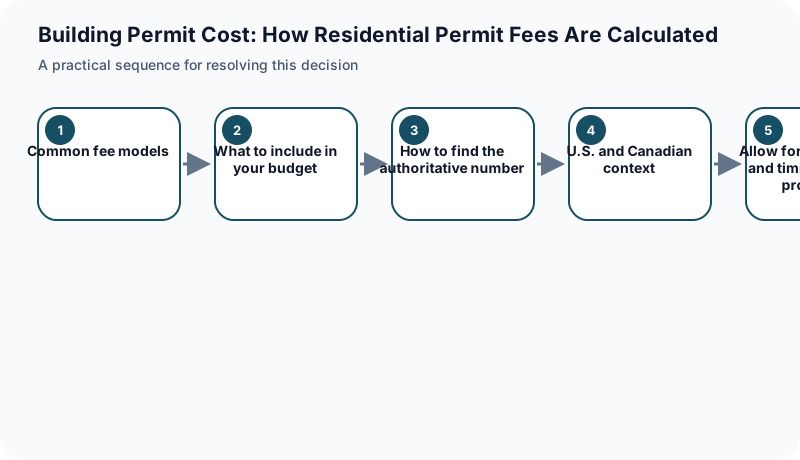
Common fee models
| Model | What the authority may use |
|---|---|
| Project valuation | Declared or calculated value of construction, sometimes with a published table |
| Floor area or service index | Area multiplied by a classification-specific rate |
| Flat permit or application fee | A named permit type with a fixed or minimum charge |
| Hourly review or inspection | Staff time for examination, special review, or unusual work |
| Fixture or system charges | Plumbing fixtures, mechanical systems, electrical work, or other units |
| Additional charges | Zoning, technology, resubmittal, revision, special inspection, or late-work fees |
Toronto’s 2026 schedule illustrates a mix of minimums, floor-area formulas, residential-unit charges, hourly examination or inspection charges, and separate charges for revised information, permit revisions, special inspections, and construction without a permit. Seattle’s guidance similarly identifies size, complexity, work value, additional permits, review time, inspections, and technology fees. Seattle’s adopted 2026 subtitle lists a $292 base fee where specified and a $292 hourly rate for most hourly services. New construction, additions, alterations, and repairs generally use a valuation-based permit fee plus a separate plan-review fee when plans are reviewed. Edmonton’s fee schedule, effective January 1, 2026, lists a $415 development-permit fee for an addition to a single-detached, duplex, or semi-detached home that increases floor area or height. That is the development-permit fee only; a building permit and trade permits use separate schedules and may also apply. These are local examples, not a national table; verify the current schedule, project classification, valuation, and applicable permit paths.
What to include in your budget
Separate the building permit from electrical, plumbing, mechanical, demolition, zoning, conservation, heritage, or other applications that may be required. Also separate professional drawing and engineering fees, contractor costs, taxes, utility charges, and inspection or reinspection charges. Some ordinary inspections may be included in a permit fee while special or repeated services are not.
Do not assume that a permit fee buys drawings or approval. Ontario and British Columbia guidance both describe applications as requiring project-specific plans, documents, and fees, followed by review and inspections. An application can require corrections even when the fee was paid correctly.
A building-permit fee is also not necessarily every public charge triggered by development. A municipality may separately assess a growth-related development charge, impact fee, or system development charge. A utility may have its own connection or capacity charge, and a contractor may price the physical work of bringing service to the house. These lines have different rules, payees, calculations, and payment dates. Read development charges and impact fees when the project may create a dwelling unit or additional system demand.
For a complete estimate, ask whether the permit worksheet covers only the building application or also trade permits, land-use review, infrastructure charges, connection charges, tax, and required securities. If an estimate combines them, request the separate calculation and authority behind every line. The distinction matters if the project changes: a revised building valuation may affect a permit fee while a change in units, floor area, use, or service area may separately affect a growth charge.
How to find the authoritative number
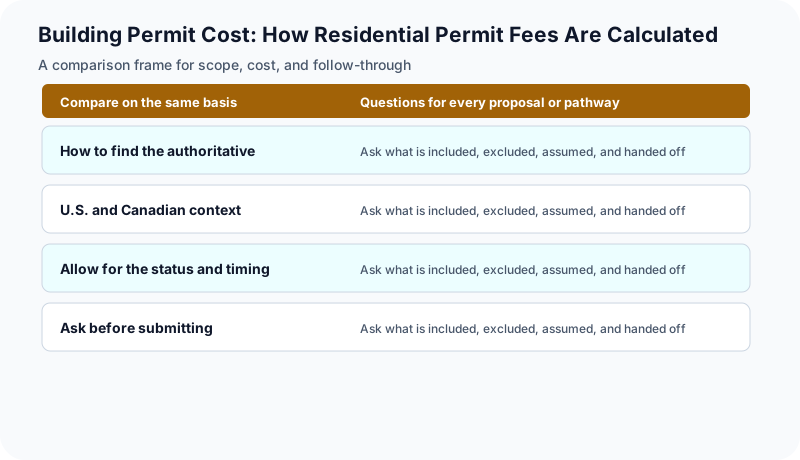
Use the responsible authority’s current fee schedule or estimator. Before asking, gather the address, project type, floor area, work value, scope description, trade systems, existing permit status, and whether the work has started. Ask whether fees are due at application, approval, issuance, inspection, or another stage, and whether taxes or technology charges are separate.
Record the schedule’s effective date. Fees change, and an online article or contractor allowance may not reflect the current classification. A quote that says “permit included” should state whether it includes only the government fee, preparation, submission, correction responses, inspections, and closeout.
U.S. and Canadian context
Permit authority is local. Ontario and British Columbia provincial guidance can explain process context, but the municipality controls the project-specific checklist. Seattle’s fee estimator applies to Seattle, not to another U.S. city. Do not combine examples into an average or convert one country’s fee into the other’s.
If your primary concern is whether work needs a permit, read does my home project need a permit. If the application is already under review, plan-review timeline and correction costs is the better guide.
Allow for the status and timing of the project
The same proposed work can have different administrative costs depending on its stage. Before an application, you may pay for drawings, pre-application advice, or a zoning review. During intake and review, the authority may collect application, plan-review, trade, or additional-review fees. After issuance, a changed scope may require a revision, while a stalled permit may require an extension request or other local process. Near completion, remaining inspections or closeout documents may add separate costs.
Ask when each amount is due and what action triggers it. A fee due with submission is a cash-flow item before approval; a charge due later still belongs in the total project budget. Ask whether the application fee is credited toward another stage, whether separate trade permits are priced individually, and whether review or inspection time is billed hourly. Do not assume a quote that says “permit included” means the contractor will pay every public charge.
If a permit has already been issued, include the permit number and current status when you ask for a new fee estimate. An old permit, an active extension, a new application, and a revision to an issued permit can have different fee bases. The authority may also need current valuations or updated documents. For a stalled job, see permit renewal and reinstatement costs; for changed plans, see permit revisions.
Ask before submitting
Before the first application, ask the authority for the project classification, required permit types, current schedule, and fee payment stages. Provide a concise scope and ask which details are still needed for a firm calculation. If valuation is used, ask how the authority defines it and what supporting information it expects. If the fee is hourly or based on review complexity, ask which services can create additional charges.
Keep confirmation with the application file and note the date the schedule was checked. A fee estimator can be helpful for planning but may rely on assumptions that do not match the final permit type. Ask whether the displayed amount includes technology fees, taxes, separate trade permits, inspections, or required deposits.
Confirm what an estimate does not settle
An authority estimator may rely on a declared value, area, classification, or service selection that the owner entered. Check those inputs before treating the output as a final amount. Ask the permit office whether a formal application or plan review is needed to confirm the classification and whether other trade or land-use approvals are separate.
If a project includes multiple buildings, phases, or units, ask whether the authority calculates one application or several. If the design changes after intake, ask whether the fee will be recalculated and what happens to amounts already paid. Keep the estimate date and project version beside the amount.
Separate a fee estimate from a project total
The permit amount is one part of the approval and construction budget. Add separate lines for professional plans, engineering, trade permits, zoning or heritage review, inspection, utility charges, development charges, physical service work, and contractor labor. Some projects need only a few of these. The point is to avoid using one permit allowance to stand in for unrelated costs.
Ask the designer or contractor to say whether their fee includes the authority application itself, only preparation, or also correction responses and closeout. Ask who pays government fees and whether reimbursement is included in the contract price. A transparent estimate lists the payee and event that makes each amount due.
Record the project scope, current schedule, fee calculation, and contact who confirmed it. If any of those assumptions change, request an updated estimate instead of relying on the old amount.
If a fee is disputed, ask the authority for the calculation method and the information used before appealing or paying for professional advice.
Make fee comparisons useful
When a contractor, designer, or homeowner compares fee estimates, align the scope and date first. Compare the same permit types, project valuation, floor area, authority, review assumptions, and included services. Write down whether a line is a fixed schedule amount, an estimate, a deposit, or an hourly allowance. Confirm whether tax, online processing, technology charges, inspection fees, and reinspection fees are included.
An estimate should also state what happens if the authority reclassifies the project or requests another review. If the project has uncertain zoning, site, or structural conditions, separate the fee to investigate those issues from the permit fee itself. That keeps the budget useful even if the initial application path changes.
Keep the total approval budget visible
A building-permit line in a household budget can hide several separate payment points. List the initial application charge, plan review, later trade permits, inspections, revisions, and any local development or utility charges as distinct items. Mark each amount as a published fee, estimate, refundable deposit, or allowance, and note when it becomes payable. Do not count a professional’s application service as an authority fee, or combine a development charge with the permit charge simply because both are collected during approval. A clear ledger makes it easier to explain a changed estimate when the authority classifies the project differently or another review becomes necessary.