
A permit revision can mean several different things: a correction requested by the reviewer, an owner-requested design change, a revised application before issuance, an amendment after issuance, a deferred document, or a supplemental permit. The name and fee depend on the authority. First identify which event occurred.
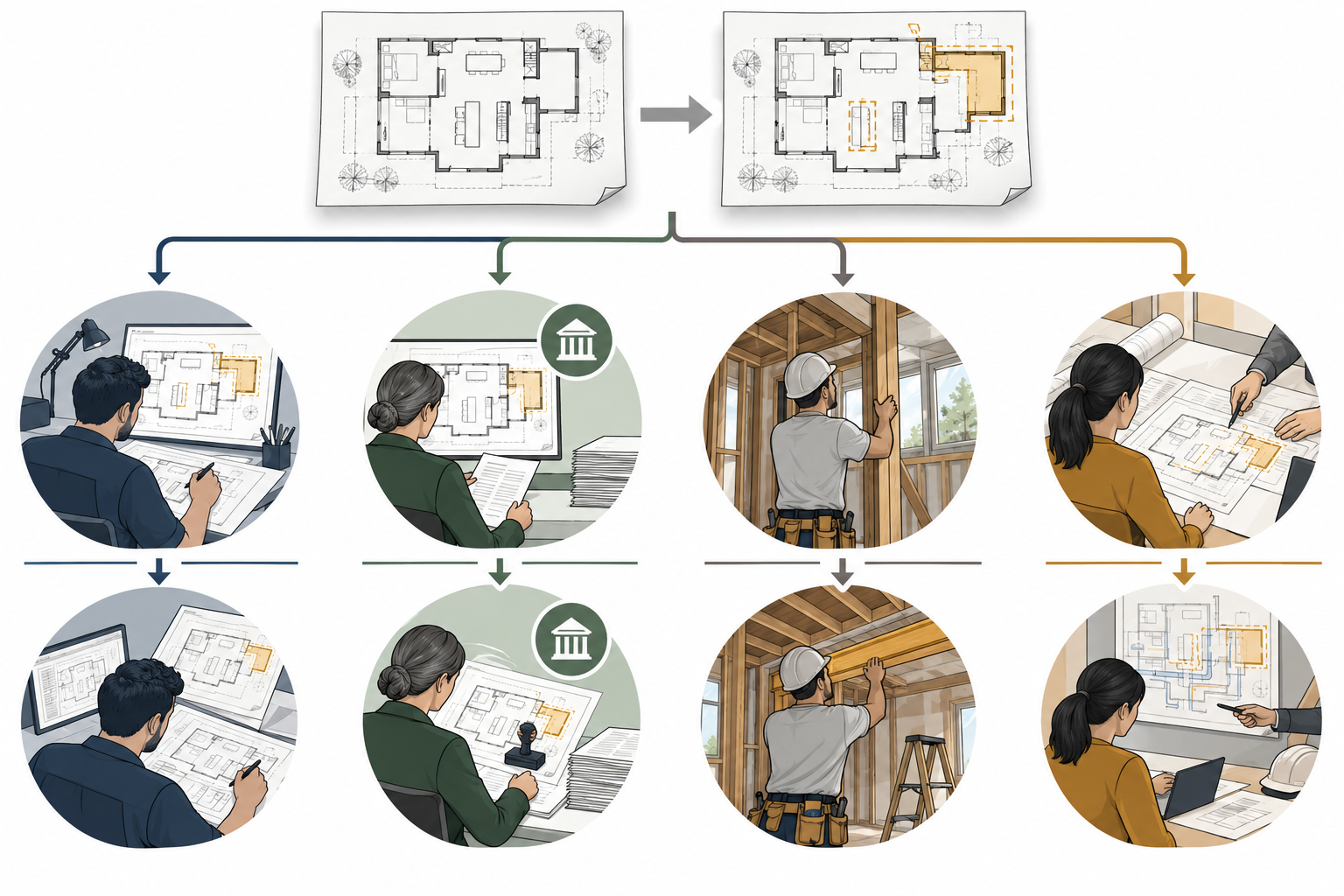
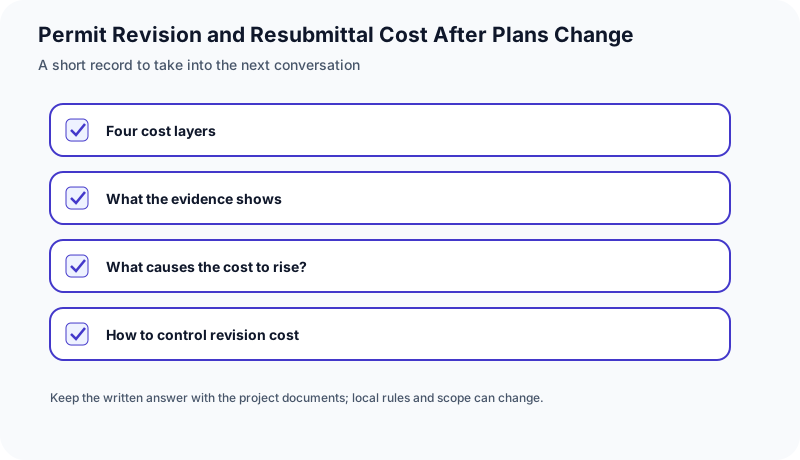
Four cost layers
- Professional revision: The architect, designer, engineer, or consultant updates drawings, calculations, forms, or specifications.
- Authority charge: The municipality or other authority may charge for revised information, review time, an amendment, or a new submission.
- Construction change: The contractor may price demolition, rework, materials, delay, or a change order.
- Coordination cost: Other consultants, utilities, inspectors, lenders, insurers, or associations may need updated information.
These layers can occur separately. A minor correction may have no separate authority fee but still require professional time. A major owner change may require all four.
What the evidence shows
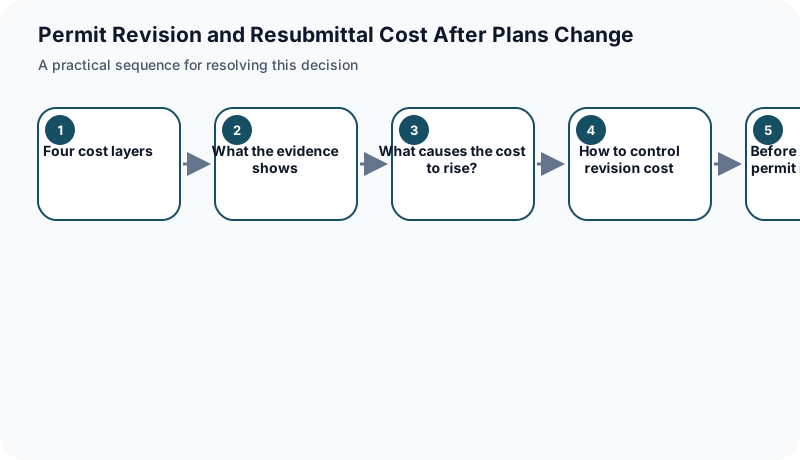
Toronto’s 2026 schedule lists charges for revised or additional information and permit revisions, while also using minimum and hourly mechanisms. Seattle explains that permit costs depend on project factors, review, inspections, and additional permits. Those are local examples. Do not copy a Toronto amount into another city or treat one authority’s label as universal.
What causes the cost to rise?
- The change affects structure, floor area, use, site drainage, energy, or utilities.
- Several drawing disciplines must be coordinated.
- The authority requires a new calculation, survey, or professional signature.
- The permit has already been issued or construction has begun.
- The change creates a new approval path or affects zoning or heritage review.
- The original contract limits revisions or treats them as additional services.
- Work already installed must be removed or altered.
Read the design and construction contracts before assuming that “correction” is included. An owner change after approval is usually a different economic event from a reviewer finding that the original package was incomplete.
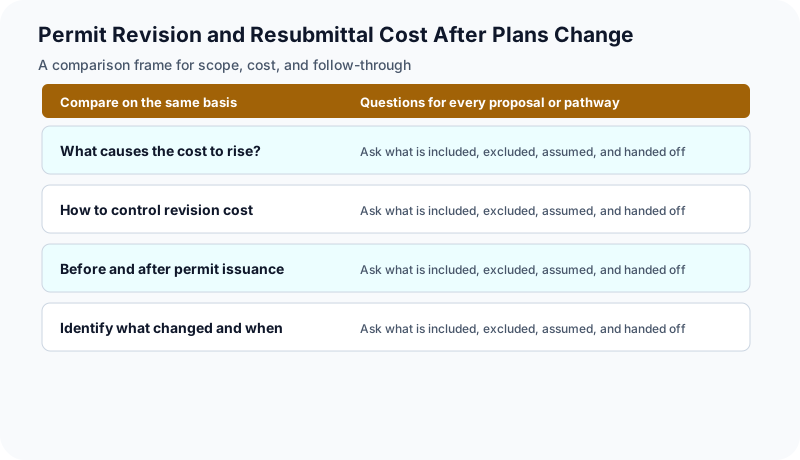
How to control revision cost
Ask the professional to describe the change in writing and identify sheets, calculations, forms, and consultants affected. Ask the authority whether the change is an amendment, revision, supplemental permit, new permit, or another local category. Obtain the current fee and review path directly from the authority.
Then request a revision proposal with:
- fixed or hourly fee and a cap;
- included response rounds;
- authority fees and taxes separately listed;
- updated drawing list and issue date;
- impact on construction sequencing and inspections;
- responsibility for coordinating the contractor and other consultants.
Do not let a small drawing change become a silent scope change across the entire project. Conversely, do not describe a material structural or use change as a cosmetic revision merely to avoid review.
Before and after permit issuance
Before issuance, a change may be incorporated into the application, but it can restart or extend review. After issuance, the authority may require an approved revision before the changed work proceeds. The contractor should not build from an unapproved change simply because the revised drawing exists.
Identify what changed and when
Start by comparing the latest submitted or approved set with the requested change. Record the sheet, detail, calculation, specification, application field, and affected trade. A small wording change can be administratively simple, while a move to a wall, opening, exit, fixture, retaining condition, drainage route, or building area can affect other disciplines and approvals. The authority decides how to classify a revision under its process.
The timing determines which cost questions to ask. Before an application is submitted, the designer may be able to revise the package under the original scope. After review has started, a changed plan can invalidate earlier comments or require another discipline to review. After permit issuance, the authority may require a formal amendment or revised permit documents before changed work is approved. Once work is installed, the owner may also have to pay to uncover, correct, or replace construction that differs from the approved set.
Do not assume that a revision fee is the whole cost. A government fee can be small while the professional hours, consultant coordination, construction delay, and physical rework are substantial. Conversely, a complex revision may be accepted without a separate municipal charge while still requiring a new engineered detail. Ask the authority and each professional for separate written scopes.
Request a revision proposal you can compare
Send the professional the current approved set, the change description, relevant comment letter, site photos or measurements, and any contractor proposal. Ask for a brief written scope that identifies:
- the drawings, calculations, forms, and consultant inputs to be changed;
- what information must be verified in the field;
- the authority contact or application step the professional will handle;
- the fee basis, cap, included response rounds, and likely exclusions;
- the authority’s quoted fee and whether it is an estimate or final amount;
- the impact on inspections, work sequence, and contractor price.
If the change affects only one discipline, ask whether the other drawings remain coordinated. If several trades or approvals are affected, ask who will maintain the master set and distribute revisions. Keep the old and current versions clearly labeled so a contractor or inspector is not working from superseded sheets.
Keep a change log and approve the fee before work begins
Write down the reason for each revision, the person who requested it, the affected drawing issue, and the date it was submitted to the authority. Track government fees and consultant invoices separately. If the revision changes cost or schedule, record that impact alongside the design decision so the owner does not later compare a revised contractor price with the original scope.
Ask the professional to state the next deliverable and estimated response time. If the fee is hourly, request a cap or notice threshold. If it is fixed, identify the included response rounds and what happens if the authority requests a different design option. Ask the contractor not to install changed work until the owner and responsible professional confirm the approval path.
For a small revision, consider whether a written clarification or formal revised sheet is required; the authority decides the process. For a substantial design change, ask whether other permits, zoning review, utility coordination, energy documents, or engineering calculations also change. The fee should cover the whole set of affected work rather than only the sheet where the change first appears.
Compare the cost before and after the change
Ask the contractor to price the current approved scope and the proposed change separately. Ask the design team whether the change affects consultant hours, permit review, inspection sequence, construction schedule, or work already installed. If the change adds area or a new system, ask whether the authority fee basis also changes.
If the project has several possible revisions, group them into one coordinated submission where the authority allows it and the design team recommends it. This can reduce duplicative coordination, but do not delay a time-sensitive safety or permit correction simply to combine unrelated owner preferences.
Document the decision and effective date. A contractor needs to know which drawing set is approved for work, and the owner needs to know whether the revised price replaces or supplements the original contract sum.
Keep each authority decision attached to the revised drawing issue. A contractor should be able to tell which change is approved and which remains under review.
Before approving the change, ask whether the contractor needs to stop the affected work and whether other portions can continue under the current approval. Keep the authority’s answer with the revision package.
Record the new fee, revised scope, and approval date in the project budget before releasing the contractor to proceed.
Obtain the authority’s written acceptance or revised permit record before using the change in the field.
Separate a design change from a permit-status problem
A revision answers “May this proposed change be added to the approved scope?” A renewal or reinstatement request answers “Does the earlier approval remain usable after time has passed?” A stalled permit may need a status determination even when the drawings have not changed. A change to an expired permit may require both a local status decision and new technical review. Ask the authority which path applies before pricing the consultant’s work.
For an issued permit that has been delayed or inactive, use permit renewal and reinstatement costs. If the authority is still reviewing the original application, see plan review timelines and correction costs. If the change follows contractor bids that exceed the budget, redesign after bids covers the project economics.
Keep the authority’s response and revised set with the contractor’s change order. That gives the owner one record of the design, approval, price, and construction sequence affected by the change.
If the issue started with bids exceeding the budget, redesign after bids is the better guide. If it is a reviewer correction, see plan-review timelines. Keep permit revision cost separate from construction change-order cost in the project budget.
Control revision scope
Before asking a designer to revise the package, sort the comments into authority corrections, owner-requested changes, field discoveries, and consultant coordination. Different causes may have different contract treatment and may affect construction cost in different ways. Ask the designer to identify the affected sheets, supporting calculations, and other approvals, then request a fee and schedule before authorizing the work. If a revision changes the approved scope, confirm whether construction must pause and whether the authority needs a formal change submission. Keep the old approved set and the revised set clearly labeled so the contractor does not build from superseded documents.