
Fence age alone does not answer the repair-or-replace question. Post condition, material availability, the distribution of damage, gate reliability, boundary layout, privacy needs, and the cost of repeated service matter more.
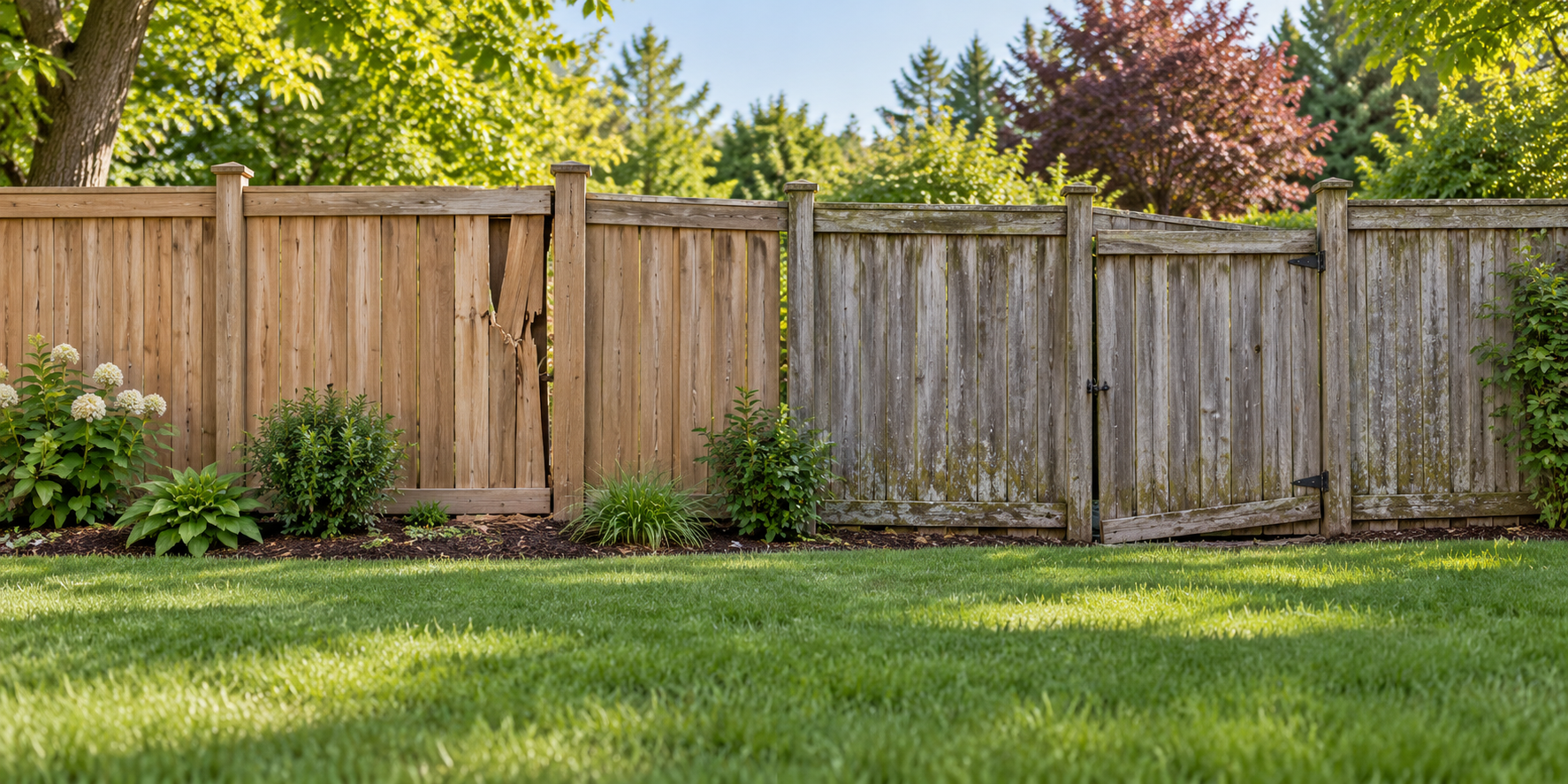
Repair is more plausible when
Damage is isolated, posts and rails are sound, the material can be matched, gates still work, and the repair will not leave a recurring alignment or drainage problem. Include removal, digging, finish matching, disposal, and service minimums in the repair comparison.
Replacement deserves comparison when
Several posts lean or decay, panels fail across the run, material is discontinued, the gate and corners need rebuilding, storm damage is widespread, or the layout no longer meets privacy or property needs. A new fence also gives an opportunity to verify the boundary and approval assumptions before rebuilding in the same location.
Compare two time horizons
Price the repair now, then list what remains old and likely to need attention. Price replacement with the same length, height, gates, access, removal, disposal, and finish assumptions. Add the value of a changed layout, a different material, and reduced near-term maintenance—but do not promise a universal lifespan.
Broad U.S. market sources identify length, material, gates, leveling, and removal as major cost variables. There is no universal repair percentage or age cutoff, and Canadian prices should be locally evidenced.
Quote questions
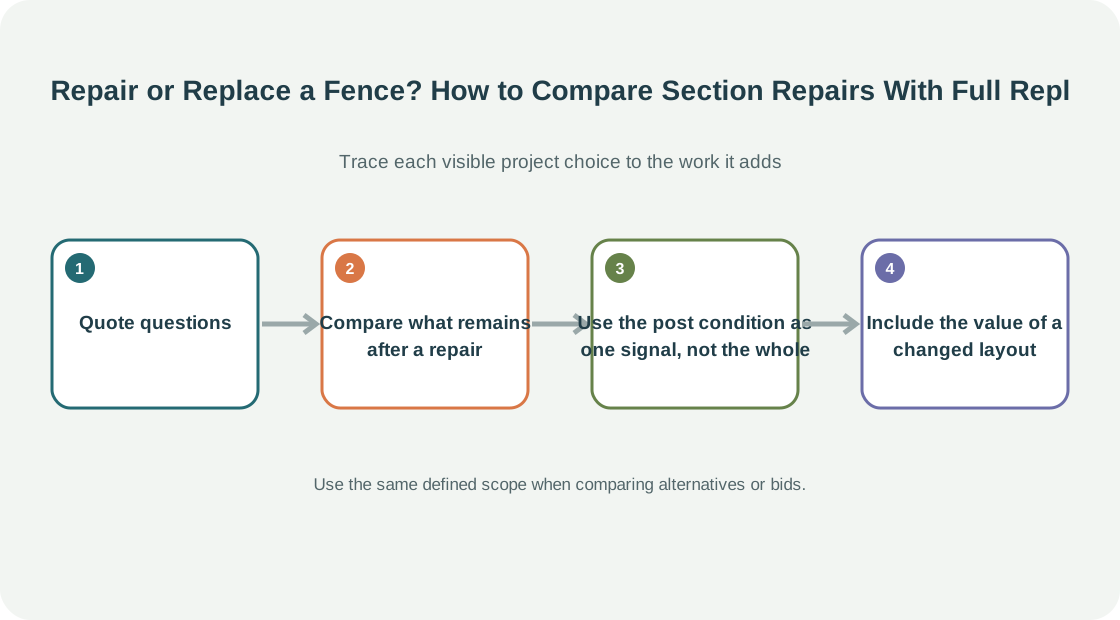
Ask what was checked below grade, how many posts are included, whether the gate and corners are sound, what is excluded, and how boundary or HOA issues are handled. Physical work and legal responsibility are separate decisions.
Compare what remains after a repair
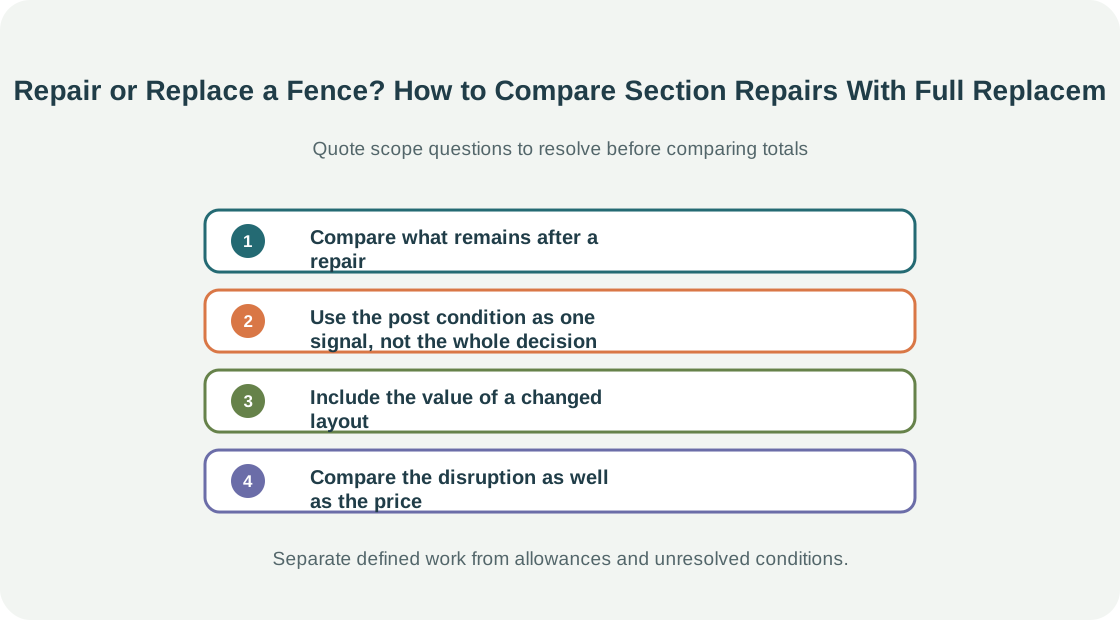
Write down the condition of posts, rails, panels, gates, corners, finish, and layout after the proposed repair. The cost of repairing a short section is only one part of the decision if several old supports or a failing gate remain. Ask each bidder what is expected to stay serviceable and which pieces are excluded from the work. If repair and replacement bids cover different lengths, removal, gates, or restoration, normalize those items before comparing totals.
Repeated movement matters because it can indicate a broader issue, but it does not prove that every post has failed. Ask whether the quote includes below-grade inspection or only visible condition. For widespread leaning, ask how soil, drainage, wind exposure, gate use, and post condition were considered. If the cause remains uncertain, price the evaluation separately rather than approving broad replacement based only on a quick visual impression.
Use the post condition as one signal, not the whole decision
Posts are important because they connect the fence to the ground and support rails, panels, and gates. Yet a leaning post can reflect impact, soil movement, a failed footing, gate load, or drainage. Ask the contractor to inspect the run and describe the reason for movement where it can be determined. Do not replace every post based on one visibly leaning section, and do not assume a new panel will fix a buried support problem.
Compare the cost of repairing one section with the combined condition of all affected sections. If posts are widely sound but boards are weathered, section repairs may preserve useful structure. If several supports have failed or the gate and corners no longer align, a coordinated replacement may reduce repeat work. These are condition-based choices without a universal age or percentage cutoff.
Include the value of a changed layout
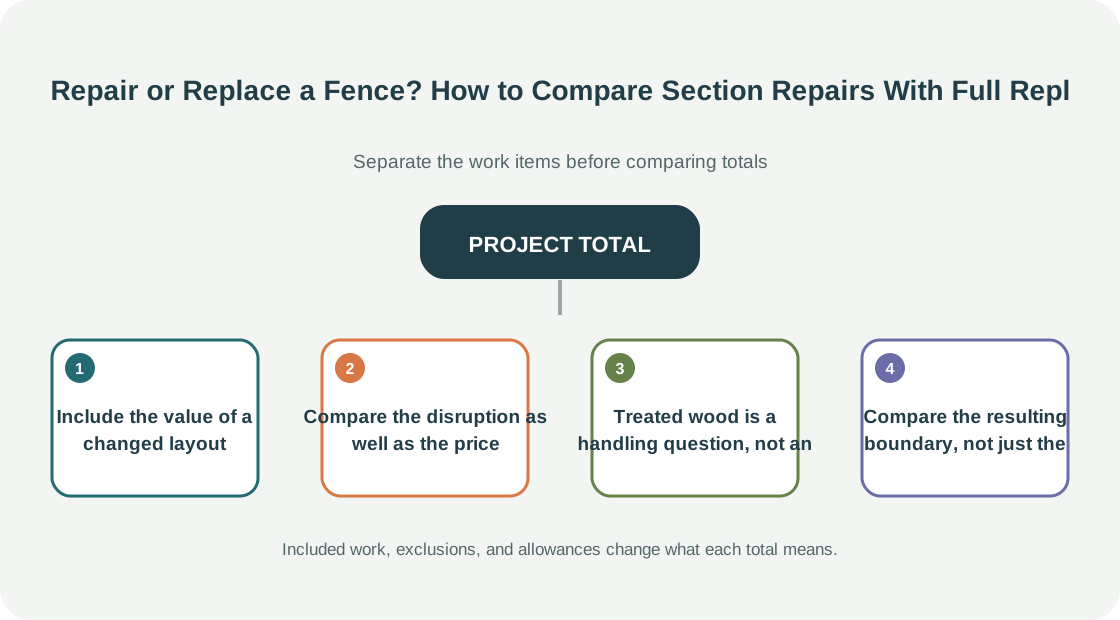
Replacement can be an opportunity to change gate placement, access, privacy, or material, but those benefits should be explicit in the comparison. A new layout may require boundary confirmation, updated approvals, or work around utilities and landscaping. Rebuilding on the same line is not automatically lawful or practical if the existing fence encroaches or property conditions have changed. Resolve property and local approval questions independently of the installer’s physical-work estimate.
Repair preserves more existing material and may reduce immediate disruption. Replacement may make sense when many components have deteriorated, compatible parts are unavailable, or homeowner needs have changed. Neither path carries a universal age threshold or percentage rule. The right horizon depends on remaining condition, the amount of repair left behind, and intended use.
Compare the disruption as well as the price
Repair may preserve a usable yard and avoid removing a long run, but it can require repeated service visits if more sections fail. Replacement can provide a consistent look and new layout, but it may disrupt landscaping, access, and shared boundaries. Ask about staging, temporary closures, disposal, and the time the gate or yard will be unavailable.
If pets, children, or pool access depend on the fence, ask how the site will be secured during the work. If a shared property line is involved, confirm who authorizes removal and replacement before the contractor begins. These are practical project constraints separate from material cost.
Treated wood is a handling question, not an automatic removal rule
If older posts or panels may be treated lumber, ask about handling and disposal before demolition. Health Canada says Canadian residential fences built before 2004 are likely to contain CCA-treated wood, though age does not identify an individual board. It advises minimizing exposure to damaged or deteriorating material. U.S. EPA guidance separately says it does not require blanket removal of existing CCA structures, advises limiting dust, discourages home burning or reuse as mulch, and directs readers to local disposal rules.
These are jurisdiction-specific guidance points, not a conclusion that a particular fence contains CCA or needs replacement. Include removal, transport, and disposal in both repair and replacement quotes where relevant so the options are compared on the same basis.
Compare the resulting boundary, not just the totals
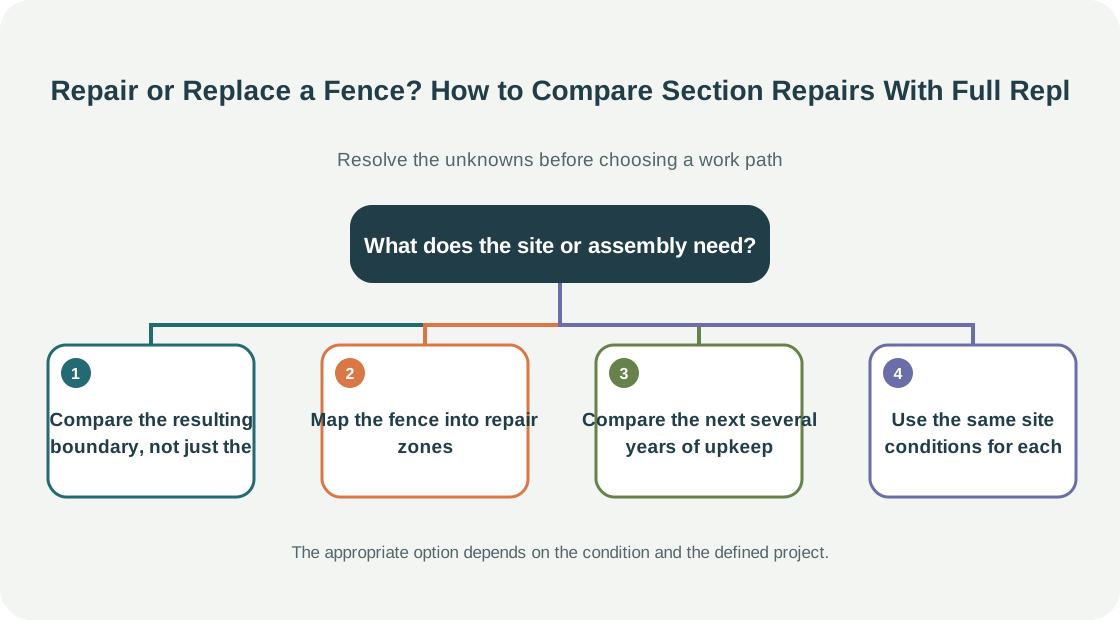
A section repair can restore a local area while leaving the rest of the fence aged, mismatched, or close to failure. Full replacement can provide a consistent line and new components but may involve more demolition, access, approval, and restoration. Ask each bidder to map the work by section and state which posts, rails, gates, and panels remain. Then compare the condition and expected use of those retained sections rather than assuming “repair” and “replace” deliver the same result.
For a shared fence, establish responsibility and agreement before treating either estimate as an authorized scope. A contractor can measure and build to instructions but cannot resolve ownership or legal boundary questions. If the fence is near a pool or another regulated access point, check the governing requirements before deciding that a partial repair is sufficient.
Include the cost of restoring plants, paving, irrigation, and access areas disturbed by replacement. Repairs may be faster but could require repeated visits if separate defects appear later. Ask contractors to identify what would change their recommendation after opening or removing a panel. Keep unknown conditions as explicit assumptions so an apparently cheaper option does not rely on an unpriced future repair.
Map the fence into repair zones
Divide the fence into sections between corners, gates, and major changes in grade. Note which panels lean, which posts move, where rails are broken, and where finish has failed. This map gives contractors a shared basis for estimating and helps you see whether defects are isolated or spread across the line. Avoid diagnosing the cause from appearance alone; ask the contractor to inspect supports and ground conditions.
Request at least two clear alternatives when practical: the minimum repair that restores the damaged area and a broader replacement scope. Have each bid state what is retained, the expected visual match, disposal, gate adjustments, and any temporary barrier. Then compare future maintenance and likely repeated mobilization, not just first-year cost. If the fence serves a safety or access-control purpose, get local requirements checked before choosing the smaller scope.
Compare the next several years of upkeep
List the components that would remain after a repair and ask what routine work they may still need. Compare that with the maintenance instructions and likely repair availability for the replacement material being considered. This is not a precise service-life calculation; it is a way to avoid treating a repair as a complete reset or replacement as maintenance-free.
For a mixed fence, identify whether new and retained sections will have different heights, colors, or hardware. A partial replacement can be a practical compromise when the line has a natural break at a corner or gate, but it may look uneven along a continuous run. Ask the contractor to mark the proposed boundary and show how the transition will be finished.
Before signing, check that both alternatives include equivalent gate function, disposal, restoration, and access. If one estimate includes a new gate and the other retains an old one, separate that item. Use a written scope and photographs to make the decision auditable later, especially if shared ownership or approvals are involved.
Use the same site conditions for each alternative
A meaningful comparison depends on contractors using the same measured run, access path, gate function, and disposal assumptions. If an estimate is based on photographs only, ask which conditions still need a site visit. Note whether prices include taxes and whether material allowances can change. These checks will not remove uncertainty, but they make the remaining uncertainty visible before you select a repair or replacement plan.