
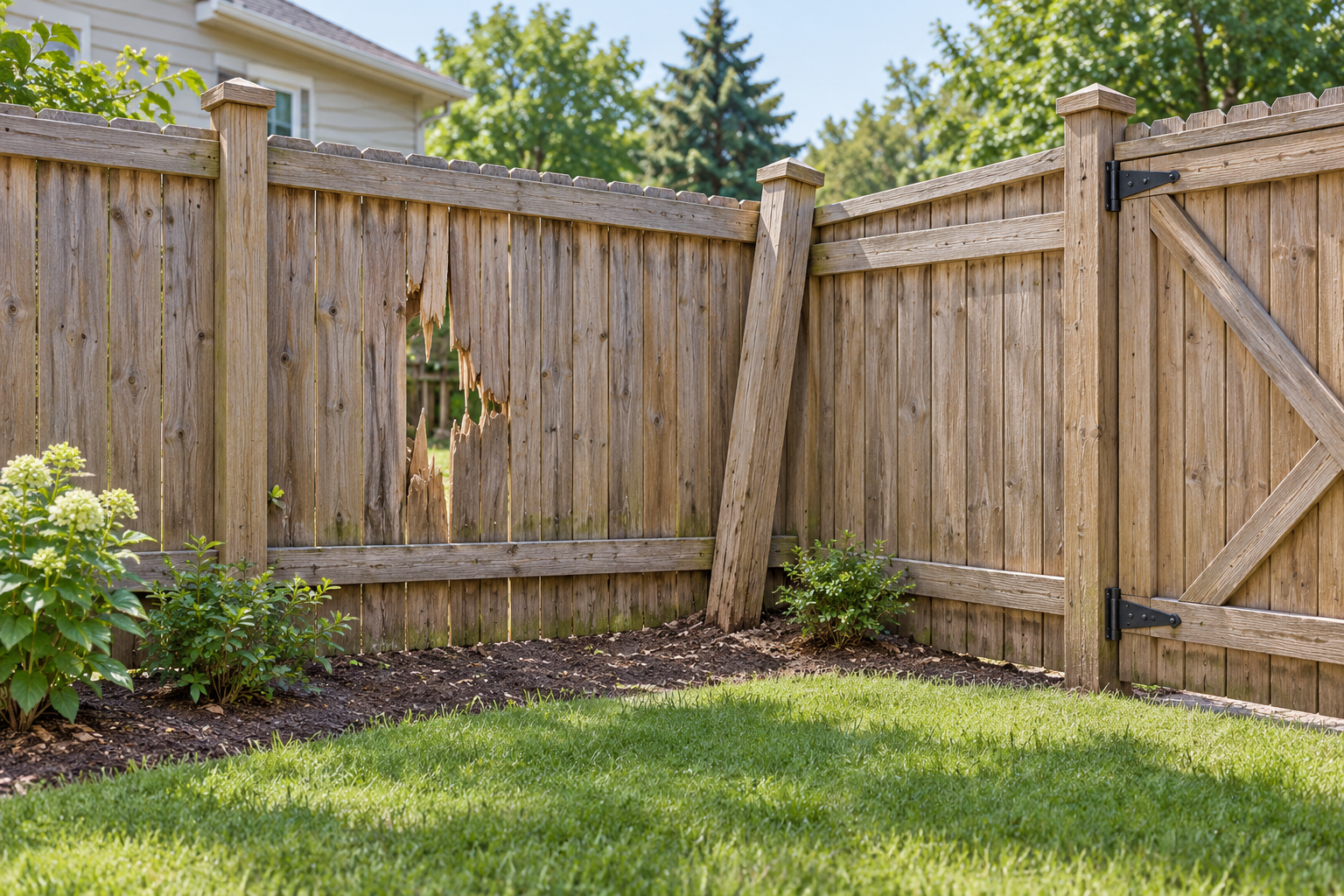
Fence repair may involve a few pickets, a damaged panel, a rail, a leaning section, a corroded post, a gate, or a larger pattern of movement. The visible section does not always reveal the condition of the posts or soil.
Common repair scopes
- replace pickets, boards, rails, or panels;
- reset or replace a post;
- repair hinges, latches, or gate alignment;
- correct localized lean or impact damage;
- address wood rot, coating failure, or metal corrosion;
- remove and dispose of damaged material;
- match finish, color, profile, and hardware.
Current evidence does not establish a reliable national price for each repair unit. Small jobs may carry a service minimum, while access, digging, material matching, and disposal can dominate. Use the broader U.S. installation signals as context only, not a repair guarantee.
Localized or systemic?
Repair is more plausible when posts, rails, panels, and gates are sound outside one damaged area. Repeated leaning, multiple failed posts, widespread rot, or a layout that no longer works makes a replacement comparison worthwhile. Storm damage should not be called cosmetic without an appropriate evaluation.
Quote questions
Ask what was inspected below grade, whether the price includes digging and concrete removal, how existing material will be matched, whether the gate is included, and what conditions trigger replacement of adjacent sections. Confirm boundary and approval assumptions separately from physical repair.
A small repair still has setup costs
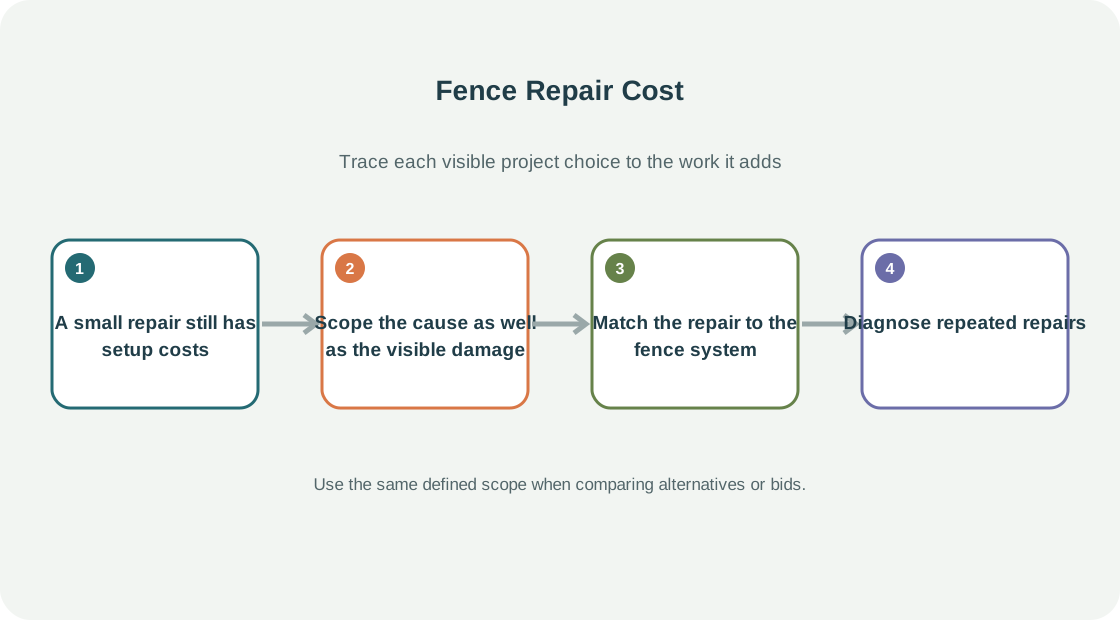
A contractor’s visit, travel, material pickup, equipment setup, and minimum labor can make a small repair cost more per foot than a full section replacement. That does not mean a minor repair is poor value: it may be the right way to preserve a sound fence. It does mean a broad per-foot average for new installation should not be used to forecast a one-post or one-panel repair.
Ask the contractor to identify which materials are reused, what has to be temporarily removed, and whether a minimum service charge applies. If the old panel is discontinued or weathered, the quote should state whether color and profile matching is available. If a replacement section will visibly differ, decide whether that is acceptable before approving a partial repair.
Scope the cause as well as the visible damage
A broken panel may have been struck, but repeated lean or separation can point to posts, soil movement, gate loading, or an adjacent drainage issue. Ask what was checked at the post bases and connections and whether the estimate includes excavation. A repair can be localized only when neighboring rails, posts, and gate hardware remain suitable. If several components have related damage, compare the combined repair with full section replacement before authorizing separate visits.
For storm or impact damage, document the visible condition and any displaced sections before cleanup when it is safe to do so. A fence quote describes physical work; it does not establish insurance coverage, property responsibility, or a legal boundary. If damage affects a pool barrier or automated gate, use the applicable specialized safety and local requirements rather than treating it as ordinary decorative fencing.
Match the repair to the fence system
Wood pickets or rails may be replaceable individually if matching sizes are available. Vinyl and composite systems may require a matching panel or proprietary rail. Metal fences can involve coating, welds, posts, or gate hardware. A chain-link repair may affect fabric, tension components, terminals, or a gate. Ask the contractor to identify the system and the parts that will be reused before accepting a generic panel replacement price.
If the fence is weathered, a new section may look different even when it is the same material. Decide whether the visual difference is acceptable or whether replacing a longer run is preferable. Include finish work, hardware, removal, and disposal in that choice.
Diagnose repeated repairs
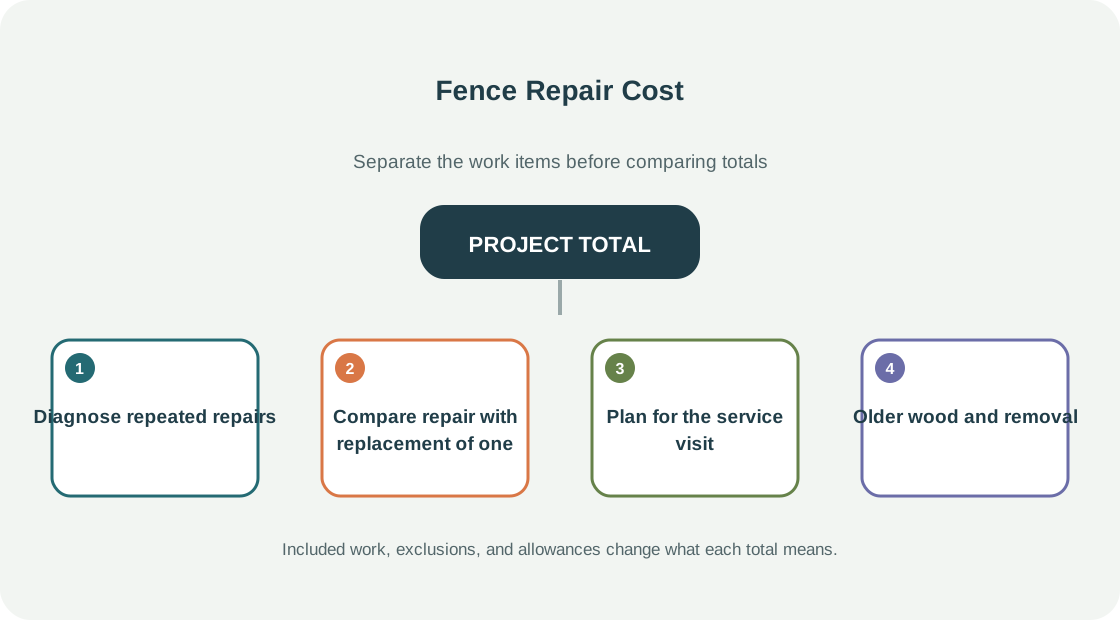
Keep a simple record of which sections were repaired, when they moved or failed, and whether the gate or drainage changed. Repeated movement at the same area may mean the original cause remains. Several independent failures can indicate a broader replacement decision, but they do not prove every post or panel is defective. Ask for a walk-through of adjacent supports and a written description of what will remain after work.
When storms or impacts are involved, photograph from a safe distance and document the visible area before cleanup if practical. Do not climb on, pull, or brace a leaning fence to assess it. If the fence borders a pool, supports an automated gate, or serves another safety purpose, obtain the relevant local evaluation before treating repair as ordinary appearance work.
Compare repair with replacement of one section
If several nearby components are damaged, request two scopes: repair the identified boards, rails, or post, and replace the affected section from one stable connection to another. State whether both bids include gates, disposal, finish, and access. A section replacement may create a cleaner appearance or reduce repeated labor, but it uses more material and can disturb sound work. The right choice depends on condition and the homeowner’s priorities.
Ask whether the replacement connects to sound posts and whether the new panel matches the existing height, style, and grade. If the fence line is changing, include survey or layout questions separately. Do not assume that a new section corrects a boundary, drainage, or property-responsibility issue.
Plan for the service visit
Confirm how the crew will access the work area, whether the yard or gate must be cleared, and whether a pet or vehicle route will be blocked. Ask how long the fence may be open and what temporary closure is included, especially where a pet or pool barrier is involved. If the job is near utilities or landscaping, identify who protects and restores them.
Older wood and removal
If damaged boards or posts may be older treated wood, identify that uncertainty in the work request. Health Canada says Canadian residential fences built before 2004 are likely to contain CCA-treated wood, though age does not prove what a particular piece contains. It advises minimizing exposure to damaged or deteriorating wood. U.S. EPA guidance separately advises limiting dust when handling CCA-treated wood, not burning it at home or reusing it as mulch, and following state or local disposal requirements; it does not require blanket removal of existing structures.
Ask whether the estimate includes hauling and disposal and who verifies the local route. This is a handling question for the repair scope, not a reason to infer that every old fence is hazardous or must be replaced.
Identify the cause as well as the damaged part
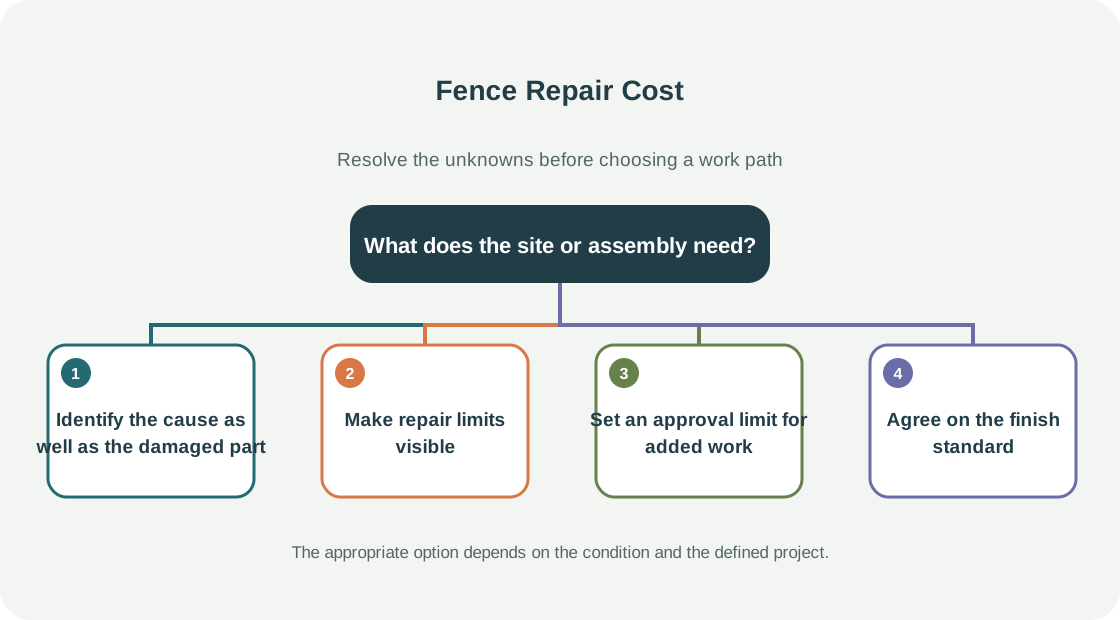
A leaning panel can result from a loose connection, a failed post, ground movement, impact, or persistent water exposure. Ask whether the repair quote identifies the observed condition and whether it includes checking adjacent posts and rails. Replacing one panel without addressing its support may leave the same movement in place. Conversely, a local repair may be sufficient when the frame remains sound and the damage is isolated.
Describe the fence’s purpose when requesting bids. A boundary marker, privacy screen, pet enclosure, and access-control fence have different consequences if a gap remains during repairs. Ask whether temporary closure is included, how long the opening will remain, and whether materials or hardware will match. Do not rely on a generic repair price to establish that a fence meets a pool, security, or other regulated use.
Have the contractor separate removal, replacement material, post or foundation work, hardware, finish, disposal, and restoration. If the fence is shared or near a property line, clarify who authorized the work and how the crew will access both sides. Keep any boundary question out of a contractor’s installation assumption until it is resolved by the proper records or professional.
Make repair limits visible
Fence sections often connect tightly, so a local repair may require loosening, cutting, or replacing components beyond the visibly damaged area. Ask where the contractor expects to stop and how the transition will look. If adjacent material is brittle, faded, or discontinued, the repair may not blend. Price an alternate section replacement if a clean boundary is important, and state which option the base bid includes.
If the fence supports a gate, check whether the repair could change its alignment or latch. If landscaping or irrigation sits beside the damaged area, identify who protects it and restores disturbed ground. The estimate should name disposal for removed material and any finish applied to new components.
Set an approval limit for added work
If opening a panel reveals more damage, agree on the method for contacting you, documenting the finding, and approving a new amount. State whether work pauses until authorization. This protects both the intended repair boundary and the contractor’s schedule, especially when fence sections connect and the visible defect does not show the full extent.
Agree on the finish standard
State whether the repair should prioritize function, visual consistency, or both. New boards or panels may not match a weathered fence, and a fresh coating can highlight differences. Ask what blending is possible and price painting or staining as a separate task. This keeps appearance expectations aligned with the material and age of the retained fence.