
Privacy fencing typically adds more material, heavier posts or gates, wind exposure, and approval questions than an open boundary fence. The economic decision is about the desired privacy and site, not only the linear footage.
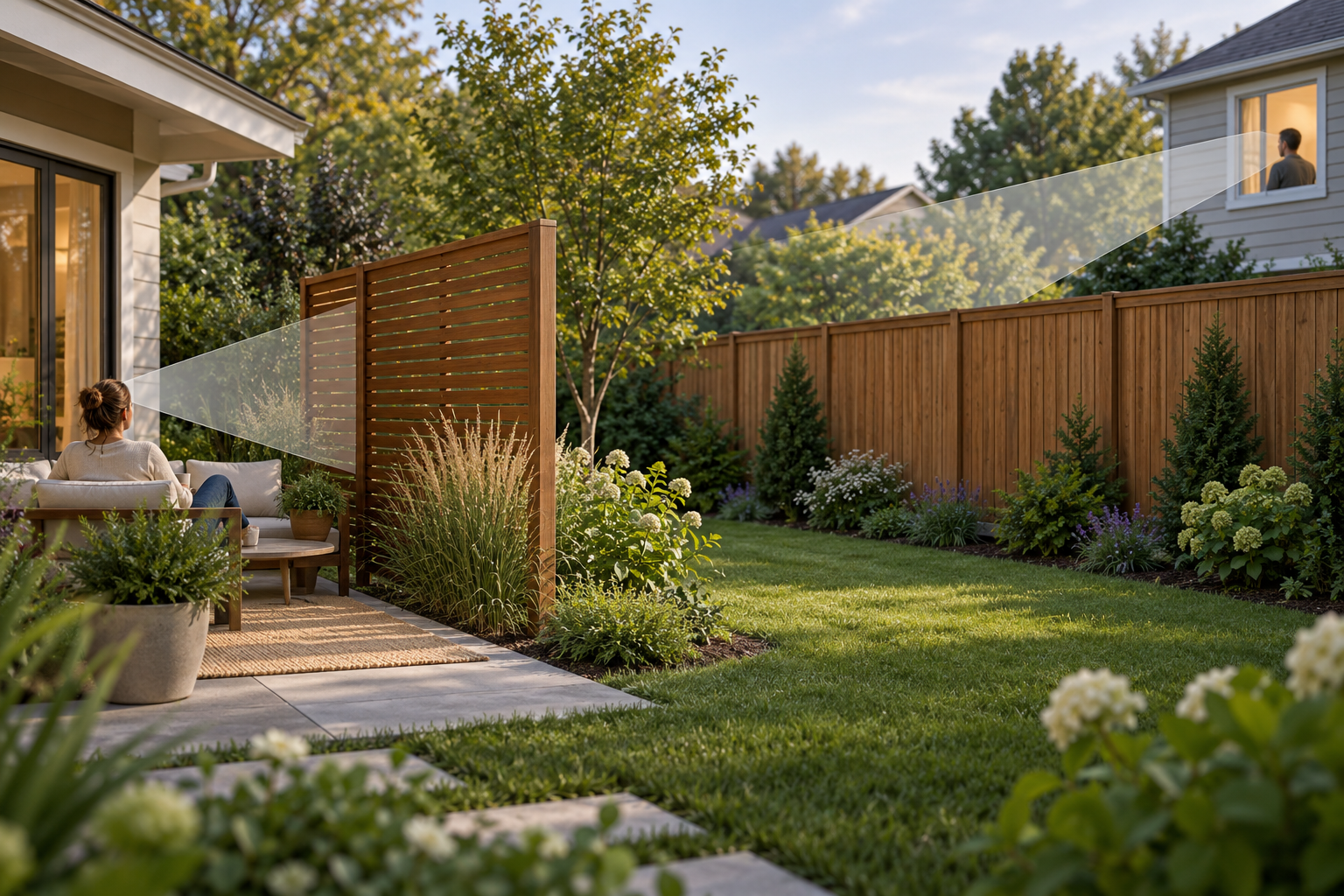
What changes the quote
Height, solid versus semi-private design, material, post spacing, gate count and weight, corners, slope, wind, old-fence removal, access, and finish all matter. Angi’s broad 2026 U.S. signal identifies height, length, material, gates, leveling, removal, and permits as drivers; its range is not a universal privacy-fence price. Canadian pricing needs Canadian evidence or local bids.
Privacy has tradeoffs
Solid panels can change wind exposure and post or foundation demands. Vinyl, wood, composite, chain-link with privacy inserts, and other systems differ in maintenance and repairability. Ask how a damaged panel, post, or gate will be replaced and whether the selected product is available locally.
Privacy design changes the material and structure
A solid panel blocks a direct view but also blocks more airflow and can change exposure at posts and supports. A semi-private design may soften the view while allowing light and air through. A taller fence may provide privacy from a neighboring window but may be restricted by local rules or site conditions. Decide which sight lines matter and from where before asking for a height and material quote.
Compare the fence from both sides and at the places where people use the yard. A short return near a patio or seating area may solve a specific privacy problem with less material than a full perimeter run. Landscaping, a deck screen, or a freestanding divider may also be alternatives depending on timing, space, maintenance, and whether the need is seasonal or permanent.
Posts, gates, and slopes affect the installed system
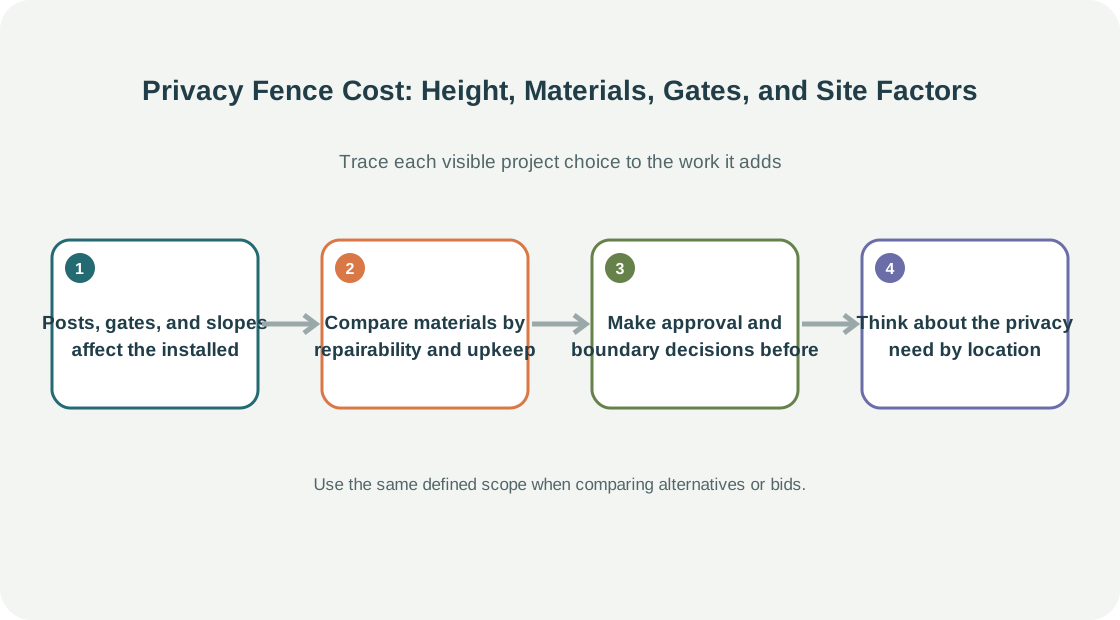
Height, solid infill, gate size, corners, grade changes, and wind exposure interact. A long straight privacy run with no openings is different from a yard with several gates, a slope, and tight property-line access. Ask the contractor how the proposed posts, framing, and gate are matched to the selected fence system and site; a generic fence price does not establish structural adequacy.
For sloped ground, ask whether panels will step or follow the grade and how that affects privacy gaps at the bottom. If the fence meets a retaining wall, make the wall interface a separate scope and obtain appropriate review. If wind, coastal exposure, or unusual height is a concern, product and local design information should guide the proposal rather than a broad material label.
Compare materials by repairability and upkeep
Wood can be adapted to many layouts but may need finish maintenance. Vinyl and composite products may provide consistent opaque panels but have product-specific profiles, expansion, and replacement parts. Aluminum may suit an open or decorative boundary, while chain-link with privacy inserts adds a separate screen element. Ask whether individual pickets, panels, posts, and gates are available later and what it would take to match a damaged section.
Do not choose a fence based only on a claim that it is maintenance-free or wind-resistant. Request current product information for the selected system and compare cleaning, repair, color availability, and warranty exclusions. If the fence’s main purpose is a pool barrier or an automated gate boundary, local safety and approval requirements should be checked separately.
Make approval and boundary decisions before installation
Height, setback, easements, corner visibility, association rules, shared boundaries, and permits are local questions. Confirm the property line and required permissions before the contractor orders panels or digs. The contractor can identify practical installation issues but does not establish legal ownership or guarantee that an application will be approved.
Give each bidder the same proposed height, material, run length, gate locations, removal scope, slope information, and access constraints. Request line items for posts, infill, gates, disposal, finish, survey or layout assumptions, and restoration. Ask what conditions would change the price, including a revised line or an approval-driven design change.
Think about the privacy need by location
Identify the view to block: a neighboring window, street, patio, or only one seating area. A full perimeter fence may be unnecessary if the concern is localized. A shorter return or deck-mounted panel can focus privacy near a gathering space, while planting may help over time where seasonal screening is acceptable. These alternatives have different maintenance, structure, and approval needs.
Check views from more than one direction and at different heights. A solid panel may block a seated view but not an upstairs window; a louvered panel may admit airflow but reveal more at an oblique angle. Ask for a sample or layout sketch and discuss both sides of the fence, especially on a shared boundary.
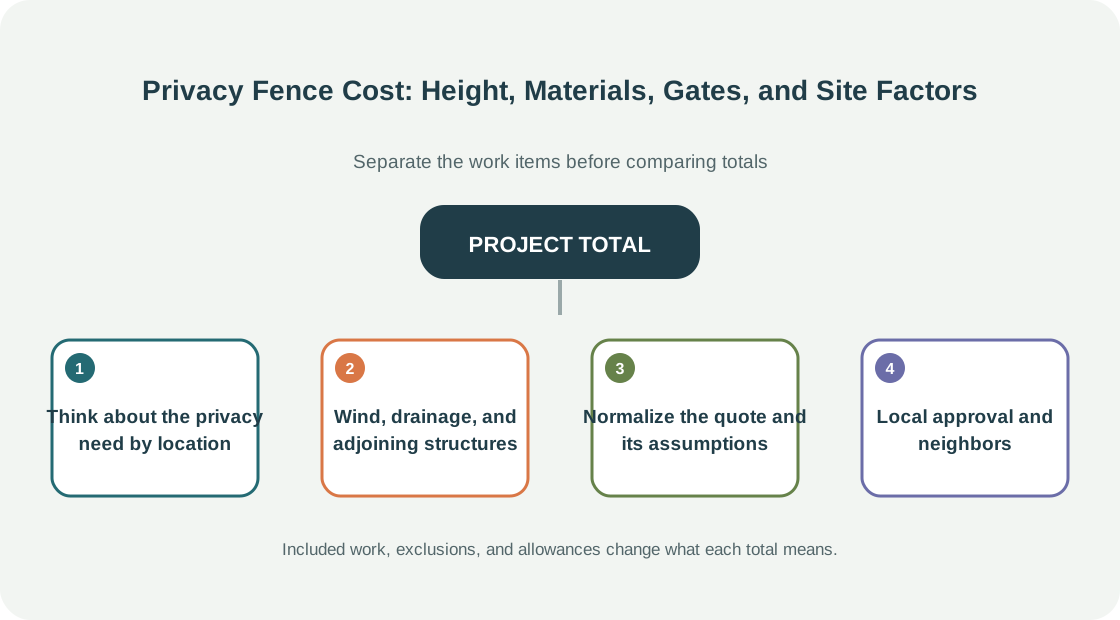
Wind, drainage, and adjoining structures
Solid fencing changes how wind interacts with the posts and panels. The appropriate design depends on height, product, site exposure, and local requirements. Ask the contractor to identify the product documentation or professional review behind the proposal; do not use a general wind claim as proof that a particular fence is adequate. A tall fence may also shade landscaping or block air flow and should be checked against local rules.
If the fence runs beside a deck, retaining wall, or drainage path, discuss how the systems meet. A privacy fence should not trap water or rely on a deck guard as its support unless the design explicitly provides for it.
Normalize the quote and its assumptions
Ask each bidder to price the same height, run, material, post system, gate count, slope treatment, old-fence removal, and finish. Identify whether the estimate includes layout, boundary confirmation, permit work, disposal, and landscape restoration. If a bid uses a different panel style or post spacing, ask what that changes in appearance, maintenance, and support.
If the fence follows a long property line, confirm the measured route before ordering materials. A privacy goal does not override a boundary or local height rule. If the approval authority asks for a different height or visibility treatment, the quote should explain how that affects price.
Local approval and neighbors
Height, setbacks, property lines, easements, HOA rules, and shared-boundary responsibility are local questions. A contractor can price physical work, but the homeowner may need a survey, approval, or neighbor agreement before construction. Keep that service scope separate from the fence installation.
In wildfire-prone Canadian settings, NRC guidance treats nearby fencing and building attachments as hazard-specific decisions based on construction class and distance. It is not an ordinary privacy-fence requirement or universal code rule.
Choose height and layout around the actual view
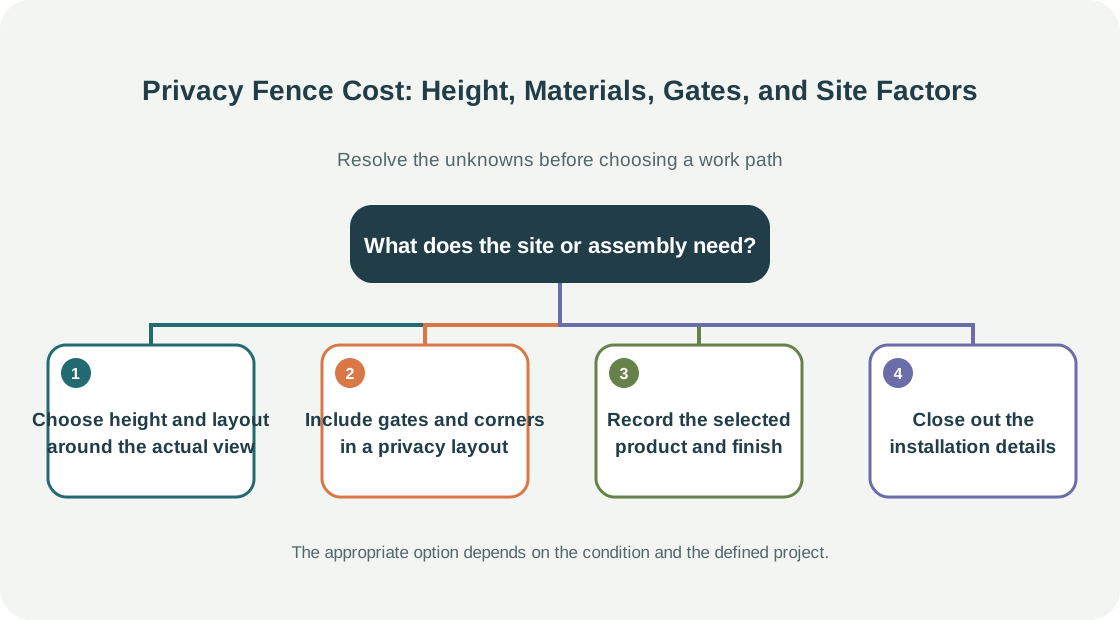
Privacy depends on where people sit, stand, and look from both sides of the fence. A level property line beside a raised deck may need a different layout than a yard viewed from neighboring windows. Walk the intended area and mark the views to screen before choosing a height or solid panel. Ask the contractor to show how the top line follows the grade and what gaps remain below or between sections.
A taller or more solid fence changes the installation scope and may be subject to different local limits. It can also change how the fence responds to wind, so the post and foundation assumptions should match the specific design and site. Do not infer structural adequacy from the fact that similar panels are used elsewhere. Confirm restrictions, approvals, and boundary location before ordering custom materials.
The quote should distinguish fence length, height, gates, corners, demolition, finish, and access. If the goal is to block a particular view rather than enclose the whole property, compare a shorter screen or targeted panel with a continuous fence. A partial screen may reduce material and preserve light, but it may not provide the same privacy or boundary function.
Include gates and corners in a privacy layout
A long privacy run can be interrupted by gates, utilities, grade changes, and corners. Measure the actual line and identify each transition before selecting panel lengths. A gate in a privacy fence may need a wider opening, heavier support, or a different infill pattern to meet daily use. Ask the contractor to itemize these features rather than applying a straight-run price to the entire project.
If you want screening without a continuous boundary, compare a focused screen near a patio or deck. A shorter installation can preserve airflow and views while meeting a particular privacy need, but it will not provide the same enclosure. Have the contractor show the sightline and support location so the screen does not interfere with paths, drainage, or neighboring use.
Record the selected product and finish
Before materials are ordered, write down the panel style, height, post type, color, hardware, and fence orientation. Keep a sample or product sheet if appearance is important. A product substitution can change privacy, upkeep, or match even when the revised estimate is similar, so request approval before it is made.
Close out the installation details
After installation, check the agreed height and route, gate operation, cleanup, and any disturbed landscaping. Record any area where the final line differs from the sketch and confirm that the change was approved. Keep a copy of the final scope and product information for future matching or repair.