
Frame material influences appearance, thermal behavior, maintenance, profile, and repair options, but it does not determine the performance of the complete window. Glazing, coatings, spacers, air leakage, size, installation, climate, and orientation still matter. A material comparison is most useful when it helps you compare complete products with the same opening and performance goal.
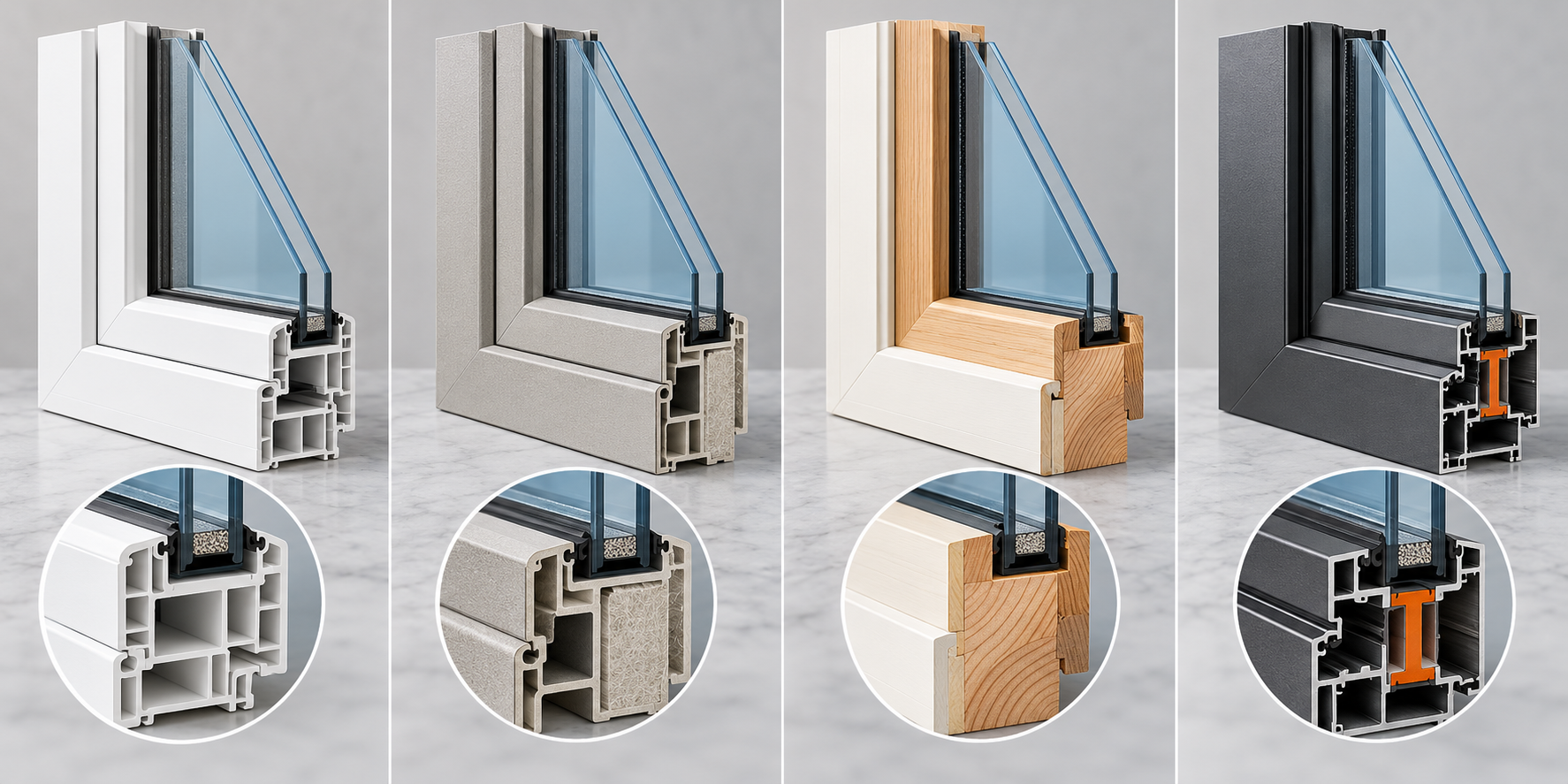
Material families at a glance
| Frame family | Common strengths | Questions that affect value |
|---|---|---|
| Vinyl | Low routine maintenance and generally lower heat transfer than uninsulated metal | Profile, reinforcement, color, movement, product quality, and repairable parts vary |
| Fiberglass or composite | Dimensional stability and a range of thermal and finish characteristics | Product construction, finish, hardware, and local availability control the price |
| Wood | Natural appearance, repair and refinishing possibilities, and historic compatibility | Exterior protection, moisture exposure, maintenance, and finish quality matter |
| Aluminum or other metal | Slim profiles, strength in some designs, and durable finishes | Metal conducts heat readily unless the product uses an effective thermal break; the complete rating matters |
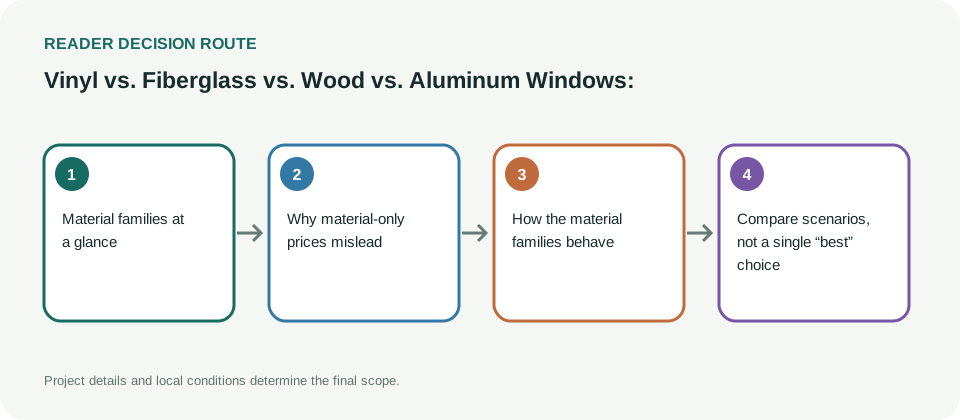
DOE guidance generally describes vinyl, wood, fiberglass, and composite frames as more thermally resistant than uninsulated metal, while noting that thermal breaks can reduce metal heat flow. That is a relative material observation, not a ranking of every product.
Why material-only prices mislead
The frame is one part of a complete rated product. Two windows made from different materials can have similar installed prices when size, operating type, glazing, color, hardware, screens, access, and finish work differ. Conversely, two windows with the same frame material can have very different costs because one is a custom shape, a large fixed pane, a projecting assembly, or a difficult full-frame installation.
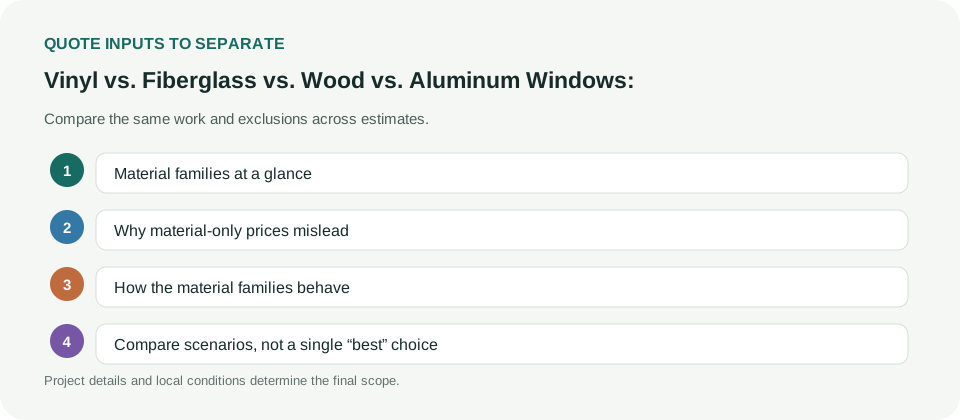
Ask each bidder to quote the same opening and the same outcome. The comparison should identify the frame, glass package, operation, performance data, screens, trim, flashing, air sealing, disposal, and interior and exterior restoration. Keep product price separate from installation and from conditional work such as rot or cladding repair. A premium material is not a useful choice if its price is being compared with a basic product in a different scope.
How the material families behave
Vinyl can offer low routine maintenance and generally lower heat transfer than uninsulated metal, but profiles, reinforcement, color, movement, and repairable parts vary. Fiberglass and composite products can offer dimensional-stability or finish characteristics that suit particular openings, but the product line still determines the actual rating and service path. Wood can provide a natural appearance, repair or refinishing options, and compatibility with some historic work; it also needs a realistic exterior-maintenance plan. Aluminum and other metals can support slim profiles and strength in some designs, while thermal-break details are important because uninsulated metal conducts heat readily.
These are material tendencies, not universal rankings. DOE guidance describes relative thermal behavior while emphasizing that construction and product design matter. The complete window’s tested U-factor, solar heat gain coefficient (SHGC), air leakage, visible transmittance, and condensation resistance are more useful comparison points than a material name by itself.
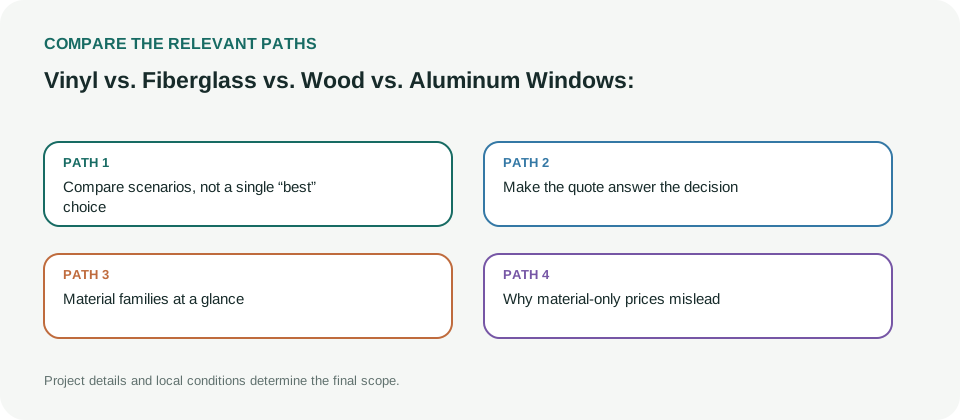
Compare scenarios, not a single “best” choice
For a sheltered opening with a standard shape, low maintenance and initial cost may carry more weight than a premium profile. For a high-exposure opening, the finish, drainage, hardware, and ability to service the product may matter more. For a historic facade, visual compatibility and repairability can outweigh a simple product-price comparison. For a large window, frame stiffness, glass weight, reinforcement, and installation access may control the scope.
Climate and orientation also change the priorities. A cold-climate opening may deserve attention to U-factor and condensation resistance. A sunny opening may need a deliberate SHGC and shading strategy. A coastal, windy, or wet exposure may put more emphasis on the complete product, installation, water management, and finish. A U.S. ENERGY STAR label is based on U.S. climate-zone criteria and does not establish Canadian requirements.
Ownership cost includes maintenance and service
Estimate who will maintain the exterior finish, how often it may need attention, and whether local contractors can repair or replace the sash, IGU, operator, or hardware. Wood maintenance can be predictable when planned, but deferred finish work can turn into moisture damage. A low-maintenance surface can still have expensive proprietary hardware or limited replacement parts. A product with a long warranty may still require the homeowner to pay for labor, access, or finish restoration under exclusions.
Ask for the warranty boundary and the service process. Confirm whether replacement glass is available, whether a color or finish can be matched later, and whether the installer will support adjustments. Do not turn a manufacturer’s stated service life into a guaranteed lifespan for the home.
Make the quote answer the decision
Request at least one complete option for the same opening, then compare the material’s incremental price with the benefit it is intended to provide. If the goal is lower energy use, ask for the product metrics and the assumptions behind any modeled saving. If the goal is comfort, appearance, noise, or preservation, state that outcome separately. If the opening leaks or has rot, price correction of the water-management and frame condition before choosing a material.
Older homes may require a disturbance assessment when trim, paint, putty, or surrounding materials are removed. U.S. paid work disturbing paint in pre-1978 housing can fall under EPA RRP requirements; Canadian guidance warns about lead paint and asbestos-containing materials. Confirm qualified assessment and current local requirements rather than selecting a material based on a construction date alone.
The right frame material is the one that fits the opening, complete-product performance, exposure, maintenance capacity, repair path, appearance, and budget. A clear quote makes that tradeoff visible.
Material-only price lists are misleading. Compare the same size, operating type, glass package, color, screens, hardware, installation method, trim, flashing, and finish restoration. A premium frame may be reasonable if it solves a profile, durability, architectural, or preservation requirement, but a higher product price does not automatically create a shorter payback.
Maintenance is also a project cost. Wood may require a maintenance and refinishing plan in exposed locations. Vinyl, fiberglass, composite, and metal finishes have different repair and replacement practices. Ask who can service the hardware, whether replacement sashes or IGUs remain available, and what the warranty excludes.
Climate and orientation still matter
The U.S. ENERGY STAR program uses climate-zone criteria and rates windows, doors, and skylights using U-factor and, where applicable, SHGC. The DOE label guidance also distinguishes visible transmittance, air leakage, and condensation resistance. In a cold climate, a low U-factor and condensation resistance may matter; in a sunny cooling climate, SHGC and shading may matter more. The right balance can differ by orientation.
U.S. ENERGY STAR criteria do not establish Canadian code or product requirements. Canadian homeowners should use the product documentation and applicable local guidance for their project rather than importing a U.S. label assumption.
Normalize a material comparison
A material comparison is useful only after the window size, operating style, glass package, finish, and installation scope are comparable. One quote may use a basic fixed vinyl unit while another prices a custom wood casement; the material alone does not explain the difference. Ask for the product series and complete assembly specifications before attributing a premium to fiberglass, wood, aluminum, or composite construction.
Separate first cost from ownership work. Ask what routine cleaning, finish maintenance, hardware adjustment, seal replacement, and repair parts are likely to involve for the chosen product, and whether those tasks are homeowner-maintained or require a specialist. The available warranty describes a manufacturer’s stated coverage, not a prediction of useful life or a guarantee that a future repair will be free. Check transfer conditions, labor coverage, exclusions, and service access for the exact series.
Climate and orientation matter through the complete assembly and exposure. A shaded wall, a high-sun elevation, coastal air, heavy rain exposure, or a cold climate may make different finish and performance questions worth asking. Use product ratings and manufacturer instructions for the exact configuration; a frame-material label is not a substitute for the tested whole window. For a historic facade, appearance and approval constraints may narrow the suitable options regardless of nominal cost.
A practical comparison table should list product price, installation method, glass and hardware, finish, maintenance instructions, repair path, warranty, and the work included around the opening. Then compare the extra initial amount with the homeowner’s actual priorities: appearance, cleaning, durability, ease of repair, or energy performance. If two options are close in total cost, a serviceable local repair path or a finish the homeowner can maintain may matter more than a broad material reputation.
A useful owner-cost check is whether the homeowner can access replacement hardware, finish repair, and service for the chosen line. Ask the dealer who handles parts after installation and whether the manufacturer’s current service channel covers the home’s region. Service access is not determined by material, but it can affect the practical cost of keeping a particular product operating.
When the material choice matters most
Material choice deserves attention when a historic appearance must be preserved, a slim profile changes daylight, a high-exposure opening needs a durable finish, a large assembly needs a particular frame system, or long-term maintenance is a major concern. It matters less when a sales pitch treats the material name as a substitute for the performance label and installation scope.
Get quotes for the complete assembly and ask for the product’s tested metrics, warranty, maintenance requirements, service path, and installation boundary. The best material is the one that fits the opening, climate, appearance, maintenance capacity, and budget without leaving water or air-sealing work unresolved.