
Replacement windows can improve comfort, operation, appearance, condensation resistance, and air leakage, but energy savings alone do not produce one universal payback period. The answer depends on the existing windows, climate, orientation, shading, installation quality, heating and cooling loads, energy prices, and alternatives.
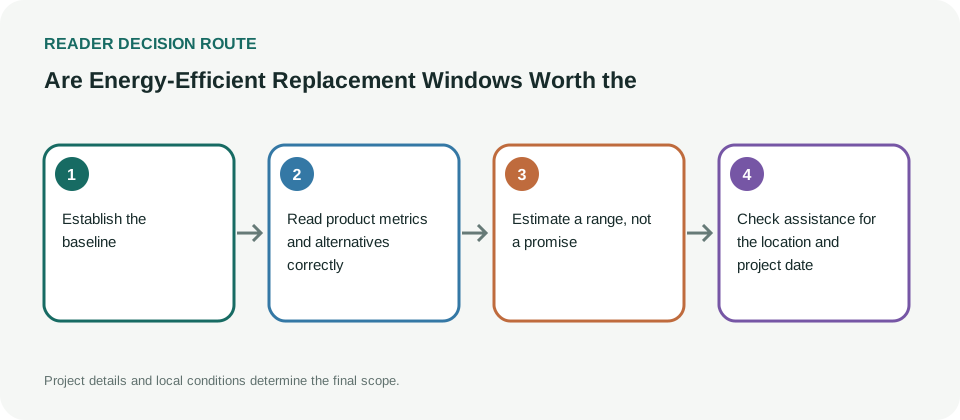
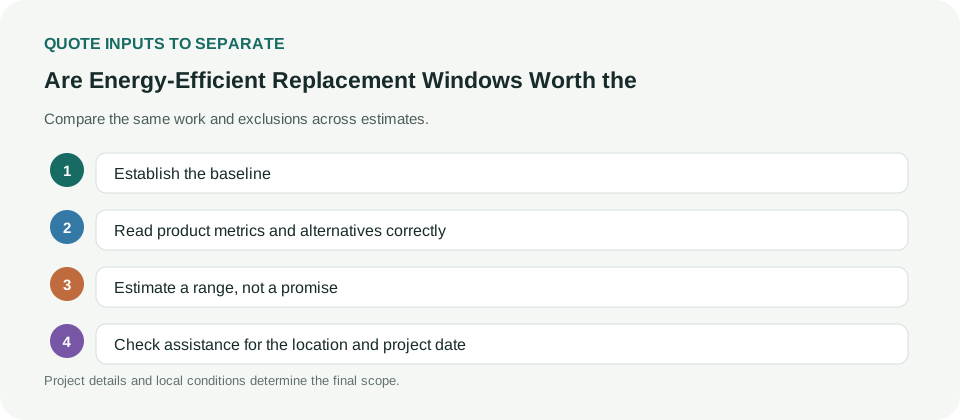
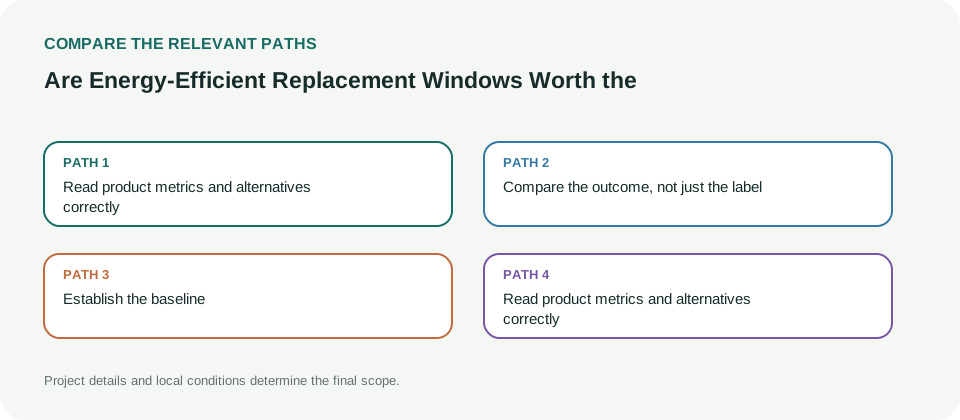
Establish the baseline
Compare replacement with the home’s actual condition, not a hypothetical worst window. Record each opening’s type, frame, glazing, operating condition, visible gaps or water problems, orientation, shading, room use, and heating or cooling system. A badly leaking single-pane window has a different opportunity from a sound double-pane unit with a perimeter air leak.
If the problem is a failed seal, weatherstripping, high indoor moisture, shading, or wall leakage, targeted work may deliver more value than replacing the whole unit. If replacement is already needed for rot or operation, energy improvement is one benefit within a broader decision rather than the sole payback justification.
Read product metrics and alternatives correctly
DOE guidance distinguishes U-factor, solar heat gain coefficient (SHGC), air leakage, visible transmittance, and condensation resistance. They describe different outcomes. ENERGY STAR certification in the United States uses climate-zone criteria, and modeled savings are not a guarantee for a particular home. Canadian product and code context must be checked separately.
Weatherstripping, perimeter air sealing, interior panels, exterior storm windows, shading, and broader enclosure improvements can be alternatives or complements. DOE attachment research models storm-window panels and films under stated assumptions; it does not prove that any option suits a particular frame or symptom. An attachment is not a substitute for correcting rotten framing, a failing wall drainage system, or a window that will not lock or serve its required purpose.
Estimate a range, not a promise
A simple energy payback estimate compares the net upfront cost attributable to the upgrade with estimated annual energy-cost savings. Show both as ranges. Net cost may include the window, removal, disposal, flashing, air sealing, trim, finish, access, and concealed damage, less only assistance the household has confirmed it can receive. Savings depend on climate, orientation, shading, existing product, installation, energy prices, heating and cooling loads, weather, and occupant behavior.
Use low, middle, and high cases. State whether savings cover heating, cooling, or both, and whether the comparison includes comfort, avoided repairs, financing, or future maintenance. ENERGY STAR reports modeled nationwide heating and cooling savings of up to 13% versus non-certified products in its stated comparison. That is a scenario result, not a household bill guarantee or a predicted payback period.
Check assistance for the location and project date
Before subtracting an incentive, identify the country, state or province, utility, property, product, and expected installation or invoice date. Program rules and intake can change. As checked in September 2026, the U.S. federal Section 25C home-improvement credit is not allowed for qualifying property placed in service after December 31, 2025. The Canada Greener Homes Grant is closed; December 31, 2025 was its last day for document submission.
Other programs are specific to a jurisdiction and household. A June 2026 Natural Resources Canada announcement lists windows and doors among measures in the described Quebec Canada Greener Homes Affordability Program delivery, but it does not establish current intake, an individual household’s eligibility, or a guaranteed window project. CleanBC’s separate British Columbia requirements describe date-bounded participant, product, contractor, and advance-quote-approval conditions; the document does not establish current intake or a particular award. Do not subtract assistance until the program confirms eligibility and the approved amount for the actual project. These examples do not establish tax advice or comparable programs elsewhere.
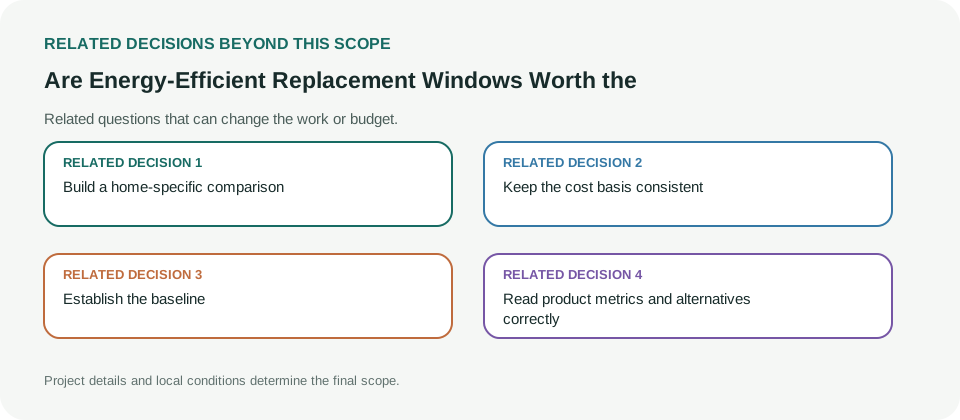
Build a home-specific comparison
Begin with the windows and rooms most likely to change the result. Record approximate size and count, existing frame and glass, orientation, shade, visible air leakage, and whether the unit needs replacement for condition or operation. A single-pane, poorly fitting window in a cold climate is not the same baseline as an already efficient unit in a mild climate. Do not apply one per-window savings figure to both.
Use the energy model or estimate to separate two decisions. If replacement is already justified by rot, failed operation, water entry, or a desired opening change, compare the added cost of a higher-efficiency product with the base replacement scope. If the existing units are serviceable and energy savings are the main reason to replace, the comparison must include the whole project cost. This distinction can change a payback calculation substantially.
A simple payback divides the relevant upfront amount by estimated annual bill savings, but it leaves out financing, future energy prices, maintenance, product life, comfort, and the timing of repairs. Treat it as a rough screen, not a promise. Ask what baseline and installation assumptions were used, whether the estimate accounts for heating and cooling fuel separately, and whether the proposed product ratings apply to the exact size and configuration being installed.
Before using an incentive, confirm that the program is open, applies to the address and product, and accepts the project date and contractor. A published program may have limited funding, eligible measures, or partner intake; it does not establish a homeowner award. Show the incentive as a separate conditional line rather than subtracting it from the gross cost by default.
Finally, list comfort, noise, appearance, maintenance, and easier operation as separate benefits if they matter to the household. A project can be worthwhile for those reasons even when energy payback is long, but those benefits should not be mislabeled as measured utility savings. If a smaller repair, weatherstripping, interior panel, or selective replacement achieves the main goal, compare that narrower scope too.
Keep the cost basis consistent
A payback comparison should use the added efficiency cost when replacement is already planned for condition reasons. If the homeowner would otherwise keep the existing window, use the full installed replacement cost. Mixing those bases can make the same product appear to pay back quickly or slowly depending on which denominator is chosen.
The model should describe the window area, baseline product, orientation, heating and cooling systems, local weather, utility rates, and installation assumptions. If an estimate reports only an annual percentage reduction without these inputs, it is not enough to calculate a household payback. For a group of openings, model or prioritize the actual rooms and surfaces where heat loss or comfort complaints are material rather than assume every opening contributes equally.
Run at least two comparisons when the decision is close: replacement of the worst condition openings versus the whole group, and the selected performance tier versus a more basic product. Keep comfort, noise, reduced maintenance, and appearance as separate benefits. The homeowner can value those outcomes, but they should not be converted into a bill-savings number without a defensible basis.
If replacement is paired with an incentive, include the timing of payment and reimbursement in the cash-flow comparison. Some programs require approval before work begins or only accept specific contractors and products. The homeowner should verify the current program terms directly and keep the gross installed price visible. A conditional future payment is not the same as a guaranteed discount at contract signing.
A final comparison should also include timing. If a repair or planned renovation will happen soon, waiting may allow work to share access and finish costs; if a window is actively leaking or unsafe, delaying for a theoretical payback is not appropriate. Record the reason for each opening’s timing separately from the efficiency calculation.
If the homeowner plans to move soon, the payback period may extend beyond the expected ownership period. That does not settle the decision, but it makes comfort, maintenance, and resale preference separate considerations from utility-bill recovery.
Keep the product specification, estimate assumptions, and utility bills together. A future review can then separate actual home performance from the original modeled savings.
Compare the outcome, not just the label
| Option | Can be attractive when | What to verify |
|---|---|---|
| Repair or adjust | Operation, seal, or glass failure is bounded | Frame and perimeter remain sound |
| Perimeter air sealing | Leakage is confirmed around the opening | Water management and finish restoration |
| Storm window or interior panel | The existing window is sound and disturbance matters | Fit, maintenance, condensation, and performance evidence |
| Window replacement | Condition, comfort, operation, or performance needs a complete reset | Product metrics, installation, and total scope |
| Broader envelope work | Many openings or wall areas perform poorly | Whole-home diagnosis and competing measures |
Ask for the baseline, product metrics, installation method, orientation, shading, climate, energy price, service-life assumption, and a complete installed scope. Request a comparison with air sealing, storm panels, or other plausible measures. If the estimate depends on assistance, ask for written confirmation of project and household eligibility before counting it.
Replacement can also provide comfort near cold glass, easier operation, improved appearance, reduced maintenance, noise benefits, a corrected leak, or a new opening configuration. List those separately from measured energy savings. Replacing a sound unit with extensive finish work can have a long energy payback; a shorter modeled payback can disappear when installation costs are omitted. Choose the project that addresses the homeowner’s actual problem and compare the remaining condition after each option.