
Window style affects ventilation, cleaning, operation, sightlines, hardware, air leakage, and sometimes cost. It is not a reliable standalone price ladder. Size, frame, glazing, installation, access, and the condition of the opening often matter as much as the operating label.
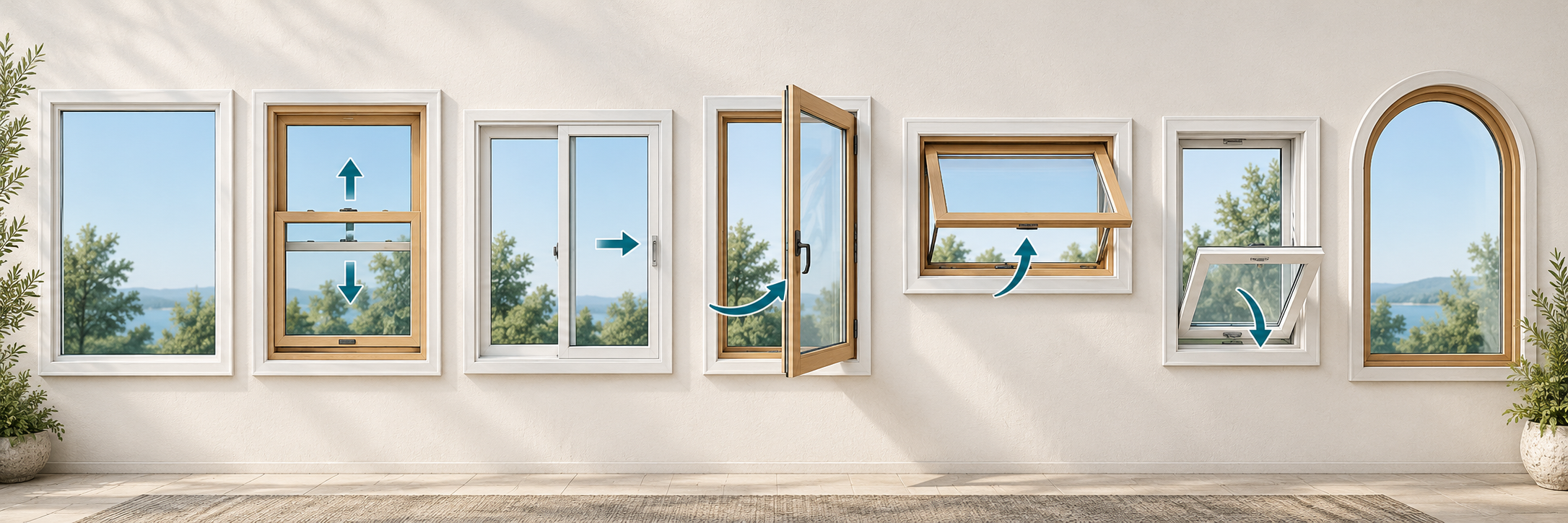
Common configurations
| Type | Useful when… | Budget questions |
|---|---|---|
| Fixed or picture | You want daylight and view without ventilation from that opening | Is another opening providing ventilation or emergency escape? Is the large glass size custom? |
| Single- or double-hung | You want vertical ventilation and a familiar replacement format | Are balances, screens, cleaning access, and sash parts included? |
| Horizontal slider | The opening needs a simple sliding operation or a wide ventilating area | How will the track, rollers, seals, and air leakage be handled? |
| Casement or awning | You want a hinged operation and a tight closing seal when properly installed | Does the crank, operator, screen, and opening direction suit the location? |
| Hopper | A below-grade or compact opening needs inward ventilation | Does the operation preserve the required opening and finish clearances? |
| Specialty shape | The architecture needs a circle, arch, trapezoid, or other nonstandard form | How are fabrication, lead time, glazing, installation, and replacement handled? |
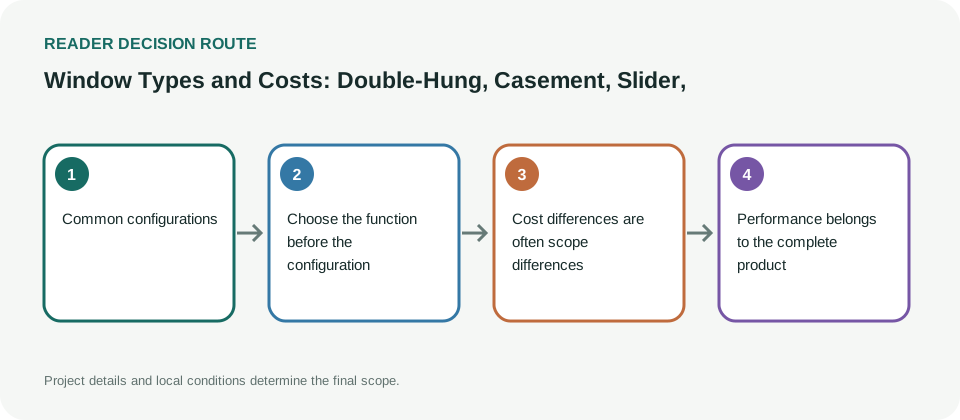
DOE consumer guidance lists fixed, sliding, hung, casement, awning, and hopper types. It notes that hinged or projecting types generally have lower air leakage than sliding or hung types when quality and weatherstripping are comparable. That is a relative observation, not a guaranteed rating.
Choose the function before the configuration
Start with what the opening must do. A fixed or picture window can provide daylight and view, but another opening may be needed for ventilation or emergency escape. A hung window can provide familiar vertical ventilation and, in some designs, inside cleaning. A slider may suit a wide opening with a simple operating path, but tracks, rollers, seals, and air leakage deserve attention. A casement, awning, or hopper may offer a different closing and ventilation pattern, but hardware and swing clearances affect the room.
If the existing problem is a draft, determine whether air is passing through the sash, weatherstrip, frame-to-wall joint, or adjacent enclosure. If the goal is cleaning, verify how the actual sashes tilt or open rather than relying on the style name. If the goal is escape, confirm the adopted local requirement before selecting a fixed, restricted, or difficult-to-operate configuration. A window type cannot be judged separately from the opening’s purpose.
Cost differences are often scope differences
Operating windows add balances, hinges, operators, locks, screens, and seals that may require service later. Fixed windows can be simpler to operate but may need a separate ventilation strategy. Large fixed panes can carry fabrication, handling, safety-glazing, and access costs that overwhelm any apparent style advantage. Specialty shapes can require custom fabrication and longer lead times even when their operation is simple.
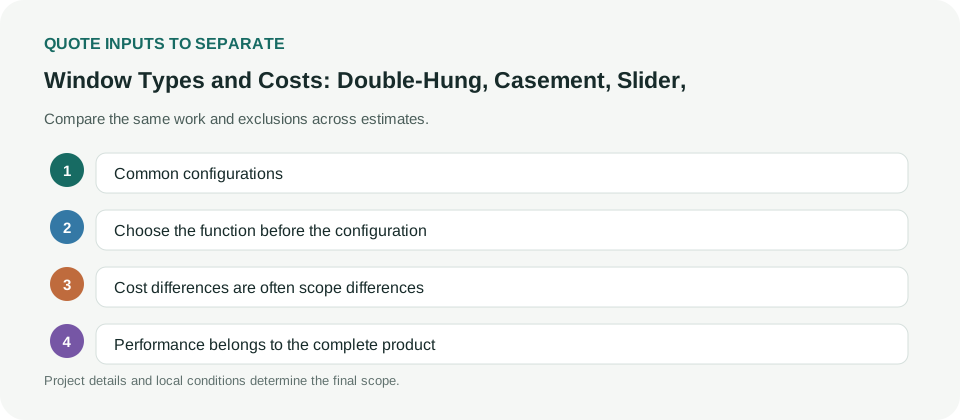
Compare quotes using the same size, frame material, glazing, coating, color, screens, hardware, installation method, trim, flashing, disposal, and finish restoration. Ask whether the frame is retained or replaced and whether the rough opening changes. A style change that requires reframing, cladding repair, or utility relocation is an opening-modification project, not a normal style upgrade.
Performance belongs to the complete product
DOE guidance describes fixed, sliding, hung, casement, awning, and hopper types and gives relative air-leakage observations for some operating families. Those observations are not guaranteed ratings for every product. Request the complete product’s U-factor, solar heat gain coefficient (SHGC), air-leakage information, visible transmittance, and condensation-resistance rating where available. U.S. ENERGY STAR qualification uses climate-zone criteria; it is not a Canadian code rule or a promise of a particular bill reduction.
A style with fewer moving parts may not solve a wall leak or poor flashing. A hinged unit may close tightly while an installation perimeter still leaks. A window with a better rating may perform poorly if the frame is distorted or the installation leaves a gap. Include the opening condition and water-management detail in the comparison.
When a specialized style earns a separate scope
Bay and bow windows deserve separate budgeting because they combine multiple units, projection, support, head or roof treatment, interior trim, and exterior water management. A specialty arched or geometric unit may also need a distinct fabrication and finish allowance. These are not automatically more expensive in every case, but they are less safely represented by a mainstream per-window average.
Avoid creating a separate article for every operating label when the homeowner’s decision is still ordinary replacement. The value of this comparison is helping a reader choose among meaningful functions and recognize when size, hardware, opening condition, or project interfaces dominate the style label.
Compare the installed function, not the catalog label
A fair comparison starts with the room’s job. A fixed window may provide daylight and a view without an operating mechanism, while an operable style can provide ventilation and a way to reach the exterior glass. That difference matters more in some rooms than in others. Before selecting a configuration, note whether the homeowner needs regular ventilation, easy cleaning, a wide clear view, furniture clearance, or an opening that can be reached from inside.
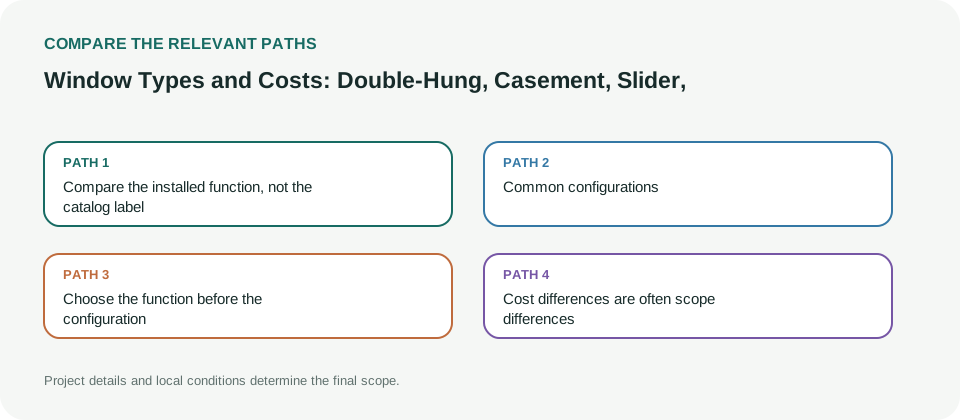
Then compare products of similar size, glazing, frame material, finish, and performance. A specialty shape or custom-size unit may cost more because it is made to order or requires a more involved frame, but a style name alone does not establish the premium. A large fixed picture window can still be a substantial assembly; a smaller operable window can include more hardware and serviceable parts. Ask which price is product-only and which includes removal, installation, flashing, trim, and finish.
Operation changes future maintenance as well as first cost. Hinges, cranks, balances, locks, screens, and tracks need compatible parts and occasional adjustment. Where a window is high above a stair or difficult to reach from outside, ask how it will be cleaned and serviced. A lower upfront option may create a more difficult access or repair problem later. If security or emergency escape is part of the decision, confirm the actual clear opening and locally applicable requirements for the room rather than relying on the configuration name.
A compact comparison can use one proposed opening and list the installed amount, operating purpose, hardware, screen, clear opening, cleaning method, tested ratings, warranty, and repair path. Keep a specialty unit in its own line instead of blending it into a per-window average. This makes it easier to choose the simplest design that meets the room’s function without paying for an operating feature that is not needed.
Where two styles serve the same room, ask for a quote on the same rough opening and product tier. A comparison of a custom shape against a standard operable unit mixes configuration, size, and fabrication costs. Keep screens and hardware in the price, and record whether opening direction or clearance affects furniture, curtains, or cleaning. This isolates the cost of the style decision from the rest of the project.
If cleaning access is a major reason for the choice, confirm whether the exact operating unit tilts, swings, or can be serviced from inside. Product-line options vary, and a general style name does not ensure a particular cleaning feature. Ask for the operation demonstration before signing, especially where exterior access is limited.
For a large specialty shape, ask whether the glass or sash can be serviced without replacing the whole unit. Custom shapes may have longer fabrication times and fewer substitute parts. Include future repair access and lead time in the choice, not only the initial installed amount.
If a room needs both light and ventilation, compare a fixed/operable combination with one large operable unit. The chosen arrangement can affect product cost, airflow, cleaning, and the number of hardware components to service.
When the decision affects a child’s room or an emergency exit, include the opening’s local escape requirements before selecting a restricted or fixed configuration. Confirm the rules for the actual room and building rather than applying a style-level assumption.
Match the style to the room and future use
Consider ventilation, view, privacy, furniture, cleaning access, screen use, child or fall-protection concerns, and whether the room may later need an egress or accessibility change. A wider clear opening may be valuable for movement, while a restricted opening can affect operation or safety obligations. Product selection should be coordinated with the authority or qualified professional when the opening is part of a regulated escape, structural, or accessibility project.
Older homes may have trim, paint, putty, or surrounding materials that change the disturbance scope. U.S. EPA RRP guidance generally covers paid work that disturbs paint in pre-1978 housing, and Canadian guidance recommends assessing lead paint and other suspect materials before renovation. Ask how the selected style affects finish removal, testing, containment, cleanup, and matching.
The best configuration is not the one with the shortest name or the lowest catalogue price. It is the one that meets the room’s function, fits the opening, provides comparable complete-product information, and leaves a realistic installation and maintenance budget.