
Pest responsibility depends on the pest, the affected component, the source, and the governing documents. A termite colony in common framing, insects entering through a unit door, rodents in a shared wall, or bedbugs in personal contents can involve different inspections, treatments, costs, and notice duties.
Do not treat a sighting as proof that one owner caused the problem. First identify the condition and the path of entry.
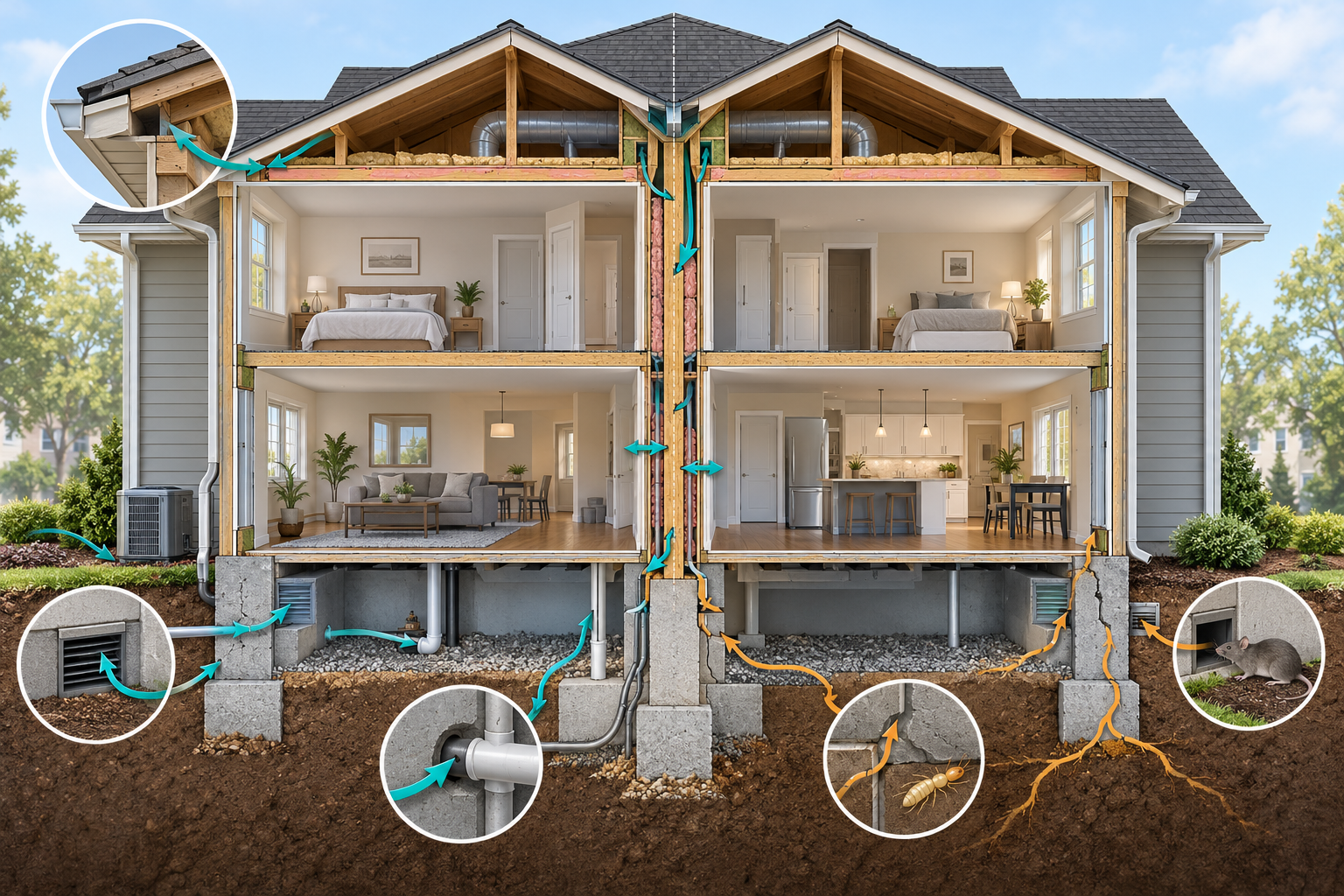
Identify the pest and building component
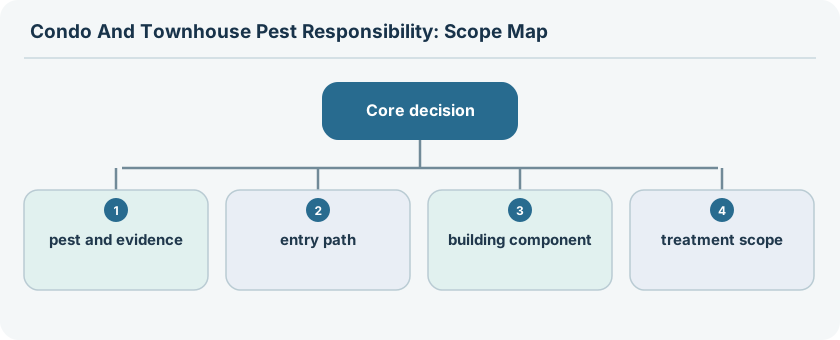
Obtain a qualified inspection that names the pest, evidence, location, extent, and likely source. Ask whether the issue affects:
- a unit interior or contents;
- a common wall, roof, crawlspace, attic, or foundation;
- shared landscaping, drainage, or utility penetrations;
- structural framing or other common components;
- an owner alteration, storage area, or attached deck.
In a condominium or strata, the association may inspect and treat common elements. A planned-development townhouse may assign exterior pest control to the HOA while leaving unit interiors to owners. A fee-simple owner may have broader responsibility than a condominium unit owner.
Read the documents and service contracts
Review the declaration, bylaws, maintenance matrix, pest-control policy, landscaping contract, and recent notices. The documents may assign routine treatment, structural repair, access, and chargebacks separately. A contract with a pest company shows what service the association purchased; it does not necessarily change the recorded allocation.
Ask whether the association has a building-wide inspection or treatment program, when it last occurred, and whether the current issue is part of that program. Request the report and treatment scope rather than relying on a verbal label such as “termite problem.”
Source, damage, and responsibility
Pest treatment and building repair are different scopes. Fumigation, baiting, exclusion, moisture correction, removal of damaged wood, drywall replacement, and structural repair may have different payers. A common framing repair may be an association project even if the pests entered through a unit-controlled alteration.
Moisture, vegetation, food storage, gaps, and unsealed penetrations can contribute, but do not assign negligence without evidence. If an owner-installed deck, enclosure, or plumbing leak contributed, document the finding and check the alteration and chargeback provisions.
Notice and safe treatment
Notify the manager and affected neighbors promptly. Follow professional instructions about occupants, pets, food, ventilation, and re-entry. Do not spread pests by moving furniture or dispose of contaminated material without asking the treatment provider and insurer.
Photograph evidence, keep inspection reports, note dates and locations, and preserve treatment invoices. If structural damage or a health concern is possible, request a separate building inspection and remediation plan.
Cost and access questions
A building-wide program may be paid from ordinary fees, reserves, an assessment, insurance, or a service contract. Unit-specific treatment may be an owner expense, but a shared wall or common void can require association coordination. Ask who pays for access, moving belongings, temporary accommodation, treatment, demolition, reconstruction, and recurring monitoring.
The association may need entry to several units to inspect a shared pathway. The notice should identify the contractor, dates, preparation requirements, and what will be restored.
Buyers and sellers
Buyers should request inspection reports, treatment records, notices, meeting minutes, warranties, and information about recurring moisture or structural work. Sellers should disclose known notices or obligations as required by the transaction and local rules. A recent treatment does not prove that the source was eliminated; ask what follow-up confirms success.
Pest responsibility checklist
- Identify the pest and obtain a written inspection.
- Map the source, path, and affected component.
- Read ownership, maintenance, alteration, and chargeback rules.
- Separate treatment from moisture correction and structural repair.
- Coordinate notice, access, safety, and insurer communication.
- Confirm the funding source and allocation.
- Preserve reports, photos, treatment records, and warranties.
- Schedule follow-up inspection and prevention.
The most reliable answer links the pest evidence to the component and document rule. It then treats treatment, access, reconstruction, and any owner-caused contribution as separate decisions.
Moisture and building-envelope investigation
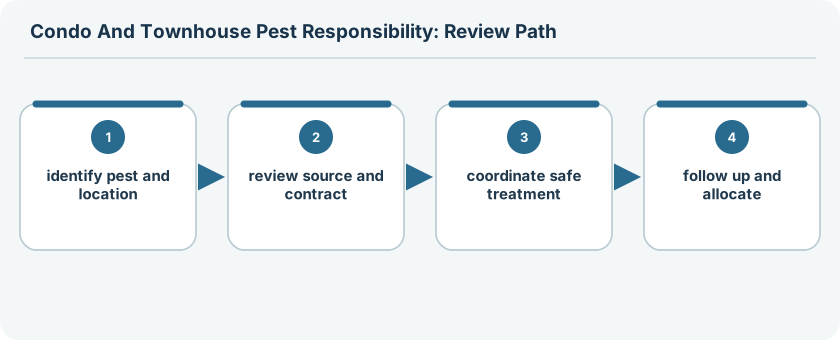
Pest treatment may fail if the source remains. Ask whether the inspection found moisture, roof or siding gaps, damaged flashing, plumbing leaks, landscaping contact, crawlspace conditions, food access, or cracks in a shared foundation. A pest professional may identify a likely pathway but a building-envelope or structural specialist may be needed to diagnose the underlying defect.
Separate the treatment plan from repair of the component that permitted entry. The association may coordinate a common wall or roof repair while an owner maintains a door sweep, appliance, storage area, or alteration. Document the evidence before sealing or replacing materials.
Treatment and cost allocation
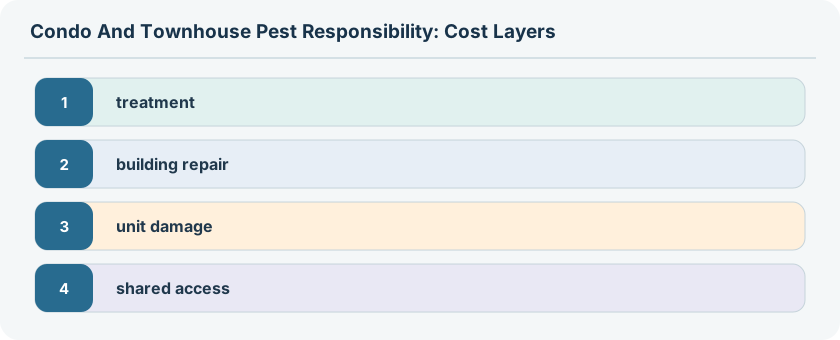
A written treatment plan should name the pest, preparation, products or methods, affected units, re-entry instructions, follow-up inspections, warranty, and what happens if activity returns. Ask who pays for resident preparation, moving contents, temporary accommodation, treatment, demolition, rebuilding, and recurring monitoring.
If a chargeback is proposed, request the document authority, factual finding, amount, calculation, notice, and dispute process. A treatment invoice alone does not establish negligence. Conversely, an approved common program does not necessarily cover owner contents or a private alteration.
Follow-up, allocation, and closeout
A treatment is not finished until the responsible professional identifies what will confirm success and what happens if activity returns. Record follow-up dates, access needs, warranty limits, and the conditions that trigger another inspection. If the source is moisture, an opening, or a damaged shared component, assign that correction separately from the pesticide or exclusion work.
Treatment and structural repair may have different payers, and pest damage is not automatically insured; ask each insurer to review the actual cause and scope.
Keep the inspection report, treatment map, preparation and re-entry instructions, invoices, warranty, follow-up report, moisture or envelope findings, and final allocation together. The association should retain common-area findings for future maintenance planning.
Example: termites near an attached deck
An inspection should identify the organism, pathway, affected framing, and likely moisture source. Treatment, damaged-wood removal, structural repair, and deck replacement may have different responsibility rules. Compare the deck approval and maintenance provisions with the inspection and treatment scope. Do not treat chemical application alone as proof that damaged framing or the entry path was corrected.
The follow-up report should say whether activity remains, what building work was completed, which warranty limits apply, and who maintains the repaired path. If the charge depends on an owner alteration, preserve the evidence supporting that connection.
Example: rodents in a shared wall
Ask the pest professional and building manager to coordinate inspection of the shared void and likely routes, which may include roof vents, siding, utility penetrations, landscaping, or crawlspaces. Exclusion, sanitation, damaged finishes, and structural work may have different payers. A follow-up should confirm whether the entry route was closed and name the next prevention step, inspection date, or condition that would trigger renewed treatment.