
A balcony, patio, parking stall, storage locker, driveway, lawn, window, or exterior door can be used by one owner without being individually owned. Shared-property documents may call the area common property, common elements, limited common property, restricted common elements, or exclusive-use property. The names differ by jurisdiction, and the label alone rarely answers who pays for every kind of work.
The useful question is not “who uses it?” It is “what do the plan, declaration, bylaws, maintenance rules, alteration agreements, and insurance provisions say about ownership, use, maintenance, repair, replacement, access, and risk?”
Three relationships to keep separate
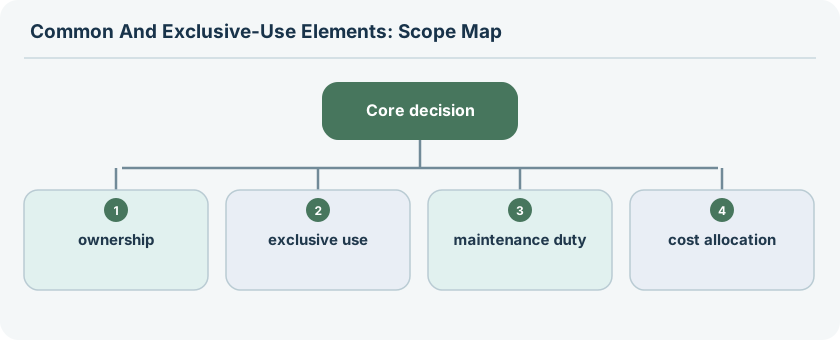
For a disputed area, separate:
- Ownership or control: who holds the legal interest or can authorize changes?
- Use: who has the right to occupy, access, or benefit from the area?
- Responsibility: who must clean, maintain, repair, replace, insure, or restore it?
Those relationships can point to different parties. A parking stall may be common property reserved for one owner. A balcony may be part of a unit, limited common property, or a common structural element. An owner may have routine care duties for an area maintained as part of a shared building. California regulatory guidance illustrates that maintenance duties may not correlate with fee ownership, while Canadian guidance gives sole-use balconies, parking, driveways, storage, and lawns as examples of property that may remain common elements.
Common property is not one cost bucket
Common property may include structure, roofs, corridors, exterior walls, mechanical systems, electrical services, roads, drainage, landscaping, parking, balconies, patios, or utilities. Some portions serve everyone; others are reserved for one unit or a limited group. The association may maintain some components while assigning day-to-day care or specific repairs to an owner.
British Columbia depreciation-report requirements illustrate why the distinction matters: the report identifies common and limited common property and can identify portions that individual owners must repair and maintain. It is a planning and responsibility input for the applicable strata, not a universal North American table. Another jurisdiction may use a different term or default allocation.
The same area can have four different work paths
Ask separately about:
| Work type | Questions to ask |
|---|---|
| Routine care | Who cleans, seasons, salts, mows, services, or protects the area? |
| Repair | Who addresses failure, wear, leakage, or damage? |
| Replacement | Who funds end-of-life or building-wide capital work? |
| Alteration | Who can approve an enclosure, finish, fixture, or structural change? |
Insurance and restoration add two more questions. An owner-installed tile surface, screen, planter, enclosure, or finish may be treated as an improvement even when the underlying slab or wall is common. A loss can affect the standard property, the improvement, contents, and the association deductible through separate routes.
Use examples without turning them into rules
A balcony is often the clearest example. An owner may have exclusive access and routine cleaning responsibilities, while the association controls inspections, structural work, waterproofing, or facade repairs. That same arrangement is not guaranteed elsewhere. A parking stall may be individually titled, assigned by an exclusive-use right, or part of common property. A driveway may be an owner parcel with an easement, a shared road, or an association asset.
Windows and exterior doors can be divided further. Glass, frames, hardware, flashing, surrounding wall, and interior finishes may not share the same responsibility. A lawn or patio can have owner care obligations even when drainage, retaining elements, or underlying structure is common. Treat each example as a prompt to locate the applicable clause.
How to read the documents
Collect the surveyed plan or declaration, definitions, maintenance matrix, bylaws, rules, architectural standards, alteration agreements, insurance requirements, and any amendments. Search for the terms “maintain,” “repair,” “replace,” “restore,” “exclusive use,” “limited common,” “standard unit,” “owner improvement,” “access,” and “damage.” Note whether the clause applies to the whole area or only a specific component.
Compare the current documents with the reserve or depreciation report and recent project notices. If a report identifies a component as a future common project but a maintenance schedule assigns routine care to the owner, that is not necessarily a contradiction. It may describe different work types. If the documents genuinely conflict, ask a qualified local professional to interpret them.
Budgeting the owner’s exposure
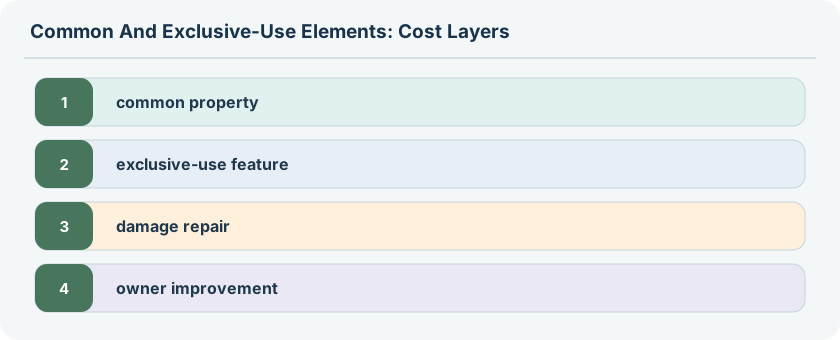
Do not budget only the visible repair. A responsibility dispute can add diagnosis, temporary protection, engineering, access, demolition, disposal, common-area protection, finish restoration, permits, insurance deductibles, and possible assessment or chargeback exposure. A low monthly fee or a prior owner’s improvement can also create a false impression that the future cost is covered.
Ask for a written scope and a written responsibility position before paying for a large project. Separate the physical contractor quote from the funding route. The quote may be technically accurate while still being addressed to the wrong payer or missing restoration obligations.
Before paying for work yourself
Ask the association or manager to identify:
- the exact provision that classifies the area and assigns the proposed work;
- who must arrange inspection and who can authorize a contractor;
- whether the cost is a common expense, owner expense, assessment, or potential chargeback;
- how owner upgrades, finishes, and alterations will be treated;
- whether insurance or a deductible may respond;
- whether access, restoration, permits, or engineering are required;
- who will maintain the repaired or altered component afterward.
Do not perform unapproved work on structure, waterproofing, guards, exterior walls, utilities, or other safety-sensitive common property. Exclusive use is not permission to alter the area. When the project is expensive, disputed, or safety-related, use current local legal, insurance, engineering, or trade advice. The documents determine the responsibility; the use pattern only starts the investigation.
Compare the document language with the physical use
An exclusive-use designation is easy to misunderstand because the resident may be the only person who enters the area, yet the association may still own the underlying structure. Create a simple two-column record: one column for what the document says the area is, and another for what the resident actually uses or installed. Resolve every mismatch before work starts.
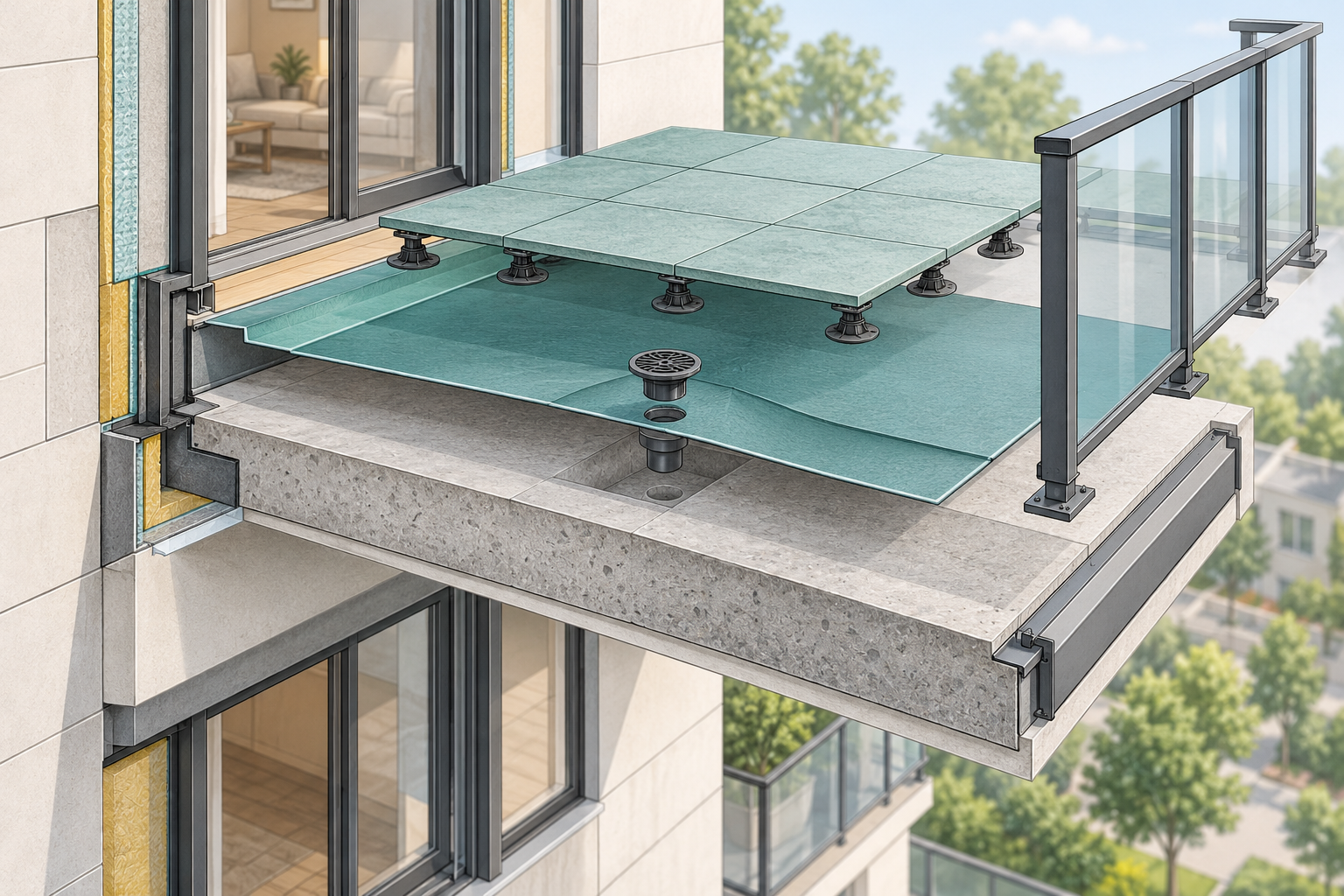
For example, a patio may be exclusive use but have a common membrane below it. A parking stall may be assigned to one unit while the garage slab, drainage, lighting, and gate remain common. A roof deck may be accessible from one unit while the roof assembly is a shared building component. These examples show why “my area” is not a sufficient legal or repair category.
Check whether the maintenance rule is ongoing or applies only to routine care. Some provisions assign cleaning or snow removal to the user but assign replacement, structural work, or waterproofing to the association. Other provisions use a special cost allocation for an element serving only one unit. Quote the relevant section in the project file rather than paraphrasing it from memory.
Project coordination and owner improvements
Before a common repair, ask whether the association will need to remove furniture, planters, decking, fencing, screens, storage, or landscaping. Photograph the area and list each improvement. The party that controls the common repair may need access, but the owner may be asked to remove an improvement or pay the incremental cost of reinstalling a non-standard finish.
An approval should address damage caused by an owner installation, the condition of the underlying common element, and the restoration standard. If the area will be rebuilt to a current standard, identify whether the owner pays for a betterment. If the association’s contractor finds concealed damage, require a written change order and an allocation decision.
A repeatable allocation record
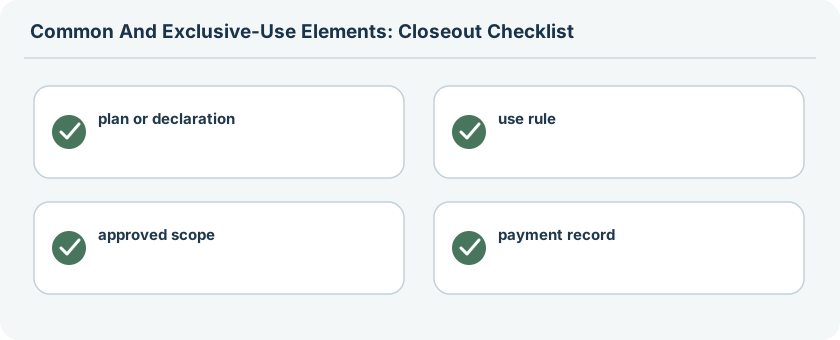
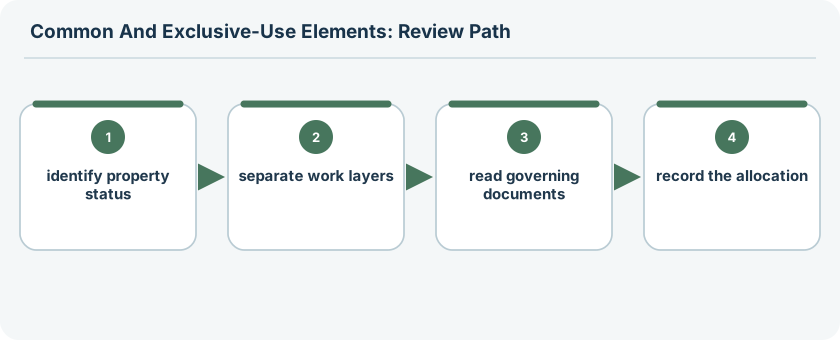
Use this order:
- quote the property classification;
- identify the exact component and failure;
- record routine maintenance and capital duties separately;
- identify who must inspect, approve, and hire;
- identify the funding source and allocation formula;
- identify insurance, deductibles, and owner improvements;
- record access, protection, temporary use, and restoration;
- preserve the completed work and warranty.
This record helps a buyer, manager, board, and owner use the same vocabulary. It also prevents an exclusive-use rule from being stretched into a conclusion about ownership, negligence, or every cost associated with a repair.
A buyer or owner should retain the designation, maintenance rule, alteration approval, photographs, inspection report, and final allocation. That small evidence set makes future access and replacement decisions easier, especially when the exclusive-use area looks private but the underlying assembly is common.
If the rule is unclear, ask the association to identify the area in the plan and explain whether the duty is cleaning, maintenance, repair, replacement, or alteration approval. Preserve that answer with the designation and photographs before relying on it for a costly project.
Example: an exclusive-use patio leak
A resident may be the only person who uses a patio, but the leak could originate in a membrane, slab, drain, wall transition, or owner-installed surface. The first inspection should identify the failed layer and compare it with the exclusive-use designation and maintenance rule. Cleaning leaves or maintaining a surface is different from replacing waterproofing or structural concrete.
Before demolition, photograph planters, decking, pavers, screens, and the surface below. Ask who will remove them, who pays for storage or reinstatement, and whether an approval changed the future maintenance duty. The association may coordinate the common repair while the resident pays for a non-standard finish.
For a buyer, the useful file includes the designation, approval, leak history, inspection, assessment or reserve decision, and warranty. Exclusive use should guide the investigation, not replace the component-by-component analysis.