
A cooperative apartment is not simply a condominium with a different label. The cooperative entity generally owns the project, while the resident’s interest is represented by shares and a proprietary lease or similar occupancy agreement. That structure changes the documents, payment channels, and approval process a homeowner must examine before treating a repair as an apartment expense or a building expense.
The central question is not whether a component is physically inside the apartment. It is how the proprietary lease, bylaws, house rules, offering documents, alteration agreements, and current local law allocate the work.

What the shareholder owns
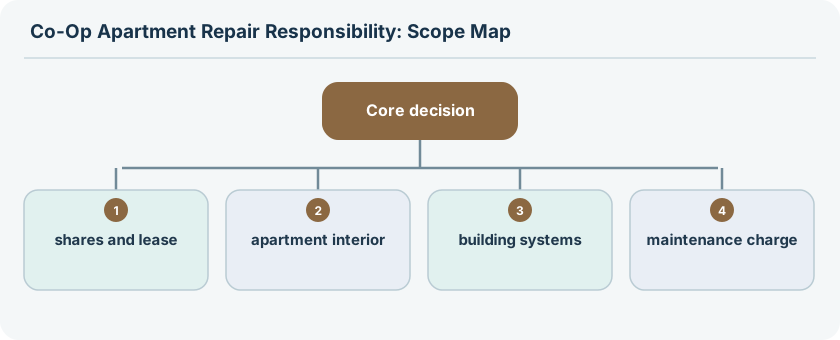
In a co-op, the purchaser commonly buys shares in the cooperative corporation that correspond to an apartment and receives the right to occupy that apartment under a proprietary lease. New York consumer guidance describes this share-and-lease structure, and Fannie Mae describes it in the limited context of its co-op appraisal requirements. Those sources explain the ownership model; they do not establish a universal repair rule.
The number of shares may be used to calculate maintenance charges or other financial obligations under the building’s documents. Shares alone do not answer who repairs a leaking riser, window, wall, appliance, fixture, or heating component. The lease may assign apartment maintenance to the shareholder, while the corporation retains responsibility for building structure, exterior work, common systems, or services. Read the specific clauses rather than inferring from the share allocation.
Building work versus apartment work
A co-op’s corporation may arrange building-wide work through its board, managing agent, maintenance budget, reserves, or assessments. Common examples can include exterior repairs, roof work, central mechanical systems, structural elements, corridors, and shared utilities. The proprietary lease may place some interior repairs, finishes, fixtures, or appliances on the shareholder.
The boundary is often more detailed than “inside versus outside.” Separate these questions:
- Does the component serve one apartment or the building?
- Is it part of the original building fabric or a shareholder improvement?
- Who must diagnose the condition?
- Who has authority to select and instruct the contractor?
- Does the work require access through another apartment?
- Who restores finishes after a shared system is repaired?
- Is the cost part of ordinary maintenance, a capital project, an assessment, or an individual charge?
A building project can involve work inside an apartment without becoming a shareholder-funded repair. An apartment alteration can affect common structure or systems without becoming a corporation obligation.
Maintenance charges and assessments
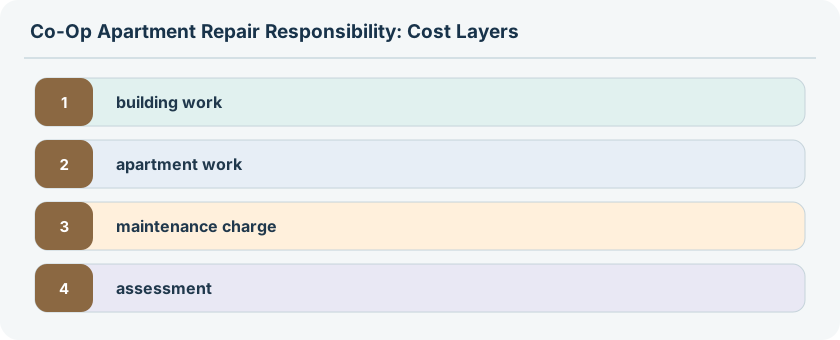
Recurring maintenance charges may support building operation, services, insurance, routine work, and long-term obligations. The amount may reflect the apartment’s share allocation and the co-op’s budget. It is not a guarantee that every repair is prepaid. A major roof, facade, boiler, electrical, or structural project may require reserves, a temporary or permanent increase in charges, borrowing, or an assessment.
Before budgeting, distinguish the predictable monthly payment from less predictable capital exposure. Review notices of assessments, recent budgets, financial statements, reserve information if provided, major project schedules, and board communications. Ask whether a proposed repair has been diagnosed, approved, funded, contracted, or merely discussed. Avoid treating an old budget or a seller’s statement as a current estimate of future obligations.
Alterations create a separate responsibility layer
Renovating a kitchen or bathroom, moving a wall, changing plumbing or electrical work, replacing windows, installing equipment, or altering ventilation may affect common property or building systems. The board or managing agent may require drawings, permits, an engineer or architect, contractor insurance, a deposit, work-hour limits, and an alteration agreement.
An agreement can allocate construction cost, access, protection, damage, maintenance, insurance, removal, and restoration. Approval means the project may proceed under stated conditions; it does not automatically transfer future responsibility to the corporation. Keep the executed agreement with the apartment records so a future sale or repair does not lose the allocation history.
Handling a leak or other urgent loss
If water, heat, electricity, or structure is involved, report the condition promptly to the managing agent or emergency contact and follow the building’s procedures. Do not assume the shareholder can authorize permanent work merely because the failure appears inside the apartment. The corporation may need to inspect, isolate a shared system, notify neighboring residents, or coordinate an insurer.
Document the source location, visible damage, dates, communications, and temporary measures. Source repair, interior finishes, owner improvements, contents, and deductibles can be assigned differently. Avoid making a causation or negligence conclusion before the condition is inspected and the applicable documents are reviewed.
Buying or budgeting for a co-op
Before buying, request the proprietary lease, bylaws, house rules, offering or resale documents, maintenance schedule, alteration records, insurance information, assessment notices, and available financial or capital-project information. Ask which services and repairs are included in maintenance and which are shareholder obligations. Check whether the apartment has undocumented alterations or upgrades that could create restoration, compliance, or insurance exposure.
Fannie Mae co-op guidance can matter to a loan subject to that program, but it is not a universal lending rule or a substitute for lender review. Other lenders may use different criteria. A building’s maintenance charges, assessment history, capital work, and financial condition can affect affordability even when the apartment itself appears well maintained.
Questions for the managing agent or board
Ask for written answers to:
- Which lease or bylaw clause applies to the component?
- Who arranges diagnosis and who authorizes the contractor?
- Is the item original, shareholder-installed, or shared building property?
- Will access, opening, protection, and finish restoration be required?
- Is the cost included in maintenance, funded from reserves, assessed, or charged to the shareholder?
- Which insurance policy and deductible may respond?
- Will the repair create an ongoing maintenance or restoration duty?
- Are there current project, assessment, financing, or lender disclosures?
A costly, structural, safety-sensitive, insurance-related, or disputed repair warrants current advice from a local co-op lawyer, insurance professional, engineer, or qualified trade. A share certificate and a general co-op explanation cannot settle the terms of a particular proprietary lease.
A decision worksheet for the owner
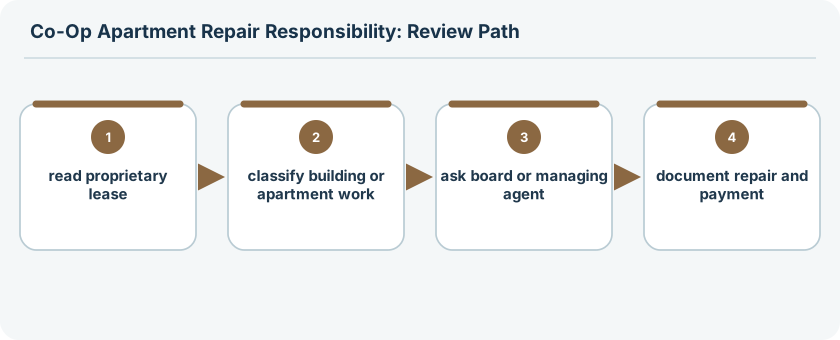
When a co-op repair question becomes disputed, prepare a short file that separates the building obligation from the shareholder’s occupancy obligation. Record the apartment number, the affected room or system, the date discovered, the visible symptom, and whether another apartment or common area is affected. Add the proprietary lease section, house rules, board notice, maintenance schedule, and any alteration agreement that appears relevant.
Then ask the managing agent for the practical next action: emergency access, inspection, temporary protection, or a board decision. A shareholder can usually make the issue easier to resolve by requesting an inspection and a written scope instead of beginning with a demand for reimbursement. If the building controls a riser, wall, window, or facade, an independent contractor hired by the shareholder may not be authorized to alter it.
For a capital project, compare the board’s explanation with the building budget and meeting minutes. Note whether the cost is being paid from reserves, an assessment, a loan, insurance, or ordinary maintenance funds. Ask whether the charge is attached to the apartment, based on shares, or allocated under a specific lease provision. Also ask how the board treats access damage, custom finishes, and a shareholder’s prior alteration.
Questions for a purchase or sale
A prospective shareholder should request the proprietary lease, house rules, financial statements, recent board or shareholder minutes, current assessments, underlying mortgage information, insurance summary, and records of material repair projects. Ask about recurring leaks, facade or roof work, elevator reliability, plumbing risers, violations, and planned capital calls. A seller should identify notices and unpaid obligations required by the transaction documents.
A co-op can be financially healthy while planning an expensive project, or appear inexpensive while carrying a large deferred obligation. The useful comparison is between the building’s component list, condition reports, funding plan, and the buyer’s ability to absorb a future charge. Never infer the repair rule from a neighboring building or from a generic “co-op owner” checklist.
Closeout records
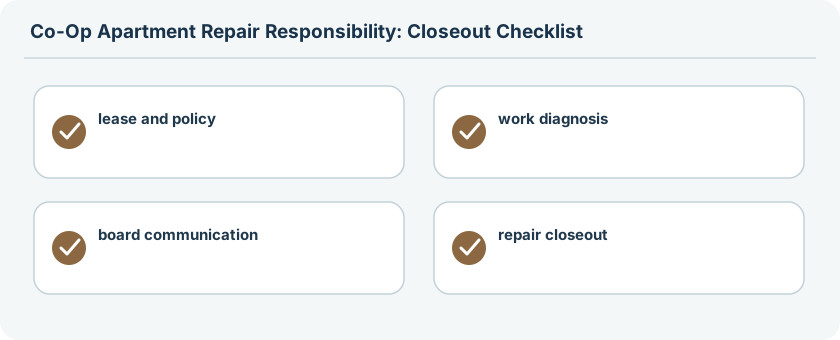
After work, keep the board approval, contractor scope, invoices, photographs, permits, inspection or testing records, warranty, and any amendment to the apartment’s maintenance file. If a wall or ceiling was opened, record what was found and how it was closed. If an alteration was involved, preserve the approval and the agreed future maintenance duty.
The practical co-op answer is therefore a document-backed chain: proprietary lease and house rules, physical component, board authority, funding method, apartment allocation, insurance position, and closeout evidence.
Before treating a board notice as the final answer, check whether it describes an emergency, routine maintenance, capital work, or an alteration issue. Record the physical condition and the lease provision together. If the notice and lease appear inconsistent, request clarification in writing and obtain current local advice for a material dispute.
For a material project, a shareholder should keep the lease excerpt, board notice, inspection, budget, assessment or financing decision, access plan, and completion record together. That packet lets the next owner understand both the apartment obligation and the building’s larger capital plan.
Example: a leak behind a wall
If a shareholder sees a ceiling stain, first document the stain and notify the managing agent. Ask whether the source is an apartment fixture, a riser, the roof, a facade, or an adjacent alteration. The proprietary lease may assign maintenance of a fixture to the shareholder while the building controls the wall or riser. Access to investigate can therefore be a building matter even before payment is decided.
The file should separate emergency drying, source repair, opening and closing the wall, interior finish, contents, and any deductible. If the board sends a contractor, record the scope and who authorized it. If the shareholder hires an independent professional, use that report to inform the investigation without assuming it authorizes work on building property.
The example demonstrates the central co-op distinction: occupancy responsibility, building responsibility, insurance response, and final allocation are related but not interchangeable.