
The fastest way to get a condo repair-cost question wrong is to assign responsibility from location alone. A pipe inside a unit may serve several homes. A balcony used only by one owner may be common property. A finished wall may include owner improvements that are treated differently from the standard unit. A townhouse may not even use condominium ownership, despite looking identical to the building next door.
Use a four-part answer instead of asking only “who owns this component?” Determine who must arrange the work, who controls or authorizes it, who pays initially, and who ultimately bears the cost. Then check whether insurance, a deductible, a chargeback, or an assessment changes the result.
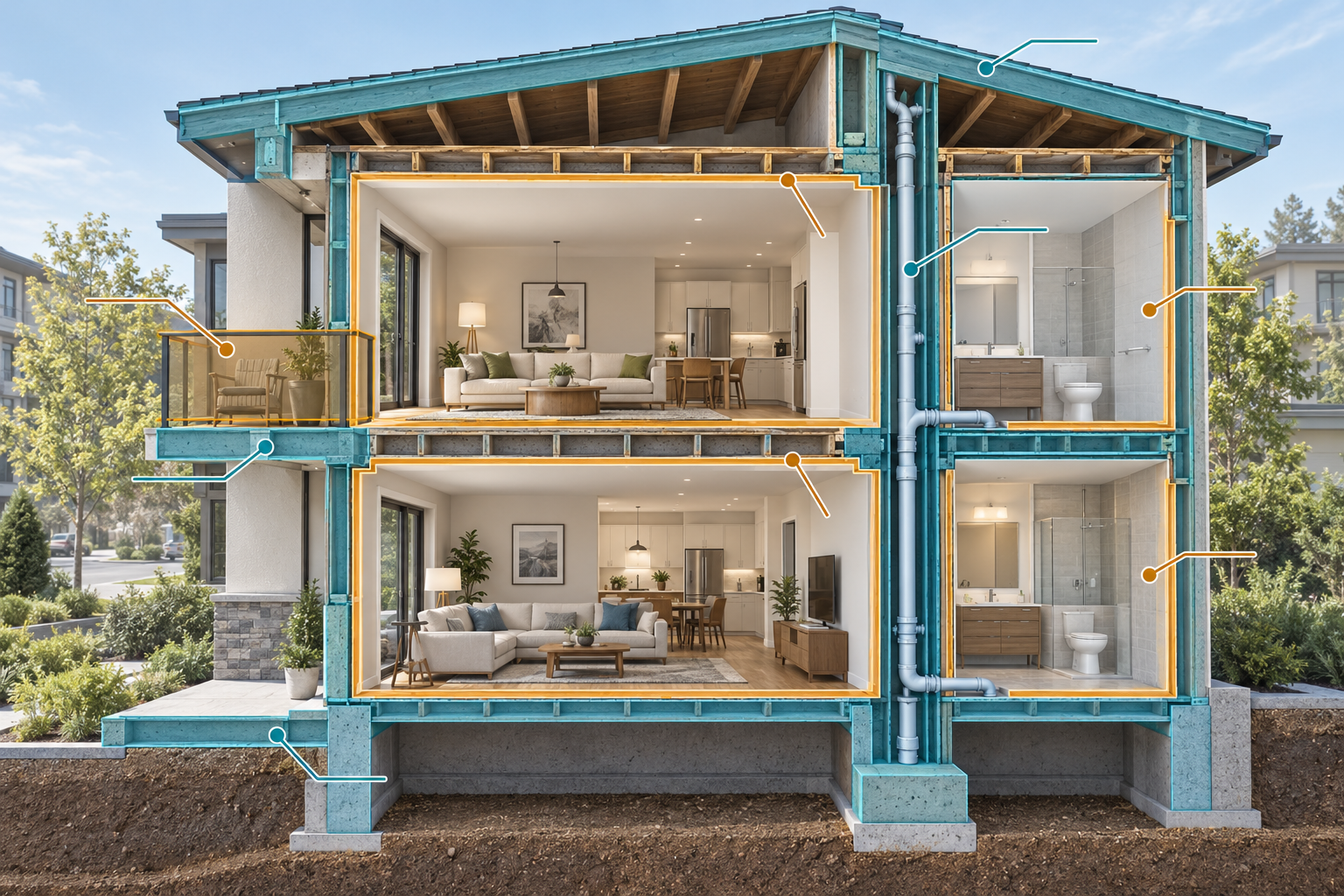
Why the building name is not enough
Condominium, strata, HOA, common-interest community, and co-op describe legal or organizational structures that vary across the United States and Canada. Even within one structure, the declaration, registered plan, bylaws, rules, maintenance schedule, standard-unit definition, and later agreements can allocate the same physical component differently.
Official Canadian guidance describes condominium as an ownership form that can occur in apartments, townhouses, rowhouses, stacked townhouses, duplexes, and other buildings. The physical shape therefore does not answer the repair question. A Washington statutory example provides a baseline split between association-maintained common elements and owner-maintained units, but it also recognizes declarations and statutory exceptions. That is a useful illustration, not a national rule.
Start with the unit boundary
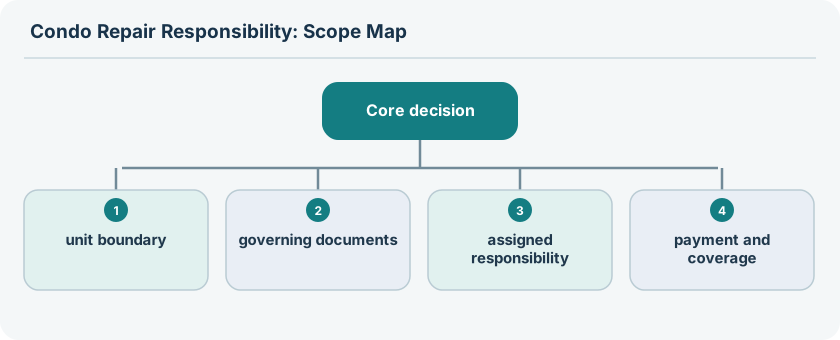
Find the registered plan, declaration, condominium plan, strata plan, or equivalent constituting document. The boundary may be drawn at an interior surface, a centerline, an exterior face, or another surveyed location. It may include or exclude windows, doors, exterior walls, roofs, balconies, lawns, parking, storage, or service equipment.
The plan is only the first document to read. Look for definitions of “unit,” “common elements,” “common property,” “limited common property,” “exclusive use,” and “owner improvement.” A component can be physically inside the unit but legally shared, or physically outside it but allocated to the owner for maintenance. Ask for the current version and all registered amendments rather than relying on an old purchase summary.
Separate use, ownership, and responsibility
An area reserved for one owner’s use is not necessarily individually owned. Balconies, patios, parking spaces, storage lockers, driveways, and lawns are common examples. A document may assign routine cleaning or snow removal to the user while retaining structural repair or replacement as a common expense. Another property may allocate more of the work to the owner.
For any disputed component, create a short responsibility map:
| Question | What to identify |
|---|---|
| Who owns or controls it? | Unit, common property, limited common property, utility, or another parcel |
| Who maintains it? | Routine cleaning, servicing, seasonal care, or prevention |
| Who repairs it? | Failure, wear, damage, or hidden condition |
| Who replaces it? | End-of-life or building-wide capital work |
| Who may alter it? | Owner, association, board, or utility approval |
| Who insures it? | Master policy, owner policy, both, or neither without added coverage |
This map prevents a routine-maintenance clause from being mistaken for a complete replacement or insurance rule.
California offers a useful but narrow example: Civil Code section 4775 generally assigns common-area work to the association unless the declaration provides otherwise, and addresses restoration of certain gas, heat, water, or electrical services that begin in a common area. A service interruption has additional timing and funding steps, so owners should read the California service-restoration guide alongside the actual declaration. This example does not establish a rule for other states or Canadian provinces.
Distinguish maintenance from damage repair
Normal maintenance, ordinary wear, sudden damage, and an owner alteration may trigger different clauses. Ontario condominium guidance, for example, describes corporations as generally responsible for common elements and standard-unit elements while owners are generally responsible for decorative and non-standard improvements. The word “generally” matters: the standard-unit definition, declaration, law, and insurance policy still need to be checked.
A leak is a good example. The party responsible for a failed supply line may differ from the party responsible for drying, drywall, flooring, cabinets, contents, or a deductible. The party that discovers the loss may have an urgent duty to report it without having authority to hire a permanent repair contractor. Preserve evidence, reduce immediate damage when safe, and notify the association and insurer according to the applicable rules.
Check owner alterations
A renovated bathroom, replacement window, enclosed balcony, added wall, upgraded flooring, heat pump, or altered electrical circuit can sit outside the property’s original allocation. The approval package may include an alteration agreement that assigns construction cost, future maintenance, repair after damage, insurance, access, removal, or restoration to the owner.
Approval does not necessarily mean the association has accepted future responsibility. Conversely, work performed inside a unit does not necessarily become an owner expense if it repairs a common system. Locate the written agreement and compare it with the current plan and bylaws before authorizing a change or relying on an earlier owner’s representation.
Add the payment and insurance layers
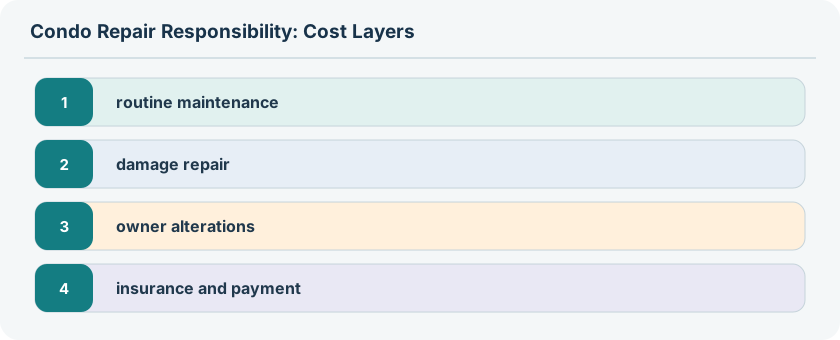
The initial invoice and final economic burden can travel through different channels. A corporation may arrange common work and fund it from operating money or reserves, then recover a portion through recurring fees, a special assessment, or a permitted chargeback. An owner may pay a contractor first and later seek reimbursement, but only if the documents and authorization support that path.
Read the master or corporation policy, the unit-owner policy requirements, deductible provisions, loss-assessment coverage, and exclusions together. Insurance responsibility is not the same as maintenance responsibility. Never promise coverage from a generic checklist; policy wording, causation, standard-unit definitions, and local law control.
Questions to ask before commissioning work
Ask management or the board to identify, in writing:
- the plan, declaration, bylaw, rule, or agreement that applies;
- the party responsible for diagnosis, emergency action, and permanent repair;
- who may select and authorize the contractor;
- whether the work is a common expense, owner expense, assessment, or possible chargeback;
- how owner improvements and upgraded finishes will be treated;
- which insurer and deductible may respond;
- whether access through another unit or common area is required;
- whether permits, engineering, or utility approval are needed.
If documents conflict, the amount is material, or structure, electrical work, water damage, accessibility, insurance, or a legal dispute is involved, obtain current advice from the appropriate local lawyer, insurer, engineer, or qualified trade professional. The framework helps you ask the right questions; it cannot decide the obligation for your property.
A component-by-component method
For a real repair, create a component table with five columns: the physical part, where it is located, what the governing document calls it, who has maintenance or repair authority, and what cost category applies. Add a sixth column for evidence, such as a plan excerpt, inspection report, photograph, invoice, or board resolution.
This method prevents common mistakes. A roof membrane can be common while a skylight is an owner improvement. A pipe can be in a unit wall while serving several homes. A balcony can be exclusive use while the slab and waterproofing remain common. A townhouse can be condominium property in one project and fee-simple property in another.
From diagnosis to closeout
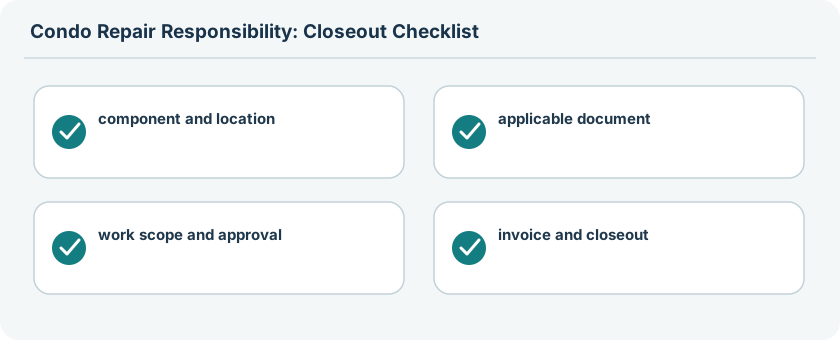
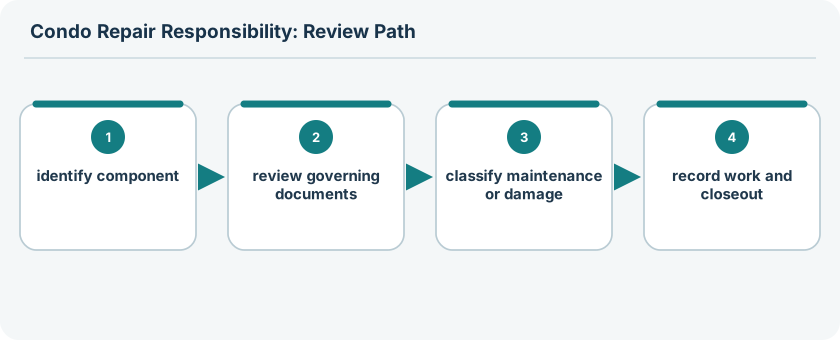
Once the component is identified, follow the same sequence:
- protect people and property from immediate harm;
- notify the party with authority and preserve evidence;
- obtain a qualified diagnosis;
- separate emergency, permanent, restoration, and upgrade scopes;
- apply the document and insurance rules;
- confirm funding, allocation, access, and permits;
- document testing, warranty, and future maintenance.
Keep the written decision with the unit or association records. A repair is not fully resolved when the contractor leaves; the affected component, cost allocation, and future care should be understandable to the next owner.
When the rule remains uncertain
If documents conflict or use an undefined term, do not fill the gap with a neighboring property’s practice. Ask the manager or board to identify the controlling provision and obtain local legal or professional advice when the cost, safety, insurance, or dispute is material. The framework narrows the question; it does not replace the governing documents or current local requirements.
Use the same method for every component
The framework applies to a small fixture, a common riser, a roof, a balcony, or a major structural project. Name the component, identify the document, obtain a qualified diagnosis, separate repair from restoration and upgrades, and preserve the allocation and closeout records. When the cost or safety consequence is material, obtain current local professional advice.
Example: a private-looking roof deck
A roof deck may be used by one unit but contain common waterproofing and structure. Apply the method: identify the designation, map the assembly, obtain a diagnosis, distinguish routine care from capital work, check alterations, determine authority and funding, then record restoration and future maintenance.
This sequence works because it does not let appearance, exclusive use, or a contractor’s first invoice substitute for the documents and evidence. When uncertainty remains, obtain current local professional advice.
If the documents use different terms, preserve the quoted language and identify the conflict. A local professional can then review a concrete question instead of a general dispute. Do not use a generic ownership category as a substitute for the plan and maintenance provisions.