
Two attached homes can look identical from the street and have completely different repair bills. One may be a fee-simple townhouse in an HOA, another may be a condominium unit in a townhouse project, and a third may be part of a different common-interest structure. The word “townhouse” describes a building form; it does not identify the legal ownership, maintenance covenant, or payer.
Before approving a roof, siding, driveway, wall, drainage, or shared-system quote, determine which structure applies to the property. Then separate who owns the component from who must maintain it, who arranges the work, who pays the contractor, and who ultimately bears the cost through dues, an assessment, or an owner invoice.
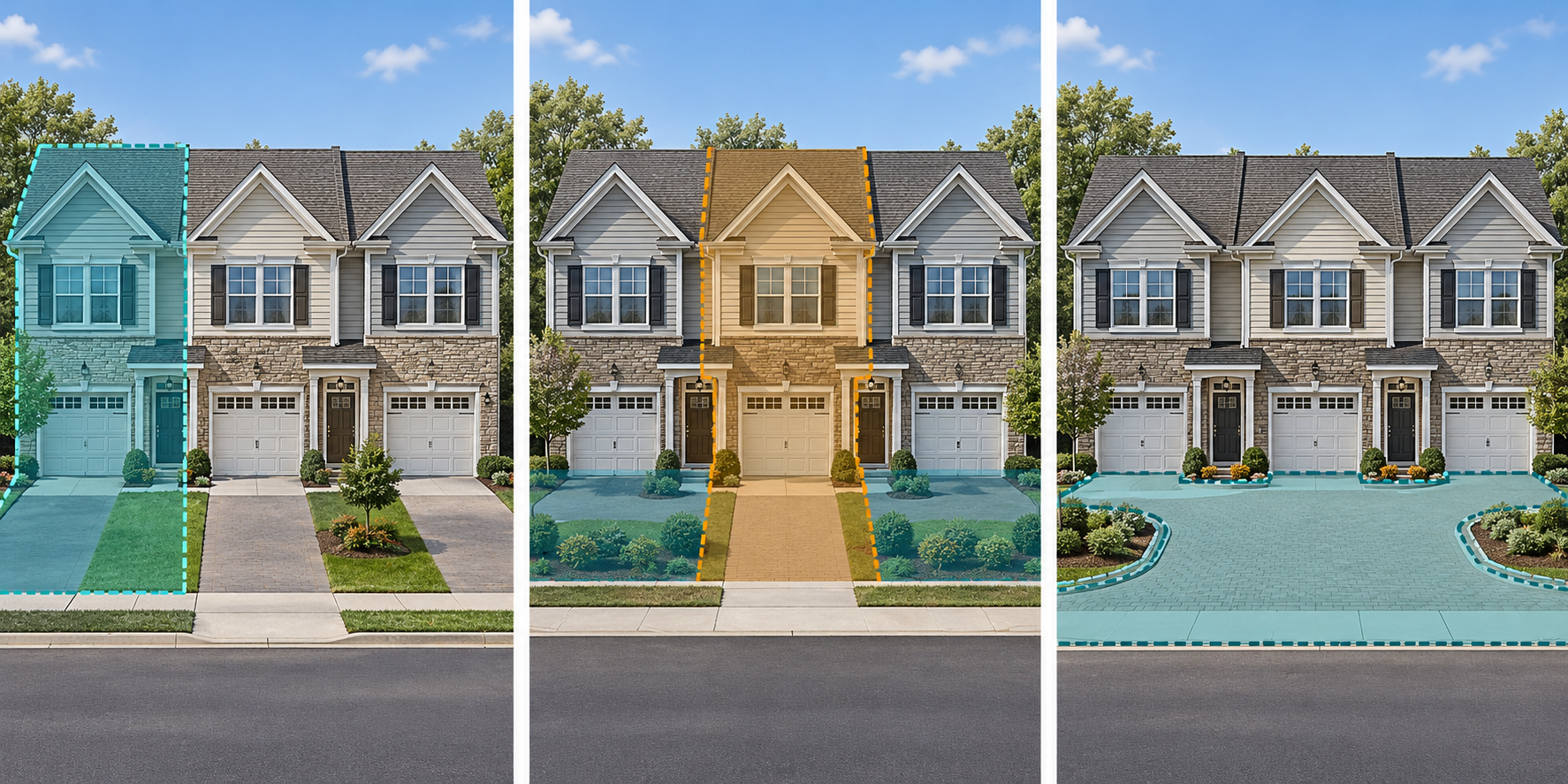
Start with the legal form
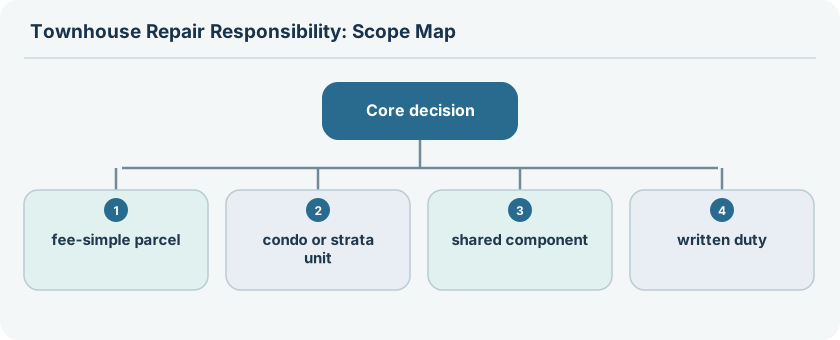
A townhouse commonly fits one of these broad models:
| Possible structure | What the owner may own | Where shared obligations often appear |
|---|---|---|
| Fee-simple townhouse with an HOA | The lot and building, subject to recorded covenants | Declaration, CC&Rs, maintenance covenants, easements, and HOA rules |
| Condominium or strata townhouse | A defined unit plus an interest in common property | Condominium or strata plan, declaration, bylaws, rules, and maintenance provisions |
| Planned or common-interest development | A parcel or unit with shared amenities, roads, walls, or services | Recorded declaration, association budget, easements, and project-specific standards |
These are explanatory categories, not a legal classification for every property. A resale listing, tax record, or visual inspection may use “townhouse” loosely. Obtain the title, declaration or plan, and governing documents that actually establish the arrangement.
Why appearance creates bad assumptions
In one townhouse community, the association may maintain roofs, siding, exterior paint, private streets, landscaping, or shared utilities. In another, the owner may maintain the whole structure while the association maintains only a gate, road, or amenity. A condominium townhouse may place the roof or exterior in common property even when the owner has exclusive use of the surrounding yard. A fee-simple owner may have an exterior maintenance covenant without giving the HOA ownership of the building.
The same component can also be split. An association might arrange a building-wide roof replacement while an owner remains responsible for damage caused by an unapproved alteration. A shared wall might be structurally common but have different obligations for paint, finishes, penetrations, or damage caused by one owner. Do not turn a neighbor’s experience into a rule for your unit.
Fee-simple ownership with an HOA
A fee-simple owner often owns the lot and building, but recorded covenants can require the HOA to maintain specified exterior or shared elements. Read the maintenance language closely. “Maintain” may cover recurring care without clearly answering who replaces a failed component. Look for separate words such as repair, replace, restore, insure, inspect, and access.
Check whether the HOA’s obligation is mandatory or discretionary, whether it can levy an assessment for capital work, and whether the owner must reimburse the association for damage caused by an act or omission. Confirm whether the association’s budget includes the component or whether the work is expected to be funded through a separate levy. Local law and the recorded declaration govern; this is not a universal HOA rule.
Condominium or strata townhouse ownership
In a condominium or strata project, the plan and declaration usually define the unit boundary and common property. The roof, exterior wall, windows, yard, driveway, party wall, service line, or utility may be common, limited common, or part of the unit. A townhouse’s separate entrance or private yard does not settle that classification.
Official Canadian guidance uses townhouses as examples of buildings that can contain condominium ownership and notes that sole-use areas can remain common elements. A Washington statutory example similarly illustrates an association-versus-unit baseline while allowing the declaration and statutory exceptions to change the result. Use those sources to understand the questions, not to predict your property’s allocation.
Shared components deserve their own map
For each proposed repair, identify the service area and document provision:
- Roof, facade, siding, and exterior finishes: are they common, owner-owned, or maintained under a covenant?
- Party walls and structure: do they serve one lot, multiple lots, or the whole project?
- Driveways and parking: are they part of the lot, an easement, or limited common property?
- Landscaping and drainage: who controls grading, irrigation, trees, retaining elements, and runoff?
- Utilities: are water, sewer, electrical, HVAC, or storm systems individual or shared?
- Gates, roads, and private infrastructure: are they association assets or owner obligations?
Ask the contractor to describe the physical scope separately from the ownership question. A contractor can price the work without being able to determine who is legally responsible for authorizing or paying for it.
How the cost reaches the owner
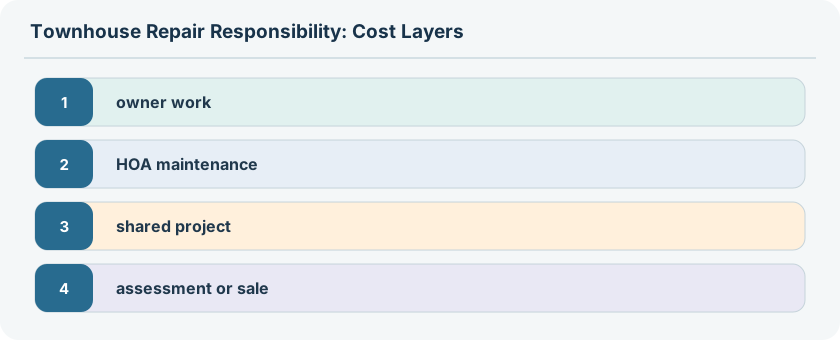
A common project may reach an owner through several paths:
- The owner receives and pays an individual repair invoice.
- The association pays from operating funds or reserves, and the owner contributes through regular dues.
- The association levies a special assessment for capital work.
- The association repairs common property and seeks a permitted chargeback for owner-caused damage.
- The owner pays for an approved improvement that later creates maintenance or restoration duties.
- Insurance responds to part of the loss, leaving deductibles or exclusions for another party.
These paths are not interchangeable. A higher monthly fee does not guarantee that every future repair is funded. A reserve balance does not prove that a planned project is fully covered. Ask whether the amount is an operating expense, reserve-funded replacement, assessment, loan obligation, deductible, or owner improvement.
Documents to review before commissioning work
Request the current:
- declaration, CC&Rs, condominium or strata plan, and amendments;
- bylaws, rules, maintenance matrix, and architectural standards;
- easements for shared walls, driveways, utilities, drainage, or access;
- reserve or depreciation report and current budget;
- insurance summary and deductible provisions;
- prior alteration agreements and approvals;
- notices, meeting minutes, project contracts, and assessment statements.
Mark the exact clause that governs the proposed work. If two documents appear to conflict, do not resolve the conflict from a generic internet explanation. A local property lawyer, association professional, engineer, or insurer may need to interpret the current records.
A quote and approval checklist
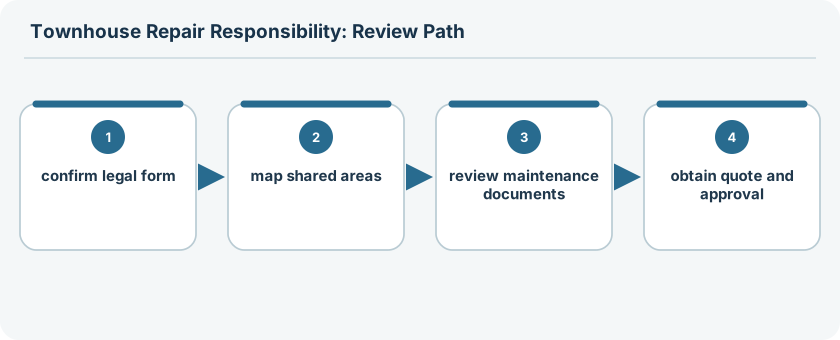
Before authorizing a contractor, ask:
- Who requested the diagnosis and who has authority to approve the permanent scope?
- Does the proposal include common property, an owner improvement, or both?
- Who pays for access, protection, demolition, disposal, permits, testing, and restoration?
- Could a change in hidden conditions create a shared assessment or an owner chargeback?
- Is the contractor required to carry specific insurance or follow association procedures?
- Who owns and maintains the repaired component after the work is complete?
- Does the work affect a neighboring unit, party wall, drainage path, or shared utility?
For structural, water, electrical, or other safety-sensitive work, use qualified professionals and current local requirements. The property’s legal documents should determine the responsibility path; the townhouse’s appearance should not.
Compare the townhouse plan with the maintenance matrix
For an attached townhouse, create a component list for roof, exterior walls, siding, windows, doors, balconies, patios, party walls, foundations, plumbing, electrical, drainage, landscaping, and shared drives or garages. For each, record whether the owner owns it, the association owns or maintains it, or the documents assign a special duty to the unit.
Pay attention to a fee-simple townhouse with an HOA. The owner may own the building but still be subject to architectural standards and an HOA duty for roofs, paint, landscaping, or shared infrastructure. In a condominium townhouse, the unit boundary and common-element rules may be materially different.
Exterior work and alterations
Before replacing a roof, window, door, deck, fence, solar array, heat pump, or drainage feature, check approval and access requirements. A private-looking exterior component can affect uniform appearance, water management, structure, and neighboring units. Keep approved plans, permits, invoices, warranties, and photographs.
If an owner alteration contributed to damage or must be removed for common work, identify the incremental cost and future maintenance duty separately. A contractor’s proposal should distinguish standard association work from an owner-requested upgrade.
Buyer and closeout review
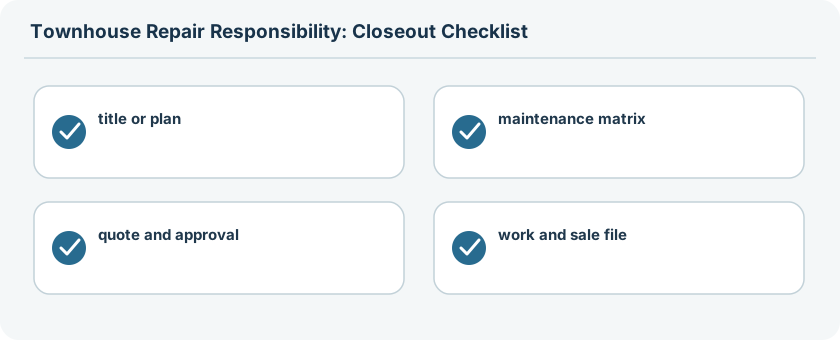
Buyers should inspect the declaration, maintenance matrix, HOA budget, reserve or capital plan, minutes, assessments, insurance, and prior exterior projects. Ask about recurring leaks, shared-drive work, retaining walls, drainage, party-wall access, and planned repainting or replacement.
At closeout, verify permits, testing, drainage, flashing, fire separation, finishes, and warranties. The practical townhouse answer is component-specific and document-backed; a building form alone cannot allocate the repair.
Keep the maintenance matrix and final project records with the deed or unit file. A future owner needs the approval, permits, warranties, and association allocation for roof, exterior, party-wall, drainage, and shared-service work.
Example: a fee-simple townhouse roof
A fee-simple townhouse owner may own the roof but remain subject to an HOA exterior standard, while another townhouse project may place roof replacement with the association. Check the recorded plan and maintenance matrix. The project file should identify the contracting authority, approval, insurance, cost, and future maintenance before work begins.