
When wastewater is backing up, an emergency provider may be called to reduce immediate risk and restore temporary storage. The bill can include an after-hours callout, pumping, difficult access, disposal, and an initial diagnosis. Pumping is a stabilization step, not a universal repair. It cannot by itself fix a blocked outlet, failed pump, saturated soil, or drainfield whose treatment capacity has been lost.
Routine U.S. pumping comparison
Angi’s July 2026 U.S. cost guide lists routine septic pumping at $292–$564, with a reported average of $428. That is a useful comparison point when reviewing an emergency quote, not a price for after-hours service, backup cleanup, diagnostics, or repair. Local urgency, tank access, volume, and provider availability can change the bill; the figure is not a Canadian price.
What the emergency bill may contain
Emergency pricing is local, and no reliable universal surcharge is available. Ask the provider to separate:
- dispatch, travel, and after-hours or holiday premium;
- locating and accessing the tank or pump chamber;
- pumping one or more tanks and hauling the contents;
- filter, outlet, pump, control, or alarm assessment;
- temporary use restrictions or a return visit;
- cleanup or indoor sewage remediation, which is a separate restoration scope.
The most important comparison is not just the emergency total. It is whether the visit leaves you with a documented next decision.
What pumping can and cannot do
Pumping may help when the tank is full from accumulated solids or when temporary storage is needed while a blocked component is addressed. It may reveal a damaged baffle, filter, or outlet after access is established. It does not establish that the drainfield can accept normal flow.
If a field is hydraulically or biologically failing, the tank can fill again after pumping. If a pump chamber is full because of a failed pump or control, pumping may buy time but leaves the equipment problem. If soil is saturated by flooding or groundwater, pumping can be unsafe or damaging and local professional direction controls the sequence.
Immediate safety boundaries
Reduce wastewater use and keep people and pets away from sewage. Do not enter a tank, open a tank casually, touch flooded electrical equipment, or perform improvised pumping or thawing. Tank gases can be dangerous, and sewage can contain pathogens. Use a qualified septic professional and local health or environmental authority guidance, especially where wastewater has entered the home.
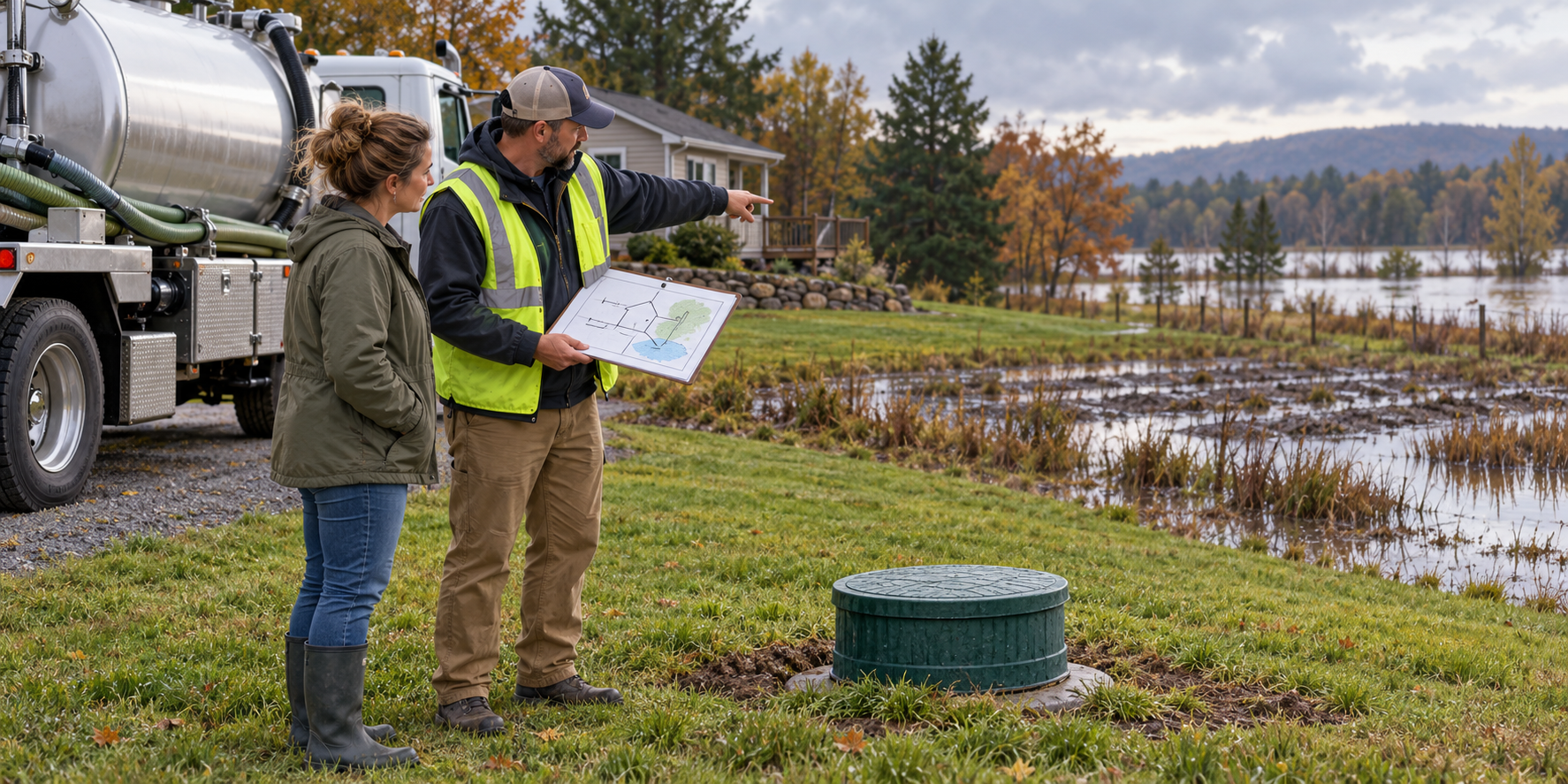
EPA flood guidance specifically warns against pumping during flooded or saturated drainfield conditions because a tank can try to float and damage inlet or outlet piping. That flood rule should not be generalized to every emergency, but it is a critical reason to tell the provider about flooding, high groundwater, recent installation, and soil conditions before service.
Stabilization scenarios
Full tank with dry, accessible site: A pump-out may create short-term capacity. Ask for a separate inspection or follow-up if the tank reached an unusual level, the outlet was blocked, or symptoms preceded the emergency.
Pump or alarm failure: Restrict use while a technician tests the pump, floats, controls, alarm, and power supply. A quote that replaces only the pump should state whether the controls and discharge path were tested.
Field or saturated-site problem: More pumping may not be the economical answer. The next cost may be diagnostic site work, a temporary use plan, drainfield repair or replacement, or a local authority decision. Do not approve a field excavation based only on an emergency symptom.
After the truck leaves
Request the tank level, visible condition, component findings, work performed, limitations, and recommended next step. Preserve the invoice and any photographs. Ask how long the temporary relief is expected to last only if the provider can connect that estimate to the observed condition; there is no safe universal duration.
If the system remains unusable, plan the permanent scope separately. A tank repair, pump replacement, distribution repair, or field project has different access, design, permit, restoration, and lifecycle economics. Indoor contamination cleanup belongs to the restoration category when it becomes the main project.
What a good emergency call accomplishes
Before dispatch, tell the provider whether water is backing up, which fixtures are affected, whether the tank or pump chamber is accessible, whether flooding or high groundwater is present, and whether electrical equipment is wet. That information can change the safe response and prevents a pump truck from arriving with an incomplete assumption.
After service, request the amount of work performed, the tank or chamber condition observed, any temporary restriction on wastewater use, and the next diagnostic step. A receipt that says only “pumped septic” may be inadequate for comparing a permanent repair. Keep photos and records, but do not ask a worker to expose a dangerous tank or saturated field merely to create documentation.
Emergency cost versus permanent cost
An emergency visit often buys time. Treat that time as a decision window, not as evidence that the system is repaired. If symptoms return, compare the cost of repeated pumping with an inspection, component repair, field investigation, or replacement plan. If the cause is a blocked outlet or failed pump, the permanent cost may remain localized. If the cause is field failure or saturation, additional pumping may have little value and can increase risk.
Indoor sewage cleanup, damaged finishes, and insurance claims should be priced separately. This category can explain the septic trigger, but it does not replace the restoration scope.