
Sharing a private road can make each household’s annual cost manageable, but only when responsibility, decision-making, and reserves are clear. Before buying or setting dues, identify the controlling documents, the work the group pays for, and how routine and capital costs are approved.
Start with the recorded rights and current records
Request the deed, recorded easements, maintenance agreement, association rules or bylaws, recent meeting minutes, insurance information, current budget, reserve balance, unpaid assessments, and contractor invoices. Confirm who owns the road, which properties benefit, who can authorize ordinary work, and what vote or approval is needed for a capital project.
Check the physical route against the recorded access. A paper easement may not show that the traveled road lies within the legal corridor, that the route reaches a public road, or that the road is passable year-round. Ask how snow, repairs, and emergency work are handled, and whether a new owner automatically joins an association or becomes responsible under an agreement. Use a title professional or local lawyer when access rights, voting, enforcement, or a proposed assessment could affect the purchase.
Maine DEP describes several forms of organized road management, while local plans such as Hornepayne’s address registered agreements and maintenance responsibilities. These are examples, not rules for every U.S. state or Canadian province. The recorded documents and applicable local law determine the actual obligations.
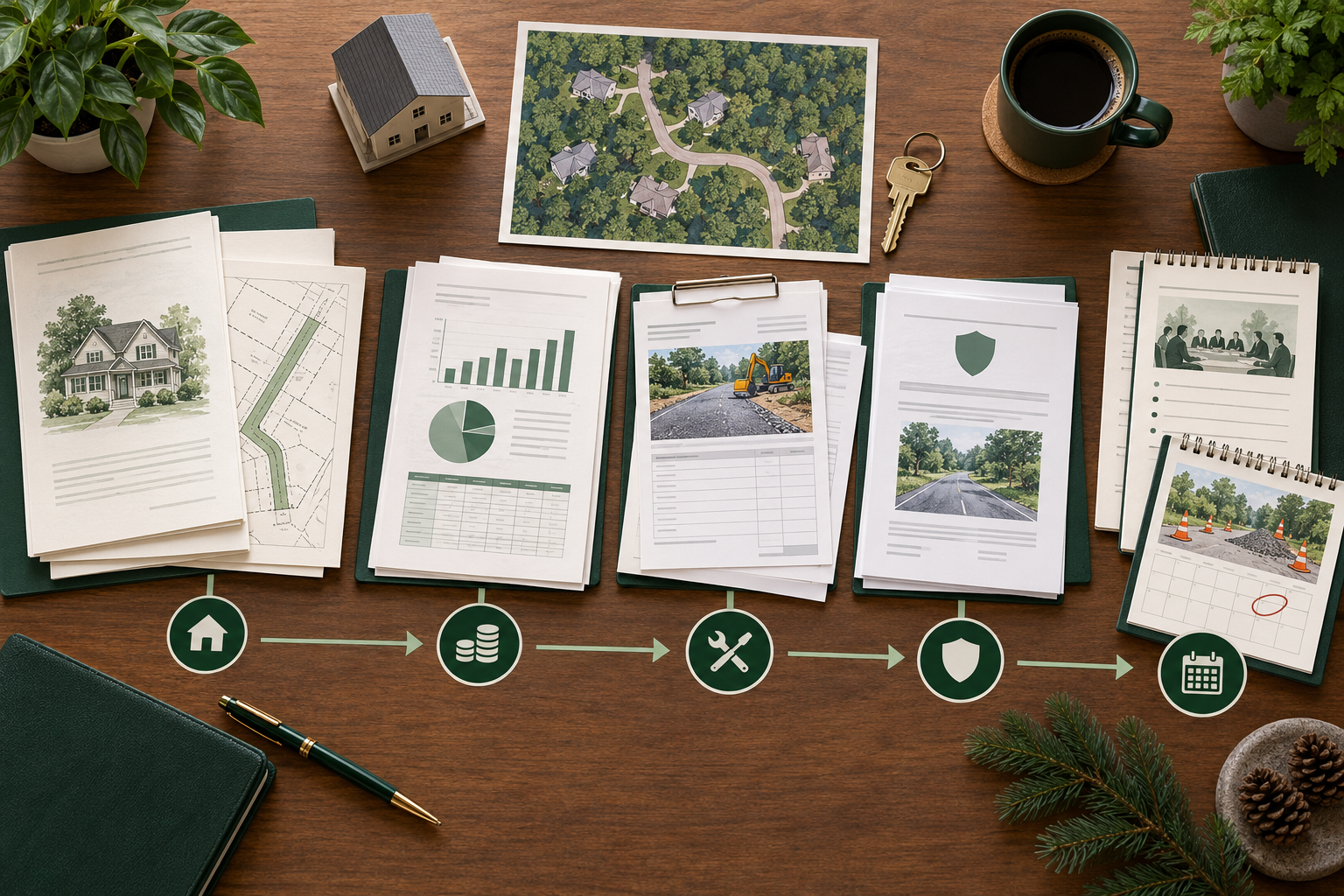
Choose a management structure that can make decisions
Some neighbors rely on a written maintenance agreement; others use an informal arrangement or a road association. Whatever the structure, owners need a workable way to approve routine service, collect contributions, retain records, and respond to urgent damage. A buyer should find out how the current group makes decisions, not only whether it has a formal name or bank account.
Do not assume a municipality will take over a private road after repairs. Local acceptance policies may require public access rights, work to a stated standard, owner approval, or a funding mechanism for future maintenance. Humboldt County describes one local process that includes easements, road improvements, and an assessment district; Hornepayne says even a road built to municipal standards need not be assumed by the Township. These examples support asking the responsible local authority what applies, not assuming either process is available for a particular property.
Build one annual budget from distinct cost layers
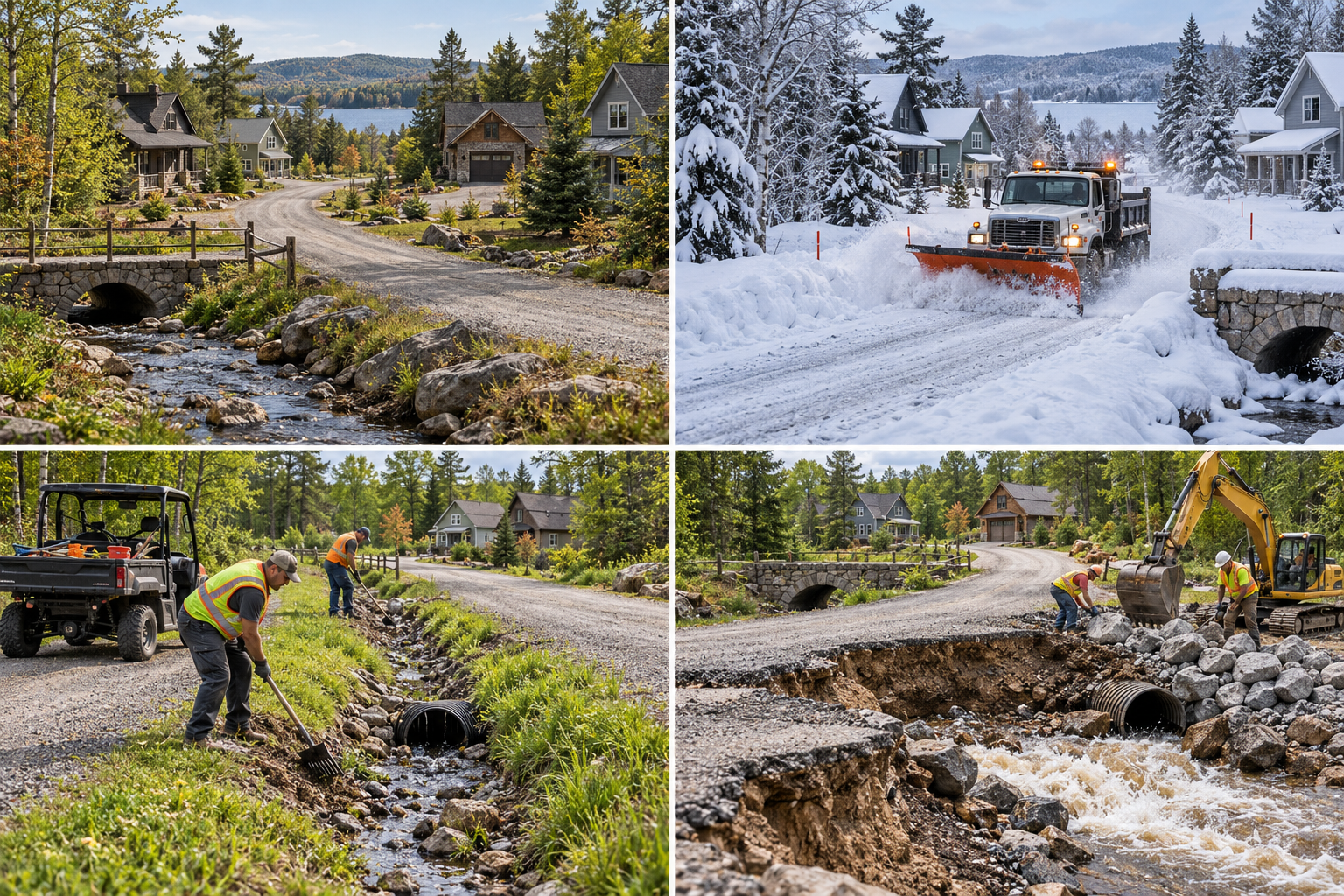
Keep the budget separated so owners can see recurring cash needs and future risk:
| Budget layer | Examples | What to record |
|---|---|---|
| Routine work | Grading, gravel, ditch cleaning, vegetation | Contract or recent invoice, route, service level |
| Seasonal operation | Plowing, sanding, storm response, spring cleanup | Trigger, timing, access standard, exclusions |
| Capital reserve | Culverts, road base, resurfacing, bridges, drainage | Condition, likely scope, estimate source, reserve target |
| Emergency exposure | Washout, blocked access, urgent stabilization | Who may authorize work, spending limit, cash call |
| Administration | Insurance, accounting, records, legal or engineering help | Separate visible allowance and responsible contact |
Show which amounts come from a signed contract or recent invoice and which are planning estimates or unknowns that need bids. Do not hide engineering, insurance, mobilization, or administration inside a generic “road maintenance” total. Identify both the group’s expected annual cash need and any major work that could produce a separate assessment.
Compare allocation approaches without assuming a legal formula
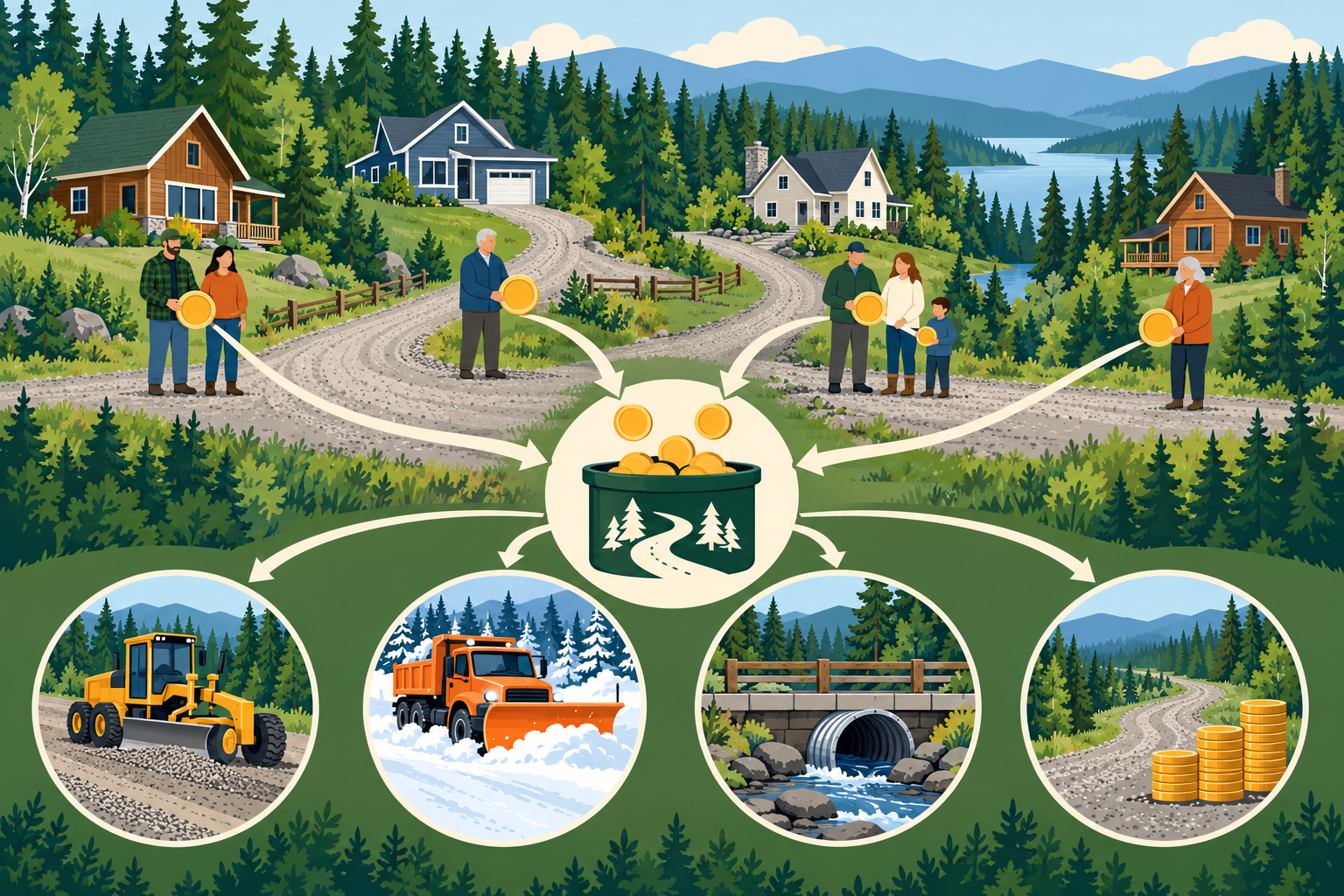
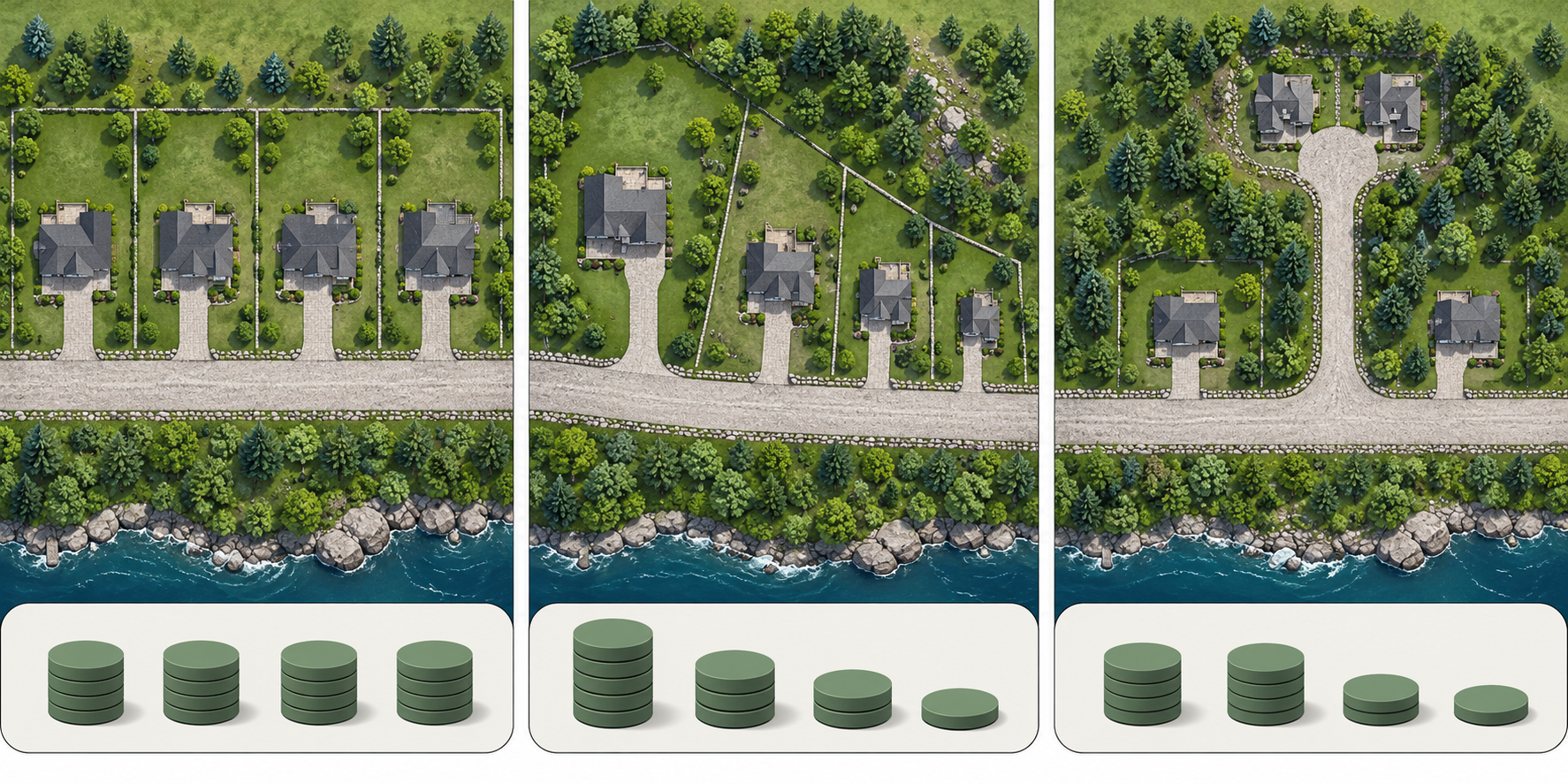
Owners may model costs as equal shares, in proportion to frontage or use, by benefit, or under another method. These are budgeting approaches, not a statement of what the law requires. First read the agreement and recorded rights; if there is no clear rule, ask qualified local counsel how the governing law applies before invoicing owners or treating a scenario as enforceable.
For planning, show the total road cost and each owner’s assumed share using the allocation units stated in the documents. If the result changes under a reasonable alternative, show both scenarios and explain what fact or document would resolve the difference. Separate work benefiting the full route from work on a spur or entrance that benefits fewer properties. Clark County’s local bridge covenant rules and the Ventura County summary of California easement law illustrate why one jurisdiction’s approach cannot be assumed elsewhere.
Specific statutes can set different defaults. Maine’s Title 23, §3121, says that for a residential property with a common benefit from a private road that is its primary access, a qualifying agreement, deed restriction, covenant or declaration, road association, or elected statutory method controls. If none applies, the statute provides for equal shares per residential property in reasonable and necessary repair and maintenance costs after due process and notice. Ventura County summarizes California Civil Code §845 as proportional to each owner’s use when there is no agreement. These rules have different scopes and exceptions; neither creates a national formula. Check the actual deed, road documents, and current local law before assigning shares.
Make contractor estimates comparable
Ask bidders to price the same road and service standard. Give each bidder the maintained route, including its length, width, branches, turnarounds, and access constraints. Specify aggregate quantity or surface work where known, drainage and culvert tasks, plowing trigger and route, mobilization, emergency callout, material delivery, exclusions, and how extra work is authorized. If the scope is uncertain, request a site visit and label provisional quantities instead of comparing incomplete totals as if they covered the same work.
Keep one record for each estimate: date, contractor, scope, unit or allowance, exclusions, expiration, and whether the price includes tax and mobilization. A shared contact can coordinate site access and collect the same information from each bidder. This improves comparison without replacing required association votes, notices, or approvals.
If the road includes a bridge, review the crossing’s ownership, maintenance covenant, inspection needs, and cost allocation separately from ordinary road dues. Clark County, Washington, does not maintain private bridges and requires a recorded covenant for certain Category A bridges serving more than three lots. Its local rules specify annual assessments and an equitable process for maintenance, repair, and rebuilding; they do not establish another county’s requirements. A 2023 Byron Bethany Irrigation District packet describes a proposed contribution toward one private bridge replacement in return for a perpetual access easement. That project-specific proposal is neither a typical bridge price nor a generally available subsidy. See the private bridge guide before treating a crossing as a routine road line item.
Tie reserves to condition and likely work
Set a reserve from identified assets and expected work, not from a round number that merely produces a comfortable annual payment. List road segments, culverts, bridges, retaining features, and drainage problems separately. Record their known condition, the next assessment or inspection need, a conceptual work scope, and where the estimate came from. A weak estimate should remain provisional until a site assessment or comparable bid is available.
Keep capital reserves separate from annual operating bills. A road association’s current dues may cover grading and snow but still leave owners exposed to a major culvert, base, or bridge assessment. A local assessment or funding mechanism does not prescribe a reserve amount for another road.
Agree on authority before an emergency
Write down who may order routine service, what vote approves capital work, how much may be spent urgently, how owners are notified, and whether one owner may advance funds before reimbursement. Include payment dates, access to records, and a process for disputing a charge. Emergency authority should allow prompt stabilization while setting a threshold and requiring documentation so one owner cannot commit the group to an unrelated upgrade.
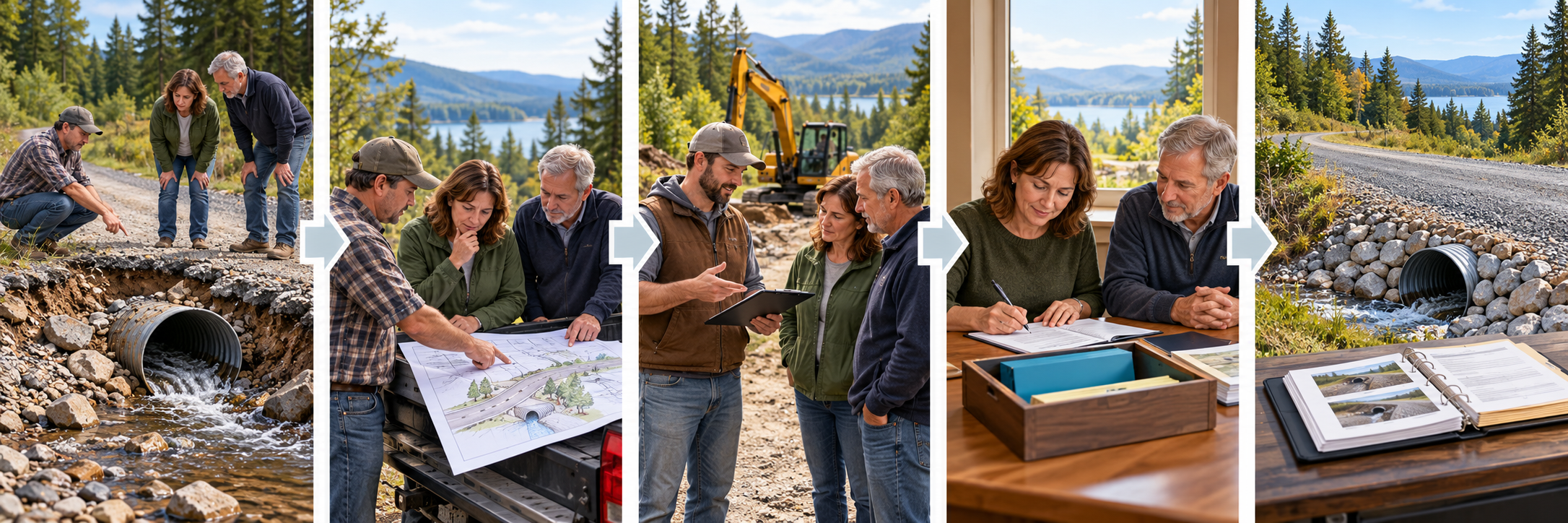
Ask how the group handled its last washout or urgent repair: who contacted the contractor, how owners were notified, how the invoice was allocated, and whether the decision process worked. A calm-year budget may conceal a process that cannot act when a delay threatens access. Keep the contact list, road map, approval, estimate, photographs, invoice, permits, and maintenance instructions together for authorized owners.
Check the obligation before buying
Ask the association or seller for several years of spending, current dues, reserve balance, planned work, unpaid shares, pending votes, contractor commitments, and approved or proposed assessments. Confirm when any change takes effect and request written confirmation. Ask what insurance covers and excludes; verify policy details with the insurer or broker instead of assuming that every owner, vehicle, visitor, or liability is covered.
Compare the expected annual contribution with the road’s condition and service standard. A low current payment does not prove that ownership is inexpensive if maintenance is deferred or no reserve exists. Treat recurring dues as cash costs and a possible special assessment as a separate risk. Do not divide the reserve equally among owners unless the agreement supports that calculation.
For a buyer, the useful output is a clear estimate of the likely annual obligation, plus separate disclosure of capital and dispute exposure. A written budget should show the full cost, each owner’s assumed share, the reserve contribution, the allocation basis, and the documents or estimates behind each assumption. When the allocation or access right is uncertain, resolve it before relying on the estimate in a purchase decision.
Keep the records useful for the next owner
Store current contact details, governing documents, approved budgets, contractor agreements, invoices, maps, permits, reserve statements, inspection reports, and major-work records together. Note the date and status of assessments and identify how a new owner joins association communications. A spreadsheet can help explain a budget, but it does not replace the recorded agreement or official records. A clear handover lets the next owner see what the road costs, who can make decisions, and what work is already planned.