
Routine private-road work is a recurring infrastructure expense, not a one-time driveway project. A useful budget separates surface grading and aggregate from ditches, culverts, erosion repair, vegetation, snow damage, and the mobilization required to bring equipment and material to the road.
What routine maintenance can include
- inspection after wet weather and spring thaw;
- grading to restore a usable crown and correct ruts or potholes;
- adding or replacing surface aggregate;
- cleaning ditches and keeping culvert inlets and outlets open;
- repairing minor erosion and stabilizing vulnerable shoulders;
- trimming vegetation and maintaining sight distance;
- correcting damage after snowplowing or heavy storms;
- mobilization, traffic control, and temporary access.
The appropriate scope depends on the road’s base, drainage, slope, material, traffic, and weather. A surface treatment will not remain durable if water is entering the base or leaving the road without a controlled outlet.
Build the maintenance estimate by task
Ask the contractor to show:
| Scope | Quantity or assumption to record |
|---|---|
| Grading | Road length, width, number of passes, and equipment access |
| Aggregate | Material type, depth, source, delivery distance, and spreading |
| Drainage | Ditch length, culvert cleaning, outlet stabilization, and disposal |
| Erosion | Locations, cause, repair material, and whether engineering is needed |
| Vegetation | Clearing limits and disposal |
| Mobilization | Travel, equipment transport, minimum charge, and setup |
| Winter damage | Spring correction, washout response, and emergency premium |
Road length alone is not a reliable price model. A short steep road with poor drainage can require more work than a longer, well-formed road with easy material access.
Annual work versus periodic work
Keep ordinary annual cash expenses separate from periodic projects. A road may need one inspection and grading visit in a favorable year, several aggregate deliveries after a wet season, and a larger drainage or base correction every few years. Shared roads also need an allocation method and a reserve for work that benefits every user.
Maine DEP describes organized road associations as one way to manage shared maintenance. That is a Maine example, not a universal legal structure. For any property, review the deed, road agreement, association records, and local law.
Public-road figures can help identify scope questions but are not private-road bids. Stevens County, Washington, says paving a gravel road to County standards can range from $150,000 to $500,000 per mile; its grading is generally twice a year when moisture permits. The County does not state a comparable private-road scope, price date, complete inclusions, or an ISO currency code for its dollar figure. Washington County, Iowa, separately reports about $2,000 per year to maintain a well-traveled gravel road without giving its length or work breakdown. Keep these public-system observations separate and obtain local private-road proposals with the same quantities and service standard.
Know when maintenance is no longer enough
Repeated grading, persistent soft spots, washouts, standing water, failing culverts, loss of crown, or exposed base indicate that the road may need drainage correction, resurfacing, base repair, or reconstruction. Price that work separately rather than hiding capital rehabilitation inside the annual maintenance allowance.
Turn the road into measurable work
Before asking for a maintenance price, describe the road as a contractor would need to understand it. Record the maintained length and width, surface type, number of spurs and turnarounds, steep grades, tight curves, low branches, gates, and any places where a truck or delivery vehicle cannot pass. A simple map with photos is often more useful than a parcel-area estimate. Note the usual vehicle loads and whether emergency vehicles, fuel trucks, or septic-service equipment must reach the home.
Measure recurring defects separately. Mark potholes, soft sections, standing water, wheel ruts, eroded shoulders, loose aggregate, blocked ditches, and culvert locations. Record whether each problem appears after ordinary rain, spring thaw, heavy vehicle use, or one extreme storm. This history helps distinguish routine grading from drainage failure. A grader can smooth the surface, but repeated grading without correcting water flow may simply reproduce the same cost.
Compare routine proposals on the same basis
Ask contractors to identify each visit and operation rather than quote an undefined annual service. A useful proposal states:
- The road segments and turnaround areas included, with approximate length and width.
- Number or trigger for grading visits, and whether dispatch is scheduled or owner-requested.
- Aggregate type, source, quantity, delivery method, compaction, and whether spreading is included.
- Ditch, outlet, shoulder, brush, and culvert work included or excluded.
- Mobilization, travel, minimum-hour charges, fuel surcharges, and equipment limits.
- Weather delays, emergency response terms, payment schedule, and any work requiring a separate authorization.
Treat gravel delivery as a quantity problem. The proposal should show the intended layer thickness and volume, not only the truck count. Ask how the supplier converts loose volume to a delivered tonnage and whether the material is suitable for the existing base and drainage. If the contractor expects the owner to arrange aggregate, separately price hauling and placement so the apparent saving does not omit the hardest part of the work.
One western Washington provider publishes roadwork packages based on a 10-foot road width, with length bands and separate mobilization charges. That is a provider-specific illustration of why width, distance, and mobilization belong in the scope; it is not a local estimate for another property or a national rate. Its page does not state an ISO currency code or a pricing date, and its packages should not be treated as a complete annual maintenance plan. Use current bids from the property’s market for the budget.
Build an annual schedule and reserve
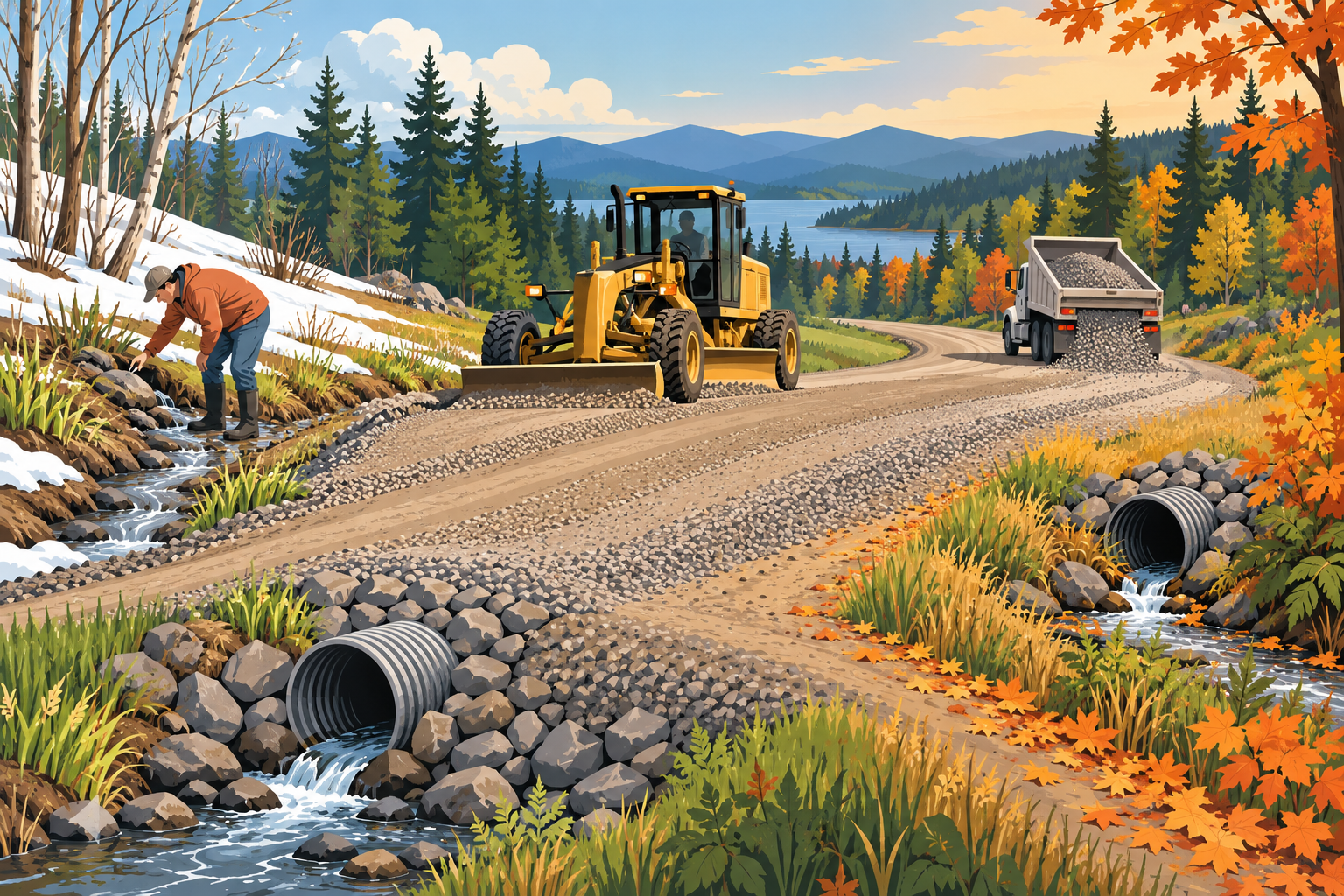
List planned work by season. A spring inspection can identify frost movement, washouts, and blocked outlets; dry-season grading can restore crown when soil conditions allow; fall work can clear drainage before storms or freeze; winter work belongs in a separate access plan. The right timing depends on local climate and road material. Ask the contractor when traffic should be restricted after placement or grading.
Keep the annual operating budget distinct from capital repairs. Ordinary grading, routine ditch cleaning, and a planned amount of aggregate may recur every year. A failed culvert, deep soft base, major washout, retaining structure, or full-length rebuild belongs in a separate reserve or capital plan. Do not assume that one year of light maintenance proves the road will remain inexpensive: inspect the whole route and ask what condition would trigger a larger project.
For a shared road, document the approved service standard and who can authorize extra work. A low-price contract that excludes the troublesome spur, gate clearing, or emergency mobilization may not deliver access to the home. Ask whether the contractor can reach the site with the equipment shown in the proposal and what happens when weather prevents the scheduled visit.
Keep copies of invoices, delivery tickets, photographs, and notes about rainfall or freeze-thaw conditions. After each season, compare planned and completed quantities and record new failures. That history gives the next bidder an evidence-based scope and makes year-over-year changes easier to explain. An annual road budget is credible when it names the tasks, assumptions, material source, access conditions, exclusions, and response plan for a severe-weather event.
Verify progress and adjust the next season
If a road segment has a weight restriction, post or communicate it to fuel, water, waste, and construction providers before scheduling service. Keep a copy of any road-use conditions with the quote request so a contractor can price the correct equipment and avoid damage.
Set a simple acceptance record before the contractor begins. Identify the expected crown and drainage direction, what should happen at driveways and turnarounds, and where material should not be pushed. After work, compare the finished surface with those expectations and note any soft spot or outlet that still holds water. If the road is shared, give owners a copy of the schedule and a contact for reporting new damage so a contractor is not dispatched twice for the same condition.
Use delivered-material tickets and actual equipment hours to reconcile a time-and-materials invoice. Ask the contractor to explain a large variance from the quote and whether it reflects extra quantity, hidden conditions, weather, or a scope change. Keep additional work authorization in writing. This gives the owner a defensible basis for next year’s maintenance allowance and reveals whether a recurring “extra” should become a planned line item.
Finally, check whether planned grading or hauling may damage roadside drainage, landscaping, utility markers, gates, or neighboring property. Confirm responsibility for marking buried services before excavation and for repairing damage from heavy equipment. A maintenance plan should state any seasonal weight limits or restrictions after a wet period. When those site constraints are included in the quote, the annual cost is more predictable and the work is less likely to create a new repair.
If the road is maintained by an association, confirm whether routine work requires a vote or can be ordered by a designated officer. Record the approval date and contractor contact with the invoice. For an individual driveway, keep the private-road maintenance plan separate from municipal services so the household does not assume a public crew will clear or repair a privately owned segment.
Define the expected road condition
A maintenance agreement should say what the owner expects after the work: a passable route for ordinary vehicles, prepared access for deliveries, or a broader road standard set by an association. Describe the outcome and seasonal limits without promising emergency access that a contractor cannot guarantee. Identify who reports a defect, who decides whether a response is urgent, and how an after-hours dispatch is approved. Keep a short log of rainfall, frost, traffic, grading, and aggregate delivery so recurring damage can be traced to a season or location. This record can show when routine maintenance is still suitable and when the owner should ask for drainage or base assessment before booking another surface pass.