
“Metal roof” covers materially different systems. A current US specialist model puts a simple builder-grade metal roof around $18.60 per square foot, versus roughly $5 for basic asphalt in the same model. Real residential metal projects can fall below or far above that comparison depending on panel type, metal, fabrication, geometry, substrate, trim, coatings, access, and region.
The premium buys a different assembly and ownership profile—not a universal guarantee of lower lifetime cost.
Know which metal system is being quoted
- Standing seam uses raised seams and generally concealed clips or fasteners in the weathering surface.
- Exposed-fastener panels attach through the panel surface and usually enter the market at a lower installed price.
- Metal shingles or tiles create a unitized appearance and use system-specific interlocks, clips, flashings, and trim.
Agricultural panels, premium architectural standing seam, stone-coated metal, and metal shingles should not be compared as one line item.
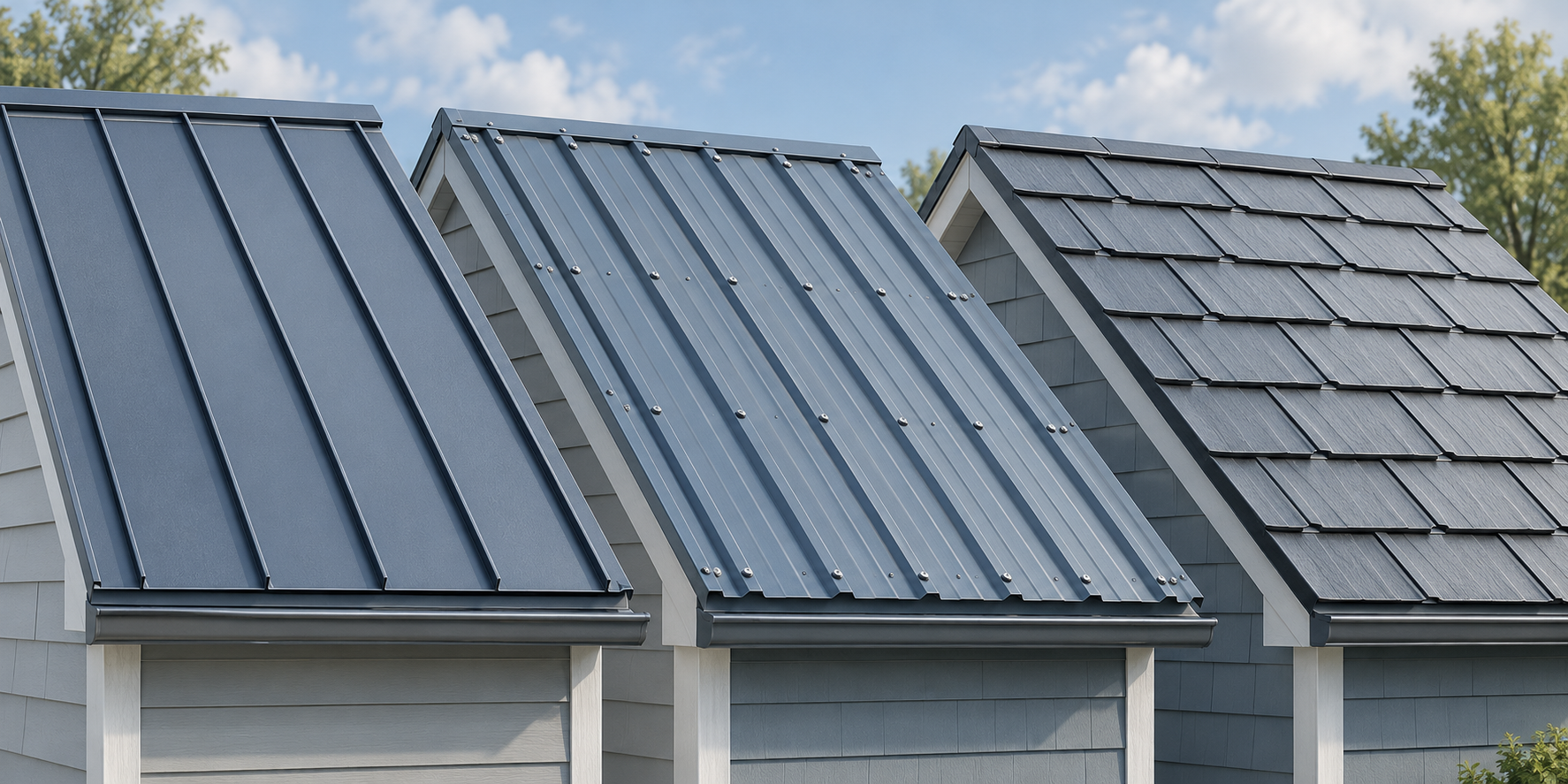
Installed-cost structure
Material thickness, coating, metal type, panel width, seam profile, clips, underlayment, trim, valleys, curbs, snow accessories, and custom fabrication all affect material cost. Labor rises with difficult geometry because every valley, dormer, wall, penetration, and short plane needs metal-specific detailing.
Long panels require delivery, handling, and space. Site-formed panels may need fabrication setup. A remote or constrained property can make logistics a larger factor than nominal product price.
Tear-off and substrate decisions
Some metal systems may be installed over an existing covering when the product, substrate, structure, and local rules permit. That can reduce tear-off but does not automatically create a sound flat substrate or reveal concealed decking. Battens or other preparation may be proposed; their purpose and compatibility should be explicit.
Full tear-off provides better access to the deck and flashing interfaces. It also adds disposal and labor. Compare both paths only if the manufacturer, contractor, and authority having jurisdiction support them for the actual assembly.
Geometry and detailing
Metal trim is not an afterthought. Eaves, rakes, ridges, valleys, sidewalls, chimneys, skylights, vents, and transitions need compatible details that accommodate water and, where relevant, thermal movement. Complex roofs produce more cuts and waste and may require short custom panels.
A low price based on open rectangular planes can be misleading for a house with many penetrations. Ask for a detail inventory and confirm whether all flashings are new.
Ownership economics
Metal can offer a long service horizon in a well-designed and installed system, but comparable universal lifespan data across all products and climates is not established here. Coatings can weather, exposed fasteners and seals may require attention, panels can be dented, and future matching depends on product availability.
Maintenance differs by system. Exposed-fastener roofs place more serviceable components in the weather surface. Standing seam shifts the investment toward concealed attachment and specialized detailing. Metal shingles create another repair pattern. Obtain product-specific inspection and maintenance guidance.
Snow, wind, and heat claims
Smooth metal surfaces can shed snow suddenly under some conditions, making snow-retention and pedestrian areas a design question. Exact need depends on roof geometry, climate, entrance locations, and local practice. Wind performance depends on the complete tested or engineered assembly, not the word “metal.”
Reflective finishes can contribute to cool-roof performance, but color name alone does not establish solar reflectance or savings. Product ratings and building/climate conditions control.
Three scenarios
Simple exposed-fastener project: Open rural gable, easy panel delivery, straightforward trim, suitable substrate. This can narrow the premium over asphalt but carries its own maintenance considerations.
Typical residential standing seam: Tear-off, underlayment, concealed-clip panels, custom eaves/rakes/ridge, several penetrations. Skilled labor and fabrication dominate the premium.
Complex architectural metal: Multiple valleys, dormers, curved or short planes, premium metal or finish, snow accessories, and difficult access. Costs can exceed broad published averages substantially.
Metal versus asphalt
Compare installed price, ownership horizon, design fit, future repair availability, maintenance, climate exposure, roof geometry, and the cost of capital. If you expect to sell soon, you may not recover the premium. If you intend long ownership and value the system’s appearance or repair cycle, higher upfront cost may be rational.
Do not justify the choice with one claimed lifespan divided by price. Use product-specific evidence, conservative maintenance assumptions, and at least one replacement-cycle scenario for asphalt without pretending the future is certain.
Quote checklist
Require exact system, metal and coating, panel profile and thickness where relevant, attachment, substrate preparation, tear-off, underlayment, trim details, penetrations, snow accessories, gutters, ventilation, deck allowance, finish warranty, workmanship coverage, and installer experience. A metal roof quote is only comparable when the assemblies—not merely square-foot prices—match.
Common adders and exclusions
Chimney/skylight curbs, complex valleys, custom gutters, snow retention, roof ladders or access systems, solar attachment, lightning protection claims, and structural modifications are not automatic. Ask whether existing penetrations are reflashed with system components or worked around.
Oil canning, dent appearance, finish variation, corrosion environment, and noise are often discussed broadly. Require product- and assembly-specific context. Underlayment, deck, attic, rain intensity, panel geometry, and viewing angle can affect the concern.
Repair and replacement planning
Ask how one damaged panel or shingle would be replaced, whether long panels require removing ridge/edge trim, and where matching stock comes from. Keep exact finish and panel records. A system that lasts a long time still needs an economically credible repair path.
Future repainting or recoating is product and condition dependent. Do not insert a universal maintenance interval into lifecycle comparisons.
Alternatives
Asphalt can preserve capital and suit complex geometry. Synthetic products can offer premium appearance at different weight. Tile or slate creates another structural and specialist profile. Exposed-fastener metal may reduce upfront price relative to standing seam. Compare complete systems serving the same roof and aesthetic requirement.
Financing the premium
If the metal upgrade is financed, include interest and the likelihood that you remain in the home long enough to receive ownership value. If paid in cash, consider the opportunity cost without assuming a guaranteed resale premium. Durability claims should be conservative because product, coating, installation, and exposure vary.
Normalize metal-roof proposals
Record the panel or metal-shingle system, substrate, underlayment, attachment, metal and finish specification, trims and closures, valleys, eaves, ridges, penetrations, ventilation, tear-off, deck allowance, access, and snow or solar accessories. “Metal roof” is not a sufficient line item: standing seam, exposed-fastener panels, and formed metal shingles have different labor, maintenance, and repair paths.
Confirm whether the quote is for panels formed on site or delivered, how long panels reach the roof, and what staging or crane assumptions apply. Complex geometry creates short pieces and custom transitions; a simple square-foot comparison can conceal substantial fabrication and waste.
Use the same roof boundary in every bid. Porches, low-slope areas, dormers, detached garages, and wall cladding transitions are easily excluded or assigned another system. Also normalize deck preparation and whether the proposal removes old roofing or installs over an accepted existing surface.
Low, typical, and complex installed cases
A low-complexity case has long simple runs, accessible staging, few penetrations, a suitable deck, and one clearly specified system. Material and forming remain meaningful, but production is efficient.
A typical residence adds valleys, hips, dormers, plumbing penetrations, chimney or wall details, and localized deck work. Trim, closures, and installer time can move the total more than a small change in metal price.
A complex case combines cut-up geometry, long-panel handling constraints, solar, snow-management needs, specialty gutters, incompatible substrate, or extensive custom flashing. The accessory and coordination package must be designed with the roof rather than priced as generic add-ons afterward.
Test the ownership case without a lifespan promise
Compare the metal premium with a complete suitable alternative, not the cheapest incomplete asphalt quote. Include financing, tear-off assumptions, planned ownership, maintenance access, repair availability, and whether future solar or equipment work will disturb long panels. Model a range of future interventions instead of assigning either material a guaranteed number of years.
For a short horizon, aesthetics, current resilience preference, and potential buyer appeal may matter, but recovery is uncertain. For long ownership, system documentation, local service capability, finish repair, and replaceable components matter alongside durability. Exposed fasteners introduce a different inspection burden; concealed clips reduce field exposure but do not remove maintenance from edges, sealants, penetrations, or coatings.
A higher first cost is justified when the exact system, installer, site, and ownership priorities support it. It is not justified merely by the word “metal.” Request an alternate for the next-closest suitable system so the premium and sacrificed features are visible.
Read the metal quote beyond area price
“Standing seam” should identify seam/profile, clips or attachment, panel/metal specification, finish, substrate, and closures. “All flashings included” should list valleys, walls, chimney, penetrations, eaves, rakes, ridge, and transitions. “Lifetime roof” is not a usable cost line; request product warranty, finish warranty, workmanship responsibility, exclusions, and repair process.
Ask for installed alternates for exposed-fastener metal, metal shingles, or asphalt only where each suits the building. Keep deck, tear-off, ventilation, and water-control details constant. This makes clear whether the owner is paying for panel system, finish, appearance, reduced exposed attachment, or unrelated project work.
Finally, retain extra compatible material if practical and all forming/profile records. Long ownership value depends partly on being able to perform a bounded future repair without replacing a full elevation for lack of identification.
Final decision checklist
Confirm exact system, suitable slope/substrate, tear-off or overlay basis, panel delivery and handling, water-control details, snow/gutter/solar interfaces, finish, service path, warranty remedy, concealed-condition process, and installed alternative. Then state why metal is preferred: architecture, a verified performance feature, ownership horizon, maintenance profile, or personal preference. If that reason disappears when the full installed premium is visible, select the coherent lower-cost assembly instead.
Closeout documentation
Keep panel profile and forming information, metal/finish specification, clip or fastener system, trims and closures, underlayment and deck work, concealed photographs, touch-up limitations, snow/solar attachments, warranties, and spare material. A later provider should be able to repair one panel or penetration without reverse-engineering the entire roof.
Low, expected, and difficult totals
The low case uses simple long runs, clear staging, suitable deck, and few details. The expected case adds custom valleys/penetrations, ordinary deck correction, trim, gutters or snow interfaces, and controlled fabrication waste. The difficult case combines cut-up geometry, long-panel handling, solar, specialty drainage, restricted access, or structural/substrate changes.
Hold the exact metal system constant across these cases. Then price the alternate system under the same geometry. This separates the panel premium from the building conditions and keeps a difficult project from being mistaken for a universal metal-roof price.
Uncertainty boundary
Metal and labor markets, freight, custom forming, and concealed deck conditions vary locally. Obtain current installed bids and controlled alternates rather than converting a broad market observation into a promise. The economic framework remains valid because it compares complete systems, not a universal unit price.