
A cool-roof upgrade may be a modest product premium during planned replacement or a separate coating/restoration project costing several dollars per square foot. The correct comparison is incremental installed cost at the time work is already needed, not the price of replacing a sound roof solely for reflectance.
What “cool” means
ENERGY STAR describes cool roofs through two properties:
- solar reflectance: the fraction of sunlight reflected;
- thermal emittance: the ability to release absorbed heat as infrared radiation.
Light color can help, but rated products in other colors exist. Product ratings, including aged values where available, are more useful than names such as “white,” “energy efficient,” or “cool metal.”
Available approaches
Low-slope options include reflective membranes and compatible coatings. Steep-slope options can include rated shingles, metal finishes, or tile. A coating is not suitable for every covering and should not be used to avoid necessary substrate repair.
When reroofing, ask bidders to price a conventional and rated reflective option with otherwise comparable assembly scope. For restoration, separate roof-preservation value from energy value.
Where the economics are strongest
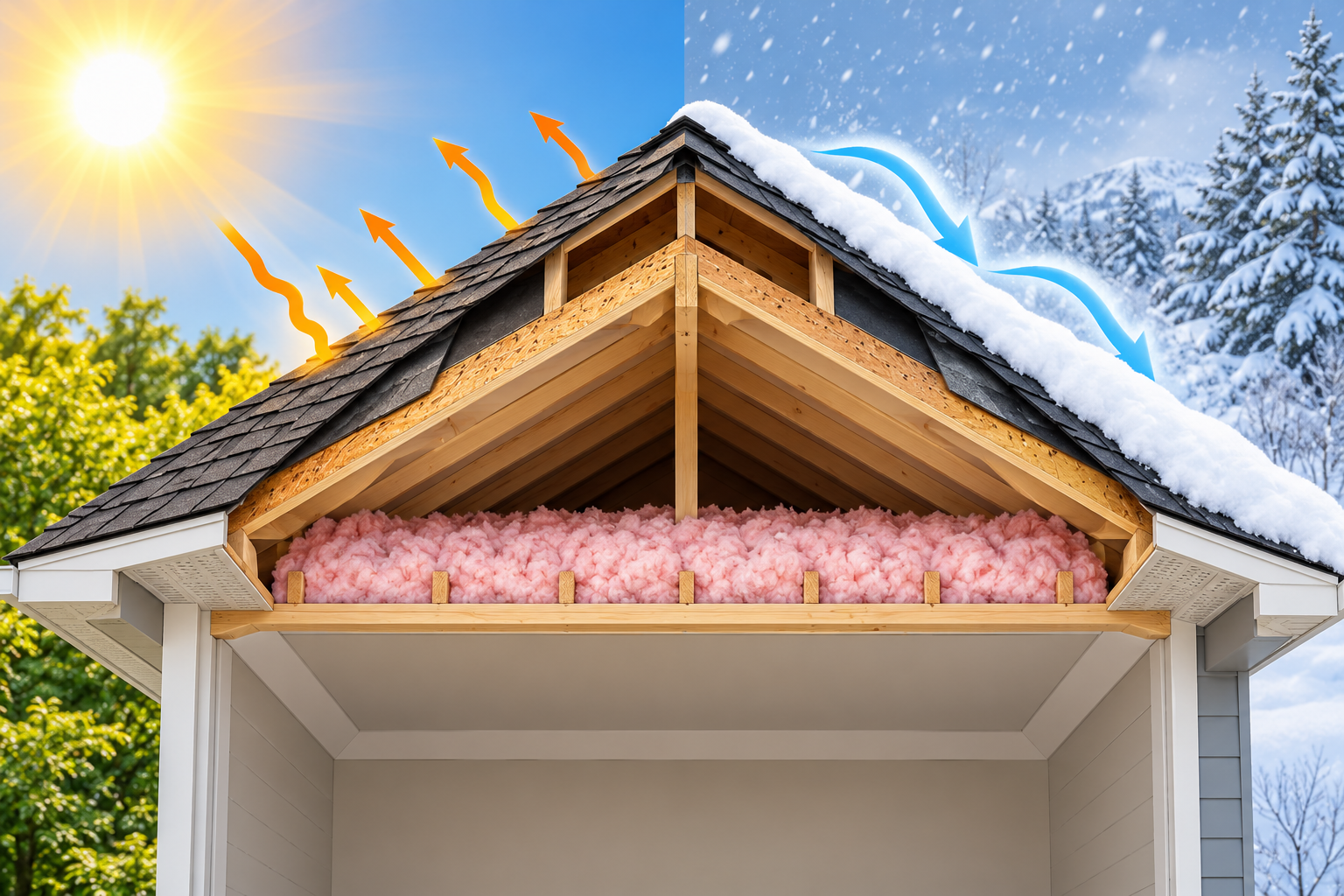
Cool roofs generally save more cooling energy in hot, sunny climates and on buildings with lower roof-insulation levels. They may improve top-floor comfort and reduce peak roof temperature. Savings shrink when the roof is shaded, insulation is strong, air-conditioning use is low, or heating dominates.
Reduced winter solar gain can increase heating demand in cold climates. That does not make cool roofs universally bad in Canada or northern US markets; it means the building and climate need evaluation.
Incremental-cost model
Calculate:
- added product and labor cost over the roof you would otherwise buy;
- any avoided cost because reflectance is built into a required replacement or coating;
- expected cooling and possible heating effect;
- maintenance, cleaning, reflectance aging, and recoat assumptions;
- incentives or requirements verified for the location.
Avoid payback based on a universal percentage saving. Utility rates, HVAC efficiency, insulation, occupancy, roof area, climate, and product aging all matter.
Comfort versus bill savings
Top-floor comfort can be valuable even when modeled dollar payback is long. A hot low-slope addition with limited insulation may benefit more than a well-insulated vented attic where the roof surface is separated from conditioned space.
If discomfort is driven mainly by air leakage, insufficient insulation, duct losses, or undersized HVAC, a roof-color change may not be the best first investment. Coordinate rather than assuming one measure solves the enclosure.
Requirements and incentives
Some locations have cool-roof requirements, rebates, loans, or program credit. These are changeable and jurisdiction-specific. Verify current eligibility, product rating, application, contractor, and filing requirements before treating money as part of the project budget.
Scenarios
Hot-climate reroof: Rated reflective membrane costs only modestly more than a conventional alternative. High sun exposure and cooling load make the incremental case strongest.
Coating an eligible aging roof: Restoration is justified on roof condition, with reflectance as an additional benefit. Compare future recoating and replacement.
Cold-climate steep roof: Appearance, snow, heating, insulation, and product availability may matter more than reflectance. Do not assume energy payback.
Sound newer roof: Replacing it only to gain cool-roof performance usually destroys remaining value; consider other efficiency measures first.
Quote checklist
Request exact product, initial and aged rating, compatible assembly, incremental cost, preparation, warranty, local requirement or incentive basis, and maintenance assumptions. A cool roof is favorable when the rated surface fits the roof project and building energy context—not because reflectivity is universally beneficial.
Compare the upgrade at the right project stage
During required reroofing, the decision is the incremental price between compatible rated and conventional products. On an eligible low-slope roof, it may be part of a coating restoration justified independently. On a sound newer roof, a stand-alone coating or replacement must overcome the cost and risk of intervening early.
Model savings conservatively
Use local climate and utility rates, conditioned roof area, HVAC efficiency, insulation, air leakage, occupancy, shading, and aged—not only initial—reflectance. Include possible heating penalty. If no building-specific model is available, present energy savings as uncertain upside rather than guaranteed payback.
Comfort and peak-demand value may not appear fully in annual bill savings. State these as separate benefits instead of converting them into invented dollars.
Maintenance and aging
Dirt, biological growth, weathering, recoating, and surface wear can change reflectance. Cleaning suitability and interval are product-specific. A roof that must be cleaned frequently for modeled performance may have different lifecycle economics than a low-maintenance conventional alternative.
Other investments
Air sealing, insulation, duct correction, shading, windows, or HVAC work may provide better or complementary comfort value depending on the building. The roof project should not absorb whole-home efficiency claims. If the top-floor problem persists at night or in winter, reflectance alone may be an incomplete diagnosis.
Procurement questions
Ask who verifies the rating, whether local code requires a minimum, which aged value is used, how repairs preserve the surface, and whether incentive paperwork is included. Never sign based on an incentive until eligibility and funding are confirmed.
Normalize the cool-roof increment
Compare the same roof assembly first: tear-off or restoration, substrate, insulation, drainage, flashings, accessories, access, and warranty. Then isolate the exact cool surface, color, rating, application quantity where relevant, compatible accessories, extra preparation, and maintenance obligations. A light-colored replacement membrane, a reflective metal finish, a rated shingle, and a field-applied coating have different base projects and should not be compared by material price alone.
Ask for initial and aged rating information from the applicable product record and confirm which value a requirement or model uses. If a coating is proposed, include eligibility testing, repairs, cleaning, primer, application control, details, and recoating assumptions. If a replacement product is proposed, compare its increment against an otherwise equivalent eligible roof.
Three economic cases
In a hot, sunny, cooling-dominated building with much roof area over conditioned space and weak shading, a suitable cool surface may support comfort and energy objectives. The installed increment can be modest when selected during an already-required roof project.
In a mixed-climate, insulated, or partly shaded residence, the direction of benefit may remain plausible while magnitude is uncertain. Model conservative savings and recognize possible heating tradeoffs. The upgrade may still be chosen for comfort, peak conditions, or a local requirement without promising short payback.
In a poorly diagnosed top-floor complaint, air leakage, insulation gaps, ducts, attic ventilation, windows, or HVAC can dominate. Buying roof reflectance alone risks spending on the wrong mechanism. A building-specific assessment or comparison of other improvements may have greater decision value.
Ownership and maintenance economics
Use the owner’s realistic holding period, financed or cash incremental cost, local energy rates, actual conditioned area, and conservative performance change over time. Keep incentives as a verified reduction only after eligibility, application, inspection, and funding are confirmed. Do not count uncertain resale value or unchanged peak equipment size as guaranteed savings.
Surface aging and cleaning matter because modeled reflectance may not remain at the initial value. Ask whether safe compatible cleaning is expected, who can perform it, and whether it changes warranty. For coatings, include a conservative next-intervention reserve rather than assuming perpetual recoating or one-time permanence.
Decision threshold
Choose the cool option when it is a suitable roof first, its installed premium is clear, and a requirement, verified incentive, comfort priority, or conservative energy case supports it. Reject a product that sacrifices water-control compatibility or relies on unverified savings merely to achieve a reflectance label.
If two compliant roofs have similar installed cost, the cool surface can be a reasonable low-regret preference. If the premium is large, compare air sealing, insulation, duct, shading, and HVAC needs on the same capital basis before claiming the roof is the best efficiency investment.
Closeout for a measurable choice
Keep exact product and color, applicable rating record, installation or application evidence, incentive documents, warranty, cleaning limits, and baseline energy/comfort observations if savings mattered to the decision. Compare future bills only with weather, occupancy, and rate changes in mind. The purpose is not to prove a sales estimate exactly, but to preserve enough context to judge whether the upgrade remains worth maintaining.
Compare a no-upgrade case
Always include the same eligible roof without the cool premium. That baseline shows whether the owner is paying for a requirement, incentive-qualified feature, comfort preference, or modeled energy value. If the conventional option would require different maintenance or material, include that difference explicitly rather than crediting reflectance with every project change.
Final decision record
State the exact surface, initial and aged rating basis, installed increment, climate/building assumptions, incentive status, maintenance, alternatives considered, and nonfinancial comfort goal. Record a conservative case in which savings are small. If the upgrade remains acceptable there, its value does not depend on false precision; if it fails there, obtain better building-specific evidence before paying a large premium.
Ownership decision in one sentence
Choose the suitable cool option when the installed increment remains acceptable under conservative savings and its requirement, comfort, incentive, or energy rationale is explicit. Choose the suitable baseline when a large premium depends on optimistic modeling or distracts from higher-value building work.