
Angi’s August 2026 US-oriented guide gives a broad $630–$1,740 project estimate for adding residential gutters. Its currency, typical footage, inclusions, and price-sample method are not established, so treat it only as a source-specific planning point. For Canadian material context, RenoQuotes lists installed per-foot observations by material; neither source supplies a representative national bid schedule. Obtain a local quote for measured footage and full scope rather than converting between markets.
How installers measure scope
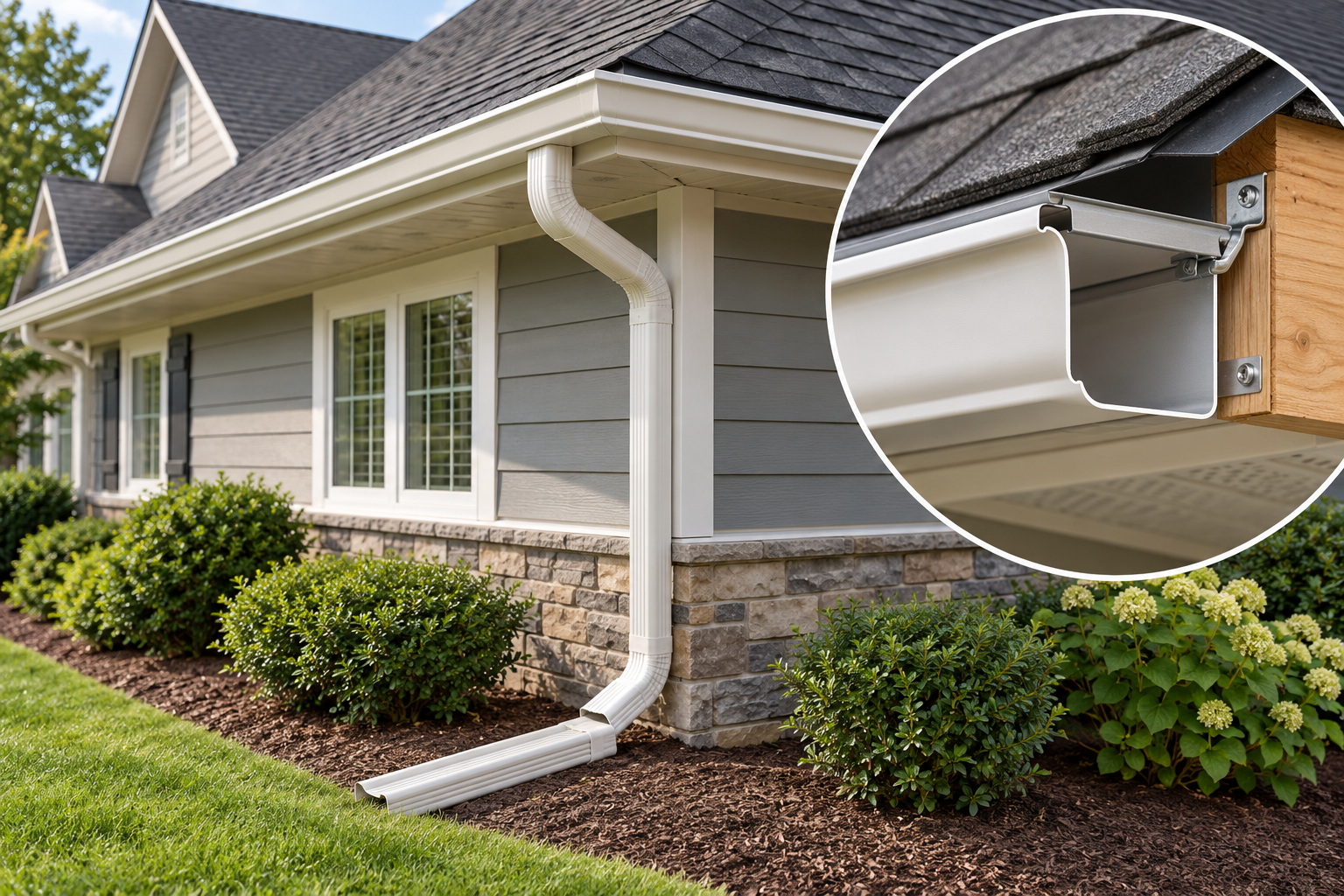
Linear footage is the starting point, but corners, outlets, downspouts, height, roof geometry, access, and fascia condition often explain why per-foot quotes differ. A long straight one-story run installs much faster than short second-story runs around bays and additions.
Ask for measured gutter footage and downspout footage separately, plus counts of corners and outlets.
Material and fabrication
Aluminum is a common reference, while vinyl, steel, zinc, and copper create different price, fabrication, weight, corrosion, appearance, and repair considerations. Material choice alone should not generate the entire decision; installer availability and complete layout matter.
RenoQuotes’ August 2026 Canadian guide reports these per-linear-foot installed observations for materials and labor:
| Material | Reported installed range (CAD/linear ft) |
|---|---|
| Vinyl | $4–$9 |
| PVC | $3–$10 |
| Galvanized steel | $5–$15 |
| Aluminum | $5–$13 |
| Copper | $18–$40 |
These are one specialist guide’s ranges, not a representative accepted-bid sample. Its regional mix and tax treatment are unclear, and the material rows do not consistently separate seamless from sectional work. Downspouts, old-gutter removal, disposal, guards, and fascia/soffit repairs may be separate; the guide does not price those add-ons. Ask for measured footage, fabrication type, and exclusions on each local quote.
Seamless gutters are field-formed into long runs but still have joints at corners, outlets, and end caps. Sectional products create more run joints and can be easier to replace in pieces. Compare installed systems, not material-only retail prices.
What a complete quote includes
- removal and disposal of existing gutters;
- new gutter runs, end caps, corners, and outlets;
- hangers/fasteners and attachment basis;
- downspouts, elbows, straps, and discharge extensions;
- finish/color and material gauge or profile where relevant;
- guard options priced separately;
- repair of fascia or roof edge, if included;
- site protection, cleanup, and water-flow check.
Downspout layout
Government of Canada guidance notes a common planning guideline of one downspout per 6–12 m (20–40 ft) of eavestrough, but this is not a universal sizing rule. Roof area, rainfall intensity, slope, valleys, outlet size, and downstream discharge control actual layout.
A cheaper system with too few outlets may overflow; adding downspouts can be less expensive than increasing every gutter run.
Height and access
Second and third stories, steep roofs, tight lot lines, conservatories, decks, landscaping, and overhead utilities slow setup and increase safety requirements. Copper and long custom runs require careful handling. Ask whether lift, scaffold, or special access is included.
Fascia surprises
Removing old gutters can expose deteriorated fascia or failed roof-edge details. Reattaching to unsound material is not a durable installation. Establish a unit price or separate evaluation rather than allowing an undefined on-site change order.
Fascia and soffit replacement are exterior-envelope work even when discovered by the gutter installer.
Three scenarios
Simple one-story aluminum: Long straight seamless runs, ordinary downspouts, sound fascia. This fits the lower-middle planning range.
Two-story complex roof: Many corners, valleys, several downspouts, guards, and difficult setup. Labor and fittings raise total.
Capacity and premium upgrade: Oversized profile, additional outlets, large downspouts, copper or steel, and downstream drainage work. The project can exceed ordinary ranges substantially.
Quote checklist
Normalize footage, profile/size, material, fabrication, hangers, corners, outlets, downspouts, extensions, height/access, removal, fascia, guards, local discharge rules, warranty, and testing. The right system is not the lowest per-foot product; it is a complete route from roof edge to a discharge location that can accept the water.
Material tradeoffs
Aluminum offers broad availability and field forming. Vinyl may lower material cost in sectional applications but has different temperature, support, and availability considerations. Steel, zinc, and copper can add strength, finish, joining, weight, corrosion, and specialist-labor implications. Exact product and environment matter more than generic life claims.
Replace now or repair
Replacement is strongest when material failure, sagging, joints, or undersized layout are distributed. Repair is stronger when long runs remain sound and one outlet, joint, or hanger area failed. If new fascia or roof-edge work is planned, coordinate once; if only appearance motivates replacement, price cleaning or focused finish options where appropriate.
Guards and capacity options
Price guards separately and state remaining maintenance. Price larger profile, larger downspouts, or added outlets as capacity alternatives with a technical basis. Do not let guard cost hide gutter replacement or treat guards as a solution for an undersized outlet.
Downstream budget
Extensions, splash blocks, rain barrels, surface drainage, or buried systems can add from modest accessory cost to a separate excavation project. Decide discharge destinations before final outlet placement. Local municipal connection/disconnection rules must be verified.
Contract and payment
Specify color/profile samples, fabrication, removal, material ownership, change orders for fascia, schedule, weather, cleanup, workmanship, and manufacturer coverage. Avoid full payment before flow, attachment, and finish can be inspected from safe locations.
Canadian terminology and market
Eavestrough and gutter often describe the same collection function. Product mix, snow/ice exposure, labor, and municipal discharge practices vary across Canada. Use local CAD proposals rather than applying US per-foot numbers through exchange rates.
Normalize installed proposals
Compare measured run length, profile and dimensions, material and thickness/specification, seamless or sectional fabrication, corners and end caps, outlets, downspout quantity and size, elbows and extensions, hangers and spacing basis, roof-edge interface, removal, fascia allowance, access, protection, cleanup, color/finish, and warranty. Record detached buildings and upper/lower levels separately.
A low per-foot figure can exclude downspouts, corners, fascia, difficult upper runs, or discharge work. A higher proposal may include larger outlets or a complete receiving path. Divide totals only after these fixed and non-linear items are reconciled.
For fascia uncertainty, state the included repair quantity or unit and who can perform carpentry. New gutters cannot be attached reliably to deteriorated support, but the condition may remain concealed until removal.
Low, typical, and complex installations
A low-complexity case is a one-level simple perimeter with sound fascia, straightforward access, few corners, and clear above-ground discharge. Mobilization and fabrication still create a minimum.
A typical residence has multiple runs and elevations, valleys or roof areas concentrating flow, several downspouts, localized fascia work, landscaping protection, and decisions about guard or capacity upgrades.
A complex case includes high or restricted access, curved/custom profiles, specialty metals, deteriorated fascia/soffit, snow or sliding-roof interactions, buried drainage, neighbor/property-line constraints, or a discharge system needing separate design.
Replacement, repair, or targeted redesign
Repair remains attractive when leaks, slope, outlets, or attachments are local and most material is sound. Full replacement is stronger when deterioration, poor layout, failed seams, or inadequate attachment is distributed. Targeted redesign—added outlets, divided long runs, larger downspouts, or corrected discharge—can solve overflow without automatically replacing every run.
Compare the residual system and next intervention. Replacing only gutters while retaining failed fascia or blocked buried drains creates repeat work. Replacing sound gutters because one downspout discharges badly wastes value. Use rain history and a flow map to locate the constraint.
If reroofing is imminent, coordinate drip edge, fascia, hangers, removal, and reinstatement. Price which work can remain. Shared timing can reduce duplicated access, but roof and drainage responsibilities should remain explicit.
Ownership and upgrade economics
For guards, specialty metals, seamless fabrication, or higher-capacity components, request the installed increment and remaining maintenance. Evaluate it against debris, exposure, service access, ownership horizon, and downstream capacity. Avoid guaranteed payback or maintenance-free claims.
A good final design carries ordinary runoff to a suitable destination and has an observable overflow consequence. No gutter total is complete if the new downspouts end at a foundation problem the proposal ignores.
Read per-foot and allowance language
Per-foot pricing should state whether corners, outlets, hangers, removal, upper-level access, and downspouts are additional. “Fascia repair as needed” needs a unit and finish/restoration boundary. “Larger gutters included” should identify the profile, outlets, leaders, attachment basis, and reason for the change.
Ask whether tax, delivery, site forming, disposal, color upgrade, guard removal/reinstall, and permits where applicable are included. A useful deposit and payment schedule ties money to material, installation, and inspected closeout under local norms rather than to an undefined full-project prepayment.
Example: two similar totals
One bid may offer premium material on the existing outlet layout; another may use mainstream material but add an outlet and correct discharge. If overflow is the problem, the second may deliver more functional value even though its material tier is lower. If the current layout is sound and appearance/durability preference drives replacement, the premium material may be rational.
The comparison works only after the homeowner states the objective: renew failed material, correct attachment, increase capacity, reduce maintenance, change appearance, or redirect water. Otherwise every installer can solve a different problem at a similar total.
Lifecycle cases without promised durability
In a low-service outcome, correct pitch, sound support, clear outlets, and a suitable discharge keep attention to cleaning and inspection. In an expected outcome, joints, hangers, downspouts, or finish need bounded service. In a difficult outcome, snow/impact damage or fascia/downstream defects require a larger intervention. Compare material and fabrication upgrades across all three rather than assigning a guaranteed life.
Specialty copper or another premium metal may be chosen for appearance, compatibility, or repairable workmanship, but it carries material and trade premiums. Mainstream products may offer easier replacement and color availability. Vinyl, steel, aluminum, and other options bring different movement, corrosion, strength, and climate considerations. Exact product suitability matters more than a universal ranking.
For a long ownership plan, preserve matching material information and accessible cleaning/repair routes. For a short horizon, prioritize complete functional drainage and acceptable finish without assuming a premium is recovered at sale. In either case, future roof replacement should be able to remove or protect the gutter without turning a sound installation into waste.
Final acceptance checklist
Confirm line and slope from safe viewpoints, secure attachment to sound support, joints and ends, outlet/downspout continuity, discharge, intentional overflow consequence, finish, cleanup, and documented exclusions. A hose test can reveal leaks and obvious flow but not certify performance in every rainfall. Closeout should record what the design intends and how it will be maintained.
Low, expected, and difficult final budgets
The low budget assumes sound fascia, simple access, mainstream material, existing suitable layout, and above-ground discharge. The expected budget includes several corners/elevations, localized fascia work, complete downspouts, protection, and a capacity or guard decision. The difficult budget adds high access, broad carpentry, specialty fabrication, snow/roof-edge coordination, or buried receiving work.
Keep the same measured runs and base material across all three. Put elective material, guard, and capacity upgrades beside—not inside—the concealed-condition difference. This prevents a difficult fascia case from being mistaken for the cost of premium gutters and gives the owner a realistic authorization ceiling.
Uncertainty boundary
Final fascia quantity and buried discharge conditions may remain unknown until removal or testing. Use visible-condition assumptions, fixed units, photographs, and a stop threshold. Uncertainty should widen the budget case; it should not allow the installer to omit the support and destination needed for a functioning system.