
Seamless gutters generally cost more than homeowner-oriented sectional products because a contractor fabricates long runs on site with specialized equipment. When comparing professional installation to professional installation, the gap may be smaller; height, layout, material, outlets, and fascia can matter more than seam count.
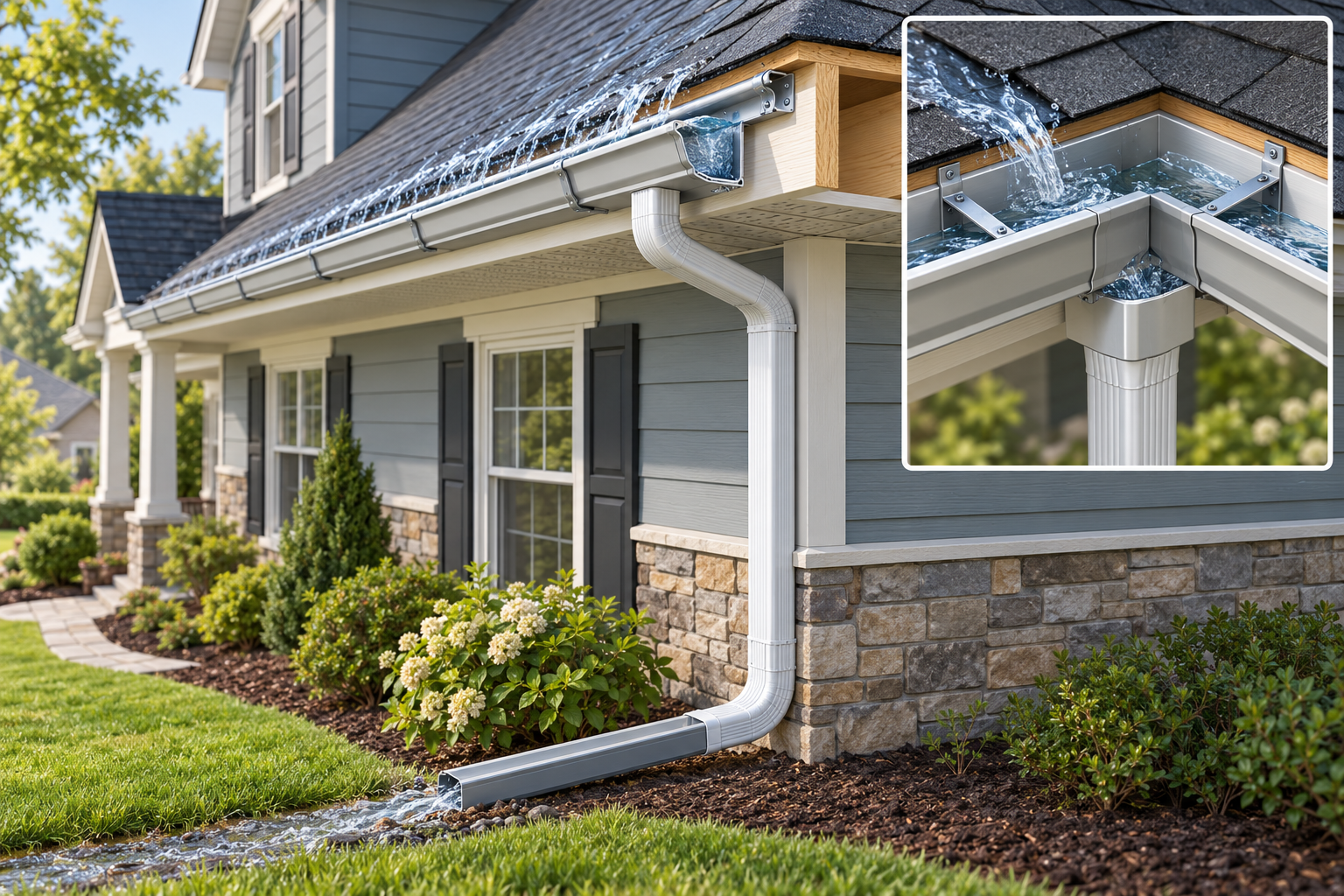
What “seamless” means
Seamless describes long gutter runs without intermediate sectional joints. The system still has joints at corners, end caps, outlets, and downspout connections. It can still leak, sag, clog, or overflow.
Sectional gutters join shorter pieces along the run. They may be available in retail-friendly materials and lengths, and damaged pieces can sometimes be replaced without fabricating a full run.
Installed-cost comparison
Seamless cost includes contractor mobilization and forming equipment. It can be efficient for long runs and custom lengths. Sectional material may cost less, but professional labor for many joints can narrow the savings.
Compare identical material, profile, size, hanger scope, downspouts, access, and removal. A low retail material total is not the installed cost on a high or complex home.
Leak points and workmanship
Fewer intermediate joints means fewer joint locations to prepare and maintain, but corners and outlets often remain the most demanding details. Poor pitch, inadequate hangers, debris, ice, undersized outlets, and bad discharge affect either system.
Avoid claims that seamless gutters “cannot leak” or universally last longer. Material, fabrication, fastening, environment, and maintenance matter.
Repair tradeoff
Sectional systems can make a damaged segment easy to replace when the same product remains available. A damaged seamless run may require cutting in a repair section—creating joints—or replacing a longer run. On the other hand, fewer original run joints can reduce recurring seam service.
Ask the installer how collision, branch, or ice damage would be repaired and whether matching color/profile stock is local.
Property fit
Long simple eaves strongly favor the production efficiency and clean appearance of seamless runs. Small detached structures or short, accessible runs may not justify special fabrication. Complex homes with many corners will have numerous joints regardless of long-run format.
Material options also vary locally. Copper can be fabricated and joined differently from ordinary aluminum; vinyl is common in sectional systems. Exact installation practice controls.
Decision scenarios
Whole-house professional replacement: Seamless aluminum often provides a sensible mainstream balance if local service is strong.
Small porch or shed: Sectional work may be economical and easily sourced.
Damage-prone lower run: Repairability and replacement stock may matter more than minimizing seams.
Many corners, few long eaves: Spend attention on corner fabrication, outlets, slope, and downspouts rather than the seamless label.
Quote checklist
Compare total installed price, run lengths, joint locations, material/profile, hangers, corners, outlets, downspouts, access, repair approach, finish, and workmanship. Choose seamless when fewer run joints and custom fit justify installer dependence; choose sectional when small scale, availability, and replaceable pieces create better value.
Cost beyond the gutter run
Both choices need hangers, outlets, downspouts, corners, end caps, fascia attachment, removal, and discharge. On a complex house these shared components can dominate, making a headline seamless premium misleading.
Expansion and movement
Long metal runs and sectional products address thermal movement through material- and system-specific details. Do not assume fewer joints removes all movement concerns or that more joints automatically handle them well. Installer layout and fastening matter.
Appearance and site fabrication
Seamless runs create a clean continuous line and exact length. Site-forming requires truck/equipment access and working space. On remote properties, mobilization may be large. Sectional products can be transported in shorter lengths and sourced more easily, which can improve small-project economics.
Maintenance comparison
Section joints can require monitoring, but seamless systems still need outlet, corner, slope, fastener, and debris maintenance. Build the cost model from actual likely service, not a promise of no leaks.
Damage scenarios
A crushed lower sectional piece may be easily replaced. A damaged seamless run may be patched with new seams or re-formed. A high long run may favor fewer original joints because every service visit is expensive. Ask for the provider’s repair method before purchase.
Installer dependence
Seamless quality depends on machine setup, material, forming, transport, and installation. Sectional quality depends on joint preparation and layout. References and workmanship terms can matter more than system label.
Normalize the installed comparison
Hold gutter profile and size, material, thickness/specification, total runs, corners, outlets, downspouts, hangers, fascia assumptions, removal, access, discharge, finish, and warranty constant. Then isolate site forming, transported lengths, number and location of field joints, connectors/sealants, labor, and mobilization. Different material or capacity should not be attributed to “seamless.”
A long formed run can reduce intermediate joints but still has corners, end caps, outlets, and movement. Sectional construction adds planned joints but may lower mobilization or improve local replacement. Ask for an elevation sketch showing joint, outlet, and expansion strategy rather than deciding from the label.
Three property cases
On a simple accessible residence with long straight runs and local forming service, seamless installation often offers a clean appearance and fewer field joints at a manageable increment.
On a remote, small, or repair-oriented project, machine mobilization can dominate. Sectional material that is locally stocked and replaceable may be economically credible if joints are well detailed and serviceable.
On a complex building with many short runs and corners, the reduction in straight-run seams matters less because corners, outlets, fascia, access, and discharge drive work. Specialty metals or profiles can further change which fabrication method is locally supportable.
Ownership and repair economics
Compare likely interventions rather than claiming seamless never leaks or sectional always needs resealing. Both require clear outlets, attachment, slope, and inspection. For high inaccessible runs, fewer original joints may reduce costly service points. For impact-prone lower runs, easy sectional replacement can preserve value.
Ask how a damaged portion is repaired, whether a seamless patch introduces new joints, whether exact material/color remains available, and what length would be re-formed. Include future reroof removal and reinstatement where the roof edge may disturb the gutter.
Decision threshold
Choose seamless when local fabrication quality, long-run appearance, fewer field joints, and the installed increment fit the property. Choose sectional when transport, do-it-yourself or small-scope practicality where safely appropriate, local stock, and modular repair matter more. Neither corrects inadequate size, pitch, outlet layout, fascia, or discharge.
This comparison is intentionally narrower than a complete gutter-cost guide. Once both options are normalized to the same functional drainage design, the remaining choice is fabrication, joint count, service path, and appearance—not a promise that one format solves every leak.
Read warranty differences
Separate finish/material coverage, joint or sealant coverage, hanger/attachment workmanship, leaks at corners/outlets, and service labor. A seamless-material warranty does not automatically cover every installed joint; a sectional product warranty does not establish installer workmanship. Confirm who responds and whether access/service charges remain.
Example: long upper run and short lower run
The high uninterrupted run may justify site-formed seamless material because every intermediate joint and future visit is difficult. A short lower run exposed to vehicles, ladders, or yard activity may favor modular repairability. One property can rationally use different formats if material, appearance, outlets, and drainage remain compatible.
That mixed option should be priced explicitly rather than forcing a whole-house label. It shows why this article can resolve the decision below the general comparison range: after function is held constant, only a bounded fabrication and service tradeoff remains.
Compare installed increments under three layouts
On long straight runs, compare site-forming and reduced field joints with transported section material, connectors, and installation labor. On a cut-up elevation, count corners and outlets because they reduce the relative importance of straight-run seams. On a remote or small project, isolate machine mobilization and minimum fabrication from the material price.
Hold fascia repair, access, hangers, size, downspouts, removal, and discharge constant. If the seamless quote also upgrades material or capacity, request a controlled alternate. If sectional work is proposed as owner-installed, include safe access, tools, waste, connectors, and realistic workmanship rather than treating labor as free.
Low, expected, and difficult ownership cases
The low-service case keeps slope, attachment, outlets, and joints sound under ordinary cleaning. The expected case includes a local corner/outlet seal or impact repair. The difficult case replaces a damaged long run, addresses movement or fascia, or reopens the gutter during reroofing. Ask how each format handles all three.
Seamless may reduce original field-joint service but require reforming a long damaged run. Sectional may add monitored joints while allowing modular replacement. The economic winner depends on run geometry and access, not a universal leak claim.
Final comparison record
Keep run lengths, joint/outlet map, profile/material, fabrication source, hangers, fascia assumptions, repair method, warranty remedies, and installed difference. Select seamless for a justified forming/joint/appearance benefit or sectional for justified transport/modularity/service benefit. Neither format changes the need for sound support, capacity, cleaning, and discharge.