
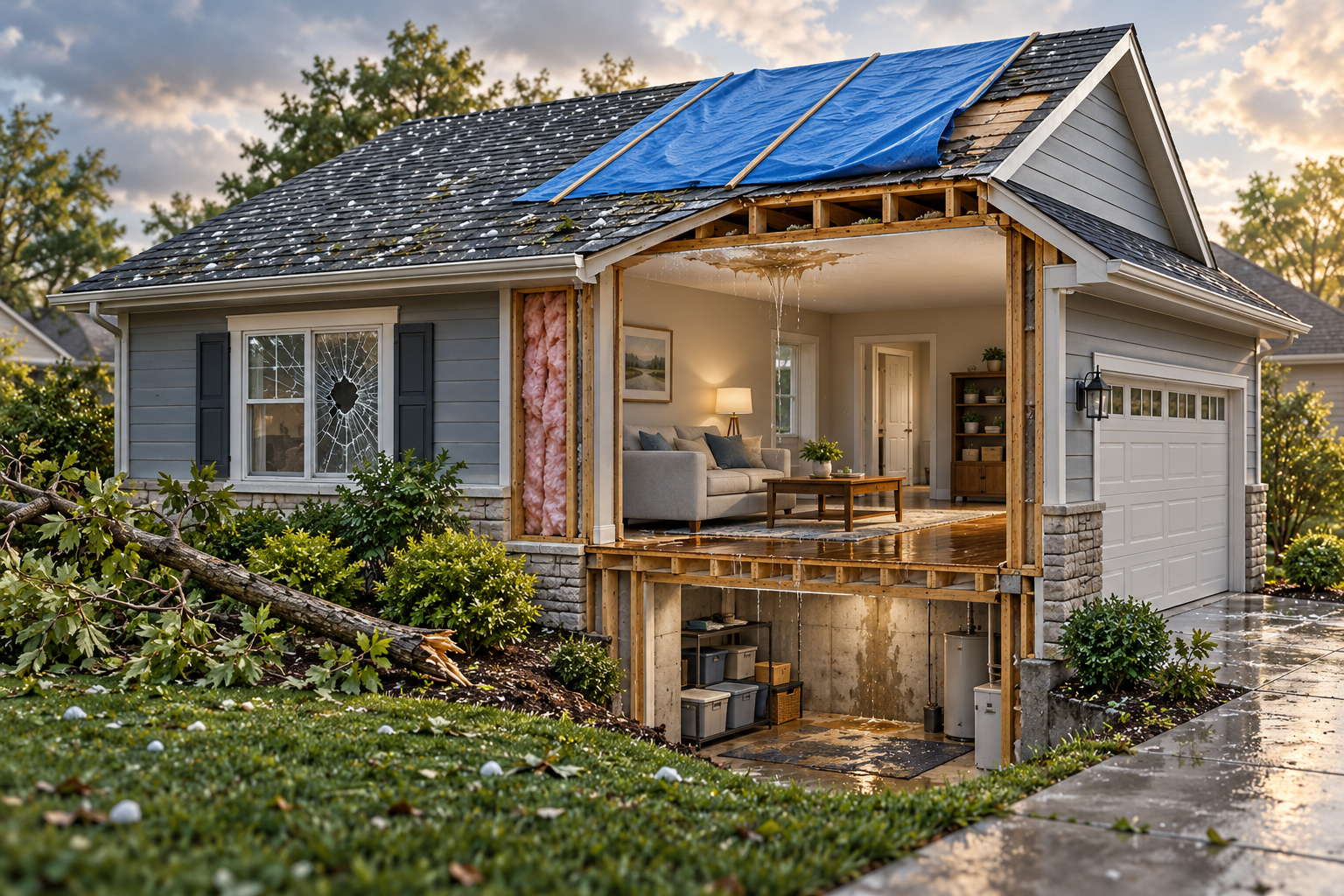
A storm can create several connected scopes: roof or opening protection, water intrusion cleanup, tree or debris handling, broken glazing, contents damage, and permanent work across more than one building system. That is different from a single-trade roof, siding, window, or tree-repair quote.
Stabilize first
When it is safe, document openings, water entry, damaged contents, and visible conditions. Temporary tarping or board-up may reduce further exposure. Do not enter an unstable building or climb a damaged roof. Emergency work should state what it protects and how it will hand off to permanent repair.
Build the recovery sequence
An assessment may need to consider roof coverings, flashing, windows, doors, cladding, framing, insulation, ceilings, floors, electrical systems, HVAC, contents, and water in concealed cavities. Extraction and drying may need to begin before a final finish or system-repair scope is known.
Debris and tree work can be integral to access and stabilization. Permanent tree, roof, opening, cladding, or structural work may still belong to a specialized contractor or adjacent project scope.
Why storm estimates vary
Cost depends on the number of systems, extent of water intrusion, access, emergency demand, temporary protection, debris, contents, drying duration, hidden damage, materials, labor availability, permits, and reconstruction finish. Catastrophe demand can affect availability and scheduling, but it does not create a universal surcharge.
Sequence the storm work
The safest sequence is condition-dependent, but the budget commonly starts with temporary protection and access, then moves through assessment, water or residue cleanup, contents, permanent system repairs, and reconstruction. A roof or opening may need to be stabilized before interior drying. Debris or tree work may need to be addressed before a crew can inspect the structure. A permit or engineering decision may control what follows.
Ask each contractor to state what it needs from another trade before starting and what it will leave behind. This prevents a roofing, window, tree, or cleanup quote from appearing complete when it depends on another unresolved condition. It also helps identify duplicate mobilization or charges caused by the order of work.
When a regional event creates demand, obtain a realistic schedule and ask how temporary protection will be maintained while waiting. Record added visits, storage, drying, or temporary-living costs separately. The event may change availability and price, but only the written scope can explain the amount.
Wind, hail, flood, sewer backup, and tree-related damage may follow different policy terms and recovery paths. A contractor’s physical scope is not a coverage determination. Compare estimates by affected system and phase: emergency stabilization, mitigation, contents, permanent repair, and code or permit work.
Ask what is temporary, what is complete, what is assumed, what remains to be inspected, and which trades are responsible for the handoff. A shorter estimate may simply cover fewer phases.
Assess before choosing a permanent repair
Storm damage can look like a roof-only issue while water has entered insulation, ceilings, and contents. A broken window can expose finishes and wiring. A tree impact can create structural and access concerns. Ask for an assessment that identifies what is observable, what is concealed, and what temporary protection is needed before a permanent repair is selected.
Hail, wind, flood, and sewer backup may be part of the same weather event but need not share the same scope or policy treatment. Keep the cause, resulting damage, and follow-on repair visible in the budget.
Schedule and sequence can change the price
If a tarp must stay in place while crews wait, if contents cannot return, or if several trades are booked after a catastrophe, the project may incur repeat mobilization, storage, protection, or temporary-living costs. Ask what the estimate assumes about access, weather, materials, and trade coordination. Those assumptions are more useful than a generic storm surcharge.
A storm can create an opening, wet interior, damaged roof covering, broken glazing, displaced siding, fallen trees, debris, and contents damage at the same time. Hail may damage roof and exterior components without an obvious interior leak. Wind can affect roof edges, doors, windows, and cladding. Flooding or sewer backup can follow the storm but has its own contamination and coverage questions.
The first task is to prevent further exposure. Board-up, tarping, tree or debris management, and temporary water control are stabilization scopes. They should be documented separately from the permanent roof, window, siding, structural, drainage, or tree work that follows. A storm-restoration article cannot determine whether a particular assembly is structurally safe or whether a roof should be replaced.
A storm-loss scope is a coordination problem
The important difference from a single-trade repair is often the handoff. A roof opening may need temporary protection before a roofer can assess the assembly. A tree may need to be removed before a structural professional can inspect a wall. A broken window can allow water into finishes and contents. Interior drying can begin while the permanent exterior repair is still being designed.
Ask each contractor what it needs from another trade and what condition it will leave behind. Identify whether the roof, opening, tree, debris, water, contents, electrical, HVAC, or structure is included, excluded, or still unknown. This reduces duplicate mobilization and prevents one quote from being mistaken for a complete storm recovery plan.
Cost scenarios after a storm
A localized hail event may involve roof or exterior assessment, temporary protection, and permanent repair with little interior restoration. A wind event can add broken openings, water intrusion, siding or soffit work, and contents. A tree impact can add access, debris removal, structural assessment, and several trades. A storm followed by flooding or sewer backup may require a separate contamination and safe-reentry response.
The price can move with access, emergency timing, roof height, temporary protection, debris, affected rooms, drying duration, materials, local labor, permit or engineering needs, contents, storage, and catastrophe demand. Demand may affect availability and scheduling, but a generic “storm premium” does not explain the whole bill. Ask what the charge covers and how long temporary protection must remain.
Compare the written scope by phase
Use the same categories for each proposal:
- emergency stabilization and access;
- documentation and assessment;
- water extraction, drying, cleaning, or containment;
- debris, tree, or damaged-material removal;
- contents and temporary storage;
- permanent roof, window, cladding, structural, or system repair;
- permits, inspections, and engineering; and
- exclusions, allowances, and change-order rules.
Hail damage may be visible on a roof without an interior leak. Wind damage may be concealed at edges, flashing, windows, or cladding. Ask what was inspected and what remains unknown rather than assuming that a visible exterior repair closes the interior scope.
Claim and household questions
Document the condition when safe, notify the insurer according to the policy, and keep receipts and estimates. The cause of loss, policy terms, deductible, limits, endorsements, and jurisdiction can affect the claim. A contractor’s physical estimate does not decide coverage, and an adjuster’s estimate does not replace technical assessment of hidden damage.
Temporary housing, storage, contents handling, repeat visits, and access work may affect the household budget even when they are not on the main exterior-repair estimate. Track them separately. Ask who will update the scope if demolition or drying reveals additional damage and what record supports the change.
The best storm-restoration budget is not one number. It is a coordinated sequence that shows what must happen now, what can wait, which trades own each handoff, and what condition the property should reach before the next phase begins.
Keep weather exposure in the sequence
Temporary protection has its own stopping rule. A tarp, board-up, temporary glazing, or covered opening should be inspected after weather changes and after permanent work begins. Ask who checks the protection, whether repeat visits are included, and what happens if the measure fails or must be renewed. A low emergency quote can become expensive if its duration and inspection responsibility are unclear.
Exterior damage can also affect interior scope in ways that are not visible during the first visit. Water may enter around a roof edge, window, wall penetration, or cladding joint; wind may move insulation or expose a cavity; hail may damage a surface without creating an immediate leak. The estimate should state which interior areas were checked and what condition would trigger drying, removal, or another assessment.
For a multi-trade loss, maintain one sequence record even if separate companies perform the work. Link photographs and decisions to the room or assembly, and record when the roof, envelope, drying, contents, and interior trades release the next phase.