
A frozen pipe can create a restoration project that is wider than the visible break. Discovery may be delayed, several pipes may fail, heating may be interrupted, and water can move through walls, ceilings, floors, and contents while the property is difficult to access.
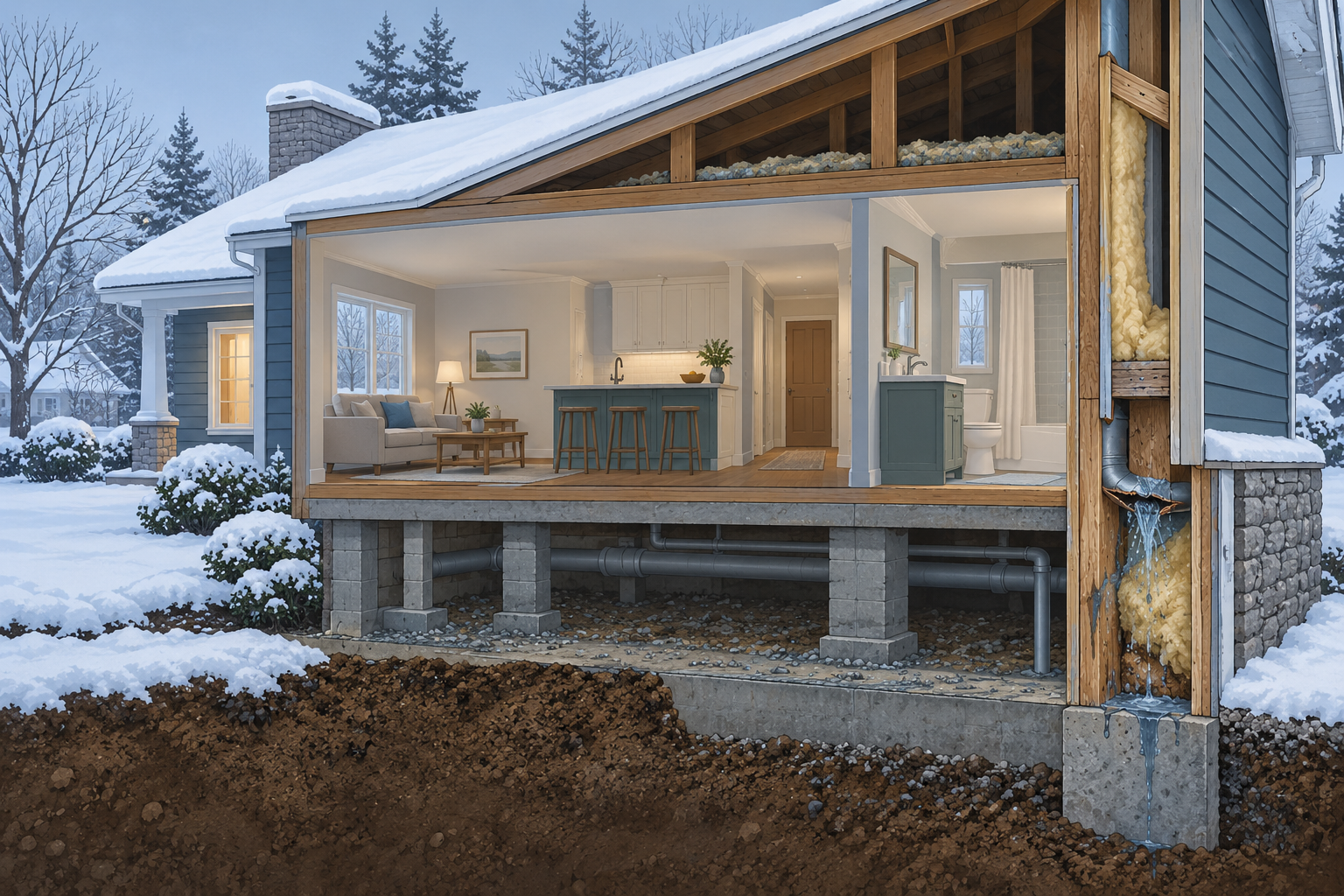
Why freeze losses spread
The failed pipe still needs a plumbing repair. The restoration scope depends on when the release was discovered, whether the home was occupied, how far water travelled, whether multiple rooms or floors were affected, and whether cold conditions slowed drying. Temporary heat or utility work may be relevant, but the safe method is property- and system-specific.
Do not improvise thawing, electrical work, gas work, or operation of damaged equipment. If the property is unsafe or utilities are affected, use the appropriate qualified service.
Cost centers beyond the pipe
The recovery may include source control, extraction, moisture assessment, air movement, dehumidification, monitoring, access to concealed cavities, removal of wet insulation or finishes, disposal, contents handling, and reconstruction. Winter access, equipment placement, power, travel, and a longer monitoring period can change the estimate.
There is no fixed freeze-loss premium or universal number of drying days. Ask which conditions the contractor observed, which areas were opened, and what will happen if concealed moisture or another failed section is found.
Insurance is not automatic
Coverage depends on the policy, cause, exclusions, endorsements, maintenance conditions, deductible, limits, and jurisdiction. Canadian consumer guidance notes that policies may treat preventable freezing or maintenance-related events differently; that does not determine any individual claim. U.S. policy language also varies.
Document the condition when safe, notify the insurer as required, and retain receipts. Do not delay urgent safety or damage-limiting work solely because an adjuster has not arrived.
After the water is removed
Compare the source repair, mitigation, reconstruction, and freeze-prevention work as separate decisions. Insulation, air leakage, vacant-home conditions, heat distribution, and exposed piping may belong in a prevention conversation, but they should not be assumed to be covered or included in the restoration estimate.
Discovery time changes the building scope
A freeze loss may start as a small release and become widespread before the property is checked. This is especially relevant to vacant, seasonal, remote, or intermittently heated homes. Water can move into floors and walls while the original break remains hidden, and a second failure may be discovered only after utilities are restored.
Ask the restoration provider to distinguish what is known from what depends on opening the assembly. Ask the plumbing provider whether other exposed or vulnerable sections were inspected. Neither question creates a universal inspection requirement; it makes the source of uncertainty visible.
Winter access affects the household budget
Restricted roads, snow, frozen ground, unavailable utilities, temporary heat, and delayed materials can affect mobilization and schedule. Storage and temporary lodging can continue while the building is dried and rebuilt. Record those costs separately and ask which are included in the contractor’s quote or addressed by the policy.
The visible split pipe is only one part of a freeze loss. A pipe can freeze in an exterior wall, crawl space, attic, garage, ceiling, or seasonal property and release water later when it thaws. Several weak points may fail during the same cold event. If the home is vacant or access is delayed, water may spread before anyone discovers it.
Cold conditions also affect drying. Equipment, temporary heat, power, ventilation, access, and condensation must be considered by the professionals managing the site. A drying plan for a warm occupied house cannot simply be copied into an unheated or intermittently occupied property. Ask what condition the contractor observed, where moisture was mapped, and whether temporary utilities or additional visits are included.
What makes a freeze loss different from a burst-pipe loss
The distinction is not the word “freeze” on the invoice. It is the recovery problem created by cold weather. Water may remain unnoticed until a thaw, several lines may fail in one event, and a seasonal or vacant home may not be accessible. Exterior walls, crawl spaces, attics, garages, unheated rooms, and utility areas can place the release in concealed or difficult-to-reach assemblies.
Cold weather can also affect the source-repair sequence. A plumber may need access to frozen or damaged piping, temporary heat may be needed for safe work, and utilities may be interrupted. Restoration cannot be scoped well if the source remains active or if the building cannot be inspected safely. Keep the plumbing diagnosis separate from the consequential drying and rebuild work.
Cost scenarios
A small, promptly discovered failure in an occupied heated home may resemble an ordinary clean-water loss: source repair, localized extraction, drying, limited material replacement, and documentation. The freeze-related difference may be a need to inspect adjacent piping or identify why the failure occurred.
A delayed loss in a vacant home can involve several rooms, finished floors, ceilings below, insulation, contents, mold concern, temporary heat, and a longer equipment period. A seasonal property can add travel, winter access, utility reconnection, and storage or lodging costs. A multi-line failure can also create several source-repair visits before the restoration scope is stable.
These are scenarios, not formulas. No fixed elapsed time, outdoor temperature, or pipe location predicts the final bill. Ask what was observed, what remains concealed, and which assumptions control the estimate.
Drying in winter conditions
The contractor should explain how the building will be dried in its actual condition. Equipment, power, temporary heat, ventilation, humidity, condensation, frozen materials, access, and the protection of occupied areas can affect the plan. Do not improvise fuel-burning drying equipment indoors; carbon monoxide can accumulate. If utilities or electrical systems were affected, the appropriate professional must decide when they can be used.
Ask how monitoring will show progress and what condition ends the mitigation phase. If wall, floor, or insulation removal becomes necessary, ask which later scope replaces the material. Drying is not reconstruction, and a source repair is not proof that the building is dry.
Insurance and prevention handoff
A policy may treat sudden water escape, freezing, vacancy, maintenance, resulting damage, deductible, limits, and exclusions differently. Notify the insurer according to the actual contract, document conditions when safe, and do not promise yourself a coverage result based on the cause label.
After the immediate loss, the homeowner may need a separate prevention decision involving insulation, air sealing, heat, monitoring, shutoff controls, seasonal closing, or plumbing changes. Those improvements can be valuable, but they are not automatically part of restoring the damaged building or part of a claim.
Compare the recovery estimate by phase: source control, extraction and drying, material removal, contents, reconstruction, temporary utilities, and household disruption. A freeze-loss budget is complete when it explains those dependencies, not when it assigns one average to every winter pipe break.
Questions that expose the winter-specific assumptions
Ask whether the estimate assumes the home is occupied, heated, accessible, and supplied with power. Ask what happens if a road, crawl space, attic, or utility area cannot be reached, and whether temporary heat, protection, monitoring, or additional mobilization is included. Ask which work belongs to the plumber and which belongs to the restoration or reconstruction contractor.
Also ask what the property should look like when drying ends. A thawed pipe is not the same as a dry assembly, and a repaired line is not the same as restored finishes. The more clearly the estimate describes those handoffs, the easier it is to distinguish a freeze-related access cost from an unplanned expansion of the entire project.
Hidden winter conditions
Cold weather can hide the extent of a loss. Water may have entered insulation, floor cavities, wall assemblies, crawl spaces, or areas that cannot be opened until the surface is safe. Ice, snow, limited daylight, blocked access, and temporary heat can also change how inspection and drying are sequenced. Ask which areas were actually inspected and which assumptions depend on thawing or access later.
If a finish must be removed, photograph the condition and identify the material, location, quantity, and reason for removal. That record helps separate damage discovered by opening the assembly from an elective improvement made during the same project. It also gives the reconstruction estimate a clear starting point instead of treating every winter-related charge as part of one emergency amount.
The source-control decision deserves the same clarity. A plumber may repair or isolate the line, while a restoration contractor handles water and materials. Confirm who verifies the repair, who monitors drying, and who decides when the affected utility or room can return to service.