
Do not let the wait for an adjuster turn an urgent hazard into more damage. Safety comes first, followed by reasonable steps to prevent additional loss and preserve a clear record of what happened. The policy still controls coverage, notice, documentation, and authorization requirements.
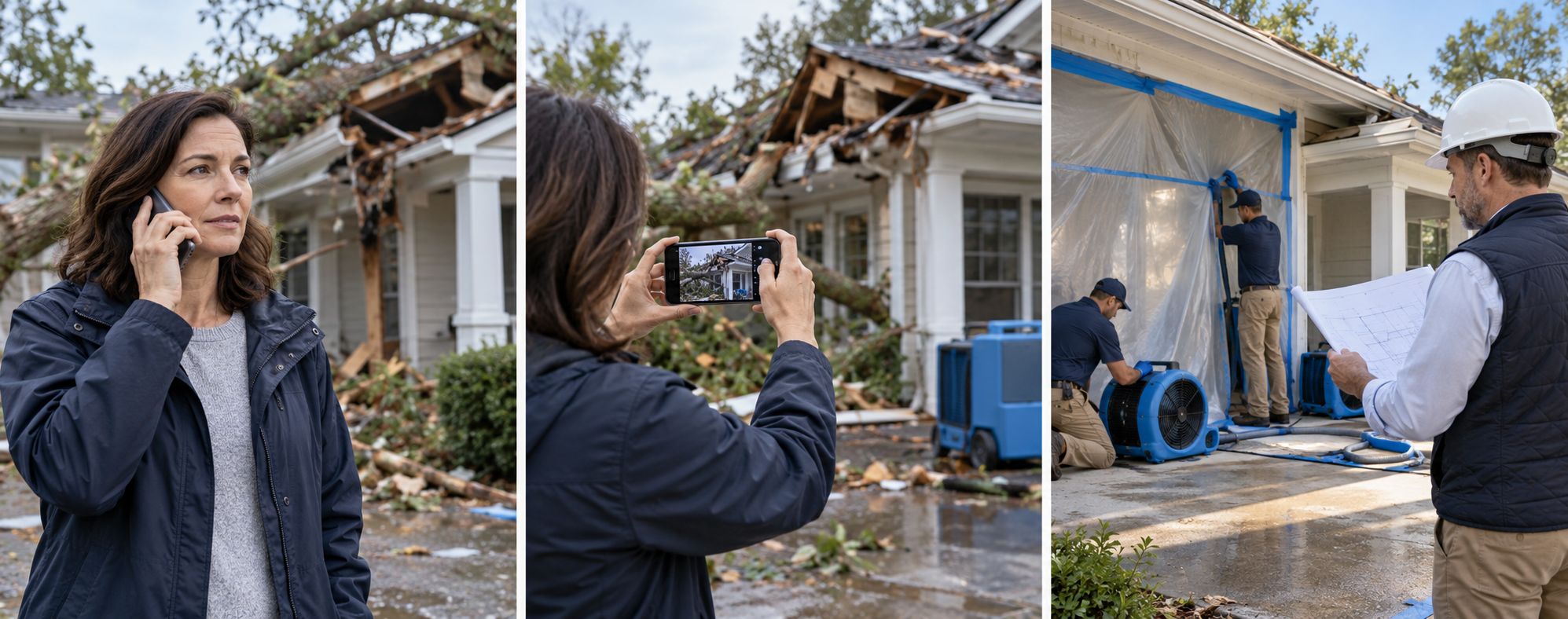
Separate urgency from authorization
An urgent condition can need action before the claim review is complete, but that does not mean the first responder should receive authority to rebuild the home. Identify whether the immediate task is to stop active damage, close an opening, remove a safety hazard, or arrange a professional assessment. Ask for a written limit on that work when practical.
If a task is dangerous or contaminated, do not attempt it to preserve a claim record. The contractor or authority should explain the safe method and the documentation that will be supplied.
Leave areas with structural instability, fire damage, gas concerns, standing water around electrical equipment, sewage, heavy smoke, or suspected contaminated HVAC. If power can be shut off only from a wet location, use a qualified electrician. Flooded buildings, appliances, wells, and utility systems may need professional or local-authority clearance before use.
Do not operate a generator, grill, stove, or fuel-powered pump indoors or near openings. Do not treat this article as permission to perform electrical, gas, sewage, structural, or hazardous-material work.
Document what must move or be removed
Photograph and video the source, affected rooms, contents, waterline or residue, openings, temporary protection, and visible damage. Record the time discovered, actions taken, people contacted, and expenses. Keep damaged materials where feasible and safe, but health, contamination, perishability, and structural conditions may require prompt removal.
Reasonable emergency mitigation
Depending on the event, this may mean stopping a leak from a safe location, arranging temporary board-up or tarping, removing standing water after electrical conditions are made safe, moving unaffected belongings away from damage, or calling qualified restoration help. Ask for a written emergency scope and limit authorization to the work needed now.
Do not authorize permanent reconstruction simply because emergency work is urgent. Ask what is temporary, what will be removed, what will be documented, and what later scope will restore the property.
Decide what truly cannot wait
The decisions that usually need prompt attention are those that protect people, stop an active source, prevent weather exposure from worsening, isolate a dangerous condition, or prevent contaminated or perishable material from creating a greater problem. The correct responder may be an emergency service, utility, authority, electrician, plumber, structural professional, or qualified restoration contractor depending on the condition.
Other decisions can often remain open while the condition is documented: the final cabinet or flooring selection, a broader layout change, a preferred finish, a voluntary efficiency upgrade, or the complete reconstruction contract. Keeping those choices open is not the same as refusing necessary mitigation. It is a way to avoid turning an urgent stabilization authorization into an unexplained permanent scope.
This distinction has limits. Fire, structural movement, flooding, sewage, smoke, gas, and electrical conditions can interact, and the safe response depends on the site. Do not enter or disturb a hazardous area to create a better record. Obtain the appropriate qualified or local-authority direction.
Questions for an emergency contractor
Before authorizing work when feasible, ask:
- What active condition are you addressing, and what additional damage is the work intended to prevent?
- Which tasks are stabilization, extraction, drying, cleaning, controlled removal, temporary protection, or permanent reconstruction?
- Which rooms, materials, contents, and systems are included, and which are expressly excluded?
- What work will be destructive, and what photographs, measurements, samples, moisture records, or inventories will be supplied before it begins?
- Who owns source repair, contents handling, disposal, reconstruction, permits, and any required specialist assessment?
- What is the price basis, minimum charge, equipment or monitoring assumption, emergency premium, and change-order process?
- What authorization limit applies now, and what requires a new written approval?
No answer to these questions guarantees coverage. They make the emergency scope legible before it is handed to the adjuster, insurer, or later reconstruction contractor.
Notify and keep records
Notify the insurer according to the actual policy. Ask what photos, receipts, inventories, damaged materials, temporary housing expenses, and contractor documents it wants. Keep the adjuster’s contact details and every estimate, invoice, and authorization.
Urgent mitigation is not an automatic coverage decision. A deductible, exclusion, limit, endorsement, policy condition, or cause-of-loss dispute can still affect payment. The purpose of early documentation is to make the decision traceable, not to guarantee reimbursement.
A simple priority order
First protect people from fire, structural, electrical, gas, sewage, smoke, carbon-monoxide, and other hazards. Next stop an active source or protect an opening when it is safe and appropriate. Then document conditions and notify the insurer. Only after those priorities should you make broader permanent repair or upgrade decisions.
The order can change by event. A broken roof may need a tarp before rain. A flooded electrical system may require an electrician before water removal. A sewage release may require isolation and professional cleanup. A fire loss may require authority or structural clearance before ordinary work. Use the actual site condition and qualified advice; do not follow a generic sequence mechanically.
Hand off from emergency work to the next phase
At the end of the emergency visit, request a record of the condition observed, work completed, materials moved or removed, photographs, invoices, equipment or monitoring records, contents inventory, unresolved hazards, and recommended next decision. Confirm whether the property is being handed to an adjuster, mitigation contractor, reconstruction contractor, contents specialist, authority, or another qualified professional.
The handoff should say what condition the emergency work leaves behind. “Protected from further rain” is not the same as “roof permanently repaired”; “standing water removed” is not the same as “assemblies dry”; and “damaged contents packed” is not the same as “contents valued or replaced.” Those boundaries help the next party price the correct phase without promising that a later phase or payment will follow.
What to record when materials must move
For each removed or discarded item, record its location, material, visible condition, apparent cause, reason for removal, photographs where safe, and the person or company handling it. Note whether the item was retained, packed, sampled, cleaned, discarded, or sent for specialist assessment. Keep a copy of the record and ask the insurer whether it needs a particular form.
Do not delay removal of dangerous, contaminated, or perishable material just to wait for an adjuster. Documentation can preserve the facts without preserving a hazard in the home.
What can reasonably happen before inspection
The answer depends on the immediate condition. If water is still entering, temporary source control or emergency mitigation may be needed to prevent additional damage. If an opening is exposed, board-up or tarping may be appropriate. If sewage, floodwater, fire damage, structural movement, gas, electrical hazards, or contaminated HVAC is involved, safety and qualified assessment take priority over preserving a perfect pre-work scene.
Reasonable emergency work is not a blank authorization for permanent reconstruction. Ask the contractor to identify the urgent condition, the work needed now, the amount authorized, the expected end condition, and what remains for a later phase. A limited authorization can protect the property while leaving the permanent scope open for assessment.
Preserve the record when conditions must change
Take photographs or video of affected rooms, source, waterline, openings, contents, visible residue, temporary protection, and damage. Make a written list of what you see and when it was discovered. Keep receipts, invoices, estimates, authorizations, communications, and records of emergency calls. If electricity, gas, structural safety, contamination, or access makes documentation unsafe, record why and use the professional’s condition report.
Do not move or discard an item merely to make the claim easier. At the same time, do not leave dangerous, contaminated, unstable, or perishable material in place solely for an adjuster’s visit. Ask the insurer how it wants unavoidable removal documented, but follow the qualified professional and local safety direction first.
Temporary work versus permanent work
Temporary protection limits exposure; it does not decide whether a roof, wall, window, pipe, or finish should be permanently repaired or replaced. Extraction and drying manage a condition; they do not automatically rebuild a room. Contents packing protects access or property; it does not determine whether an item is salvageable or covered.
For each emergency line, ask what it protects, what it leaves behind, and what the next scope must address. Record the starting and ending condition. This is more useful than trying to make an emergency invoice include every possible later cost.
Questions for the insurer and contractor
Ask the insurer:
- How should the loss be reported and what records are needed?
- What emergency work can proceed under the policy’s instructions?
- Which damaged contents or materials should be documented before disposal?
- What deductible, limits, endorsements, or deadlines may matter?
- Who will explain the claim scope and payment process?
Ask the contractor:
- What condition is unsafe or actively worsening?
- What work is urgent, and what can wait for assessment?
- What areas and materials are included?
- What is excluded or subject to a supplement?
- What report, photographs, moisture record, inventory, or handoff will be provided?
Neither list promises coverage. It helps locate the right question with the right party.
When the adjuster is delayed
A delay does not automatically mean the homeowner must wait while avoidable damage grows, and it does not automatically authorize all proposed work. If the property needs urgent mitigation, document the reason, authorize only the necessary phase, and keep the scope and cost bounded. Notify the insurer through the available channel and preserve confirmation of the report.
The practical objective is to stabilize safely, preserve useful evidence, prevent additional damage, and keep permanent repair decisions tied to a documented condition. That approach protects both the building and the homeowner’s ability to understand the later estimate, without offering a universal rule for every policy or jurisdiction.